
A hammer mill for dry grass powder in Senegal grinds Rhodes grass and millet stalks at 700 kg/h using a 2 mm screen for organic fertilizer making.
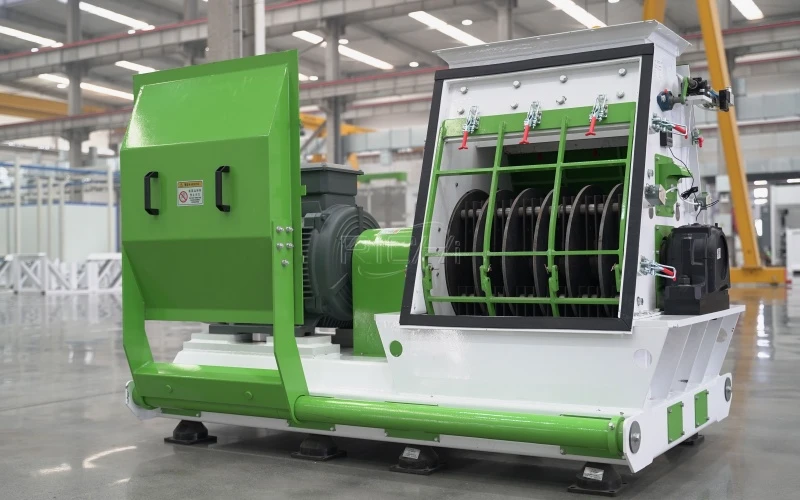
An organic fertilizer producer near Thiès installed one RICHI hammer mill for dry grass powder in Senegal to prepare its own fibrous ingredients. The company produces approximately 800 tonnes of fertilizer annually for vegetable growers. Its grinding upgrade uses an SFSP56×40 with a 37 kW main motor, operating at a specified fine-grinding duty of 700 kg/h with a 2 mm screen.
The customer had been buying ground grass from local suppliers. Deliveries varied from fine powder to stalk fragments approaching 10 mm, making ingredient preparation inconsistent. Bringing grinding into the plant gave the owner direct control over the screen, incoming material condition and powder supplied to the fertilizer process.
Name:
Grass hammer mill
Country:
Senegal
Date:
2026
Capacity:
700 kg/h
Model:
SFSP56×40
Main Motor Power:
37 kW
Raw Materials:
Dried Rhodes grass and millet stalks
Final product size:
0.5–2mm
The two materials are dried Rhodes grass and millet stalks. The grinding specification uses 8–12% moisture on a wet basis. Workers open the bales, separate ties and foreign matter, and loosen compacted material before loading. Long stems need shortening to support controlled feeding through the hopper.
The customer processes the materials separately. Leafier Rhodes grass and the more stem-heavy millet material have different feeding behaviour. Millet stalk fine grinding in Senegal formed the tougher fibrous duty in this installation, making steady loading particularly useful for keeping the screen clear.
A magnetic grate at the hopper intercepts ferrous contamination. Stones, soil and bale ties require removal during material preparation. Keeping the two materials identified through grinding also helps the operator compare output, screen condition and powder quality between batches.
The order covered one grinding unit and its collection arrangement, fitted around the customer's fertilizer operation. The selected configuration is defined by the dry fibrous material and the 2 mm screen duty.
| Equipment item | Project specification |
|---|---|
| Model and quantity | One SFSP56×40 hammer mill |
| Main grinding motor | 37 kW |
| Raw materials | Dried Rhodes grass and millet stalks |
| Standard grinding capacity | 700 kg/h, equivalent to 0.7 t/h |
| Standard screen aperture | 2 mm |
| Grinding moisture specification | 8–12%, wet basis |
| Main powder fraction | 0.5–2 mm |
| Product and dust collection | Cyclone followed by a fabric filtration stage |
The 37 kW figure covers the grinding motor. Collection-system drives and other plant equipment belong in the separate auxiliary load schedule. Electrical protection and starting arrangements follow the installed motor nameplates and the site's supply conditions.
The customer compared three screen apertures before settling on the standard production setting. The comparison showed the practical cost of finer grinding: a smaller opening increased the work needed to discharge the fibrous material and reduced hourly output.
| Screen aperture | Reported grinding output | Operating observation |
|---|---|---|
| 3 mm | 900 kg/h | Higher throughput, with more coarse material remaining |
| 2 mm | 700 kg/h | Selected production setting; main powder fraction of 0.5–2 mm |
| 1.5 mm | 500 kg/h | Finer powder, with more heat and screen-cleaning demand |
The customer's comparison reported 85% of the powder within the 0.5–2 mm fraction at the selected setting. This describes the resulting particle distribution. The 2 mm screen aperture does not mean that every particle has an identical 2 mm dimension.
The owner chose the middle setting because it provided the required preparation quality at 700 kg/h. The 1.5 mm and 3 mm screens remained available for comparison work, while the 2 mm screen became the operating standard for the fertilizer ingredients.
The animal feed hammer mill for dry grass powder in Senegal discharges into a cyclone that separates the bulk ground product from the conveying air. A fabric filtration stage collects entrained fines downstream of the cyclone.
Dust handling became part of the operator's daily routine. The collection system needs clear discharge points, sound connections and regular filter inspection. Collected fines are emptied through a controlled handling procedure, with attention to dust released during clean-out.
Filter loading also affects airflow through the grinding circuit. Maintaining the collection arrangement therefore supports both housekeeping and stable mill operation. Filter medium, available filtration area and the cleaning arrangement need to suit the actual airflow and dry fibrous dust.
The ground materials serve as prepared fibrous inputs for the customer's organic fertilizer operation. The company's ingredient basket also includes manure-derived organic matter, rock phosphate and mineral additions. The powder improves the consistency of the plant material entering that process.
Grinding and biological stabilisation are separate process controls. Dry grass powder remains an organic feedstock that requires appropriate composting and curing within the fertilizer manufacturing process. Moisture, nitrogen balance and aeration still need control; fine powder alone does not provide the open structure needed throughout a composting mass.
The organic fraction must reach the plant's maturity specification before the finished fertilizer is released. Final blending, mineral additions and granulation are coordinated around that requirement. The hammer mill supplies a defined physical ingredient without establishing nutrient content or compost maturity.
For the granulated product, consistent fibre preparation helps reduce coarse interruptions in the mixture. Pellet integrity also involves mixture moisture, compaction and the complete formulation. The grinding upgrade addresses the customer's particle-preparation problem within that wider process.
The customer's combined grass and millet powder requirement is approximately 50 tonnes per month. At 0.7 t/h, that volume requires about 71.4 net grinding hours, rounded to 72 hours for basic scheduling.
As an engineering calendar reference, 20 working days with four available grinding hours per day provide 80 hours. That leaves approximately 8.6 hours beyond the calculated grinding time for handling interruptions and routine work. Longer stoppages or material changes require their own allowance.
This calculation explains why one SFSP56×40 was sufficient for the stated monthly duty. Ground-fibre input and finished fertilizer tonnage remain separate production records because composting, moisture changes and other ingredients affect the manufacturing balance.
The reported package value at Dakar port was CFA 4.2 million. The equipment scope centred on the hammer mill, 37 kW motor, cyclone and starter screens with 1.5 mm, 2 mm and 3 mm apertures.
The equipment travelled in two crates from Qingdao to Dakar. The customer arranged inland transport to the Thiès site and local installation work. Connection planning covered the mill position, collection ducting, electrical supply and access for screen replacement and cleaning.
Before purchase, the owner provided 15 kg of each material for grinding demonstrations. RICHI supplied test videos and particle-size information to support screen selection. These sample demonstrations helped assess grindability, while the customer's operating comparison established the preferred production screen.
French-language instructions supported the customer's installation and operator training. Support also covered screen replacement, hammer inspection, magnetic separation and collection-system maintenance.
At the six-month follow-up, the owner highlighted more consistent fertilizer preparation and the daily attention required by the dust collection system. He reported that the hammer set and 2 mm screen were still in service.
“The fertilizer quality is much better now.”
“The fabric filter bag works well, but we have to empty it every day.”
The selected configuration gave the company a defined 700 kg/h grinding stage for its two dry fibrous materials. The 2 mm screen, controlled material condition and regular collection-system maintenance became the practical basis for repeat production.
When comparing a hammer mill for dry grass powder in Senegal, specify the dry material, moisture, required powder grading and tonnes needed per month. RICHI Machinery can use those details and a representative sample to assess the grinding duty and the collection arrangement for your plant.
Having the right mix of reliable, high-quality pellet machine and pelletizing systems and expert support is essential to your success. Watch how our end-to-end feed pellet plant solutions have helped our customers optimize their performance.
Our customized and future-proofed turnkey pellet plant solutions is designed with you at the core. From vision to reality and beyond, our team stays connected with yours. Giving you peace-of-mind with an expert at your side.
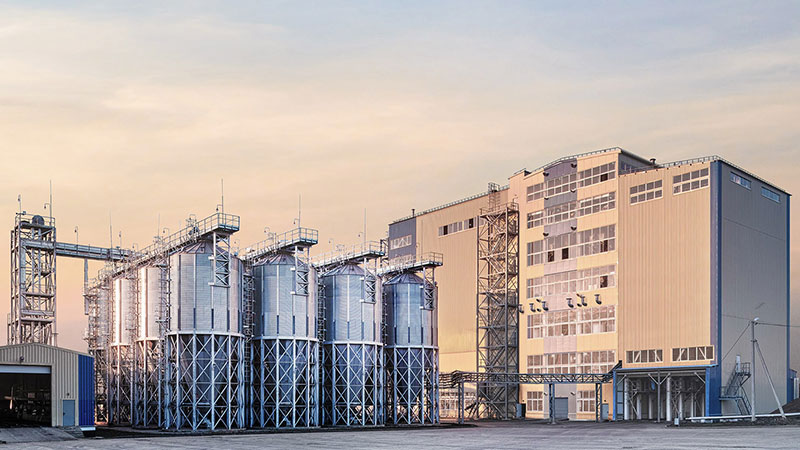
At RICHI, we go beyond project completion. With RICHI Servicee, we’re your dedicated partners in success. Count on us for expert guidance, minimal downtime, and optimized productivity. Choose RICHI for unmatched service and support.
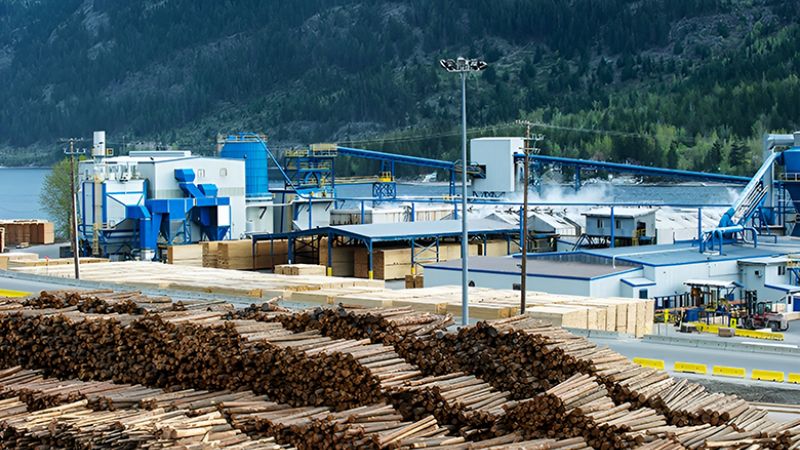


Meet global product demands and quality standards with industry-leading pellet plant design, engineering, equipment, and construction services for pellet processors.


Your Partner Beyond Project Completion
2000+ cases
RICHI is the leading designer, manufacturer and builder of pellet plants in the world, completing over 2000 projects in 140 countries across 6 continents.
Read More
Increase plant productivity, profitability, and safety by integrating high quality equipment into your pellet production line. Over the years, RICHI has become China's top pellet equipment manufacturer. At the same time, RICHI has established valuable partnerships with the world's leading component and raw material manufacturers to bring you the best there is in technology, automation, and efficiency in pelleting plant machinery.

For nearly 30 years, RICHI has been providing best-in-class pellet plant equipment and services to clients across a variety of industries, sizes, and needs. We pride ourselves on the knowledge and skill that each team member possesses – from our technical sales team to our process design engineers. You can count on RICHI Machinery to take your operation to the next level of innovation, quality, and success.
Need help with your pellet manufacturing plant project? Contact us today.
ANIMAL FEED
BIOMASS
WOOD
ORGANIC FERTILIZER
AQUA FEED
CAT LITTER
MUNICIPAL WASTE RECYCLING
SPECIAL PELLET PRODUCTION
RICHI Machinery continues to deliver world class pellet mill equipment, pellet plant engineering and project solutions that add value to our customers in the animal feed, wood waste, agriculture waste, organic fertilizer, cat litter and special pellet products industries. Throughout the years, we RICHI Machinery have built strong brand, becoming industry-leading pellet machine manufacturer. We value integrity, promise quality, and prioritize your success.
Learn MoreWith our expert team, we precisely implement your process engineering requirements in pellet mill and pelletizing plant systems. No matter which industry you’re in – we understand your needs and deliver solutions that meet the highest standards.
At RICHI, quality comes first. Our pellet making machine and related pellet line equipment undergo rigorous quality controls to ensure they meet the highest standards. Rely on products that are durable, safe, and efficient.
With decades of experience in pellet machine and pellet production line production, we have earned a reputation as a trusted partner in various industries. Our expertise allows us to cover a wide range of applications.
Not only do we offer premium pelleting equipment, but we are also experts at designing, building, installing, and maintaining facilities from the ground up. Our expertise is within pellt plant process design, discovering the most efficient, productive, and profitable way to handle your materials in an end-to-end cycle.
○ RICHI MACHINERY
Keeping in touch with us is an effective way to solve all your problems. If you have any needs or questions, please leave your contact information, then RICHI technical consultants will send design, quotation, videos to your mailbox. You can also contact us directly via WhatsApp: +86 13838389622
Copyright©2015-2026 by HENAN RICHI MACHINERY CO., LTD. All rights reserved.