
A biomass fuel producer near Kumasi selected one RICHI MZLH350 Good Straw Pellet Mill for Sale in Ghana to test commercial pellet production from locally collected agricultural residues. The company already had basic material receiving, shredding and grinding equipment, so it did not need a complete pellet production line at the first stage.
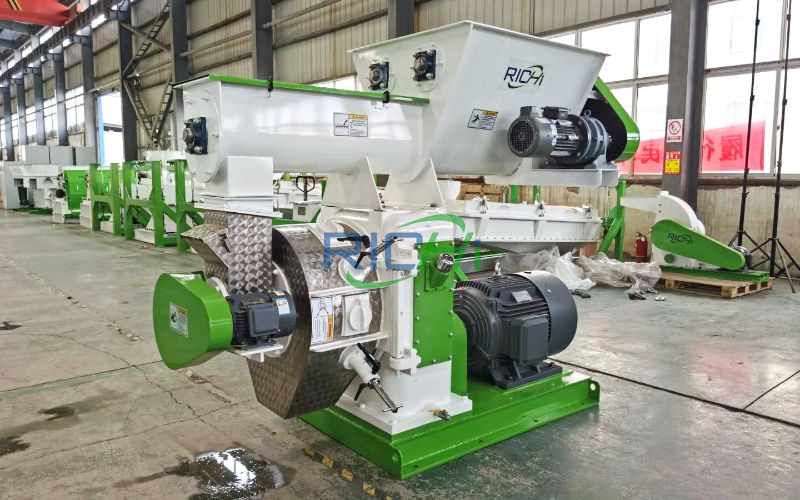
A biomass fuel producer near Kumasi selected one RICHI MZLH350 Good Straw Pellet Mill for Sale in Ghana to test commercial pellet production from locally collected agricultural residues. The company already had basic material receiving, shredding and grinding equipment, so it did not need a complete pellet production line at the first stage.
The main raw material is maize stalk collected after harvest from farms in and around the Ashanti Region. Rice straw and sorghum stalk are used as seasonal supplementary materials when suitable quantities are available, while small amounts of clean, untreated solid-wood residue can be introduced where the customer needs to adjust the physical behavior of the biomass blend. The final product is biomass fuel pellet for industrial and agro-processing heat applications.
Name:
Corn Straw Pellet Mill
Country:
Ghana
Date:
2026
Capacity:
0.3–0.5 T/H
Model:
MZLH350
Main Motor Power:
37 kW
Main Raw Material:
Maize stalk
Pellet diameter:
6–10 mm
The customer’s first objective was not to build a large biomass factory immediately.
Agricultural-residue projects depend heavily on collection radius, seasonal availability, moisture, contamination and the actual amount of residue that farmers are willing to sell.
This makes a single-machine project a practical first commercial step.
The customer can use the MZLH350 straw pellet making machine to evaluate several important questions before expanding:
This approach is particularly useful for straw because agricultural residue supply is not the same as buying a uniform industrial raw material.
Residues may be available in large theoretical quantities across a region, but only part of them can normally be recovered economically.
Some crop residues remain on farms, some have existing feed or soil-management uses, and collection costs rise rapidly when supply becomes geographically dispersed.
The MZLH350 therefore serves as the customer’s commercial pelletizing core while the upstream biomass collection system develops around it.
| Project Parameter | Configuration |
|---|---|
| Equipment | Straw biomass pellet mill |
| Model | MZLH350 |
| Main Motor | 37 kW |
| Arch Breaker | 2.2 kW |
| Forced Feeder | 0.75 kW |
| Reference Capacity | Approximately 0.3–0.5 T/H |
| Main Raw Material | Maize stalk |
| Supplementary Raw Materials | Rice straw, sorghum stalk and selected clean untreated solid-wood residues |
| Typical Pellet Diameter | Approximately 6–10 mm for biomass fuel applications |
| Main Application | Biomass fuel pellets |
| Project Type | Standalone pellet mill for pilot and small commercial production |
The MZLH350 provides a reference capacity of approximately 0.3–0.5 T/H for suitably prepared biomass.
This means capacity has to be connected to realistic annual operating hours.
If the machine runs eight effective pelleting hours per day for 300 days per year, theoretical annual production is approximately 720–1,200 tonnes before maintenance, changeovers and operating interruptions.
This capacity range fits a customer that wants to establish a local biomass-pellet market without immediately committing to a several-tonne-per-hour line.
Actual output changes with the material.
Dry maize stalk can behave differently from rice straw. Sorghum stalk can have different fibre characteristics, and a blend containing clean wood residue may change die resistance and pellet density.
RICHI therefore treats 0.3–0.5 T/H as a reference range rather than a guaranteed fixed throughput for every residue mixture.
Maize stalk is the organizing raw material for this Ghana project.
Ghana produces substantial maize volumes, and maize harvesting generates stalks, cobs and husks that can potentially enter biomass-energy routes where they are not already committed to other farm uses.
For the customer near Kumasi, maize stalk provides a stronger primary supply logic than trying to make rice straw, sorghum stalk, cassava peel and wood residue equally important.
Rice straw remains useful as a supplementary material where collection is practical.
Its fuel behavior, however, should not be treated as identical to maize stalk.
Rice straw can contain relatively high ash and mineral content, especially when soil contamination occurs during field collection.
This matters because pellet appearance alone does not determine whether a biomass fuel is suitable for a boiler.
High ash, silica and alkali content can influence slagging, fouling and ash handling.
Sorghum stalk can also enter the biomass mix when available, but seasonal supply and transport distance are checked before it becomes a regular commercial ingredient.
The customer therefore records each incoming residue by source, moisture and contamination level instead of treating all “straw” as one uniform feedstock.
Baled straw cannot normally be fed directly into an MZLH350 ring die pellet mill.
The preparation route starts by opening or breaking the bale and reducing long stalk material into a manageable intermediate size.
For many biomass projects, approximately 15–60 mm is a practical coarse-preparation region before fine grinding.
This is not the final pelletizing particle size.
The coarse stage with Bale Breaker Machine makes the material easier to convey, meter and feed into the hammer mill.
The hammer mill then reduces the material further to a particle distribution suitable for ring die pelletizing.
It is therefore incorrect to describe straw as being shredded directly from a bale to exactly 3–5 mm in one operation.
The process is more realistically:
bale receiving → bale opening or coarse shredding → foreign-material control → fine grinding → moisture adjustment → controlled feeding → MZLH350 pelletizing → cooling → screening.
Particle preparation affects both feeding and pellet formation.
Material that remains too long and fibrous can bridge in bins or feed inconsistently.
Excessive grinding, however, increases electricity consumption and can produce unnecessary dust.
The final hammer-mill screen therefore needs to be selected from actual straw behavior rather than from one universal particle-size rule.
Moisture is another key operating variable for straw pelletizing.
A low-teens moisture region can be a useful commissioning starting point for many dry biomass materials, but 12–15% should not be presented as the only correct value.
Freshly collected stalks, sun-dried bales and material stored through the rainy season can arrive in very different conditions.
If straw is too wet, drying may be necessary before fine grinding or pelletizing.
If it is already sufficiently dry, installing or operating a dryer unnecessarily would increase project cost and energy consumption.
The customer therefore measures the actual incoming material rather than designing the plant around an assumed moisture content.
Storage also matters.
Dry straw can reabsorb moisture if it is stored outdoors or directly on wet ground.
Covered storage, separation from soil and good first-in/first-out management help stabilize the feedstock before pellet production.
This is particularly important for rice straw because field soil carried into storage increases both ash content and abrasive contamination.
The customer has access to some wood residue from local woodworking activities, but wood is not automatically suitable just because it can be pelletized.
Only clean, traceable and untreated solid-wood residues are considered for the biomass fuel stream.
Painted timber, MDF, particleboard, laminated furniture board, preservative-treated wood and material with unknown coatings or adhesives are excluded from the clean fuel route.
This distinction is especially important when sourcing from furniture workshops.
A furniture producer may generate genuine solid-wood shavings alongside engineered board dust, laminate fragments and adhesive-contaminated waste.
These streams need to be kept separate before they reach the pellet mill.
RICHI also does not assume that adding mahogany, teak or another named hardwood will automatically increase calorific value or improve pellet density.
Wood species, moisture, ash, resin, particle size and blend ratio all influence pellet behavior.
If the customer introduces clean wood residue, the reason is process and market suitability rather than a generic claim that wood always makes a better pellet.
The main finished product is biomass fuel pellet for industrial heat users.
A diameter in the approximately 6–10 mm range can be considered depending on the customer’s boiler, handling system and market specification.
The final product is not judged only by whether the pellet looks dense and uniform.
Fuel buyers can also care about moisture, ash content, fines, bulk density, mechanical durability, net calorific value and ash behavior.
These factors are particularly important for agricultural residues because straw-derived fuel generally behaves differently from conventional clean wood pellets.
Rice straw, for example, can create higher ash-management demands than many woody fuels.
Soil contamination can make that problem worse.
The customer therefore needs to match the pellet specification with the intended boiler before scaling production.
This is more useful than manufacturing one generic straw pellet and assuming it can enter every biomass combustion system.
The customer also keeps this project focused on fuel.
MZLH biomass pellet equipment is not used here to make animal feed simply because maize and sorghum stalk can also be livestock materials in other contexts.
Feed production requires a different formulation, nutritional-control and feed-equipment route.
Purchasing one MZLH350 biomass pellet machine does not mean raw straw can enter the pellet mill at one end and finished bagged pellets leave the other.
The machine is a single pelletizing unit installed within the customer’s existing preparation system.
The surrounding equipment has to provide stable material at the correct size and moisture.
The arch breaker and forced feeder help deal with lightweight fibrous biomass, but they cannot compensate for poorly prepared long straw.
After pelletizing, the hot pellets require cooling before final screening and storage.
Screening removes loose fines generated during pelletizing and handling.
If the customer later increases output, the same interfaces become the basis for expansion.
A larger shredder, hammer mill, dryer where necessary, storage bins, cooler, screening system and bagging equipment can be sized around the new production target.
This gives the company a clear path from standalone biomass pellet mill testing toward a complete biomass pellet production line without discarding the knowledge gained during the first stage.
This Good Straw Pellet Mill for Sale in Ghana project uses one RICHI MZLH350 biomass pellet mill for small-scale commercial fuel-pellet production near Kumasi.
The machine uses a 37 kW main motor, 2.2 kW arch breaker and 0.75 kW forced feeder and provides a reference production range of approximately 0.3–0.5 T/H.
Maize stalk is the principal raw material.
Rice straw and sorghum stalk can supplement supply when collection conditions are suitable, while only clean untreated solid-wood residue is accepted into the woody fraction.
The raw material first passes through coarse size reduction before fine grinding.
Moisture is then checked and adjusted according to actual condition before the prepared biomass enters the MZLH350.
The finished 6–10 mm fuel pellets are cooled and screened before storage or sale.
The project is deliberately focused on one downstream application: biomass fuel.
This keeps raw-material acceptance, machine configuration and finished-pellet requirements technically consistent.
For another buyer searching for a Good Straw Pellet Mill for Sale in Ghana, straw pellet machine Ghana, maize stalk pellet mill, rice straw pellet machine, agricultural residue pellet mill, MZLH350 biomass pellet machine or small biomass pellet production equipment, RICHI first evaluates the recoverable dry raw material rather than only the amount of crop grown in the region.
Useful project information includes the main crop residue, available tonnes per month, collection radius, baled or loose form, incoming moisture, soil and foreign-material contamination, current shredding and grinding equipment, intended pellet diameter, boiler application and daily operating hours.
The customer should also explain the seasonal supply pattern.
A biomass pellet project with abundant maize stalk for three months but limited dry storage needs a different receiving and inventory plan from a project receiving smaller quantities throughout the year.
If rice straw is an important part of the mix, ash content and boiler compatibility become particularly important.
If clean wood residue will be blended, its source and treatment history should be confirmed before it is accepted.
At 0.3–0.5 T/H, one MZLH350 is suitable for pilot and small commercial biomass production.
If the customer later requires several tonnes per hour, RICHI can evaluate larger MZLH models and the complete preprocessing, cooling, screening and packaging system rather than forcing one MZLH350 beyond its intended capacity.
For a Ghana straw-pellet project, send RICHI your raw-material photos, monthly dry tonnage, straw type, moisture, bale dimensions, current particle size, target pellet diameter, operating hours and existing equipment list. These details allow the pellet mill and supporting process to be matched to the actual biomass supply rather than an assumed national residue volume.
Having the right mix of reliable, high-quality pellet machine and pelletizing systems and expert support is essential to your success. Watch how our end-to-end feed pellet plant solutions have helped our customers optimize their performance.
Our customized and future-proofed turnkey pellet plant solutions is designed with you at the core. From vision to reality and beyond, our team stays connected with yours. Giving you peace-of-mind with an expert at your side.
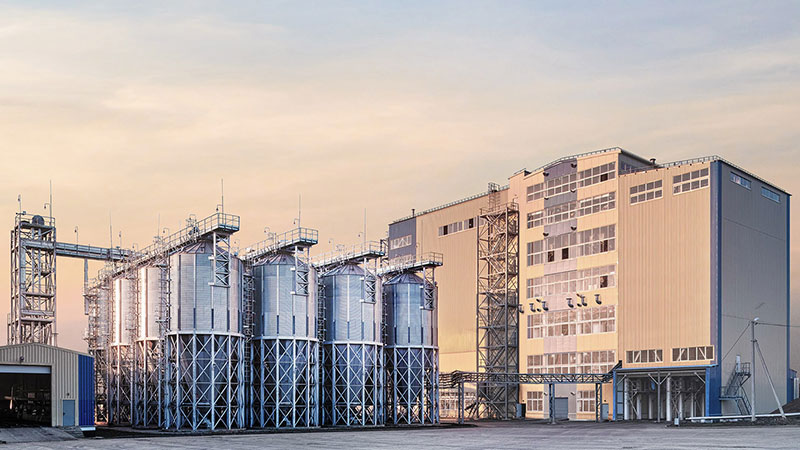
At RICHI, we go beyond project completion. With RICHI Servicee, we’re your dedicated partners in success. Count on us for expert guidance, minimal downtime, and optimized productivity. Choose RICHI for unmatched service and support.
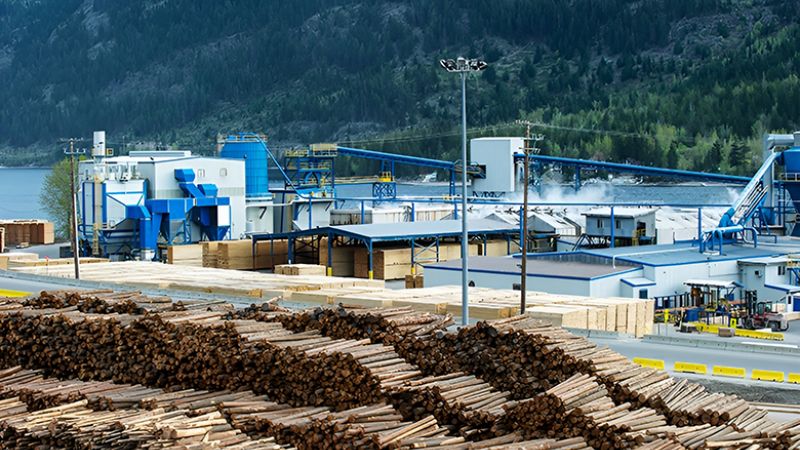


Meet global product demands and quality standards with industry-leading pellet plant design, engineering, equipment, and construction services for pellet processors.


Your Partner Beyond Project Completion
2000+ cases
RICHI is the leading designer, manufacturer and builder of pellet plants in the world, completing over 2000 projects in 140 countries across 6 continents.
Read More
Increase plant productivity, profitability, and safety by integrating high quality equipment into your pellet production line. Over the years, RICHI has become China's top pellet equipment manufacturer. At the same time, RICHI has established valuable partnerships with the world's leading component and raw material manufacturers to bring you the best there is in technology, automation, and efficiency in pelleting plant machinery.

For nearly 30 years, RICHI has been providing best-in-class pellet plant equipment and services to clients across a variety of industries, sizes, and needs. We pride ourselves on the knowledge and skill that each team member possesses – from our technical sales team to our process design engineers. You can count on RICHI Machinery to take your operation to the next level of innovation, quality, and success.
Need help with your pellet manufacturing plant project? Contact us today.
ANIMAL FEED
BIOMASS
WOOD
ORGANIC FERTILIZER
AQUA FEED
CAT LITTER
MUNICIPAL WASTE RECYCLING
SPECIAL PELLET PRODUCTION
RICHI Machinery continues to deliver world class pellet mill equipment, pellet plant engineering and project solutions that add value to our customers in the animal feed, wood waste, agriculture waste, organic fertilizer, cat litter and special pellet products industries. Throughout the years, we RICHI Machinery have built strong brand, becoming industry-leading pellet machine manufacturer. We value integrity, promise quality, and prioritize your success.
Learn MoreWith our expert team, we precisely implement your process engineering requirements in pellet mill and pelletizing plant systems. No matter which industry you’re in – we understand your needs and deliver solutions that meet the highest standards.
At RICHI, quality comes first. Our pellet making machine and related pellet line equipment undergo rigorous quality controls to ensure they meet the highest standards. Rely on products that are durable, safe, and efficient.
With decades of experience in pellet machine and pellet production line production, we have earned a reputation as a trusted partner in various industries. Our expertise allows us to cover a wide range of applications.
Not only do we offer premium pelleting equipment, but we are also experts at designing, building, installing, and maintaining facilities from the ground up. Our expertise is within pellt plant process design, discovering the most efficient, productive, and profitable way to handle your materials in an end-to-end cycle.
○ RICHI MACHINERY
Keeping in touch with us is an effective way to solve all your problems. If you have any needs or questions, please leave your contact information, then RICHI technical consultants will send design, quotation, videos to your mailbox. You can also contact us directly via WhatsApp: +86 13838389622
Copyright©2015-2026 by HENAN RICHI MACHINERY CO., LTD. All rights reserved.