
A Nigerian feed mill uses an SFSP66×80 goat feed hammer mill to grind prepared maize stover, dried forage and selected fibrous ingredients before mixing and pelletizing goat feed.
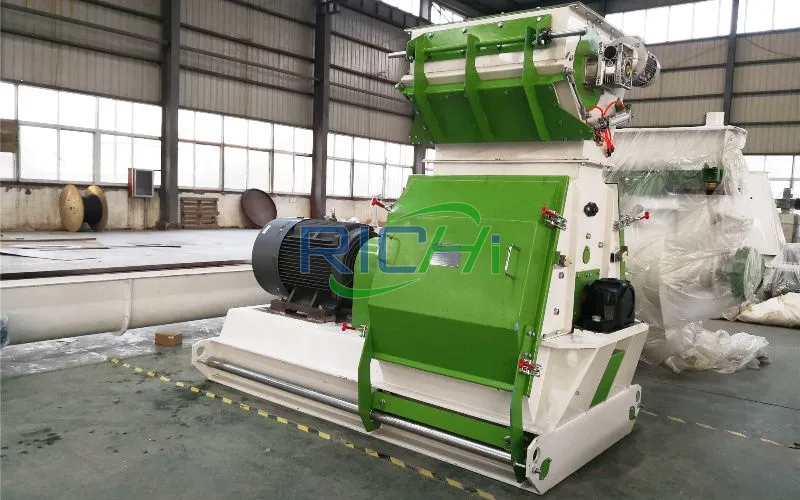
A medium-scale animal feed manufacturer in southwestern Nigeria selected one SFSP66×80 Goat Feed Hammer Mill for Sale in Nigeria to replace the weak grinding stage in its existing goat-feed production system. The plant already had ingredient storage, a batch mixer and ring-die pelletizing equipment, but its smaller grinder struggled when production shifted from mainly grain-based feeds toward formulas containing more dried forage and crop residues.
The SFSP66×80 was therefore purchased as a standalone secondary grinder rather than as part of a complete new feed mill. With a 75 kW main motor and approximately 2.0–2.5 T/H reference capacity on suitably prepared fibrous feed materials, the machine gives the customer enough grinding capacity for commercial goat-feed campaigns while allowing the existing mixing and pelletizing sections to remain in service.
Name:
forage and feed hammer mill
Country:
Nigeria
Date:
2026
Capacity:
2.0–2.5 T/H
Model:
SFSP66×80
Power:
75 kW
Rotating Speed:
2980 rpm
Hammer Tip Speed:
103 m/s
The customer's production includes pelletized supplemental feeds for growing goats, breeding animals and commercial fattening operations.
Whole maize can be ground relatively easily, but the plant also uses fibrous ingredients that behave very differently inside a hammer mill. Dried grass occupies much more volume per tonne, maize stalk contains tough stem sections, and browse leaves can produce a mixture of fragile leaf particles and harder woody material.
The smaller grinder previously used by the customer was suitable for moderate cereal grinding but became difficult to feed consistently when these lower-density ingredients were introduced.
The new machine therefore had to solve a material-handling problem as much as a motor-capacity problem.
| Project Parameter | Configuration |
|---|---|
| Equipment | Secondary forage and feed hammer mill |
| Model | SFSP66×80 |
| Quantity | 1 unit |
| Rotor Diameter | 660 mm |
| Grinding Chamber Width | 800 mm |
| Main Motor Power | 75 kW |
| Rotating Speed | Approximately 2980 rpm |
| Hammer Tip Speed | Approximately 103 m/s |
| Reference Forage Capacity | Approximately 2.0–2.5 T/H under suitable pre-cut conditions |
| Main Materials | Prepared maize stover, dried forage and selected browse ingredients |
| Downstream Use | Mixing and goat feed pellet production |
| Installation Type | Standalone replacement grinder inside an existing feed plant |
The 2.0–2.5 T/H figure refers to properly prepared fibrous materials rather than every ingredient passing through the feed mill.
Dry maize grain can generally achieve a different throughput from low-density forage on the same hammer-mill family. Actual production changes with material type, incoming chop length, moisture, screen opening, hammer condition and the particle distribution required by the pelletizing section.
Maize cultivation creates stalks, leaves, husks and other residues that can be used in Nigerian ruminant-feeding systems when their nutritional limitations are understood.
These materials are fibrous and substantially different from maize grain.
For the feed mill, maize stover is collected dry and inspected before processing. Soil-heavy stem bases, stones, wire and other contaminants are separated because they add no feed value and increase hammer and screen wear.
Long stalks are then chopped before they reach the SFSP66×80.
The hammer mill performs secondary size reduction. It is not expected to accept whole field-length maize stalks directly.
Dried elephant grass and other suitable forage materials can be incorporated into ruminant feeding systems, but long dry stems have very low bulk density and can bridge above a hammer-mill inlet.
The feed mill therefore uses preliminary chopping or shredding before secondary grinding.
Once stem length has been reduced to a manageable condition, the SFSP66×80 can produce a more consistent fibrous meal for the mixer.
This sequence avoids forcing the hammer mill to perform bale opening, coarse chopping and fine grinding at the same time.
Gliricidia and Leucaena are among the browse materials known in Nigerian small-ruminant feeding, but they should not be treated as interchangeable high-protein powders.
Dried leaves break readily and can create fine particles, while stems and petioles remain coarser.
The operator therefore evaluates the physical form of the material before deciding whether the entire dried branch material should pass through the hammer mill or whether leafy fractions should be prepared separately.
Nutrition also matters. Leucaena contains compounds that limit unrestricted inclusion, so its use in goat feed has to follow proper ration formulation rather than simply increasing the amount because the material is locally available.
The customer uses the grinder only where actual size reduction is required.
This prevents unnecessary energy consumption and avoids sending already-fine ingredients through another aggressive grinding step.
The Goat Feed Hammer Mill for Sale in Nigeria operates between coarse forage preparation and the customer's mixing section.
A representative production route is:
This keeps each machine responsible for one clearly defined processing function.
The original objective of grinding every fibrous material to exactly 2–4 mm is too rigid for practical goat-feed production.
A hammer-mill screen produces a distribution of particle sizes rather than identical particles.
For material entering a ring-die pellet mill, a few-millimeter fibrous meal can be appropriate because excessively long fibres interfere with feeding and die compression.
The exact screen is selected from the forage type, pellet diameter and required feed structure.
Using a smaller screen than necessary reduces throughput, increases electrical demand and creates more fines without automatically improving nutritional value.
Goats are ruminants and still require adequate physical fibre.
The customer's pelletized product is therefore treated as a formulated feed or supplement rather than automatically replacing every long forage offered on the farm.
Hay, browse and other structural roughage can continue to be supplied separately depending on the feeding system.
The SFSP66×80 processes the portion intended for manufactured feed production.
This distinction prevents the feed plant from reducing every available forage to fine meal simply because it owns a high-capacity grinder.
A hammer mill cannot turn low-quality maize stalk into a high-protein ingredient.
Particle-size reduction can improve mechanical handling, mixing and pellet formation, but the nutritional composition of the raw material remains determined by the crop, maturity, storage and contamination level.
Maize stover is therefore balanced with suitable energy and protein ingredients rather than treated as nutritionally equivalent to good legume forage.
Likewise, adding more browse material because it contains protein does not remove the need to evaluate fibre, anti-nutritional factors and total ration balance.
Dry fibrous material fractures more readily than damp forage.
If maize stalk or grass absorbs moisture during outdoor storage, fibres become more difficult to break and may pass through the grinding chamber less efficiently.
Higher moisture can therefore reduce output and increase the risk of screen loading.
The plant stores dry forage under cover and avoids feeding weather-damaged material into the grinder simply to clear storage space.
The hammer mill is a size-reduction machine, not a dryer.
The SFSP66×80 would be difficult to justify for a small goat farm grinding a few hundred kilograms of forage each day.
This customer is different. It manufactures feed commercially for multiple farms and processes fibrous ingredients in concentrated production campaigns.
At approximately 2.0–2.5 T/H forage capacity, several tonnes of prepared material can be ground during one production period and accumulated in a buffer for multiple mixer batches.
The grinder therefore does not need to operate continuously at exactly the same rate as the mixer or pellet press.
The commercial feed-mill scale is what makes the 75 kW configuration reasonable.
The SFSP66×80 feed crusher machine operates continuously while the plant's mixer works in batches.
Without intermediate storage, the grinder would need to stop whenever one mixing cycle ended.
A buffer bin receives the ground fibrous material and allows the mixer to draw the required amount for each formulation.
This arrangement also helps accommodate changes in actual hammer-mill throughput between lightweight grass and tougher maize stalk.
Buffer sizing is based on mixer batch weight, grinding rate, production schedule and available installation height.
One tonne of maize stover occupies much more space than one tonne of maize grain.
The feeding system therefore has to control volume as well as mass.
If a large quantity of fluffy material enters suddenly, the grinding chamber can overload even though the actual mass flow remains modest. If feeding becomes intermittent, the rotor alternates between low load and sudden surges.
The operator monitors feed rate together with motor current and product condition.
Stable feeding is often more important than simply installing additional motor power.
A relatively open screen allows prepared forage to leave the chamber sooner and generally supports higher throughput.
A finer screen increases the number of impacts required before the material can escape.
This affects:
The feed mill therefore keeps multiple screen options available rather than defining one permanent setting for grass, maize residue and browse materials.
Dried leaves, maize stalk and grass can generate substantial airborne fines during hammer milling.
The grinding section therefore requires enclosed conveying and an appropriate aspiration or dust-separation arrangement.
Correct airflow also helps remove ground material after it passes through the screen.
Allowing dust to accumulate around motors, bearings and structural surfaces creates housekeeping and safety problems.
Dust management is therefore part of the grinding system rather than an optional improvement added after installation.
Crop residues collected close to the ground can carry sand and soil into the feed plant.
These mineral contaminants are highly abrasive compared with most plant fibre.
The customer therefore checks incoming material and removes contaminated lower stalk sections where practical.
Magnetic protection is installed ahead of the grinder for ferrous objects, but magnets cannot remove stones or sand.
Good raw-material purchasing and cleaning can therefore reduce wear as effectively as changing hammer material.
Hammers do not need to break completely before they affect production.
As the striking edges become rounded, grinding efficiency can decline and the material may require more impacts before passing through the screen.
The operator checks hammer condition together with screen wear, rotor balance and bearings.
Maintenance intervals are based on actual material cleanliness and tonnes processed rather than a fixed promise such as 500 or 800 operating hours.
Maize residue carrying sand can shorten wear life substantially compared with clean dried grass.
The customer does not select hammer-mill screens independently from the pelletizing section.
Long fibres can interfere with consistent ring-die feeding, while excessive fines may consume unnecessary grinding power and alter pellet structure.
The feed mill therefore evaluates the ground material at the mixer and pellet mill rather than judging quality only at the hammer-mill discharge.
If a coarser screen still produces stable mixing and pellet formation, there is little reason to spend additional electricity making the material finer.
Grinding screen size should not be confused with final pellet diameter.
The animal feed hammer mill prepares the raw material. The ring die determines the nominal pellet diameter during the later forming stage.
A feed plant may use fibrous material ground through a several-millimeter screen and still produce a different finished pellet diameter.
The correct combination depends on formula composition, goat category, pellet quality and equipment configuration.
This is why specifying a 4 mm hammer-mill screen does not mean the plant must manufacture 4 mm feed pellets.
A 75 kW motor does not consume the same amount of electricity per tonne under every grinding duty.
Well-prepared dry forage passing through a relatively open screen can be processed differently from tough maize stalk forced through a fine screen.
Energy use per tonne depends on actual load, throughput, material moisture, screen area and hammer condition.
The project therefore does not claim a fixed percentage reduction in power consumption compared with the customer's earlier grinder without measured operating data.
A commercial Nigerian feed mill installing this machine needs an electrical system capable of starting and operating the 75 kW motor reliably.
Site preparation includes checking:
Where generator backup forms part of the plant's power strategy, the complete simultaneous load has to be considered rather than sizing backup generation from the hammer mill alone.
Because the customer already operates a feed factory, the new grinder has to fit an established building and process layout.
The installation review covers feed-inlet height, upstream conveyor capacity, magnetic separation, ground-material discharge, aspiration ducting, buffer-bin position and access for changing screens.
Maintenance clearance around the grinding chamber is particularly important. A machine can fit physically between two conveyors and still be difficult to maintain if there is insufficient room to remove screens or inspect the rotor.
The foundation and structural load are also confirmed before equipment positioning.
The SFSP66×80 is prepared for sea transport from Qingdao to the Lagos port area before inland movement to the customer's feed-production site in southwestern Nigeria.
The Lagos Port Complex handles containerized and general cargo and provides road and rail connections into the Nigerian hinterland.
Before shipment, the customer receives equipment dimensions, electrical requirements, foundation information, material inlet and discharge data and maintenance-clearance requirements so that site preparation can proceed before the machine arrives.
Ocean schedules, customs handling and inland transport are coordinated according to the confirmed shipment rather than presented as one fixed delivery period.
If goat-feed sales increase, the customer first needs to identify the actual production restriction.
The SFSP66×80 may still have unused capacity while coarse chopping becomes too slow. In another situation, the mixer, pellet mill, cooler or packing section may become the limiting stage.
Adding another hammer mill only makes sense when prepared forage regularly accumulates ahead of the existing machine and the downstream equipment can accept additional ground material.
Expansion therefore follows measured plant flow rather than assuming every growing feed business needs a second grinder.
A Goat Feed Hammer Mill for Sale in Nigeria should be selected from the physical condition of the ingredients that actually require grinding. Whole maize, chopped maize stover, dry grass, browse leaves, bran and premix cannot be treated as one identical raw material simply because they eventually appear in goat feed.
For another Nigerian feed mill, RICHI Machinery would first review annual forage volume, raw-material form, incoming chop length, moisture, maize-residue contamination, desired particle distribution, mixer capacity, pellet-mill capacity, daily operating hours, buffer-bin volume, aspiration arrangement, electrical supply and available maintenance space.
Those details determine whether the SFSP66×80 provides the right balance or whether a smaller or larger hammer mill should be selected for the grinding section.
Having the right mix of reliable, high-quality pellet machine and pelletizing systems and expert support is essential to your success. Watch how our end-to-end feed pellet plant solutions have helped our customers optimize their performance.
Our customized and future-proofed turnkey pellet plant solutions is designed with you at the core. From vision to reality and beyond, our team stays connected with yours. Giving you peace-of-mind with an expert at your side.
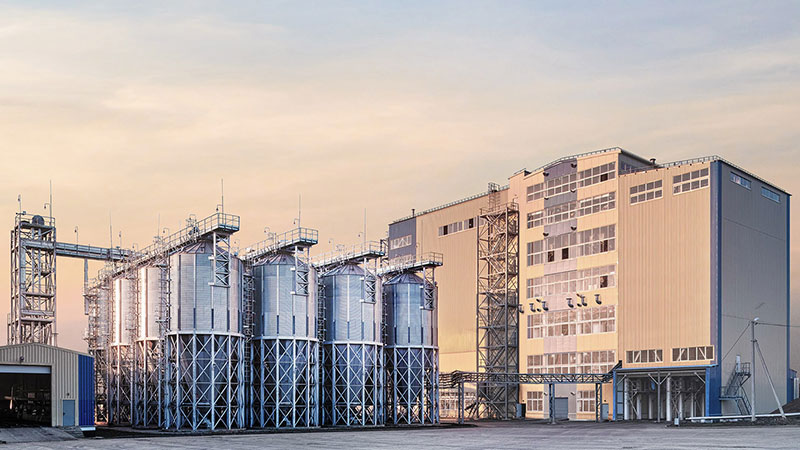
At RICHI, we go beyond project completion. With RICHI Servicee, we’re your dedicated partners in success. Count on us for expert guidance, minimal downtime, and optimized productivity. Choose RICHI for unmatched service and support.
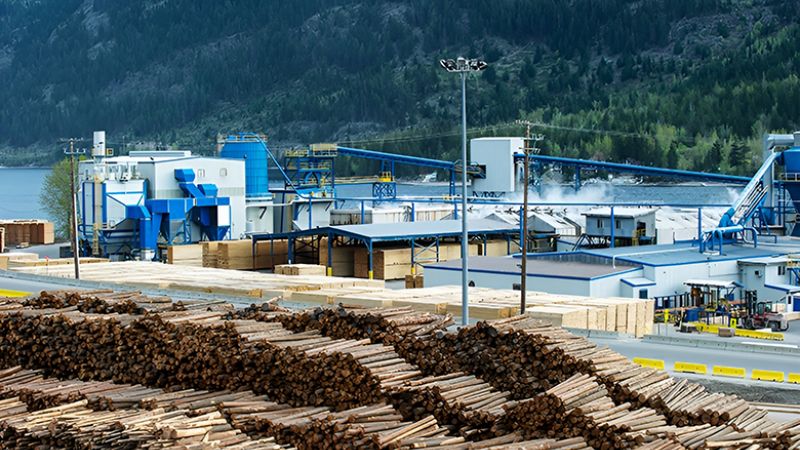


Meet global product demands and quality standards with industry-leading pellet plant design, engineering, equipment, and construction services for pellet processors.

Your Partner Beyond Project Completion
2000+ cases
RICHI is the leading designer, manufacturer and builder of pellet plants in the world, completing over 2000 projects in 140 countries across 6 continents.
Read More
Increase plant productivity, profitability, and safety by integrating high quality equipment into your pellet production line. Over the years, RICHI has become China's top pellet equipment manufacturer. At the same time, RICHI has established valuable partnerships with the world's leading component and raw material manufacturers to bring you the best there is in technology, automation, and efficiency in pelleting plant machinery.

For nearly 30 years, RICHI has been providing best-in-class pellet plant equipment and services to clients across a variety of industries, sizes, and needs. We pride ourselves on the knowledge and skill that each team member possesses – from our technical sales team to our process design engineers. You can count on RICHI Machinery to take your operation to the next level of innovation, quality, and success.
Need help with your pellet manufacturing plant project? Contact us today.
ANIMAL FEED
BIOMASS
WOOD
ORGANIC FERTILIZER
AQUA FEED
CAT LITTER
MUNICIPAL WASTE RECYCLING
SPECIAL PELLET PRODUCTION
RICHI Machinery continues to deliver world class pellet mill equipment, pellet plant engineering and project solutions that add value to our customers in the animal feed, wood waste, agriculture waste, organic fertilizer, cat litter and special pellet products industries. Throughout the years, we RICHI Machinery have built strong brand, becoming industry-leading pellet machine manufacturer. We value integrity, promise quality, and prioritize your success.
Learn MoreWith our expert team, we precisely implement your process engineering requirements in pellet mill and pelletizing plant systems. No matter which industry you’re in – we understand your needs and deliver solutions that meet the highest standards.
At RICHI, quality comes first. Our pellet making machine and related pellet line equipment undergo rigorous quality controls to ensure they meet the highest standards. Rely on products that are durable, safe, and efficient.
With decades of experience in pellet machine and pellet production line production, we have earned a reputation as a trusted partner in various industries. Our expertise allows us to cover a wide range of applications.
Not only do we offer premium pelleting equipment, but we are also experts at designing, building, installing, and maintaining facilities from the ground up. Our expertise is within pellt plant process design, discovering the most efficient, productive, and profitable way to handle your materials in an end-to-end cycle.
○ RICHI MACHINERY
Keeping in touch with us is an effective way to solve all your problems. If you have any needs or questions, please leave your contact information, then RICHI technical consultants will send design, quotation, videos to your mailbox. You can also contact us directly via WhatsApp: +86 13838389622
Copyright©2015-2026 by HENAN RICHI MACHINERY CO., LTD. All rights reserved.