
A commercial feed manufacturer in Nakuru uses one SFSP66×100 hammer mill to prepare dry forage, maize residues and selected ingredients for goat feed pellet production.
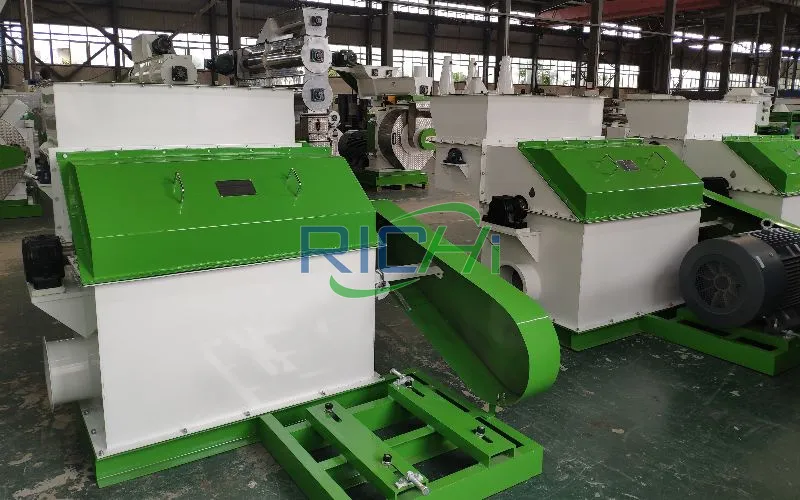
A regional feed manufacturer in Nakuru County selected one SFSP66×100 Goat Feed Hammer Mill for Sale Kenya unit to strengthen the grinding stage used for commercial goat pellets and small-ruminant concentrates. The mill already operated ingredient storage, batching, mixing, pelletizing, cooling and bagging equipment, so the purchase focused on one grinder rather than another complete feed production line.
The SFSP66×100 uses a 660 mm rotor, 1000 mm grinding chamber, 110 kW main motor and approximately 2980 rpm rotor speed. For this project, about 3–4 T/H is treated as a practical reference when processing suitably dry, pre-cut fibrous materials for pellet-feed preparation. Grain throughput can differ substantially, so the customer does not apply one T/H figure to every ingredient.
Name:
Hammer mill for goat feed ingredient
Country:
Kenya
Date:
2026
Capacity:
3–4 T/H
Model:
SFSP66×100
Power:
110 kW
Raw Materials:
Grains, napier grass, maize stover, legume hay
Final product size:
4–6 mm
The plant had enough mixing and pelletizing capacity for its sales plan, but the grinding section could not prepare dry forage and selected coarse ingredients at the required rate. Installing one SFSP66×100 allowed the customer to increase prepared-material flow while continuing to use the surrounding process equipment. This kept the investment centered on the actual bottleneck instead of rebuilding a feed mill that was otherwise usable.
| Project Parameter | Configuration |
|---|---|
| Equipment | Hammer mill for goat feed ingredient preparation |
| Model | SFSP66×100 |
| Quantity | 1 unit |
| Main Motor Power | 110 kW project configuration |
| Rotor Diameter | 660 mm |
| Grinding Chamber Width | 1000 mm |
| Rotating Speed | Approximately 2980 rpm |
| Hammer Tip Speed | Approximately 103 m/s |
| Reference Forage Capacity | Approximately 3–4 T/H under suitable dry, pre-cut conditions |
| Typical Working Screens | Approximately 4–6 mm depending on ingredient and pellet specification |
| Main Materials | Prepared dry Napier grass, maize stover, legume hay and selected grains |
| Downstream Use | Mixing and ring-die pellet production |
| Installation Type | Standalone grinding upgrade |
The 3–4 T/H figure belongs to the fibrous-feed duty in this project and should not be interpreted as a universal output for maize or other dense grains. Real capacity depends on moisture, incoming fibre length, screen opening, bulk density, feeder stability and hammer condition. A finer screen usually lowers tonnes per hour because material remains inside the chamber for more impacts before discharge.
Napier grass is relevant to Kenyan ruminant feeding, but freshly cut material contains too much water and has long flexible stems that are unsuitable for direct fine hammer milling. When the customer uses Napier in a pellet formulation, the forage is first dried or conserved to a suitable condition and reduced to a manageable length. The SFSP66×100 then performs secondary grinding rather than acting as a forage harvester or dryer.
Maize stalks, leaves and husks can enter goat-feed formulations as a low-cost fibrous ingredient, but field residues are not fed into the grinder as whole stalks. The customer first removes excessive soil and foreign material, then chops the dry residue to a manageable length. This improves feeder stability and keeps long fibres from bridging above the grinding chamber or wrapping around upstream conveying components.
Desmodium hay, lucerne and other suitable legume forages can contribute more protein than mature cereal residues, but they still need quality control before grinding. Leaf loss, stem maturity, mould and moisture vary between batches. The animal feed hammer mill only prepares particle size, so the nutritionist decides inclusion rates from feed analysis and the target goat ration rather than from grinding behavior.
Dense maize grain flows through a hammer mill very differently from chopped dry forage. One tonne of forage occupies much more volume and can limit feeder loading before motor power becomes the main restriction. The plant therefore plans grain campaigns and forage campaigns separately, using actual material behavior to set feeder rate and screen selection. This avoids overstating fibrous throughput from a capacity figure measured on cereal grain.
The relatively fine material from this project is intended for mixing and subsequent ring-die pelleting. It is not a recommendation to grind every kilogram of forage fed to goats into fine meal. Farms may still provide hay, browse or another effective-fibre component outside the pellet. The feed manufacturer formulates the pellet as part of a complete feeding program rather than treating grinding as a nutrition strategy.
A 4–6 mm hammer-mill screen provides a practical trial range for dry fibrous ingredients entering a pellet process, but the discharge is still a distribution of particles rather than uniform 4 mm or 6 mm pieces. Grain fractions may need finer preparation than chopped forage, and very fine grinding raises dust and energy use. The customer therefore evaluates mixer uniformity and pellet-machine feeding before settling on each screen.
The Goat Feed Hammer Mill for Sale Kenya performs best when dry material enters the chamber at a steady rate. Low-density forage can surge or bridge if a large pile is allowed to fall into the inlet at once, while dense grain creates a different motor-load pattern. A controlled feeder and suitable buffer keep the rotor working within a stable load range, and operators watch current together with discharge condition when adjusting throughput.
Dry forage and crop residues can pick up wire, nails or small ferrous fragments during baling, storage and transport. A magnetic point ahead of the hammer mill reduces the risk of such material reaching the high-speed rotor and screen. It does not remove stones, plastic twine or non-ferrous debris, so visual inspection and mechanical cleaning remain important when the feed mill buys fibrous ingredients from multiple agricultural suppliers.
Plastic string is not a feed ingredient and should not be expected to disappear inside a hammer mill. Long strands can wrap around shafts, remain in the ground material or interfere with conveying. When baled hay enters the factory, wrapping and twine are taken away during bale opening. This simple handling step protects the grinder and prevents foreign plastic from being distributed through the mixer and pelletizing section.
Maize stover and forage collected close to the ground can carry soil into the plant. Sand accelerates wear on hammers and screens, increases ash in the feed and occupies weight that contributes no useful nutrition. The customer therefore keeps dry forage on clean storage surfaces and rejects heavily contaminated loads. Better incoming-material control can reduce maintenance demand more effectively than relying only on harder wear parts.
A smaller screen keeps material inside the grinding chamber longer and increases the number of hammer impacts before discharge. This can improve fineness but usually reduces throughput and raises power use per tonne. The plant therefore avoids the finest screen by default. A coarser specification is preferred whenever the mixer and pellet mill can accept it without poor feed uniformity or unstable pellet formation.
The hammer mill main drive accounts for 110 kW, but the grinding section also needs power for the feeder, conveyors and aspiration system. The factory therefore checks transformer capacity, motor starting, cables, protection and the simultaneous demand of nearby feed equipment. A grinder can be mechanically suitable for the required T/H and still be a poor retrofit if the site's electrical system cannot support the full operating section.
Dry forage grinding creates light fibres and airborne fines, so suitable airflow is required around the hammer mill and downstream separation system. Aspiration helps ground material leave the screen area and reduces dust escape into the workshop, but fan capacity has to match duct resistance and material behavior. Excessive suction can carry too much product into the filter, while insufficient airflow can reduce effective grinding performance.
A 3–4 T/H fibrous grinding rate is useful only when prepared material can move into batching and mixing without creating a new bottleneck. The customer compares mixer batch weight, cycle time and buffer capacity with the grinder's campaign rate. If the mixer cannot accept material continuously, an intermediate bin can separate grinding from batching so the hammer mill does not stop after every mixer cycle.
Ground forage and grain are combined with protein meals, minerals and other formulated ingredients before pelleting. Long fibres can interfere with ring-die feeding, while excessive fines can raise dust and energy demand. The plant therefore uses the pelletizing section as a practical check on grinding quality. If the pellet mill feeds steadily and finished pellets meet the physical specification, finer grinding offers little additional value.
The hammer mill cannot determine crude protein, energy, mineral balance or fibre level. Kenyan goat feeds may use maize products, wheat by-products, sunflower or cottonseed meals, legume forage and mineral premixes according to availability and the nutrition target. The feed manufacturer formulates the ration before processing, while the grinder only prepares the physical condition required for mixing and pelleting.
The SFSP66×100 can be shipped from Qingdao to Mombasa before inland transport to Nakuru County. The customer can prepare the foundation, inlet and outlet heights, electrical supply, aspiration ducting and maintenance clearance from confirmed installation drawings while the cargo is in transit. Shipping schedules, terminal handling and inland delivery are coordinated from the actual booking rather than one fixed transport period.
If goat-feed sales increase, the customer should first check daily operating hours and whether prepared forage regularly waits ahead of the SFSP66×100. More grinder capacity adds little value if mixing, pelletizing or bagging already restricts output. The next investment should follow measured material flow through the whole plant rather than an assumption that another hammer mill automatically increases feed sales.
A Goat Feed Hammer Mill for Sale Kenya should be selected from the material that truly requires size reduction. For another Kenyan project, RICHI Machinery would review forage type, bale or stalk form, incoming moisture, chopping method, grain share, target screen, hourly grinding demand, operating hours, mixer capacity, pellet-mill capacity, aspiration, electrical supply and available installation space before confirming the machine size.
Those details determine whether an SFSP66×100 is appropriate or whether a smaller hammer mill would provide better utilization. A farm grinding occasional forage batches has a very different requirement from a regional feed manufacturer running several tonnes per hour, so model selection should follow prepared-material volume and downstream demand rather than the number of goats in the sales area.
Having the right mix of reliable, high-quality pellet machine and pelletizing systems and expert support is essential to your success. Watch how our end-to-end feed pellet plant solutions have helped our customers optimize their performance.
Our customized and future-proofed turnkey pellet plant solutions is designed with you at the core. From vision to reality and beyond, our team stays connected with yours. Giving you peace-of-mind with an expert at your side.
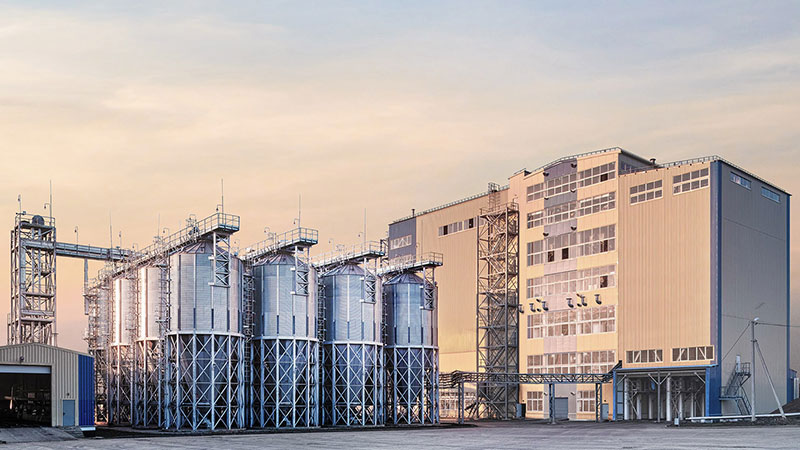
At RICHI, we go beyond project completion. With RICHI Servicee, we’re your dedicated partners in success. Count on us for expert guidance, minimal downtime, and optimized productivity. Choose RICHI for unmatched service and support.
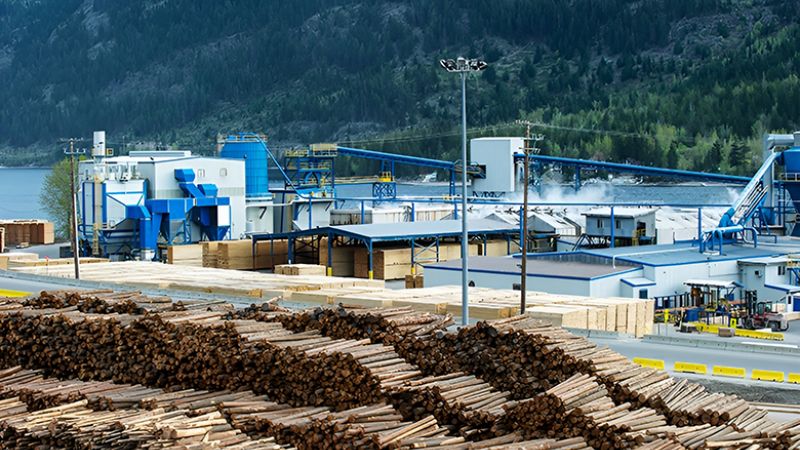


Meet global product demands and quality standards with industry-leading pellet plant design, engineering, equipment, and construction services for pellet processors.


Your Partner Beyond Project Completion
2000+ cases
RICHI is the leading designer, manufacturer and builder of pellet plants in the world, completing over 2000 projects in 140 countries across 6 continents.
Read More
Increase plant productivity, profitability, and safety by integrating high quality equipment into your pellet production line. Over the years, RICHI has become China's top pellet equipment manufacturer. At the same time, RICHI has established valuable partnerships with the world's leading component and raw material manufacturers to bring you the best there is in technology, automation, and efficiency in pelleting plant machinery.

For nearly 30 years, RICHI has been providing best-in-class pellet plant equipment and services to clients across a variety of industries, sizes, and needs. We pride ourselves on the knowledge and skill that each team member possesses – from our technical sales team to our process design engineers. You can count on RICHI Machinery to take your operation to the next level of innovation, quality, and success.
Need help with your pellet manufacturing plant project? Contact us today.
ANIMAL FEED
BIOMASS
WOOD
ORGANIC FERTILIZER
AQUA FEED
CAT LITTER
MUNICIPAL WASTE RECYCLING
SPECIAL PELLET PRODUCTION
RICHI Machinery continues to deliver world class pellet mill equipment, pellet plant engineering and project solutions that add value to our customers in the animal feed, wood waste, agriculture waste, organic fertilizer, cat litter and special pellet products industries. Throughout the years, we RICHI Machinery have built strong brand, becoming industry-leading pellet machine manufacturer. We value integrity, promise quality, and prioritize your success.
Learn MoreWith our expert team, we precisely implement your process engineering requirements in pellet mill and pelletizing plant systems. No matter which industry you’re in – we understand your needs and deliver solutions that meet the highest standards.
At RICHI, quality comes first. Our pellet making machine and related pellet line equipment undergo rigorous quality controls to ensure they meet the highest standards. Rely on products that are durable, safe, and efficient.
With decades of experience in pellet machine and pellet production line production, we have earned a reputation as a trusted partner in various industries. Our expertise allows us to cover a wide range of applications.
Not only do we offer premium pelleting equipment, but we are also experts at designing, building, installing, and maintaining facilities from the ground up. Our expertise is within pellt plant process design, discovering the most efficient, productive, and profitable way to handle your materials in an end-to-end cycle.
○ RICHI MACHINERY
Keeping in touch with us is an effective way to solve all your problems. If you have any needs or questions, please leave your contact information, then RICHI technical consultants will send design, quotation, videos to your mailbox. You can also contact us directly via WhatsApp: +86 13838389622
Copyright©2015-2026 by HENAN RICHI MACHINERY CO., LTD. All rights reserved.