
Production capacity was not the problem at this Belgian feed mill. The bottleneck appeared after the feed had already been produced.
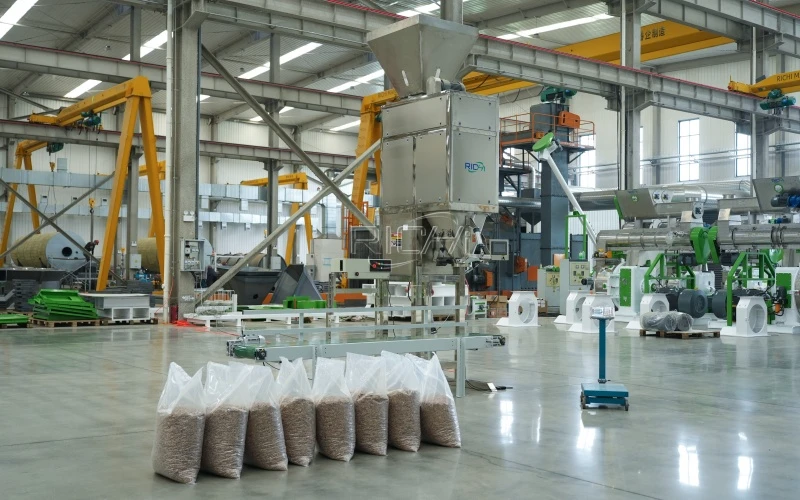
Production capacity was not the problem at this Belgian feed mill. The bottleneck appeared after the feed had already been produced.
The customer operated a medium-sized commercial feed facility supplying formulated feed for livestock farms in its regional market. Its existing grinding, batching, mixing and pelleting sections were still suitable for current production, but the finished-feed packing area had become increasingly inconvenient as the mill handled more bagged orders alongside bulk deliveries.
Rather than replacing equipment that was already performing well, the company purchased one formulated feed bagging machine in Belgium from RICHI Machinery. A DCS-50K was selected for the project, providing a packaging speed of 5–6 bags per minute for finished pellet feed.
Name:
Feed Bagging Machine
Country:
Belgium
Date:
2026
Capacity:
5–6 bags/min
Model:
DCS-50K
Power:
0.55 + 0.37 kW
Material:
Finished formulated feed pellets
Feeding Method:
Gravity feeding
Feed mills do not always need to expand from the raw-material intake forward.
Sometimes the last process becomes the first place that needs attention.
The Belgian customer's pellet production section could already manufacture the required feed. Finished pellets passed through cooling and screening before reaching the storage and packing area. For bulk orders, the existing arrangement remained adequate. Bagged products created a different workload.
The older packing station required more operator attention and restricted the rate at which finished pellets could be transferred into bags during concentrated packaging periods.
This affected production organization rather than pellet quality.
The customer therefore isolated the packaging stage and upgraded only that part of the plant.
The product entering this machine was finished pellet feed.
That immediately narrowed the equipment choice.
RICHI selected the DCS-50K, which uses gravity feeding and is designed for granular materials. Its 5–6 bags per minute packaging speed offered a practical balance between output and the customer's existing downstream bag-handling arrangement.
| Project Item | Belgium Configuration |
|---|---|
| Equipment | Formulated feed bagging machine |
| Model | DCS-50K |
| Quantity | 1 unit |
| Material | Finished formulated feed pellets |
| Feeding Method | Gravity feeding |
| Packaging Speed | 5–6 bags/min |
| Power | 0.55 + 0.37 kW |
| Static Accuracy | ±0.1% |
| Dynamic Accuracy | ±0.2% |
| Available Sealing Method | Thermoplastic sealing, seam sealing or mixed sealing |
A higher-speed DCS-50P*2 was unnecessary for this retrofit.
The packaging machine had to match the real flow arriving from finished-product storage as well as the capacity of the operators and downstream bag handling. Increasing the nominal bagging speed beyond those surrounding conditions would simply move the bottleneck to another position.
The customer produced formulated feeds for different livestock requirements, but the new bagging station was configured around pellet products.
That distinction matters when choosing a bagging machine.
RICHI's DCS series includes equipment for pellets, powders and premixes, and the feeding mechanism changes with the material. The DCS-50K uses gravity feeding because free-flowing finished pellets can move into the weighing section without the forced conveying required for many powder products.
If this project had focused on mash feed, the DCS-50F with screw feeding would have been a more relevant option.
If the customer had required one station to handle both powder and pellet products, RICHI could instead have evaluated the belt-fed DCS-50P or DCS-50P*2.
For this installation, however, adding functions that were not required would have made the selection less precise rather than more flexible.
The figure of 5–6 bags per minute was considered within the surrounding process.
A bagging machine never operates alone in practice.
Finished pellets must arrive at the machine at a sufficiently stable rate. Empty bags have to be positioned. Filled bags need to leave the weighing station and proceed to the selected sealing operation. Operators or downstream handling equipment then have to remove and organize the finished packages.
RICHI therefore did not select the model from packaging speed alone.
The customer's existing finished-product bin, discharge arrangement, working platform and available floor space were reviewed as part of the retrofit interface.
The objective was continuous, manageable bagging rather than the highest number printed in the equipment catalogue.
A commercial feed mill may change formulations many times without changing the physical packaging equipment.
The Belgian customer could use the DCS-50K for different qualified pellet-feed batches as long as the products remained compatible with the machine and the required bagging arrangement.
This was useful for a plant serving more than one livestock market.
Belgium has an established compound-feed industry producing feeds for cattle, pigs, poultry and other farm animals. The Belgian Feed Association also describes compound feed as a combination of ingredients selected according to animal nutritional requirements rather than a single raw material.
For the bagging section, however, the important question was not the nutritional formula itself.
It was the physical form reaching the machine.
A cattle pellet and a poultry pellet can have different formulations and dimensions while still being suitable for gravity-fed weighing and bagging. The operator changes production according to the plant schedule while maintaining the required separation and cleaning procedures between products.
Speed alone would not have solved the customer's problem.
The DCS-50K has a specified static packaging accuracy of ±0.1% and dynamic accuracy of ±0.2%.
In a commercial feed operation, consistent weighing helps the plant control the amount of product entering each package and reduces unnecessary variation during repetitive bagging.
The weighing section therefore had to receive material steadily.
Irregular surges from the upstream bin could affect the operating rhythm even when the weighing equipment itself was correctly configured. RICHI reviewed the connection between the finished-product storage point and the gravity-fed bagging machine so that pellet discharge could remain stable during operation.
Commissioning included checking the weighing cycle with the customer's actual finished feed rather than treating the machine as an isolated scale.
Unlike a greenfield feed factory, this project had fixed boundaries.
The building already existed.
So did the pellet outlet, finished-product storage arrangement and operator working area.
Machine selection therefore had to consider installation dimensions, inlet elevation, discharge position, electrical connection and access for routine maintenance.
The bagging machine was positioned so operators could work around it without unnecessarily restructuring the surrounding production area.
This is one reason a standalone machine project can require more engineering attention than its size suggests.
The equipment package may be small, but every interface is predetermined by something already installed.
Different feed producers use different bag materials and closing methods.
The DCS bagging system can be configured with thermoplastic sealing, seam sealing or a mixed sealing arrangement according to the customer's packaging requirements.
RICHI therefore treated bag closing as part of the packaging specification rather than assuming that every formulated feed producer used the same bag.
Before final configuration, the customer needed to confirm the intended bag type, packaging format and downstream handling method.
This allowed the weighing and bag-closing sections to work as one packaging station rather than two separately selected pieces of equipment.
One advantage of replacing or adding a downstream machine is that the work can be concentrated in a defined area.
The customer did not need to rebuild its grinding system.
The batching and mixing section remained in place.
The pellet mill did not need to be replaced.
Cooling and screening were retained.
Preparation instead focused on the point where finished pellets entered the new DCS-50K and where filled bags left it.
RICHI supplied the installation information needed for the customer to prepare the site before equipment arrival. Electrical requirements, equipment positioning and upstream and downstream connections could therefore be arranged around the existing factory.
During commissioning, the operating sequence was checked from pellet discharge through weighing and bagging to bag closing.
The DCS-50K Automatic Packing Machine was manufactured and inspected in China before shipment from Qingdao Port to Antwerp, Belgium.
Because this was a standalone packaging-equipment order rather than a complete feed production line, the shipment was comparatively compact. That did not remove the need for preparation at the destination.
Before arrival, the customer confirmed the installation position and the interfaces with the existing finished-feed system.
RICHI provided technical documentation and remote or on-site support according to the project service arrangement, covering installation, commissioning, weighing adjustment, normal operation and routine maintenance.
Operator instruction also addressed the points that affect daily bagging performance: stable product feeding, weighing checks, cleaning, inspection of moving components and recognition of abnormal operating conditions.
The Belgian customer did not purchase the DCS-50K because its feed plant lacked production equipment.
It purchased the machine because one existing production stage no longer matched the way finished feed was being dispatched.
That difference shaped the entire project.
The correct solution was not another pellet mill, a larger mixer or a complete new formulated feed production line. It was one gravity-fed bagging machine placed where finished pellets changed from bulk material into saleable bags.
For this plant, the DCS-50K provided 5–6 bags per minute without unnecessarily oversizing the packing station. It also allowed the customer to retain the production equipment that still met its needs.
RICHI Machinery applies the same principle when evaluating other feed bagging projects. Pellet feed, mash feed, premix, required packaging speed, bag type, existing bin arrangement and downstream handling all influence the correct machine.
A standalone formulated feed bagging machine should solve the packaging problem the factory actually has—not create a new bottleneck somewhere else.
Having the right mix of reliable, high-quality pellet machine and pelletizing systems and expert support is essential to your success. Watch how our end-to-end feed pellet plant solutions have helped our customers optimize their performance.
Our customized and future-proofed turnkey pellet plant solutions is designed with you at the core. From vision to reality and beyond, our team stays connected with yours. Giving you peace-of-mind with an expert at your side.
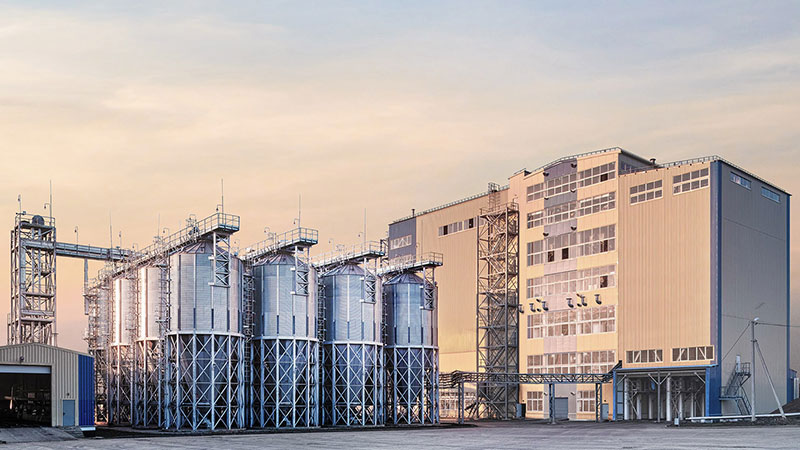
At RICHI, we go beyond project completion. With RICHI Servicee, we’re your dedicated partners in success. Count on us for expert guidance, minimal downtime, and optimized productivity. Choose RICHI for unmatched service and support.
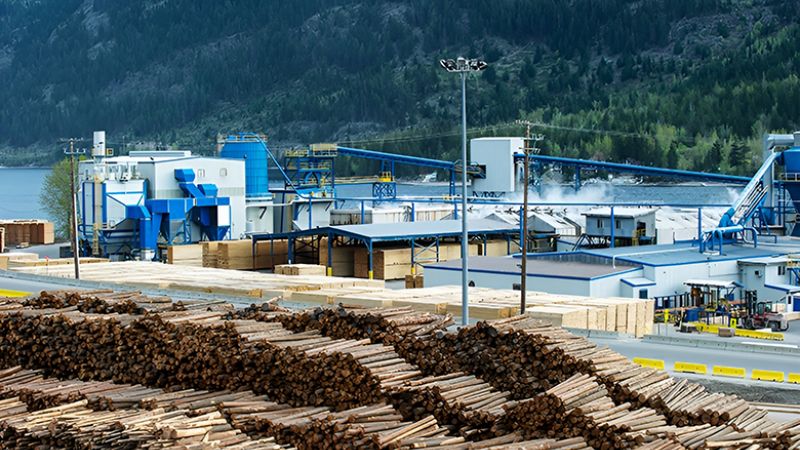


Meet global product demands and quality standards with industry-leading pellet plant design, engineering, equipment, and construction services for pellet processors.


Your Partner Beyond Project Completion
2000+ cases
RICHI is the leading designer, manufacturer and builder of pellet plants in the world, completing over 2000 projects in 140 countries across 6 continents.
Read More
Increase plant productivity, profitability, and safety by integrating high quality equipment into your pellet production line. Over the years, RICHI has become China's top pellet equipment manufacturer. At the same time, RICHI has established valuable partnerships with the world's leading component and raw material manufacturers to bring you the best there is in technology, automation, and efficiency in pelleting plant machinery.

For nearly 30 years, RICHI has been providing best-in-class pellet plant equipment and services to clients across a variety of industries, sizes, and needs. We pride ourselves on the knowledge and skill that each team member possesses – from our technical sales team to our process design engineers. You can count on RICHI Machinery to take your operation to the next level of innovation, quality, and success.
Need help with your pellet manufacturing plant project? Contact us today.
ANIMAL FEED
BIOMASS
WOOD
ORGANIC FERTILIZER
AQUA FEED
CAT LITTER
MUNICIPAL WASTE RECYCLING
SPECIAL PELLET PRODUCTION
RICHI Machinery continues to deliver world class pellet mill equipment, pellet plant engineering and project solutions that add value to our customers in the animal feed, wood waste, agriculture waste, organic fertilizer, cat litter and special pellet products industries. Throughout the years, we RICHI Machinery have built strong brand, becoming industry-leading pellet machine manufacturer. We value integrity, promise quality, and prioritize your success.
Learn MoreWith our expert team, we precisely implement your process engineering requirements in pellet mill and pelletizing plant systems. No matter which industry you’re in – we understand your needs and deliver solutions that meet the highest standards.
At RICHI, quality comes first. Our pellet making machine and related pellet line equipment undergo rigorous quality controls to ensure they meet the highest standards. Rely on products that are durable, safe, and efficient.
With decades of experience in pellet machine and pellet production line production, we have earned a reputation as a trusted partner in various industries. Our expertise allows us to cover a wide range of applications.
Not only do we offer premium pelleting equipment, but we are also experts at designing, building, installing, and maintaining facilities from the ground up. Our expertise is within pellt plant process design, discovering the most efficient, productive, and profitable way to handle your materials in an end-to-end cycle.
○ RICHI MACHINERY
Keeping in touch with us is an effective way to solve all your problems. If you have any needs or questions, please leave your contact information, then RICHI technical consultants will send design, quotation, videos to your mailbox. You can also contact us directly via WhatsApp: +86 13838389622
Copyright©2015-2026 by HENAN RICHI MACHINERY CO., LTD. All rights reserved.