
Discover a fish feed micron grinding machine in the United Arab Emirates for fine grinding of shrimp feed, marine fish feed and juvenile aquaculture feed ingredients. Explore SWFL90 specifications, 80–200 mesh fineness, processing requirements and equipment configuration.
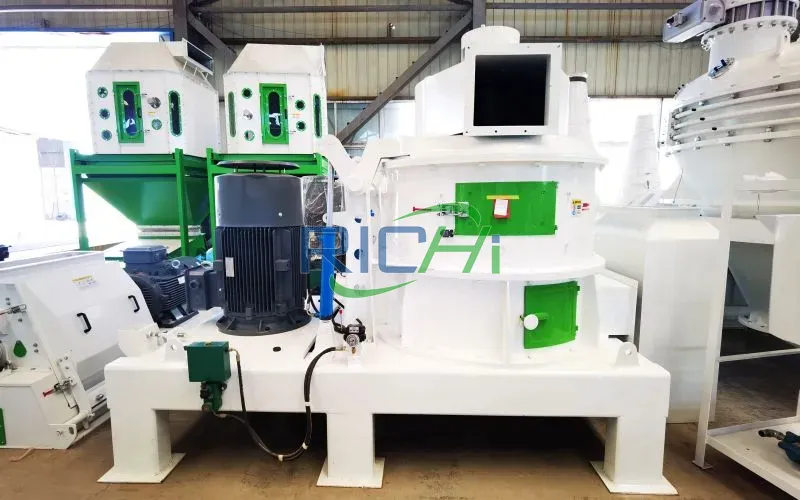
A fish feed micron grinding machine in the United Arab Emirates was selected for a specialist aquafeed manufacturer looking to improve the preparation of fine ingredients for shrimp and marine fish feed. Rather than replace its existing feed production line, the manufacturer planned to add one SWFL90 ultrafine pulverizer to handle a specific processing stage that conventional grinding equipment could not consistently meet.
The project focused on ingredient fineness and batch consistency, not simply increasing total production capacity. The manufacturer was developing feed formulations for different aquatic species and growth stages, where particle size can influence mixing uniformity, pellet formation and the suitability of the finished feed for small animals. The proposed SWFL90 would receive pre-ground material and provide an additional fine-grinding stage, allowing the existing production equipment to remain in use.
Name:
Fish Feed Micron Grinder
Country:
United Arab Emirates
Date:
2026
Capacity:
1–2 T/H
Model:
SWFL90
Main Motor Power:
90 kW
Classifier wheel motor power:
7.5 kW
Final product size:
80–200 mesh
The United Arab Emirates has a dry climate and a strong reliance on international supply chains for many agricultural commodities. Its aquaculture sector includes marine fish farming and growing interest in more controlled production systems. For a specialist feed manufacturer serving this market, consistent ingredient preparation is important when working with imported fishmeal, soybean meal, cereal ingredients and other components used in formulated aquatic feeds.
The customer in this project profile operates a relatively focused aquafeed business rather than a large, multi-product commodity feed mill. Its production schedule includes small batches of specialized feed, with particular attention to formulations for shrimp and juvenile marine fish. These products may require finer ingredient preparation than standard livestock feed, depending on the formula, pellet size and downstream processing method.
The existing hammer mill could handle routine size reduction, but it was not intended to deliver every fine-particle specification required by the newer formulations. Replacing the entire grinding and mixing section would have required a larger investment and changes to the plant layout. A dedicated micron grinding machine offered a more targeted solution: retain the existing primary grinding stage and install a separate machine for finer processing.
This purchasing decision also allowed the manufacturer to evaluate the performance of ultrafine grinding before making any further changes to its production system. The new machine would be assessed against practical indicators such as particle-size distribution, throughput, energy use, maintenance requirements and the behavior of the ground material during subsequent mixing and pelleting.
The proposed application centers on pre-ground feed ingredients used in specialized aquaculture formulations. Depending on the product, these may include fishmeal, soybean meal, wheat flour or other suitable cereal ingredients, and selected protein or carbohydrate sources. The actual formula must be determined by the feed manufacturer according to the species, growth stage, nutritional targets and ingredient availability.
For shrimp feed, particle size is particularly important because fine ingredient preparation supports uniform distribution of components in small feed pellets. The precise grinding requirement depends on the intended pellet diameter, formulation, binder system and processing conditions. The same particle-size target should not automatically be applied to every shrimp feed or marine fish feed recipe.
Juvenile marine fish feed can also require carefully controlled ingredient preparation. Fishmeal and plant-derived ingredients may differ in hardness, fiber content, oil content and grinding behavior. These differences affect the amount of energy needed for size reduction and can change the machine's practical throughput. A pre-purchase assessment should therefore consider the actual ingredient mix rather than rely on one nominal capacity figure.
Incoming material must be suitable for ultrafine grinding. Ingredients with excessive moisture, foreign objects or inconsistent particle sizes can affect feeding stability and product quality. Materials should be inspected, cleaned and pre-ground as necessary before entering the SWFL90. This preparation also helps prevent an ultrafine pulverizer from being used for work better handled by the plant's primary grinding equipment.
The selected equipment is one SWFL90 fish feed micron grinding machine. Its role is to provide a dedicated fine-grinding stage for material that has already undergone primary size reduction. This arrangement suits a plant that wants to improve its ability to produce finely ground ingredients without immediately purchasing a complete new feed production line.
| Technical Parameter | SWFL90 |
|---|---|
| Machine type | Ultrafine pulverizer / micron grinding machine |
| Main motor power | 90 kW |
| Classifier wheel motor power | 7.5 kW |
| Feeder motor power | 1.5 kW |
| Reference fineness range | 80–200 mesh |
| Reference capacity for secondary grinding | 1–2 T/H |
| Reference feed condition for the stated capacity | Material pre-ground through a 2.0 mm screen |
| Purchase scope | One machine |
The stated 1–2 T/H capacity is a reference for the specified secondary-grinding condition, not a guaranteed output for every feed ingredient. Actual throughput depends on material hardness, moisture, oil content, incoming particle size, the target fineness and operating settings. The final selection should be confirmed through a technical review or material test.
The machine's 80–200 mesh reference fineness range is relevant to fine ingredient preparation. The broader application information for this equipment family describes finished material sizes across approximately 60–300 mesh, depending on the configuration and application. These figures represent different levels of application capability and should not be interpreted as a guarantee that the SWFL90 will achieve every fineness within the broader range at its nominal reference throughput.
The SWFL90 fish feed fine crusher machine is intended to operate after the primary grinding stage. Incoming material is first checked and reduced to a suitable size, with the specified reference condition being material that has passed through a 2.0 mm screen. It is then fed into the ultrafine grinding system for further size reduction and classification.
The machine's classifier wheel helps control the separation of fine particles from material that requires further processing. This function is valuable when the manufacturer needs to manage the final particle-size distribution rather than rely on a simple grinding chamber alone. The appropriate operating settings depend on the ingredient and the target product specification.
After fine grinding, the material can be transferred to the existing weighing, mixing and pelleting stages, provided those systems are suitable for the resulting powder. Fine ingredients may behave differently during conveying and mixing, so the receiving equipment should be checked for dust containment, stable feeding and uniform blending.
Because the customer is purchasing one machine rather than a complete line, the installation plan should concentrate on the interfaces between the new pulverizer and the existing equipment. These include the feed hopper, discharge arrangement, conveying route, electrical controls, dust collection and access for inspection. Confirming these details before delivery reduces the likelihood of unnecessary structural modifications.
Ultrafine grinding places considerable demands on the wear components and the balance of the rotating assembly. In the SWFL series, alloy protection is applied to areas of the hammers that are subject to greater wear. The wear plate arrangement and upgraded materials are intended to improve durability and maintain grinding performance during repeated operation.
The grinding ring uses staggered, wave-shaped alloy elements to increase the effective shearing edge length and disrupt the circulation layer inside the grinding chamber. Depending on the application, angled-tooth configurations can also be used to support material discharge. These design choices are intended to improve the interaction between the grinding components and the incoming material.
Operating stability is another important consideration for a high-speed grinding machine. The equipment uses a high-precision balancing process for the disc assembly, with a stated overall vibration amplitude below 4 mm/s. This is a manufacturer-provided specification; actual site vibration should be checked during commissioning under the applicable operating conditions.
The machine also incorporates monitoring and safety features, including main-bearing temperature measurement, body vibration detection, classifier-wheel speed monitoring and an interlock for the maintenance door. These functions help operators monitor operating conditions and reduce the risk of unsafe access while the machine is running.
A hydraulic cover-opening device makes inspection and maintenance more convenient. The compact internal silencer design helps reduce the space required for the machine arrangement, while the heavy-duty frame can be fitted with vibration dampers where appropriate. These features are relevant to plants that need reliable operation while working within an existing production area.
Airflow management plays an important role in ultrafine grinding. The SWFL design uses a multi-point air-inlet arrangement at the bottom of the machine, with airflow directed to support the upward movement of material. A more even distribution of air inside the grinding chamber is intended to improve the grinding process and material movement.
An automatically adjustable air damper provides another means of controlling the amount of incoming air. The appropriate setting depends on the raw material, feed rate and desired fineness. Too much or too little airflow can affect the behavior of particles inside the chamber, so the settings should be established during commissioning rather than copied unchanged from another ingredient.
For shrimp and juvenile fish feed ingredients, the important result is not simply that the powder looks fine. The manufacturer should verify the particle-size distribution using an appropriate testing method and check whether the resulting material behaves consistently during mixing and pellet formation. Where formulations differ, separate operating settings may be required.
Although shrimp feed is the main focus of this project, the fish feed micron grinding machine can also support the preparation of fine ingredients for other specialized aquafeed products. These may include feed for juvenile marine fish, eel and crab, provided that the formulation and required particle size are suitable for the equipment and the intended processing route.
The same equipment family can be used in selected pet food, food, chemical and pharmaceutical applications, as indicated in the manufacturer's application information. However, suitability for these sectors depends on the raw material, required hygiene standard, contamination controls and final product specification. A machine configured for aquafeed ingredients should not automatically be assumed suitable for every food or pharmaceutical process.
For this UAE project, the practical priority remains aquatic feed ingredients. Keeping the initial application focused allows the customer to establish a reliable operating range and collect meaningful data before considering other products. If additional materials are introduced later, they should be reviewed individually to determine whether the machine's grinding and classification settings are appropriate.
The manufacturer chose a standalone ultrafine pulverizer because the existing line already provided the major functions of feed production. The gap was in fine grinding, not in raw-material storage, formulation, mixing or pelleting. Adding the SWFL90 allowed the business to address that gap without duplicating equipment that was still serviceable.
The investment can be evaluated using the actual production results: kilograms processed per operating hour, particle-size distribution, power consumption, cleaning time, wear-part replacement and the effect on downstream mixing and pelleting. These measures provide a more useful basis for deciding whether the new machine is delivering value than a general claim about higher productivity.
RICHI Machinery can review the customer's target fineness, incoming particle size, raw-material properties and expected working hours before confirming the final configuration. The review should also cover the available electrical supply, foundation, feeding arrangement, discharge route and dust-control requirements. These details matter because the SWFL90 is being integrated into an existing operation rather than installed as part of a new turnkey line.
The planned shipping route is from Qingdao Port in China to Khalifa Port in Abu Dhabi, United Arab Emirates. The final shipping arrangement should be confirmed against the agreed delivery terms, packing dimensions, gross weight and the freight forwarder's requirements.
Before delivery, the customer should prepare the installation area, power connections, suitable material-handling equipment and the required space for operation and maintenance. If the machine is connected to an existing conveyor or dust-collection system, the interface dimensions and control requirements should be confirmed before installation begins.
For this type of project, the most useful customer evaluation focuses on the results that affect daily production. The manufacturer needs to know whether the machine can achieve the target fineness on its actual ingredients, maintain a stable feed rate and integrate smoothly with the existing line.
The key acceptance checks include particle-size testing, output measurement under defined material conditions, monitoring of vibration and bearing temperature, and inspection of the discharge material during downstream mixing and pelleting. Operators should also assess whether routine access, cleaning and wear-part replacement can be carried out without disrupting the rest of the production line unnecessarily.
No verified customer statement or commissioning record has been supplied for this project profile. Therefore, the feedback section is presented as a set of project evaluation priorities rather than a fabricated direct quotation. Once actual operating results and approved customer feedback are available, they can be added to document the performance of the installed equipment.
The proposed fish feed micron grinding machine in the United Arab Emirates is a focused investment in the fine-grinding stage of an existing aquafeed operation. By selecting one SWFL90, the manufacturer can process pre-ground ingredients more finely while retaining the rest of its production system where it remains suitable.
The SWFL90 provides a 90 kW main motor, a 7.5 kW classifier-wheel motor and a 1.5 kW feeder motor, with a reference fineness range of 80–200 mesh. Its stated 1–2 T/H secondary-grinding capacity applies to the specified pre-ground material condition and should be verified against the actual ingredient mix and target fineness.
For manufacturers considering a similar upgrade, the most useful starting information includes the feed species, raw materials, incoming particle size, required fineness, expected throughput and existing equipment layout. RICHI Machinery can use these details to assess the machine configuration, installation interfaces and optional components, helping the buyer make a decision based on the real production requirement.
Having the right mix of reliable, high-quality pellet machine and pelletizing systems and expert support is essential to your success. Watch how our end-to-end feed pellet plant solutions have helped our customers optimize their performance.
Our customized and future-proofed turnkey pellet plant solutions is designed with you at the core. From vision to reality and beyond, our team stays connected with yours. Giving you peace-of-mind with an expert at your side.
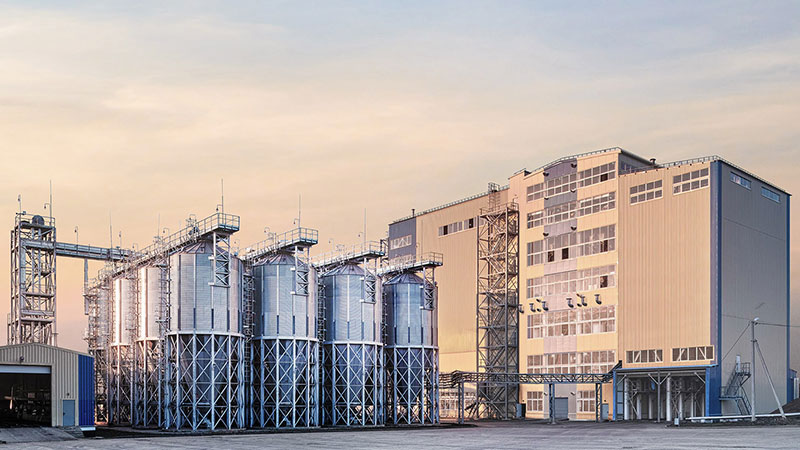
At RICHI, we go beyond project completion. With RICHI Servicee, we’re your dedicated partners in success. Count on us for expert guidance, minimal downtime, and optimized productivity. Choose RICHI for unmatched service and support.
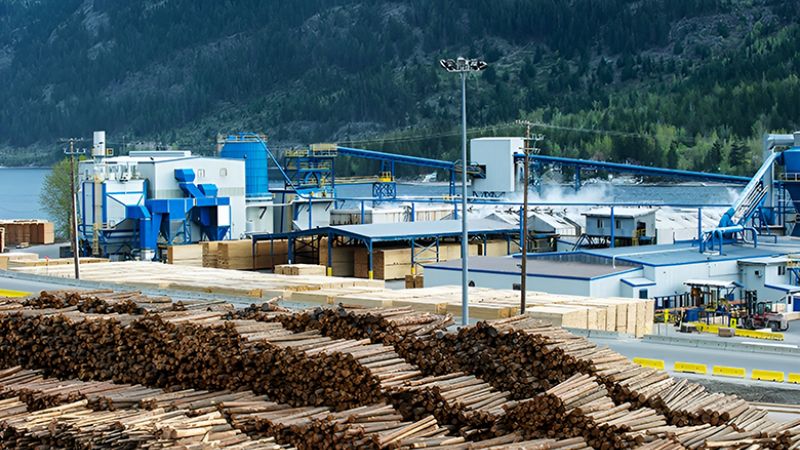


Meet global product demands and quality standards with industry-leading pellet plant design, engineering, equipment, and construction services for pellet processors.


Your Partner Beyond Project Completion
2000+ cases
RICHI is the leading designer, manufacturer and builder of pellet plants in the world, completing over 2000 projects in 140 countries across 6 continents.
Read More
Increase plant productivity, profitability, and safety by integrating high quality equipment into your pellet production line. Over the years, RICHI has become China's top pellet equipment manufacturer. At the same time, RICHI has established valuable partnerships with the world's leading component and raw material manufacturers to bring you the best there is in technology, automation, and efficiency in pelleting plant machinery.

For nearly 30 years, RICHI has been providing best-in-class pellet plant equipment and services to clients across a variety of industries, sizes, and needs. We pride ourselves on the knowledge and skill that each team member possesses – from our technical sales team to our process design engineers. You can count on RICHI Machinery to take your operation to the next level of innovation, quality, and success.
Need help with your pellet manufacturing plant project? Contact us today.
ANIMAL FEED
BIOMASS
WOOD
ORGANIC FERTILIZER
AQUA FEED
CAT LITTER
MUNICIPAL WASTE RECYCLING
SPECIAL PELLET PRODUCTION
RICHI Machinery continues to deliver world class pellet mill equipment, pellet plant engineering and project solutions that add value to our customers in the animal feed, wood waste, agriculture waste, organic fertilizer, cat litter and special pellet products industries. Throughout the years, we RICHI Machinery have built strong brand, becoming industry-leading pellet machine manufacturer. We value integrity, promise quality, and prioritize your success.
Learn MoreWith our expert team, we precisely implement your process engineering requirements in pellet mill and pelletizing plant systems. No matter which industry you’re in – we understand your needs and deliver solutions that meet the highest standards.
At RICHI, quality comes first. Our pellet making machine and related pellet line equipment undergo rigorous quality controls to ensure they meet the highest standards. Rely on products that are durable, safe, and efficient.
With decades of experience in pellet machine and pellet production line production, we have earned a reputation as a trusted partner in various industries. Our expertise allows us to cover a wide range of applications.
Not only do we offer premium pelleting equipment, but we are also experts at designing, building, installing, and maintaining facilities from the ground up. Our expertise is within pellt plant process design, discovering the most efficient, productive, and profitable way to handle your materials in an end-to-end cycle.
○ RICHI MACHINERY
Keeping in touch with us is an effective way to solve all your problems. If you have any needs or questions, please leave your contact information, then RICHI technical consultants will send design, quotation, videos to your mailbox. You can also contact us directly via WhatsApp: +86 13838389622
Copyright©2015-2026 by HENAN RICHI MACHINERY CO., LTD. All rights reserved.