
A long-established compound feed producer in Skåne upgraded its packaging section with one RICHI DCS-50K feed mill bagging machine in Sweden. The mill had expanded substantially over the years, while an older semi-automatic weighing and filling machine had become a bottleneck for the portion of pelleted feed sold in small bags.
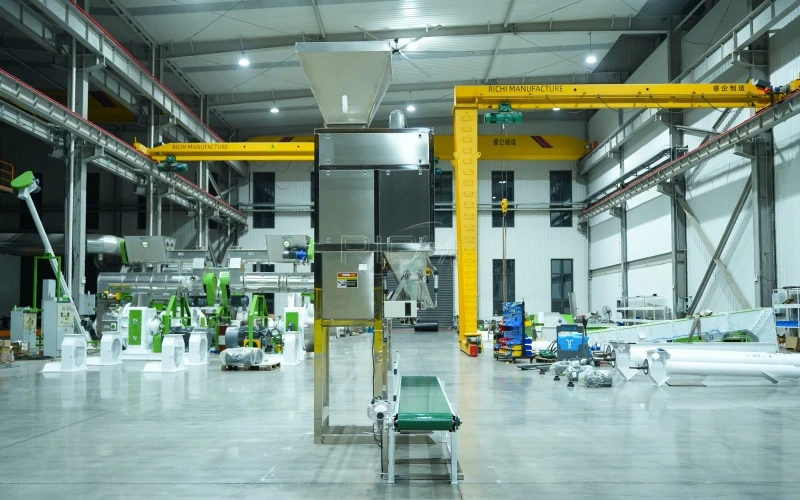
A long-established compound feed producer in Skåne upgraded its packaging section with one RICHI DCS-50K feed mill bagging machine in Sweden. The mill had expanded substantially over the years, while an older semi-automatic weighing and filling machine had become a bottleneck for the portion of pelleted feed sold in small bags.
The customer did not need a complete new feed mill or a fully robotic packaging plant. Grinding, batching, mixing, pelletizing, cooling, screening, finished-feed bins and pallet handling were already available. The requirement was a faster and more consistent weighing-and-filling machine for dry, free-flowing feed pellets, with a familiar operator-assisted bagging workflow and straightforward integration into the existing plant.
Name:
Pig feed bagging machine
Country:
Sweden
Date:
2026
Capacity:
5–6 bags/min
Model:
DCS-50K
Main Product:
pig feed pellets
Main Bag Format:
25 kg sewn bags
Feeding Method:
Gravity feeding
The feed mill produces approximately 35,000 tonnes of compound feed annually, but not every tonne is necessarily packed through one small-bagging machine.
This distinction is important when selecting packaging equipment.
Modern commercial feed mills can deliver part of their production in bulk while selected feeds are packed in smaller bags for particular customers, distributors or farm requirements.
The DCS-50K was therefore selected around the mill’s actual bagged-pellet stream rather than simply dividing the complete 35,000 T/Y factory output by annual working hours.
The older machine was still mechanically serviceable but required more operator time and had limited filling speed. As the mill’s overall production increased, bagged orders increasingly competed for packaging time.
The customer wanted to increase the rate at which finished pellets could move from the bagging bin into sewn bags without replacing upstream production equipment that was still performing adequately.
This made the project a typical retrofit.
The engineering question was not “How large is the entire feed mill?” but rather “How many tonnes per hour of finished pellets actually need to pass through this bagging position?”
| Project Parameter | Configuration |
|---|---|
| Equipment | Feed mill weighing and bagging machine |
| Model | DCS-50K |
| Feeding Method | Gravity feeding |
| Reference Filling Speed | Approximately 5–6 bags/min under suitable conditions |
| Reference Dynamic Accuracy | Approximately ±0.2% under suitable calibration and material conditions |
| Main Product | Dry compound feed pellets |
| Main Bag Format | Approximately 25 kg sewn bags |
| Primary Application | Bagging pig feed pellets |
| Mill Location | Skåne, Sweden |
| Project Type | Existing feed mill packaging-section replacement |
Gravity feeding is suitable when the product flows readily from the finished-feed hopper into the weighing system.
Dry feed pellets generally behave much better in this type of system than sticky, highly oily or poorly flowing powders.
For the Swedish customer, pig feed pellets form the main bagged product handled by the DCS-50K.
The pellets have already passed through cooling and screening before reaching the packaging bin, so the bagging machine receives a relatively uniform, free-flowing finished product.
This is important because filling performance depends on more than the machine itself.
Excessive fines, irregular pellet flow, bridging in the upstream hopper or fluctuating product head can reduce both speed and weighing consistency.
The DCS-50K Automatic Packing Machine therefore works as part of the complete finished-feed handling system rather than as an isolated packaging unit.
Bagging-machine speed should always be converted into mass throughput using the customer’s real bag weight.
At 25 kg per bag, a reference rate of five bags per minute equals approximately 7.5 T/H.
At six bags per minute, the corresponding theoretical rate is approximately 9 T/H.
If the customer changes to a 20 kg bag, the same five-to-six-bag-per-minute cycle corresponds to approximately 6–7.2 T/H.
This is why a statement such as “5–6 bags per minute” is incomplete unless bag weight is also provided.
Actual plant output is normally lower than a simple theoretical calculation when time is included for bag placement, sewing, product changeovers, scale verification, housekeeping, pallet changes and interruptions upstream or downstream.
For this Swedish feed mill, the DCS-50K provides enough packaging headroom for the selected bagged-product stream without requiring the entire 35,000 T/Y production volume to pass through one machine.
If a feed mill truly needed to pack all 35,000 tonnes into 25 kg bags, it would require approximately 1.4 million bags per year.
At five bags per minute, that represents about 4,667 hours of theoretical filling time before stoppages. At six bags per minute, it still requires roughly 3,889 hours.
That calculation immediately shows why total factory tonnage and bagging tonnage must be separated during equipment selection.
The DCS-50K is installed after the feed manufacturing process, not directly after the pellet mill.
Fresh pellets leaving a ring die are still warm and should first pass through cooling. Screening then removes loose fines before the finished product enters storage or packaging bins.
The bagging machine therefore receives pellets that are closer to their final temperature and moisture condition.
This supports more stable gravity flow.
The Swedish customer mainly packages conventional dry pig feed pellets made from cereal-based compound formulations.
Typical Scandinavian feed materials can include barley, wheat, rapeseed meal, peas and imported or regionally traded protein ingredients according to the nutrition program.
The exact ingredient percentages do not affect bagging-machine selection directly, but formula changes can affect pellet bulk density, fines and surface oil.
A particularly oily product may flow differently from a conventional dry cereal-based pellet.
For this reason, RICHI asks customers whether the machine will handle pellets only or whether mash, meal and other feed forms will also be packaged.
A gravity system that performs well with dry pellets should not automatically be assumed to be the best feeding method for every powder or sticky formulation.
The DCS-50K can be configured around a reference dynamic weighing accuracy of approximately ±0.2% under suitable operating conditions.
That number needs to be interpreted correctly.
For a 25 kg bag, 0.2% corresponds to approximately 50 grams.
It does not mean that every production bag will always be within exactly 15 or 20 grams regardless of product condition.
Actual filling deviation can be influenced by pellet flow, scale calibration, cut-off timing, product head above the feeder, vibration, load-cell condition and bagging settings.
The customer therefore establishes a routine check-weighing procedure during commissioning and production.
If the nominal bag weight is 25 kg, test bags can be taken periodically and verified with a suitable control scale.
If average weight begins drifting upward or downward, the operator can inspect calibration and filling parameters before large quantities are produced.
This is commercially important because both underfilling and unnecessary overfilling create problems.
Underweight packages can create regulatory and customer issues. Persistent overfilling gives away saleable feed.
However, the financial value of improved weighing should be calculated from the mill’s actual historical weight data rather than assuming a fixed annual saving.
The Swedish feed mill retained a straightforward open-mouth bag workflow.
The operator positions an empty bag at the filling spout, the bag is held during filling, and the filled package moves to a sewing station before palletizing.
This arrangement is appropriate for a customer that already uses compatible woven or paper feed bags and does not require a more complex heat-sealed packaging format.
The sealing method is therefore determined by the actual bag construction.
If a customer uses a laminated or lined bag that requires heat sealing, the downstream package-closing equipment needs to be configured accordingly.
If standard sewable open-mouth bags are used, sewing remains a simple and widely understood option.
Bag dimensions also matter.
A machine may support different target weights, but changing from one bag format to another can require adjustments to bag clamping, filling parameters and the downstream conveyor or sewing position.
It is therefore more accurate to say that the DCS-50K can be configured for the customer’s selected bag sizes than to claim that every bag-format change takes only a few seconds.
Replacing a 25-year-old bagging machine is rarely as simple as placing a new unit over the same bolt holes.
RICHI first evaluates the existing finished-feed hopper, available headroom, support structure, feed inlet position, discharge elevation, conveyor height, operator space and sewing-machine arrangement.
The new machine must also communicate properly with the surrounding controls.
Where pneumatic bag clamping or actuators are used, the site needs a suitable compressed-air supply at the pressure and quality specified for the delivered configuration.
Electrical requirements are confirmed against the actual Swedish plant supply and the machine configuration before installation.
Swedish industrial facilities commonly use 50 Hz three-phase systems, but motor voltage, controls and protection should still be confirmed from the project electrical drawings rather than assuming that one generic connection suits every site.
Operator ergonomics are another retrofit issue.
If workers have to repeatedly lift full 25 kg bags manually between filling, sewing and palletizing positions, simply increasing filling speed may transfer the bottleneck to manual handling.
The discharge conveyor, sewing position and palletizing method therefore need to keep pace with the bagger.
For higher bagging rates, downstream automation can become more important than increasing the weighing-machine speed again.
A DCS-50K capable of filling around 7.5–9 T/H in 25 kg bags does not automatically mean the complete feed mill will package at that rate continuously.
The upstream finished-feed bin needs enough product available.
The cooler and screen must deliver finished pellets consistently.
The bag conveyor and sewing station must accept the filled bags without accumulation.
Operators need enough empty bags available, while pallets and warehouse space must keep up with the packaging schedule.
This line-balance check is particularly important when an old bagger is being replaced because the rest of the packaging area may have been designed around the slower machine.
For example, if the old bagging section produced only three bags per minute, doubling filler speed can overload a manual sewing or pallet-stacking station even though the new bagger itself performs correctly.
The customer therefore evaluates the complete packaging sequence rather than only the weighing head.
RICHI can also leave interfaces for future upgrades such as automatic bag feeding, bag sewing, conveying, metal detection, check weighing or robotic palletizing if the mill later increases its packaged-feed volume.
This feed mill bagging machine in Sweden project uses one RICHI DCS-50K gravity-fed weighing and filling machine to modernize the small-bag packaging section of an established compound feed mill in Skåne.
The machine is primarily used for dry pig feed pellets packed in approximately 25 kg open-mouth bags.
Its reference filling speed of approximately 5–6 bags per minute corresponds to about 7.5–9 T/H at a 25 kg bag weight under suitable conditions.
The mill’s approximately 35,000 T/Y total feed production is therefore treated separately from the tonnage that actually passes through this bagging station.
This distinction prevents oversimplified equipment selection.
The DCS-50K is well suited to this project because the pellets are already cooled, screened and relatively free-flowing before bagging.
Gravity feeding provides a comparatively simple material path without forcing the customer to purchase a more complex feeder designed for powders or difficult-flowing materials that are not part of the main application.
The machine’s weighing system is commissioned around the actual pellet bulk density and bag target.
A reference dynamic accuracy of around ±0.2% can be used for selection, while routine check weighing confirms the actual production result.
The customer retains its existing feed manufacturing equipment and packaging workflow where appropriate.
RICHI therefore focuses on the interface between the finished-feed bin, DCS-50K, discharge conveyor and bag-closing system rather than replacing the entire packaging department.
For another buyer searching for a feed mill bagging machine in Sweden, feed pellet bagging machine, automatic feed weighing machine, 25 kg feed bagging machine, gravity feed bagging machine or DCS-50K packing machine, the first information RICHI needs is the actual packaged-product requirement rather than total factory tonnage alone.
Useful project data include bagged tonnes per hour, bag weight, pellet or mash product type, bulk density, pellet fines, bag material and dimensions, required bag-closing method, existing hopper height, available compressed air, electrical supply, conveyor arrangement and desired level of automation.
If the plant packages mostly dry pellets, a gravity-fed DCS-50K may be an efficient solution.
If the same line must regularly handle poorly flowing mash or powder, another feeding configuration may need to be evaluated.
If required packaging throughput exceeds what one operator-assisted machine can realistically support, RICHI Machinery can also review higher-capacity or more automated alternatives rather than selecting equipment only from annual tonnage.
For a Swedish feed mill retrofit, send RICHI your current bagging rate, target bags per minute, bag weight, annual bagged tonnage, feed form, bag dimensions, existing machine layout and downstream sewing or palletizing method. These parameters provide the basis for selecting a feed mill bagging machine that fits the real packaging bottleneck.
Having the right mix of reliable, high-quality pellet machine and pelletizing systems and expert support is essential to your success. Watch how our end-to-end feed pellet plant solutions have helped our customers optimize their performance.
Our customized and future-proofed turnkey pellet plant solutions is designed with you at the core. From vision to reality and beyond, our team stays connected with yours. Giving you peace-of-mind with an expert at your side.
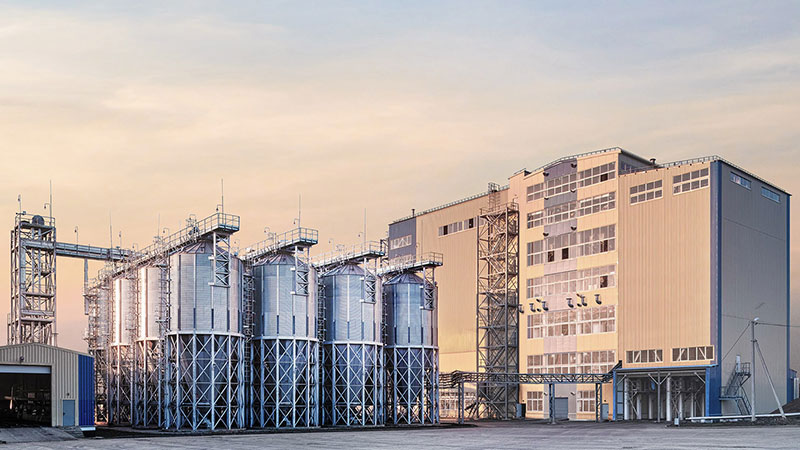
At RICHI, we go beyond project completion. With RICHI Servicee, we’re your dedicated partners in success. Count on us for expert guidance, minimal downtime, and optimized productivity. Choose RICHI for unmatched service and support.
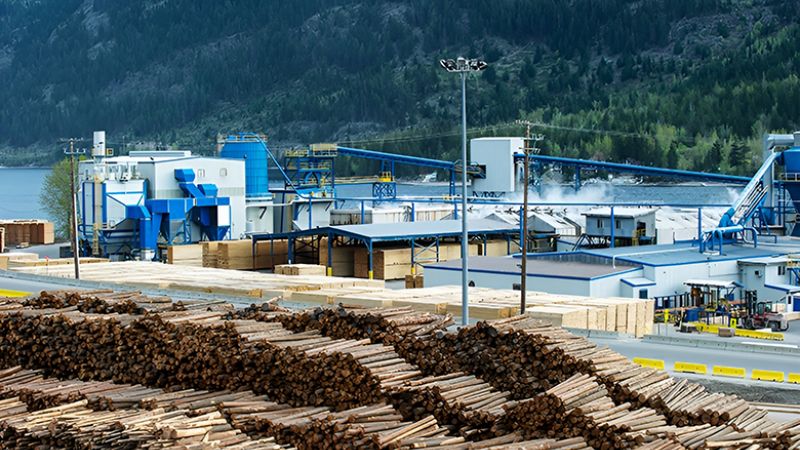


Meet global product demands and quality standards with industry-leading pellet plant design, engineering, equipment, and construction services for pellet processors.


Your Partner Beyond Project Completion
2000+ cases
RICHI is the leading designer, manufacturer and builder of pellet plants in the world, completing over 2000 projects in 140 countries across 6 continents.
Read More
Increase plant productivity, profitability, and safety by integrating high quality equipment into your pellet production line. Over the years, RICHI has become China's top pellet equipment manufacturer. At the same time, RICHI has established valuable partnerships with the world's leading component and raw material manufacturers to bring you the best there is in technology, automation, and efficiency in pelleting plant machinery.

For nearly 30 years, RICHI has been providing best-in-class pellet plant equipment and services to clients across a variety of industries, sizes, and needs. We pride ourselves on the knowledge and skill that each team member possesses – from our technical sales team to our process design engineers. You can count on RICHI Machinery to take your operation to the next level of innovation, quality, and success.
Need help with your pellet manufacturing plant project? Contact us today.
ANIMAL FEED
BIOMASS
WOOD
ORGANIC FERTILIZER
AQUA FEED
CAT LITTER
MUNICIPAL WASTE RECYCLING
SPECIAL PELLET PRODUCTION
RICHI Machinery continues to deliver world class pellet mill equipment, pellet plant engineering and project solutions that add value to our customers in the animal feed, wood waste, agriculture waste, organic fertilizer, cat litter and special pellet products industries. Throughout the years, we RICHI Machinery have built strong brand, becoming industry-leading pellet machine manufacturer. We value integrity, promise quality, and prioritize your success.
Learn MoreWith our expert team, we precisely implement your process engineering requirements in pellet mill and pelletizing plant systems. No matter which industry you’re in – we understand your needs and deliver solutions that meet the highest standards.
At RICHI, quality comes first. Our pellet making machine and related pellet line equipment undergo rigorous quality controls to ensure they meet the highest standards. Rely on products that are durable, safe, and efficient.
With decades of experience in pellet machine and pellet production line production, we have earned a reputation as a trusted partner in various industries. Our expertise allows us to cover a wide range of applications.
Not only do we offer premium pelleting equipment, but we are also experts at designing, building, installing, and maintaining facilities from the ground up. Our expertise is within pellt plant process design, discovering the most efficient, productive, and profitable way to handle your materials in an end-to-end cycle.
○ RICHI MACHINERY
Keeping in touch with us is an effective way to solve all your problems. If you have any needs or questions, please leave your contact information, then RICHI technical consultants will send design, quotation, videos to your mailbox. You can also contact us directly via WhatsApp: +86 13838389622
Copyright©2015-2026 by HENAN RICHI MACHINERY CO., LTD. All rights reserved.