
A Binh Duong wood processor uses one SFSP66×100 90 kW wood crusher to grind prepared acacia, rubberwood and clean wood chips for pellet and briquette production.
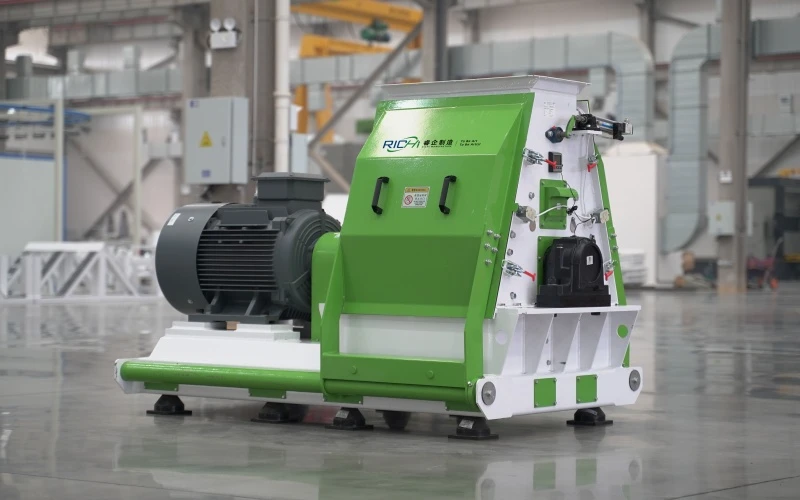
A medium-scale wood processor in Binh Duong selected one SFSP66×100 Factory Offer 90KW Wood Crusher for Making Wood Sawdust in Vietnam to strengthen the fine-grinding stage of its biomass operation. The plant handles acacia chips, rubberwood residues and selected clean wood from regional suppliers, then prepares controlled sawdust for pellet and briquette production.
The customer kept its receiving, coarse chipping, drying, conveying and downstream densification equipment, so the purchase remained a standalone grinding upgrade. The SFSP66×100 uses a 90 kW main motor, 660 mm rotor and 1000 mm grinding chamber, with about 3–4 T/H used as the project reference on suitably prepared wood rather than as a fixed output for every species and moisture condition.
Name:
Water-drop hammer mill for wood
Country:
Vietnam
Date:
2026
Capacity:
3–4 T/H
Model:
SFSP66×100
Power:
90 kW
Raw Materials:
acacia chips, rubberwood residues
Final product size:
4–6 mm
The factory already had the main equipment required to receive wood residues and reduce oversized pieces before final grinding. Its bottleneck appeared when irregular chips and coarse shavings had to be prepared for pelletizing at a steady rate. Adding one wood hammer mill allowed the customer to improve that stage without duplicating dryers, conveyors, storage bins or pellet machines that could still support the production plan.
| Project Parameter | Configuration |
|---|---|
| Equipment | Water-drop hammer mill for wood fine grinding |
| Model | SFSP66×100 |
| Quantity | 1 unit |
| Main Motor Power | 90 kW |
| Rotor Diameter | 660 mm |
| Grinding Chamber Width | 1000 mm |
| Rotating Speed | Approximately 2980 rpm |
| Hammer Tip Speed | Approximately 103 m/s |
| Screen Selection | Typically 4–6 mm for pellet-feedstock duty, confirmed by material trial |
| Project Reference Capacity | Approximately 3–4 T/H on suitably prepared wood |
| Main Materials | Prepared acacia chips, rubberwood residues and selected clean wood chips |
| Main Application | Fine wood preparation before pelletizing or briquetting |
| Installation Type | Standalone secondary grinding upgrade |
The 3–4 T/H value applies to wood that has already been reduced to a manageable size and brought into a practical moisture range. Actual throughput varies with wood density, fibre structure, chip dimensions, screen opening, hammer condition, feeding stability and the particle distribution required by the next process.
Large slabs, thick offcuts and long pieces from furniture or sawmill operations should not be fed directly into the SFSP66×100. Those materials first pass through a chipper or coarse crusher so the hammer mill receives smaller, more regular chips. Keeping primary size reduction separate from fine grinding reduces sudden impact loading and gives the 90 kW rotor a steadier material bed inside the chamber.
Acacia is an important plantation timber in Vietnam, but the factory does not treat every acacia residue as ready-to-grind feed. Clean chips from plantation and sawmill suppliers can enter the fine-grinding route after inspection, while thicker branches and solid trim require additional chipping. The customer focuses on consistent incoming dimensions because irregular hardwood pieces can create unstable loading and reduce usable tonnes per hour.
Rubberwood is highly relevant to wood processing in southern Vietnam because furniture and timber businesses generate offcuts, chips and shavings after sawing and machining. Only clean untreated solid-wood residues enter the biomass route. Painted timber, MDF, particleboard, plywood and laminated pieces are kept out because adhesives, coatings and engineered-board components are not equivalent to clean biomass feedstock.
The customer can also buy selected pine chips through regional timber trading channels when their quality and delivered cost fit the production plan. Pine is not assigned a permanent percentage because procurement changes with availability and price. When a pine batch enters the factory, moisture, contamination and chip dimensions are checked in the same way as local hardwood material before it is released to the grinding section.
The SFSP66×100 crusher machine reduces particle size; it does not remove water. Wet wood fibres become more flexible, screen passage can slow, and usable grinding capacity can fall as moisture rises. Material that is too wet is therefore handled through the plant's drying or storage system before fine grinding. The customer does not force high-moisture chips through the machine simply because a 90 kW motor is available.
Where the plant receives wetter wood chips, coarse material can be easier to handle through the moisture-control section before it is reduced into fine sawdust. Very fine wet material has larger surface area, creates more dust after drying and can be harder to convey cleanly. The customer therefore coordinates chip size, dryer performance and hammer-mill feed condition instead of applying one rigid route to every residue stream.
For this type of biomass duty, a 4–6 mm screen can be used as a practical trial range, but screen opening is not the same as finished particle diameter. Hammer milling produces a distribution of fines, short fibres and small wood particles. Acacia, rubberwood and pine fracture differently, so the customer evaluates the material reaching the pellet or briquette section rather than assuming every particle leaving the mill matches the screen hole.
A smaller screen keeps material inside the chamber longer and requires more hammer impacts before discharge. That can lower throughput, increase electricity use per tonne and create more airborne dust. For this reason, the factory does not chase the finest possible sawdust. The screen is selected from the needs of the downstream pellet or briquette equipment, and finer grinding is used only when it adds a real processing benefit.
The Factory Offer 90KW Wood Crusher for Making Wood Sawdust in Vietnam performs best when chips enter at a stable rate rather than in large surges. A controlled feeder or conveyor keeps the grinding chamber loaded without repeatedly overloading the motor. Operators monitor current, sound, vibration and discharge condition together, then adjust the feed rate when wood species, moisture or screen resistance changes.
Wood residues from factories and pallet handling areas can contain nails, staples, wire or other ferrous contamination. A magnetic separation point ahead of the high-speed rotor reduces the chance that metal reaches the hammers and screen. Magnets do not remove stones, sand, aluminium or plastic, so receiving inspection and suitable mechanical cleaning remain necessary when externally purchased residues enter the plant.
Plantation chips and outdoor wood residues can collect soil during handling, while yard-stored material may contain sand or small stones. These contaminants add no value to sawdust and can accelerate wear inside the grinding chamber. The customer therefore keeps clean wood off muddy ground, checks incoming material and removes visible contamination before the hammer mill instead of relying only on harder wear components.
Dry fine wood creates substantial airborne dust, so the hammer mill cannot be evaluated only by motor power and tonnes per hour. The installation needs enclosed transfer points and suitable aspiration to move ground material away from the screen and control dust around the machine. Fan capacity, duct resistance, separation equipment and filter loading are matched to the actual air volume instead of being treated as minor accessories.
Fine combustible dust can accumulate around grinders, conveyors and filters if housekeeping and extraction are poor. The plant therefore considers grounding, bearing condition, motor protection, temperature monitoring and suitable explosion-protection measures. The exact arrangement depends on the building, dust system and risk assessment, so one hardware package should not be claimed for every wood plant.
The hammer mill main drive is 90 kW, but the grinding section also uses power for feeding, conveying, aspiration and material separation. Site planning therefore checks transformer capacity, motor starting, cable sizing, protection and the simultaneous load of nearby equipment. A machine can be mechanically appropriate for 3–4 T/H yet still be a poor fit if the workshop electrical system cannot support the full grinding section reliably.
Increasing grinding capacity has little value if the downstream pellet mills can consume only part of the new sawdust flow. The customer therefore compares hammer-mill output with dryer performance, buffer volume and pelletizing capacity. Intermediate storage can separate the grinder from the pellet machines so both sections operate at practical rates without requiring identical instantaneous tonnes per hour throughout the shift.
Prepared sawdust can also support briquette production when moisture and particle distribution meet the press requirement. The factory does not assume that one screen setting is ideal for both pellets and briquettes, because different forming equipment can respond differently to fibre length and fines. When production switches between the two routes, operators check the downstream specification before changing the hammer-mill screen or feed rate.
Clean wood shavings and selected sawdust can be used for animal bedding, but very fine pellet-grade dust may create more airborne particles than a bedding customer wants. The plant therefore keeps bedding as a separate market specification rather than diverting every fine fraction to farms. Cleanliness, particle size, dust level and absence of coatings or treated wood matter more than the fact that the material came through a wood hammer mill.
Medium-density fibreboard is produced from refined wood fibres under a dedicated fibre-preparation process, so generic fine sawdust from this hammer mill should not be presented as ready MDF feedstock. Particleboard plants can use selected wood particles under their own specifications, but that also requires buyer confirmation. For this project, biomass pellet and briquette preparation remain the primary uses of the SFSP66×100 output.
Hammer edges, screens, bearings and rotor condition are checked according to tonnes processed, vibration and incoming-wood cleanliness. Harder material, mineral contamination and fine screens can increase wear, while clean prepared chips create a different maintenance pattern. The plant does not assign one universal hammer-life figure because service intervals depend on material and operating conditions.
The SFSP66×100 can be shipped from Qingdao to the Cai Mep-Thi Vai port area and then moved by road to Binh Duong. This route is more consistent with a customer in southern Vietnam than sending the machine through a northern port. Before delivery, the factory can prepare the foundation, electrical connection, feeder, discharge, aspiration interfaces and maintenance clearance from confirmed equipment drawings.
If sawdust demand increases, the customer should first check whether the installed hammer mill is running near its practical limit. A second grinder adds little value if wet chips are waiting for drying or if the pellet section already has unused sawdust in storage. Capacity planning therefore compares chipping, drying, fine grinding, buffer storage, pelletizing and finished-product demand.
A Factory Offer 90KW Wood Crusher for Making Wood Sawdust in Vietnam should be selected from the material entering the fine-grinding stage, not from total wood-waste tonnage. RICHI Machinery would review wood species, largest prepared chip size, moisture, contamination, screen target, required particle distribution, hourly demand, dryer capacity, downstream pellet or briquette capacity, aspiration, electrical supply and available service space.
Those details determine whether an SFSP66×100 provides the right balance between 90 kW installed power and usable grinding capacity. A customer with mostly fine dry sawdust may need less grinding equipment, while a plant receiving wet slabs and large offcuts needs stronger coarse reduction and moisture control before a high-speed hammer mill can operate efficiently.
Having the right mix of reliable, high-quality pellet machine and pelletizing systems and expert support is essential to your success. Watch how our end-to-end feed pellet plant solutions have helped our customers optimize their performance.
Our customized and future-proofed turnkey pellet plant solutions is designed with you at the core. From vision to reality and beyond, our team stays connected with yours. Giving you peace-of-mind with an expert at your side.
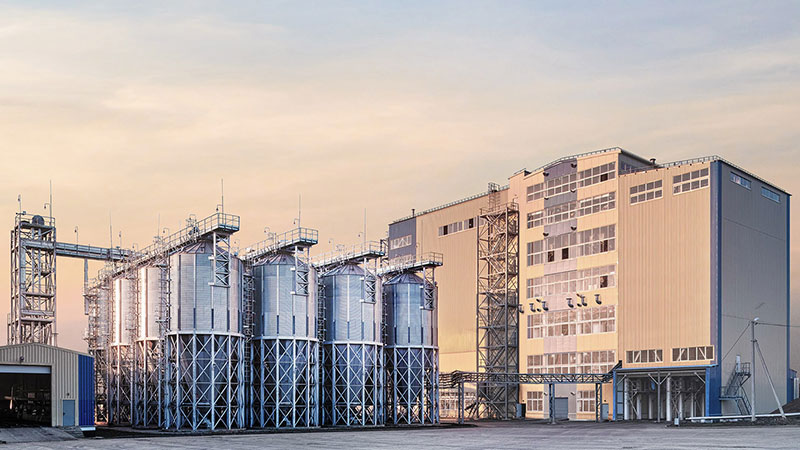
At RICHI, we go beyond project completion. With RICHI Servicee, we’re your dedicated partners in success. Count on us for expert guidance, minimal downtime, and optimized productivity. Choose RICHI for unmatched service and support.
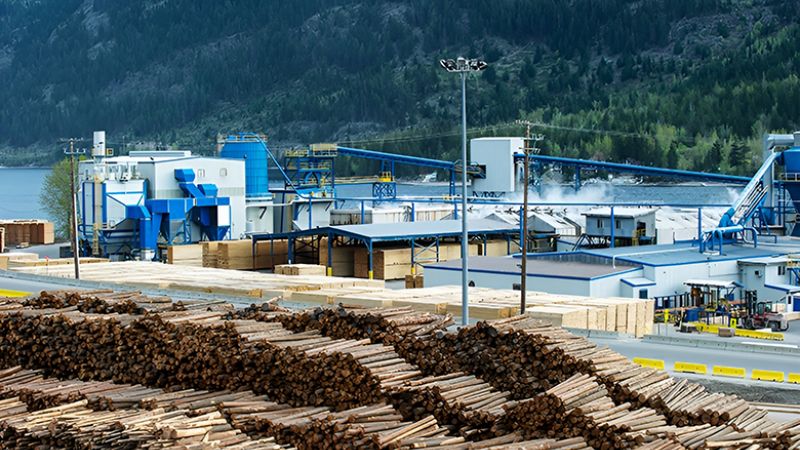


Meet global product demands and quality standards with industry-leading pellet plant design, engineering, equipment, and construction services for pellet processors.


Your Partner Beyond Project Completion
2000+ cases
RICHI is the leading designer, manufacturer and builder of pellet plants in the world, completing over 2000 projects in 140 countries across 6 continents.
Read More
Increase plant productivity, profitability, and safety by integrating high quality equipment into your pellet production line. Over the years, RICHI has become China's top pellet equipment manufacturer. At the same time, RICHI has established valuable partnerships with the world's leading component and raw material manufacturers to bring you the best there is in technology, automation, and efficiency in pelleting plant machinery.

For nearly 30 years, RICHI has been providing best-in-class pellet plant equipment and services to clients across a variety of industries, sizes, and needs. We pride ourselves on the knowledge and skill that each team member possesses – from our technical sales team to our process design engineers. You can count on RICHI Machinery to take your operation to the next level of innovation, quality, and success.
Need help with your pellet manufacturing plant project? Contact us today.
ANIMAL FEED
BIOMASS
WOOD
ORGANIC FERTILIZER
AQUA FEED
CAT LITTER
MUNICIPAL WASTE RECYCLING
SPECIAL PELLET PRODUCTION
RICHI Machinery continues to deliver world class pellet mill equipment, pellet plant engineering and project solutions that add value to our customers in the animal feed, wood waste, agriculture waste, organic fertilizer, cat litter and special pellet products industries. Throughout the years, we RICHI Machinery have built strong brand, becoming industry-leading pellet machine manufacturer. We value integrity, promise quality, and prioritize your success.
Learn MoreWith our expert team, we precisely implement your process engineering requirements in pellet mill and pelletizing plant systems. No matter which industry you’re in – we understand your needs and deliver solutions that meet the highest standards.
At RICHI, quality comes first. Our pellet making machine and related pellet line equipment undergo rigorous quality controls to ensure they meet the highest standards. Rely on products that are durable, safe, and efficient.
With decades of experience in pellet machine and pellet production line production, we have earned a reputation as a trusted partner in various industries. Our expertise allows us to cover a wide range of applications.
Not only do we offer premium pelleting equipment, but we are also experts at designing, building, installing, and maintaining facilities from the ground up. Our expertise is within pellt plant process design, discovering the most efficient, productive, and profitable way to handle your materials in an end-to-end cycle.
○ RICHI MACHINERY
Keeping in touch with us is an effective way to solve all your problems. If you have any needs or questions, please leave your contact information, then RICHI technical consultants will send design, quotation, videos to your mailbox. You can also contact us directly via WhatsApp: +86 13838389622
Copyright©2015-2026 by HENAN RICHI MACHINERY CO., LTD. All rights reserved.