
Electric wood chipper in Canada with a 90 kW drive and 680 × 300 mm inlet. A B.C. forestry project covering feedstock, power and capacity acceptance.
Waiting for a chipping contractor leaves a forestry business with a stockpile and a scheduling problem. For a family-run operator in British Columbia's interior, bringing the work into its own yard offered more control over when residues were processed and when customers could collect the chips.
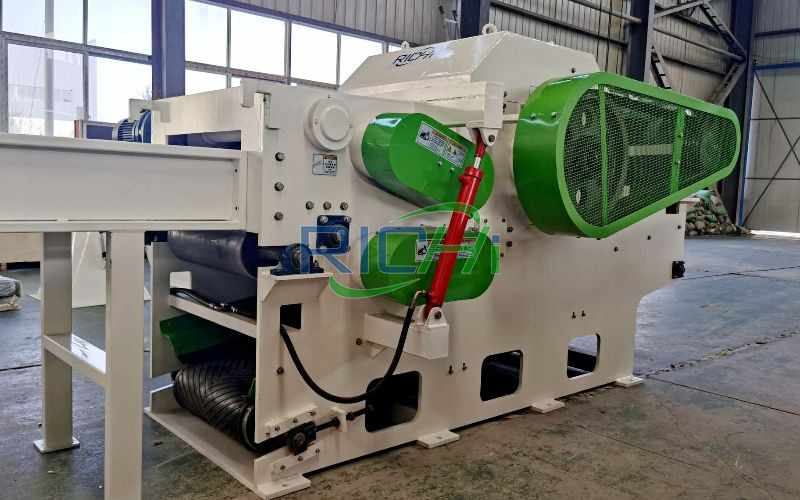
The electric wood chipper in Canada project centres on one RICHI XPJ680 × 300. The company selected a 90 kW drum chipper for branches, timber tops and small-diameter conifer wood. Its purchasing priority was a dependable chipping stage within an organised, electrically serviced yard.
Fuel chips and landscaping material provide the immediate product routes. RICHI can also configure subsequent grinding, drying and pellet-making equipment for suitable wood fuel or bedding products. Those routes require their own material specifications and processing modules.
Name:
Electric drum chipper
Country:
Canada
Date:
2024
Capacity:
Flexible
Model:
XPJ680 × 300
Main Motor Power:
90 kW
Maximum feed diameter:
300 mm
Raw Material:
Pine, spruce and Douglas-fir
The business supplies logs to local sawmills and handles residues arising from forestry work. Contract chipping had tied material movements to another company's availability. Owning the main processing machine changes that arrangement: stock can be prepared around incoming timber, collection dates and the yard's own working hours.
One industrial wood chipper in Canada suited the scope of this purchase. The operator needed a cutting machine with defined feeding and discharge interfaces. The project did not call for the immediate construction of a pellet factory or the purchase of unrelated downstream equipment.
A central yard also creates a practical place to inspect material before it reaches the knives. Incoming loads can be separated by source, condition and intended use. That matters when a biomass customer accepts bark-bearing chips while a landscape supplier requires a more selective product.
The commercial case rests on accepted tonnes dispatched and the cost of producing them. Contractor invoices, loader time, electricity, knife servicing and outbound haulage all belong in the assessment. An attractive chipper quotation needs to work within that wider operating budget.
Lodgepole pine, interior spruce and Douglas-fir are appropriate species for this British Columbia application. Their presence in the same supply area does not make every load mechanically identical. Straight stem sections feed differently from crooked branches, forked tops and pieces carrying loose bark.
Small roundwood can be aligned with the feed direction. Forked sections may need cutting before loading, even where the stem diameter falls below the nominal limit. The full shape of the piece determines whether it can pass through the opening without repeated repositioning.
Logging residues also need a clean collection method. Stones dragged from the ground, wire and other foreign objects can damage cutting tools or enter the finished chips. Material inspection and appropriate separation should take place before the powered infeed.
Branch loads containing needles and fine twigs should be identified separately from cleaner stemwood. Their suitability depends on the receiving customer's fuel or landscaping specification. Separating them early gives the operator more control over the material being offered for sale.
Orchard prunings and clean municipal tree wood are possible future streams, subject to inspection and trials. Their branch geometry, moisture and contamination history need separate assessment. Accepting another source should follow a defined chip specification and a workable collection arrangement.
The selected drum wood chipper combines a rotating cutting drum with powered feeding and a discharge belt. The following reference configuration identifies the components that need to be coordinated with the Canadian installation.
| Machine item | XPJ680 × 300 configuration |
|---|---|
| Drum drive | 90 kW main motor |
| Infeed roller drives | 4 kW and 3 kW motors |
| Pump motor | 1.1 kW |
| Chip discharge conveyor | 1.5 kW motor |
| Feed opening | 680 mm wide × 300 mm high |
| Nominal roundwood diameter limit | Up to 300 mm, subject to material geometry |
| Cutting arrangement | Two rotating knives and one fixed counterknife |
| Sum of listed motor ratings | 99.6 kW |
| Capacity acceptance | Net T/H established with representative feedstock |
The 300 mm figure describes the nominal roundwood feed limit. It does not describe chip length, and it does not mean every irregular 300 mm piece will feed readily. Loading instructions should identify acceptable shapes and the preparation required for awkward forks or butt sections.
For an electric drum chipper in Canada, the motor schedule is useful beyond the purchasing department. It gives the electrical contractor a starting list of driven components. The final design still needs motor nameplate currents, starting characteristics and details of any additional conveyors or extraction equipment.
The listed ratings add to 99.6 kW: 90 + 4 + 3 + 1.1 + 1.5. That arithmetic does not establish measured electricity use or a suitable service size. Motor efficiency, actual loading, starting demand and other site equipment affect the electrical requirement.
Capacity for this application must be agreed through a material trial. A useful result records accepted chip weight, elapsed time, wood species, moisture, incoming dimensions and the chip specification achieved. That gives the buyer an output figure it can use for scheduling and costing.
For illustration, a yard targeting 12 tonnes of accepted chips in four productive hours requires 3 T/H of net output. This is a planning calculation, not a measured capacity claim for the installed machine. Breaks, sorting, maintenance and loading delays require additional time in the working day.
The trial should distinguish active cutting time from the complete operating period. A high rate during a short run of straight logs may give little guidance about a shift dominated by tangled branches. Representative loads make the acceptance figure more relevant to the business.
Moisture also changes what a received tonne contains. At an illustrative received-wood feed rate of 3 T/H and 45% moisture on a wet basis, the wood supplies 1.65 tonnes of dry matter per hour. At 55% moisture, the same received mass contains 1.35 tonnes of dry matter.
Those examples describe the material entering the chipper; chipping does not perform the moisture removal of a dryer. Fuel buyers can therefore specify both delivered mass and moisture, while the operator keeps wet-tonne and dry-matter calculations separate in its sales records.
A nominal 30 mm cut length provides a starting target for sample production in this application. It is an assessment setting to discuss with the buyer, not a declaration that every chip has the same dimensions. Width, thickness, fines and long slivers also need checking.
For a biomass wood chipper in Canada, the receiving boiler's fuel-handling system helps determine the acceptable product. The trial sample should be checked for particle distribution, moisture and ash where required by the supply contract. A visual inspection alone cannot establish a fuel grade.
Landscape customers judge a different product. Appearance, cleanliness and consistency may influence acceptance as much as the nominal cut setting. Screening or further processing can be necessary before chips are sold as a specified landscaping material or packed for retail distribution.
The commercial brief assigns approximately 70% of prospective chip sales to biomass users and 30% to landscaping outlets. This is a market allocation for planning. Actual dispatches depend on product acceptance, seasonality and orders; the chipper does not enforce that split.
Separate stock bays make those destinations easier to manage. Material approved for one outlet can retain its source record and sample results. The operator can then quote each product on its own specification instead of mixing all chipped wood into a single sale pile.
A stationary wood chipper in Canada needs an electrical package matched to the actual premises. British Columbia's supply operates at 60 Hz. Site voltage, available capacity, transformer arrangements and starting limits must be confirmed before motors and controls are finalised.
At a yard with a 600 V three-phase service, equipment selection must account for the corresponding motor and control ratings. The service voltage is a site detail to verify. Supplying the nameplate schedule and wiring drawings allows the local electrical designer to complete that work.
Electrical equipment used in British Columbia requires acceptable evidence of approval. The purchase scope should identify the applicable certification or field-evaluation route with the responsible approval body. A particular model name or overseas inspection report does not by itself establish approval for the installation.
The control sequence also needs attention: discharge capacity must be available before feeding begins, and an interrupted discharge must stop further loading. RICHI and the site integrator should define the interfaces, emergency stops and restart conditions within the agreed equipment scope.
This electric wood chipper in Canada is consequently planned around a powered operating base. Its business value depends on a reliable electrical connection and organised material movements. Electricity tariffs, demand charges and measured operating load belong in the running-cost calculation.
Interior British Columbia calls for attention to freezing conditions without assuming that every yard has the same winter climate. The site brief should state the minimum operating temperature, exposure to snow and the condition of wood arriving from storage or harvesting operations.
Snow-covered loads can conceal foreign material, while frozen bundles complicate sorting and feeding. Drainage and clear loading surfaces help preserve access to the machine. Hydraulic oil, lubrication and motor protection need selection against the stated operating environment.
Knife access belongs in the layout from the beginning. The crew needs space to isolate equipment, confirm that the rotor has stopped and remove cutting tools using the approved procedure. Guards, chutes and maintenance access must be assessed as a complete installation.
British Columbia's wood-processing rules address protection against thrown material and access to rotating chipper components. Those requirements affect the feed chute and service arrangements. They should be resolved during integration rather than left to an operator improvising around the machine.
A forestry wood chipper in Canada also needs a practical wear-parts plan. Identify spare knives, counterknife requirements and sharpening arrangements before production begins. Logging knife changes alongside material condition gives the operator useful evidence when cutting performance starts to deteriorate.
The yard's delivery record should connect each outgoing load with its material source and intended customer. Received weight, moisture information and product checks help establish what has been supplied. That record is particularly useful when wood from several forestry jobs enters the same processing location.
Chip storage needs enough separation to preserve those distinctions. Pile condition, drainage, access for loading and the buyer's collection schedule all affect the dispatch plan. Newly produced chips should enter a managed stock system with appropriate fire and storage controls.
Owning the chipper gives the business responsibility for these product decisions. It can organise processing around orders, but profitable operation still depends on saleable yield, transport distance and the cost of handling each tonne. Production records provide a sound basis for evaluating that result.
An electric wood chipper for sale in Canada should be quoted with a clear supply boundary. The machine, motors, control panel, feeding arrangement, discharge interface and initial wear parts need separate identification. Site electrical work, foundations and any product screening should be allocated explicitly.
For a shipment from Qingdao, Vancouver is a route option to assess for this British Columbia destination. Packing dimensions, cargo weight, terminal handling and onward road transport determine the logistics plan. Freight arrangements and delivery dates belong in the confirmed commercial offer.
Send photographs of the typical pine, spruce and Douglas-fir loads, their diameter range and moisture condition, together with the required tonnes per working day. Include a yard drawing, electrical service details and the proposed fuel or landscaping specification.
Discuss this electric wood chipper in Canada application with RICHI Machinery. The next step is a material-based capacity assessment and an itemised proposal for one XPJ680 × 300, with the feeding, electrical and discharge requirements defined for your site.
Having the right mix of reliable, high-quality pellet machine and pelletizing systems and expert support is essential to your success. Watch how our end-to-end feed pellet plant solutions have helped our customers optimize their performance.
Our customized and future-proofed turnkey pellet plant solutions is designed with you at the core. From vision to reality and beyond, our team stays connected with yours. Giving you peace-of-mind with an expert at your side.
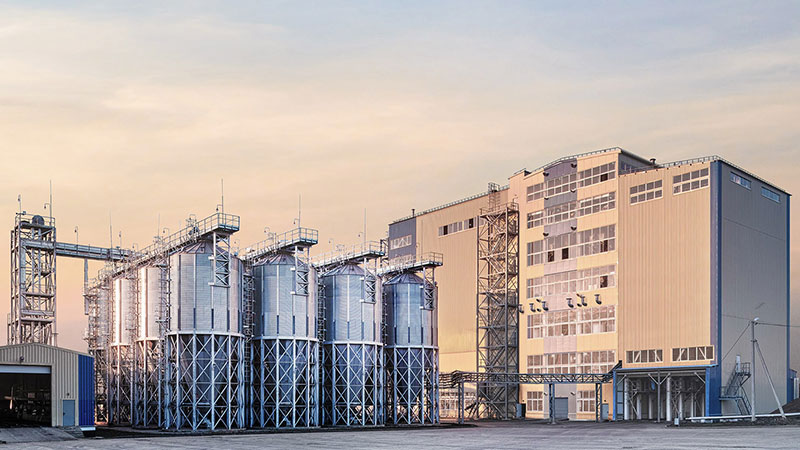
At RICHI, we go beyond project completion. With RICHI Servicee, we’re your dedicated partners in success. Count on us for expert guidance, minimal downtime, and optimized productivity. Choose RICHI for unmatched service and support.
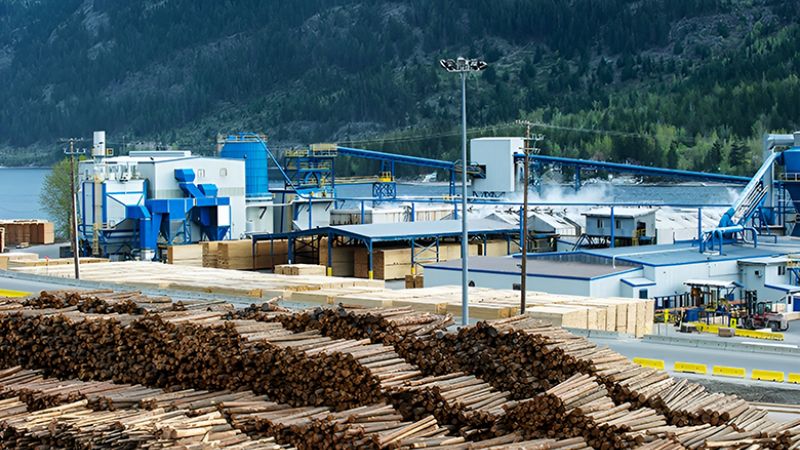


Meet global product demands and quality standards with industry-leading pellet plant design, engineering, equipment, and construction services for pellet processors.


Your Partner Beyond Project Completion
2000+ cases
RICHI is the leading designer, manufacturer and builder of pellet plants in the world, completing over 2000 projects in 140 countries across 6 continents.
Read More
Increase plant productivity, profitability, and safety by integrating high quality equipment into your pellet production line. Over the years, RICHI has become China's top pellet equipment manufacturer. At the same time, RICHI has established valuable partnerships with the world's leading component and raw material manufacturers to bring you the best there is in technology, automation, and efficiency in pelleting plant machinery.

For nearly 30 years, RICHI has been providing best-in-class pellet plant equipment and services to clients across a variety of industries, sizes, and needs. We pride ourselves on the knowledge and skill that each team member possesses – from our technical sales team to our process design engineers. You can count on RICHI Machinery to take your operation to the next level of innovation, quality, and success.
Need help with your pellet manufacturing plant project? Contact us today.
ANIMAL FEED
BIOMASS
WOOD
ORGANIC FERTILIZER
AQUA FEED
CAT LITTER
MUNICIPAL WASTE RECYCLING
SPECIAL PELLET PRODUCTION
RICHI Machinery continues to deliver world class pellet mill equipment, pellet plant engineering and project solutions that add value to our customers in the animal feed, wood waste, agriculture waste, organic fertilizer, cat litter and special pellet products industries. Throughout the years, we RICHI Machinery have built strong brand, becoming industry-leading pellet machine manufacturer. We value integrity, promise quality, and prioritize your success.
Learn MoreWith our expert team, we precisely implement your process engineering requirements in pellet mill and pelletizing plant systems. No matter which industry you’re in – we understand your needs and deliver solutions that meet the highest standards.
At RICHI, quality comes first. Our pellet making machine and related pellet line equipment undergo rigorous quality controls to ensure they meet the highest standards. Rely on products that are durable, safe, and efficient.
With decades of experience in pellet machine and pellet production line production, we have earned a reputation as a trusted partner in various industries. Our expertise allows us to cover a wide range of applications.
Not only do we offer premium pelleting equipment, but we are also experts at designing, building, installing, and maintaining facilities from the ground up. Our expertise is within pellt plant process design, discovering the most efficient, productive, and profitable way to handle your materials in an end-to-end cycle.
○ RICHI MACHINERY
Keeping in touch with us is an effective way to solve all your problems. If you have any needs or questions, please leave your contact information, then RICHI technical consultants will send design, quotation, videos to your mailbox. You can also contact us directly via WhatsApp: +86 13838389622
Copyright©2015-2026 by HENAN RICHI MACHINERY CO., LTD. All rights reserved.