
Electric feed mill grinder in the Netherlands for dairy feed preparation. The 75 kW SFSP66×60 processes corn, barley and peas at 6–7 T/H.
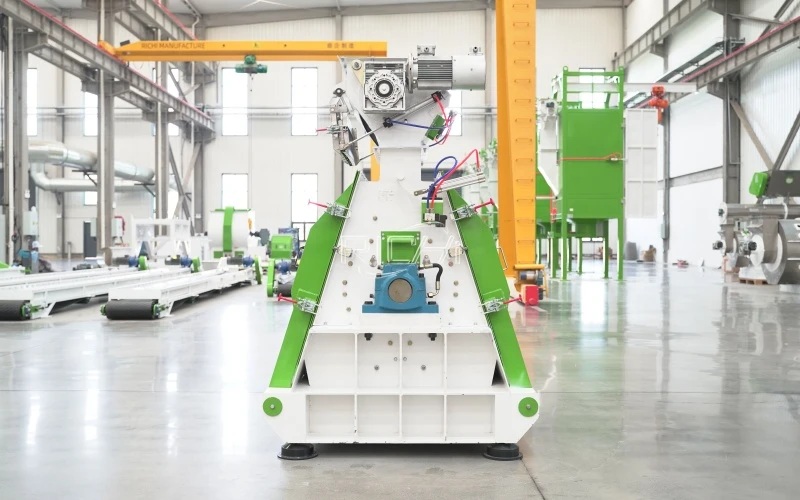
In Gelderland, the Netherlands, a dairy-farm cooperative supplying milk to regional processors decided to bring more control over grain preparation into its own operation. The business already had a hay cutter, feed mixer and material-handling equipment, but its existing grinding arrangement struggled to maintain a consistent particle size when processing corn, barley and field peas. Purchasing prepared feed ingredients from external suppliers also left the cooperative exposed to changing prices and delivery schedules.
Rather than replace its entire feed preparation system, the cooperative purchased one SFSP66×60 electric feed mill grinder. The machine was assigned to dry grain and pulse ingredients used in concentrate mixtures for dairy cattle. Existing equipment remained responsible for forage preparation and mixing. This approach allowed the cooperative to address its grinding bottleneck without undertaking a complete production-line reconstruction.
Name:
Feed Mill Grinder
Country:
Netherlands
Date:
2026
Capacity:
6–7 T/H
Model:
SFSP66×60
Main Motor Power:
75 kW
Main application:
Dairy cattle concentrate feed preparation
target particle size:
2–3 mm
The cooperative needed a grinder that could process several dry ingredients, maintain a repeatable particle size and keep pace with the feed requirements of its own herd and neighboring dairy farms. Its combined requirement for dry grain ingredients was approximately 20–25 tons per day during busy periods.
A machine with a rated capacity of 6–7 T/H provided sufficient output for the planned operating schedule, while leaving room for seasonal demand changes. After reviewing the raw materials, available electrical supply and existing conveyor arrangement, the cooperative selected the SFSP66×60 water-drop animal feed hammer mill.
The water-drop grinding chamber and high-speed rotor are suited to reducing dry cereal grains into particles for subsequent mixing. The machine also offers a practical advantage for a cooperative handling several feed formulations: screen selection and operating adjustments allow the grinding fineness to be matched to different ingredients and feed requirements.
| Parameter | Specification |
|---|---|
| Model | SFSP66×60 |
| Rotor diameter | 660 mm |
| Grinding chamber width | 600 mm |
| Main motor power | 75 kW |
| Hammer line speed | 103 m/s |
| Rated capacity | 6–7 T/H |
| Typical target particle size | 2–3 mm for selected grain ingredients |
| Main application | Dairy cattle concentrate feed preparation |
The rated capacity depends on the raw material, screen opening, incoming moisture and required fineness. Actual output therefore needs to be confirmed under the cooperative's operating conditions rather than treated as a fixed rate for every ingredient.
The main materials processed by the electric feed mill grinder are dried corn, barley, wheat and field peas. These ingredients provide energy and, in the case of peas, additional plant protein for dairy concentrate formulations. Their proportions change according to ration requirements, ingredient availability and the nutritional advice followed by the cooperative.
Before grinding, operators check the condition of each incoming batch. Grain that is excessively damp or contains foreign material is not sent directly into the grinding chamber. Magnets and appropriate screening at the receiving stage help remove metal and other unwanted contaminants before the material reaches the hammer mill.
For the cooperative's standard concentrate mixtures, the initial target was a particle size of approximately 2–3 mm. The operator adjusts the screen and checks the resulting material when changing between corn, barley and field peas. These checks help prevent a coarse ingredient from disrupting mixing uniformity or an unnecessarily fine grind from increasing energy use.
The grinder handles dry ingredients only. Grass silage and other wet forages remain outside this machine's duty and are managed through the cooperative's existing forage-handling system. After grinding, the grain meal is conveyed to the mixer, where it can be combined with grass or alfalfa meal, protein ingredients, mineral supplements and other ration components as required.
The investment was based on a straightforward assessment of the existing facility. Its mixer, hay cutter and conveying equipment were still serviceable, so replacing them would have added cost without directly resolving the inconsistent grinding results.
Adding one dedicated grinder provided three practical benefits:
This configuration also makes future expansion easier to plan. If the cooperative's ingredient throughput increases, it can review the capacity of its receiving, conveying and mixing equipment before deciding whether additional machinery is necessary.
The grinder was shipped from Qingdao, China, through the Port of Rotterdam before onward delivery to Gelderland. Rotterdam provides an established entry point for industrial equipment destined for the Dutch agricultural sector.
Before delivery, the cooperative prepared the installation area and checked access for unloading, positioning and maintenance. The planning process allowed space for the grinder, feeding and discharge connections, dust collection equipment and access to the motor and wearing components. The final layout was coordinated with the dimensions of the selected machine and the existing building.
The electrical installation was designed around the site's three-phase, 400 V, 50 Hz supply, subject to confirmation of the motor nameplate and final equipment documentation. The 75 kW main motor requires suitable electrical protection, correctly sized cabling and an installation that complies with applicable Dutch and European requirements.
Dust management was another important consideration. Grinding dry grain generates airborne particles, so the installation incorporated dust extraction and suitable protective measures for combustible agricultural dust. The cooperative's maintenance team also established inspection routines for the grinding chamber, hammers, screens and collection equipment.
Because the purchase involved one machine rather than a complete feed line, commissioning concentrated on verifying the grinder's direction of rotation, feed consistency, discharge performance and particle-size results. Operators then carried out trial runs with the principal raw materials before introducing the equipment into the regular production schedule.
Following commissioning, the cooperative used the SFSP66×60 to prepare dry ingredients for its dairy concentrate mixtures. The main improvement was greater control over the grinding stage. Operators could check the particle size before mixing rather than relying entirely on the consistency of purchased meal or the performance of an aging grinder.
At a working output of around 6 T/H, processing 20–25 tons of grain ingredients requires approximately 3.3–4.2 hours of actual grinding time. The complete daily schedule also includes material handling, ingredient changes, inspections and routine cleaning, so total operating time is longer than the calculated grinding time alone.
The cooperative reported that the new arrangement made daily preparation more predictable and reduced the need to interrupt production to correct inconsistent grinding results. More uniform ground ingredients also supported more consistent distribution during mixing.
These improvements matter in dairy feed preparation because particle size affects how ingredients mix and how cattle consume the resulting ration. Grinding is only one part of feed quality, however. The final ration still needs to account for forage structure, energy and protein balance, minerals, feeding rate and the requirements of different groups of cows.
“We wanted better control over our grain ingredients without replacing equipment that was still working well. The new grinder gives us a more consistent material for mixing, and we can adjust the setup when we change between corn, barley and peas. Keeping our existing equipment has also helped us control the investment. We now have a more dependable preparation process for our dairy feed.”
The cooperative's priority was not simply to increase the rated grinding capacity. It was to obtain a machine that fitted the existing workflow, gave operators better control over raw materials and could be maintained by the facility's own technical staff.
For an electric grain grinder used regularly in a dairy-feed operation, routine inspection is essential. The cooperative checks hammer wear, screen condition, bearings, drive components and the integrity of dust extraction connections. The maintenance schedule is adjusted according to operating hours and the abrasiveness of the processed ingredients.
Operators also monitor motor load and listen for unusual vibration or changes in grinding noise. A sudden change can indicate uneven feeding, foreign material or wear that needs attention. Keeping spare screens and commonly replaced wearing components available helps reduce interruptions during busy feed preparation periods.
Electricity consumption is influenced by the material being ground, the required particle size and the actual throughput. For this reason, the cooperative evaluates operating performance against tonnes processed and the required fineness rather than assuming that the rated motor power alone determines the cost per ton.
The requirements of Dutch dairy farms vary considerably. A small farm processing only a few tons of grain per day may need a lower-capacity grinder, while a cooperative or commercial feed preparation business serving multiple farms may benefit from a machine in the 6–7 T/H class.
For buyers comparing a Netherlands cattle feed grinder with other grinding options, several factors deserve attention before selecting a model:
A Gelderland grain hammer mill installation may be relatively straightforward when suitable receiving and mixing equipment is already available. The final selection should nevertheless be based on actual throughput requirements, the material samples and the layout of the facility.
This project demonstrates how an electric feed mill grinder in the Netherlands can improve a specific stage of dairy feed preparation without requiring a complete new production line. The SFSP66×60 provides a dedicated grinding route for dry grains and pulses, while the cooperative continues using its existing equipment for forage handling and mixing.
For dairy farms, farm cooperatives and commercial feed preparation businesses considering a similar investment, the most important starting points are the raw materials, required fineness, daily tonnage and existing equipment arrangement. Matching these factors to the grinder's actual operating range helps avoid both insufficient capacity and unnecessary oversizing.
RICHI Machinery supplies industrial grinding equipment for grain and feed ingredient preparation. Buyers evaluating electric feed mill grinder equipment, Dutch dairy feed grinding machinery or a commercial feed grinder for dairy operations can discuss their raw materials, throughput targets and installation requirements with the technical team before selecting a suitable configuration.
Having the right mix of reliable, high-quality pellet machine and pelletizing systems and expert support is essential to your success. Watch how our end-to-end feed pellet plant solutions have helped our customers optimize their performance.
Our customized and future-proofed turnkey pellet plant solutions is designed with you at the core. From vision to reality and beyond, our team stays connected with yours. Giving you peace-of-mind with an expert at your side.

At RICHI, we go beyond project completion. With RICHI Servicee, we’re your dedicated partners in success. Count on us for expert guidance, minimal downtime, and optimized productivity. Choose RICHI for unmatched service and support.



Meet global product demands and quality standards with industry-leading pellet plant design, engineering, equipment, and construction services for pellet processors.


Your Partner Beyond Project Completion
2000+ cases
RICHI is the leading designer, manufacturer and builder of pellet plants in the world, completing over 2000 projects in 140 countries across 6 continents.
Read More
Increase plant productivity, profitability, and safety by integrating high quality equipment into your pellet production line. Over the years, RICHI has become China's top pellet equipment manufacturer. At the same time, RICHI has established valuable partnerships with the world's leading component and raw material manufacturers to bring you the best there is in technology, automation, and efficiency in pelleting plant machinery.

For nearly 30 years, RICHI has been providing best-in-class pellet plant equipment and services to clients across a variety of industries, sizes, and needs. We pride ourselves on the knowledge and skill that each team member possesses – from our technical sales team to our process design engineers. You can count on RICHI Machinery to take your operation to the next level of innovation, quality, and success.
Need help with your pellet manufacturing plant project? Contact us today.
ANIMAL FEED
BIOMASS
WOOD
ORGANIC FERTILIZER
AQUA FEED
CAT LITTER
MUNICIPAL WASTE RECYCLING
SPECIAL PELLET PRODUCTION
RICHI Machinery continues to deliver world class pellet mill equipment, pellet plant engineering and project solutions that add value to our customers in the animal feed, wood waste, agriculture waste, organic fertilizer, cat litter and special pellet products industries. Throughout the years, we RICHI Machinery have built strong brand, becoming industry-leading pellet machine manufacturer. We value integrity, promise quality, and prioritize your success.
Learn MoreWith our expert team, we precisely implement your process engineering requirements in pellet mill and pelletizing plant systems. No matter which industry you’re in – we understand your needs and deliver solutions that meet the highest standards.
At RICHI, quality comes first. Our pellet making machine and related pellet line equipment undergo rigorous quality controls to ensure they meet the highest standards. Rely on products that are durable, safe, and efficient.
With decades of experience in pellet machine and pellet production line production, we have earned a reputation as a trusted partner in various industries. Our expertise allows us to cover a wide range of applications.
Not only do we offer premium pelleting equipment, but we are also experts at designing, building, installing, and maintaining facilities from the ground up. Our expertise is within pellt plant process design, discovering the most efficient, productive, and profitable way to handle your materials in an end-to-end cycle.
○ RICHI MACHINERY
Keeping in touch with us is an effective way to solve all your problems. If you have any needs or questions, please leave your contact information, then RICHI technical consultants will send design, quotation, videos to your mailbox. You can also contact us directly via WhatsApp: +86 13838389622
Copyright©2015-2026 by HENAN RICHI MACHINERY CO., LTD. All rights reserved.