
Explore a dust proof wood shredder in Albania for crushing discarded construction formwork, nailed wooden pallets and mixed timber waste into 2–4 cm wood chips.
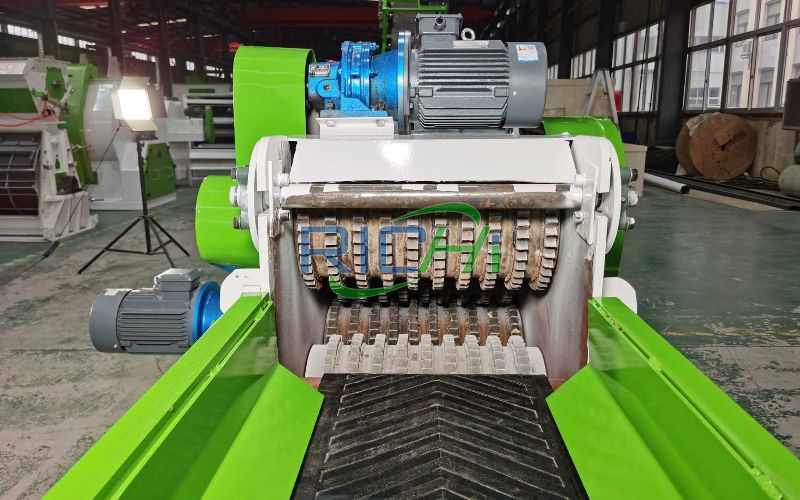
At a construction-material recovery operation serving the Durrës–Tirana corridor in Albania, discarded timber had become an increasingly awkward part of the daily workload.
The business handled surplus building materials, damaged wooden pallets, used formwork boards and timber packaging collected from construction contractors and building-material suppliers. Some pieces could be reused after inspection, but others were too cracked, split or distorted to justify further service.
The operator did not need another complete production line. The immediate requirement was more specific: reduce the volume of rejected wood, make it easier to store and prepare suitable material for downstream recycling. A heavy-duty wood shredder was therefore considered as a standalone addition to the existing recovery operation.
Name:
Wood Shredder
Country:
Albania
Date:
2026
Capacity:
Flexible
Model:
RIBPC 1250×400
Main Motor Power:
110 kW
Raw Materials:
pallet wood, formwork boards, timber waste
Final product size:
2–4cm
The selected configuration for this project is the RICHI RIBPC 1250×400 wood-waste crusher, equipped with a 110 kW main motor, two 7.5 kW feeding motors, a 1.1 kW hydraulic pump motor, a 1.5 kW discharge conveyor motor and 24 hammers. The planned output is approximately 2–4 cm wood chips, with the internal screen selected according to the required material size and the manufacturer's technical recommendations.
For companies looking for a dust proof wood shredder in Albania, the important consideration is not simply the machine's motor power. Construction timber varies in thickness, moisture condition, fastener content and previous use. A suitable machine must be selected around the actual feedstock, the required output and the working conditions at the recovery site. Dust management also needs to be considered as part of the installation rather than treated as a feature that eliminates all airborne particles by itself.
Albania's building-material supply chain relies on timber packaging, pallets and temporary wooden structures for different handling and construction tasks. Durrës is particularly relevant to this project because the port is an important entry point for goods into Albania and serves regional trade connections. The Albanian government identifies the Port of Durrës as a major gateway for freight and regional transit.
For a materials-recovery contractor, the wood arriving from these activities is not a uniform raw material. One delivery may contain relatively clean pallet boards, while another includes thicker formwork panels, broken timber supports and short pieces of construction lumber. Some materials remain suitable for reuse; others have been damaged by repeated handling, exposure to rain or contact with concrete and construction debris.
The operator's first task is to separate reusable material from wood that should be discarded. Reusable formwork and structurally sound pallets retain value and should not be crushed unnecessarily. Damaged boards, broken pallet blocks and unusable timber packaging, on the other hand, take up space without serving their original purpose.
Before the purchase, the recovery business relied on manual dismantling and basic cutting for part of its rejected wood stream. This approach was manageable for occasional material, but it became less practical when irregular boards and pallet components accumulated faster than workers could prepare them. The business wanted a machine capable of processing suitable pieces in a more consistent manner, without immediately investing in a complete wood-processing plant.
The RIBPC wood pallet shredder was selected for this defined role. It would handle the coarse-crushing stage, while inspection, sorting, storage and the decision about the final use of the chips would remain part of the operator's existing workflow. This single-machine approach limits the initial investment to the main processing bottleneck and leaves room for a later decision about screening or secondary size reduction.
The intended feedstock is a mixed stream of rejected construction timber and wooden packaging. Its composition is determined by the materials available to the recovery business, rather than by an assumption that all construction waste can be fed into the machine.
The main material categories include damaged wooden pallets from building-material deliveries, solid timber blocks, broken pallet stringers, short lengths of untreated timber, discarded formwork boards and timber packaging that can no longer be reused. Some pieces may be wet from outdoor storage, while others may carry concrete residue, paint, adhesives or metal fasteners.
Construction formwork deserves particular attention. Reusable formwork panels can be valuable, so only boards that have reached the end of their practical service life should enter the crushing stream. Boards with excessive splitting, severe deformation or damage that makes reuse uneconomical are more suitable candidates for recovery, provided their coatings and contamination status allow the proposed recycling route.
The same principle applies to pallets. A pallet with a few replaceable boards should not automatically be treated as waste. After inspection, serviceable pallets can be repaired or returned to circulation. Only the rejected portion proceeds to crushing, helping the business preserve the value of reusable timber and reduce unnecessary processing.
The operator must also distinguish ordinary timber from chemically treated or contaminated wood. Painted boards, preservative-treated timber, laminated panels and materials contaminated with oils or construction chemicals may not be suitable for the same downstream application as clean wood. The shredder can reduce the physical size of compatible material, but it cannot remove chemical contamination or make unsuitable wood safe for unrestricted use.
Before feeding, workers should remove oversized metal objects, stones, concrete chunks and other contaminants that fall outside the manufacturer's permitted operating conditions. Nails and screws are common in pallet and construction wood, and the machine is designed for coarse crushing of suitable nailed wood. Nevertheless, the presence of fasteners does not mean that every metal object is acceptable. Large steel pieces, chains and reinforcement bars can create a serious risk of damage or unsafe operation.
The RICHI RIBPC 1250×400 is a heavy-duty wood-waste crusher intended for preliminary crushing of materials such as wooden pallets, nailed boards and discarded wooden components. Its 1250 × 400 mm feed opening is suited to the proposed mixed timber stream, subject to confirmation of the actual feed dimensions and operating limits.
The main motor is rated at 110 kW. The feeding system uses two 7.5 kW motors, while the hydraulic pump motor is rated at 1.1 kW. The discharge conveyor uses a 1.5 kW motor, and the crushing assembly contains 24 hammers. This configuration provides a defined starting point for a construction-material recovery business that needs to reduce bulky timber waste rather than manufacture fine wood powder directly.
The target product is wood chips measuring approximately 2–4 cm. The internal screen can be customized to suit the required output, but the final size distribution should be confirmed through technical discussion and, where appropriate, a material trial. Different timber thicknesses, moisture conditions and feed arrangements can affect the actual result.
The manufacturer's supplied specification does not include a rated hourly throughput for this model. A reliable capacity figure cannot therefore be stated from the available data alone. The actual processing rate should be confirmed with RICHI based on the feedstock, working schedule, desired particle size, feeding method and operating conditions.
| Parameter | Specification |
|---|---|
| Machine model | RIBPC 1250×400 |
| Feed opening dimensions | 1250 × 400 mm |
| Main motor power | 110 kW |
| Feeding motor power | 7.5 + 7.5 kW |
| Hydraulic pump motor power | 1.1 kW |
| Discharge conveyor motor power | 1.5 kW |
| Hammer quantity | 24 |
| Target finished material size | Approximately 2–4 cm |
| Primary application | Coarse crushing of suitable pallet wood, formwork boards and timber waste |
| Purchase configuration | One standalone machine |
Model selection should not rely on the feed opening alone. Before ordering, the operator should provide the largest board dimensions, the typical thickness of the timber, the proportion of pallet blocks and boards, the condition of the material and the required output size. Photographs of representative feedstock can help RICHI's technical team assess whether the proposed configuration is suitable.
Construction wood is often less predictable than clean, straight timber. Pallet components can have split edges, uneven lengths and protruding nails. Formwork boards may be warped or coated with residue, while short timber offcuts can enter the crushing chamber in different orientations. The equipment therefore needs a robust crushing arrangement and a feeding system that can handle suitable material under controlled conditions.
The RIBPC uses high-strength alloy-steel hammers that undergo quenching treatment. The hammer arrangement is intended for demanding wood-waste applications, including compatible nailed timber. The hammers are installed using detachable fastenings, which simplifies inspection, removal and replacement when wear or damage makes servicing necessary.
The machine's heavy-duty housing is constructed from reinforced steel plate. Carbon dioxide gas-shielded welding and overall annealing are specified to help reduce residual stress associated with fabrication and improve structural stability during long-term operation. These manufacturing measures are important for equipment exposed to repeated impact loads.
The hydraulic feeding arrangement supports the movement of material into the crushing chamber. Feeding performance still depends on the size and shape of the wood, so operators must follow the recommended loading procedure and avoid forcing oversized or unsuitable pieces into the machine.
Automatic overload protection is designed to help protect the equipment when abnormal loading occurs. It is not a substitute for sorting or safe operating procedures. If the machine repeatedly trips, develops abnormal vibration or produces unusual noise, the operator should investigate the cause rather than simply restarting it.
Sealed bearings and the specified dust- and water-resistant design features help protect critical components in industrial working conditions. However, the phrase "dust proof wood shredder" should not be interpreted as meaning that the entire installation produces no airborne dust. Crushing dry timber can still generate dust, particularly when the material contains brittle boards, degraded surfaces or fine particles.
For a wood-waste recovery site, dust control begins with the layout around the machine. The feed area, discharge conveyor and chip-collection point should be arranged to minimize unnecessary drops, spills and repeated handling. Where the material and local requirements call for it, the installation may incorporate suitable dust extraction, collection equipment or enclosed transfer points.
The appropriate arrangement depends on the moisture and condition of the incoming wood. Wet timber may create less airborne dust during crushing but can introduce other operating and storage challenges. Dry, brittle boards may produce more airborne particles. Concrete residue, old coatings and unknown contaminants can also change the risk profile, so material inspection remains important.
Dust extraction equipment, if required, must be selected to match the actual process and applicable safety requirements. A generic dust collector should not be assumed suitable for every wood-waste stream, particularly where the feedstock may contain coating residues or other contaminants. The site operator should also consider noise, housekeeping, worker exposure and safe access for maintenance.
RICHI can discuss the intended installation conditions, feeding arrangement, discharge layout and any auxiliary equipment needed for a practical system. Buyers should identify their dust-control requirements before ordering so that the proposed machine and the surrounding installation can be evaluated together.
The first result of this project is a more manageable intermediate wood material. The final use depends on the wood's composition, cleanliness and the requirements of the receiving facility. A uniform-looking chip is not automatically suitable for every recycling route.
One possible route is further processing at a wood-recycling facility. The 2–4 cm chips can be inspected, screened or reduced further according to the receiving plant's requirements. A secondary hammer mill may be considered if smaller particles are needed, but its selection depends on the chip size, throughput requirement and final product specification.
Another possible route is the recovery of clean wood for approved manufacturing applications. Whether the chips can be used in composite products, panel production or another industrial process depends on the material specification and the receiving facility's acceptance criteria. Painted, laminated or chemically treated boards may need to be excluded from such streams.
Biomass applications may be possible for suitable clean wood, but the operator must verify the feedstock's suitability and comply with applicable fuel and environmental requirements. Treated, painted or contaminated construction timber should not be directed to a fuel stream merely because it has been crushed. Particle size alone does not establish that the material is safe or commercially acceptable.
The business can also evaluate whether some incoming wood should bypass the shredder entirely. Serviceable pallets and reusable formwork may be worth more when repaired or resold than when converted into chips. Sorting before processing helps retain that value and keeps the crushing operation focused on genuinely rejected material.
The project was planned around one immediate operational need: reducing the volume of rejected construction timber. The operator already had a material-receiving area, sorting space and arrangements for handling the incoming waste. A complete wood-processing line would have introduced additional capital costs before the business had established the market demand and quality requirements for the finished chips.
By adding one RIBPC 1250×400 crusher machine, the operator can first measure the volume of accepted feedstock, the actual processing rate, the condition of wear parts and the amount of material accepted by downstream buyers. This information is essential when deciding whether a secondary crusher, screen, dust collector or other auxiliary equipment would improve the business case.
The decision also reduces the risk of purchasing equipment that is not yet required. If the market only accepts coarse chips, additional grinding may offer little value. If buyers demand smaller particles or a tighter size distribution, the next stage can be selected after those requirements are confirmed.
RICHI Machinery can support this process with technical consultation on model selection, feed dimensions, screen configuration, electrical requirements and maintenance access. For a buyer evaluating a dust proof wood shredder in Albania, the objective is to match the machine to the actual material stream rather than to oversize the equipment based on an unverified throughput estimate.
Reliable operation depends on how the machine is fed and maintained, not only on the strength of its main motor. The operator should establish a consistent sorting process and record the condition of the incoming timber. Material with excessive concrete, stone, metal or other unsuitable contaminants should be removed before crushing.
Routine inspection should cover the hammers, fastening arrangements, bearings, feeding components, hydraulic system, conveyor and protective devices. Wear patterns can provide useful information about the material being processed and whether the operating procedure needs adjustment. Worn or damaged components should be replaced in accordance with the manufacturer's maintenance instructions.
Workers should never reach into the feed opening or attempt to clear a blockage while the machine is running. Before inspection or maintenance, the equipment must be isolated from its energy sources and secured against unexpected restart. Guarding and emergency-stop systems must remain in place and functional.
The business should also track electricity consumption, operating hours, downtime, wear-part replacement and the proportion of incoming wood rejected during sorting. These records provide a more accurate view of the cost per tonne than a nominal motor-power figure alone.
For this application, the most useful feedback concerns whether the machine handles the accepted mix of pallet components and formwork boards consistently, whether the output meets the receiving facility's particle-size requirements and how straightforward routine inspection and hammer replacement prove to be.
The operator's assessment should also consider the work before and after crushing. If sorting is poorly organized, the machine may be interrupted by unsuitable feedstock. If the discharge area is too small, chips may accumulate and restrict operation. A practical acceptance review therefore considers the shredder together with the material flow around it.
Before the project is treated as a verified customer case, actual operating feedback should be obtained from the buyer. Any customer quotation, measured processing rate, reduction in labour, maintenance interval or cost saving should be supported by project records or an authorized customer statement. No specific performance result is assumed in this case description because the supplied equipment information does not include measured operating data.
The planned shipping route is from Qingdao Port in China to the Port of Durrës in Albania. Durrës is a major commercial port and an important entry point for freight into Albania.
Before dispatch, the equipment configuration, packing list, spare-parts arrangement and electrical requirements should be checked against the order. The receiving site should prepare adequate foundation support, lifting access, power supply, material-handling space and a safe area for collecting the crushed wood.
Installation planning should also consider dust control and the separation of accepted feedstock from materials awaiting inspection. Treated or contaminated wood should remain separate from clean wood intended for an approved recycling application.
The RICHI RIBPC 1250×400 offers a defined configuration for a construction-material recovery business that needs to crush suitable rejected pallets, formwork boards and other compatible timber waste. With a 110 kW main motor, two 7.5 kW feeding motors, a 1.1 kW hydraulic pump motor and 24 hammers, it is designed for the preliminary crushing stage rather than for direct production of fine wood powder.
The intended output of approximately 2–4 cm chips creates a more manageable intermediate material. Whether that material can be sold or used in a particular downstream process depends on sorting quality, contamination controls, particle-size requirements and the receiving facility's specifications.
For buyers comparing a dust proof wood shredder in Albania, the next step is to review representative photographs of the feedstock, the largest board dimensions, the proportion of nailed timber, the expected operating schedule and the target use of the finished chips. These details allow RICHI Machinery to evaluate the model, screen configuration and any auxiliary equipment that may be required.
Starting with a single appropriately selected machine can help a recovery business understand its actual feedstock and operating costs before expanding into a more extensive wood-processing system. A measured approach makes the investment easier to evaluate and gives future equipment decisions a practical foundation.
Having the right mix of reliable, high-quality pellet machine and pelletizing systems and expert support is essential to your success. Watch how our end-to-end feed pellet plant solutions have helped our customers optimize their performance.
Our customized and future-proofed turnkey pellet plant solutions is designed with you at the core. From vision to reality and beyond, our team stays connected with yours. Giving you peace-of-mind with an expert at your side.

At RICHI, we go beyond project completion. With RICHI Servicee, we’re your dedicated partners in success. Count on us for expert guidance, minimal downtime, and optimized productivity. Choose RICHI for unmatched service and support.



Meet global product demands and quality standards with industry-leading pellet plant design, engineering, equipment, and construction services for pellet processors.


Your Partner Beyond Project Completion
2000+ cases
RICHI is the leading designer, manufacturer and builder of pellet plants in the world, completing over 2000 projects in 140 countries across 6 continents.
Read More
Increase plant productivity, profitability, and safety by integrating high quality equipment into your pellet production line. Over the years, RICHI has become China's top pellet equipment manufacturer. At the same time, RICHI has established valuable partnerships with the world's leading component and raw material manufacturers to bring you the best there is in technology, automation, and efficiency in pelleting plant machinery.

For nearly 30 years, RICHI has been providing best-in-class pellet plant equipment and services to clients across a variety of industries, sizes, and needs. We pride ourselves on the knowledge and skill that each team member possesses – from our technical sales team to our process design engineers. You can count on RICHI Machinery to take your operation to the next level of innovation, quality, and success.
Need help with your pellet manufacturing plant project? Contact us today.
ANIMAL FEED
BIOMASS
WOOD
ORGANIC FERTILIZER
AQUA FEED
CAT LITTER
MUNICIPAL WASTE RECYCLING
SPECIAL PELLET PRODUCTION
RICHI Machinery continues to deliver world class pellet mill equipment, pellet plant engineering and project solutions that add value to our customers in the animal feed, wood waste, agriculture waste, organic fertilizer, cat litter and special pellet products industries. Throughout the years, we RICHI Machinery have built strong brand, becoming industry-leading pellet machine manufacturer. We value integrity, promise quality, and prioritize your success.
Learn MoreWith our expert team, we precisely implement your process engineering requirements in pellet mill and pelletizing plant systems. No matter which industry you’re in – we understand your needs and deliver solutions that meet the highest standards.
At RICHI, quality comes first. Our pellet making machine and related pellet line equipment undergo rigorous quality controls to ensure they meet the highest standards. Rely on products that are durable, safe, and efficient.
With decades of experience in pellet machine and pellet production line production, we have earned a reputation as a trusted partner in various industries. Our expertise allows us to cover a wide range of applications.
Not only do we offer premium pelleting equipment, but we are also experts at designing, building, installing, and maintaining facilities from the ground up. Our expertise is within pellt plant process design, discovering the most efficient, productive, and profitable way to handle your materials in an end-to-end cycle.
○ RICHI MACHINERY
Keeping in touch with us is an effective way to solve all your problems. If you have any needs or questions, please leave your contact information, then RICHI technical consultants will send design, quotation, videos to your mailbox. You can also contact us directly via WhatsApp: +86 13838389622
Copyright©2015-2026 by HENAN RICHI MACHINERY CO., LTD. All rights reserved.