
Dried fruit belt dryer system in Tunisia for controlled drying of processed dates and other suitable fruit products. Explore the DHG-500 five-layer belt dryer, technical specifications and customized drying solutions from RICHI Machinery.
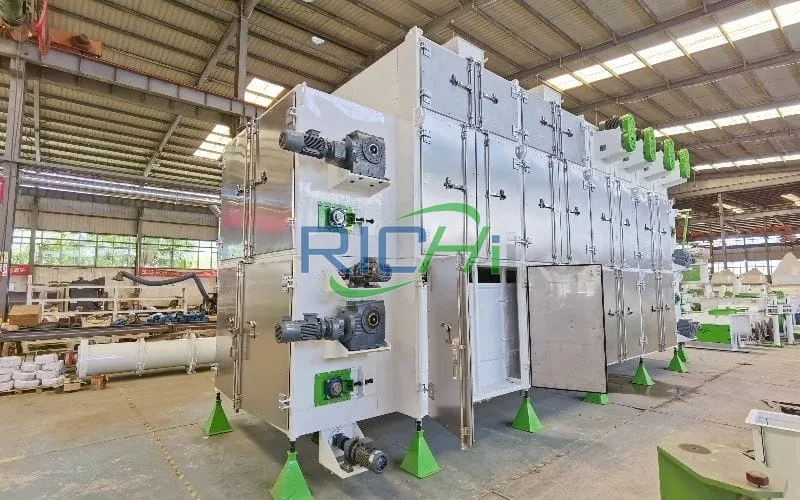
The dried fruit belt dryer system in Tunisia was selected for a commercial date-processing business looking to improve moisture control before grading, packaging and export. The customer handles Deglet Nour dates sourced from Tunisia's southern oasis regions, where harvested fruit passes through several preparation stages before reaching domestic and international markets. The project centers on one five-layer belt dryer that can provide a more controlled drying stage for washed dates and suitable batches requiring additional moisture adjustment before packing.
Rather than purchasing a complete fruit-processing line, the customer plans to add a single drying machine to the existing handling and packing operation. The objective is to improve consistency between batches, reduce dependence on uncontrolled drying conditions and give operators better control over the final product. RICHI Machinery's proposed DHG-500 electric-heating belt dryer provides a 21 m² drying area and a 1.0 m belt width. The final operating settings will be established according to fruit variety, incoming moisture, product condition and the required finished moisture level.
Name:
Dried Fruit
Country:
Tunisia
Date:
2026
Capacity:
Flexible
Model:
DHG-500
Belt layers:
5
Belt width:
1.0m
Drying area:
21m²
Tunisia is a practical choice for a dried-fruit processing project because dates are one of its important agricultural export products. Deglet Nour is particularly associated with the country's southern oasis areas, including Kebili and Tozeur. The date value chain involves growers, collection centers, sorting and conditioning facilities, packers and exporters, creating a realistic commercial setting for equipment used to prepare dates for sale.
The country's date sector also has a strong export orientation. International agricultural trade information identifies dates among Tunisia's leading agricultural exports, while the country's date industry includes specialized collection, conditioning and export-packing businesses. For a processor handling multiple suppliers' harvests, maintaining consistent product condition is an important part of preparing dates for storage, packaging and shipment.
The customer in this project is a medium-sized date processor that purchases harvested fruit from regional suppliers. Its existing operation includes fruit reception, preliminary cleaning, inspection, grading and packing. The new dryer is intended to serve a specific need between washing or other approved preparation steps and final quality inspection. It is not intended to replace every traditional drying method or to process every batch regardless of its condition.
That distinction matters. Dates naturally vary in moisture, texture and maturity. Some batches may already be sufficiently dry, while washed fruit may need controlled removal of surface moisture or further conditioning before packing. The correct treatment depends on the incoming product and the processor's quality specification. A belt dryer gives the operator a controllable process option for batches that genuinely require additional drying.
The processor's existing equipment already performs the basic handling and packing functions. Replacing the complete operation would require a much larger investment and could interrupt seasonal production. The immediate requirement is narrower: introduce a controlled drying stage without duplicating machinery that is already working.
A single dried fruit belt dryer system can be integrated between suitable upstream preparation equipment and the downstream inspection or packing area. This arrangement lets the business address moisture variation where it occurs, while retaining its established workflow. It also gives the operator a practical way to evaluate the drying process before considering any later expansion.
Before the purchase, the main questions are whether the fruit can travel through the dryer without excessive sticking or damage, whether the belt arrangement suits the required loading depth, and whether the machine can achieve the target moisture without causing unwanted changes in color, texture or appearance. These points need to be resolved through product assessment rather than assumed from the machine's dimensions.
The customer therefore requires more than a machine quotation. The project needs a clear understanding of the incoming fruit condition, the desired finished state, the available installation space and the connection between the dryer and existing conveyors. RICHI's equipment review focuses on those practical details before the final configuration is confirmed.
The proposed model is DHG-500, an electrically heated belt dryer with five belt layers. It is a reasonable preliminary choice for a processor adding a dedicated drying stage to an established operation. Its 1.0 m belt width and 21 m² drying area provide a defined equipment configuration without assuming that the customer needs the larger DHG-1000 or DHG-2000 models.
The supplied model data specifies the following configuration:
The listed power values are reproduced from the supplied equipment table. The final electrical design should confirm the individual motor and heating loads, supply voltage, protection requirements and the site's available electrical capacity. The drying area and belt width describe the equipment configuration; they do not establish a guaranteed throughput for dates.
Actual production capacity depends on the incoming fruit moisture, the required moisture reduction, the loading depth, belt speed, air circulation and the time needed to achieve the target product condition. Since the supplied model table does not state a date-specific capacity, a reliable tonnes-per-hour figure should not be invented. A product test and process assessment are needed before a final capacity commitment can be made.
The proposed processing route begins with receiving and inspecting the dates. Fruit is checked for maturity, visible defects, foreign material and condition after storage. Depending on the processor's established food-safety procedure and product specification, suitable batches may then undergo cleaning or washing before entering the drying stage.
After preparation, the fruit is distributed across the belt in a controlled layer. The five-layer arrangement allows the product to travel through a compact, multi-level drying system. Warm air removes moisture as the fruit progresses through the machine. The operating conditions must be adjusted so that moisture reduction is sufficient without unnecessarily hardening the fruit or damaging its appearance.
At the discharge end, the product should be checked before proceeding to grading or packing. Depending on the actual process, the customer may need a cooling or temperature-equalization period before packaging. This step helps avoid sealing fruit while it is still too warm or allowing condensation to develop inside the package.
Not every batch needs the same drying treatment. A date lot that has already reached its target moisture may only require inspection and packing, while washed fruit or a batch needing further conditioning may require additional drying. Separating these situations prevents unnecessary treatment and helps preserve the texture expected by the buyer.
Dates are not a uniform industrial material. Their moisture distribution, sugar content, skin condition and texture vary with cultivar, maturity, harvesting conditions and storage history. The objective of the dryer is therefore not to remove as much moisture as possible. It is to bring a suitable batch into the required condition while retaining the characteristics expected in the finished product.
For Deglet Nour dates intended for retail packing or export, appearance and texture are important commercial considerations. Excessive heat or an unsuitable residence time can change surface texture, cause uneven drying or make some fruit noticeably firmer than other pieces in the same batch. These risks are managed through product trials, appropriate loading depth and gradual adjustment of the operating conditions.
Moisture should be measured using a method appropriate for the product specification. Surface dryness alone is not enough to establish the moisture condition throughout a date. Representative samples should be taken from different positions in the load and, during commissioning, from different parts of the belt discharge. The results can then be compared with the customer's agreed acceptance criteria.
Water activity may also be relevant when establishing the storage and packaging specification. Moisture content and water activity are related but are not interchangeable measurements. The customer's food-safety and quality procedures should determine which tests are required before the product is released for packing.
The five-layer belt arrangement provides multiple conveying levels within one machine footprint. For a processor with limited space beside an existing packing area, this configuration can be easier to integrate than a longer single-level drying route, provided that the fruit's handling characteristics and the required drying time are compatible with the equipment.
The belt width and drying area also help the engineering team evaluate how the machine will connect to the customer's existing material flow. The feeding height, discharge position, operator access and cleaning clearance should be reviewed before the foundation and surrounding layout are finalized.
For dried fruit, belt material and food-contact suitability must be confirmed for the actual product and cleaning procedure. The design should allow routine inspection and cleaning of the product-contact areas. Any requirement for washable components, hygienic construction or specific food-contact documentation should be agreed before manufacture rather than assumed from the model name alone.
The DHG-500 is electrically heated, so its operating economics depend on local electricity tariffs, the required heat duty and the hours of operation. A processor with a suitable steam supply may also compare the QHG series, but steam heating is only attractive when the required boiler capacity, distribution system and operating infrastructure are available. The correct choice is based on the site and production schedule, not simply on the nominal equipment power.
For this project, RICHI Machinery's technical preparation should begin with a review of the customer's product samples and process requirements. The purpose is to establish whether the DHG-500 is appropriate for the intended drying duty and to identify the operating details that must be confirmed before the machine is manufactured and installed.
The review covers the incoming fruit condition, the required moisture target, the expected operating schedule, the available electrical supply and the connection to the existing handling equipment. If the customer has multiple date grades or varieties, the team should establish whether they can share one drying recipe or require separate operating settings.
Layout coordination is another important part of the preparation. The installation drawing should show the feeding and discharge interfaces, service access, electrical connection points and the space needed for inspection and cleaning. These details help the customer prepare the site and reduce uncertainty during installation.
RICHI can also provide equipment operation guidance and a commissioning checklist covering initial loading, belt movement, temperature adjustment, sample collection and routine inspection. Final operating values should be established during testing with the customer's actual product, not copied from a generic setting intended for a different fruit.
The equipment is planned for shipment from Qingdao Port in China to the Port of Radès in Tunisia. Radès is an important Tunisian commercial port specializing in container traffic and rolling cargo, making it a practical destination for containerized industrial machinery.
Before dispatch, the packing dimensions, gross weight and loading arrangement should be confirmed against the final equipment drawing. The customer should prepare the installation area and verify the electrical supply before the machine arrives. The final shipping schedule and container arrangement will depend on the confirmed package dimensions and the freight forwarder's booking.
The key issue for the customer is whether the new drying stage can improve consistency without disrupting the established date-packing workflow. The evaluation focuses on finished-product condition, moisture variation between batches, ease of operation and the time required for cleaning and routine inspection.
After commissioning, the operator should compare the condition of dates entering and leaving the dryer, record the settings used for each batch and review the results with the quality team. The trial should include fruit with representative differences in size and incoming moisture so that the operating procedure is based on real production conditions.
For this project scenario, the customer's feedback centers on having a defined drying stage that can be adjusted to the product rather than relying on one treatment for every batch. The most useful result is a repeatable process that helps the packing team work with a more consistent product and gives the business clearer operating records for future production planning.
The dried fruit belt dryer system in Tunisia is planned as a single-machine addition to a date-processing operation. The DHG-500 electric-heating model offers a five-layer arrangement, a 1.0 m belt width and a 21 m² drying area, making it a preliminary option for a processor that needs controlled moisture adjustment without replacing the complete line.
The final operating procedure must be developed around the actual dates, including their incoming condition, the required finished moisture, the desired texture and the packaging specification. The model's nominal dimensions alone cannot establish a guaranteed production capacity, so the final configuration should be confirmed through product assessment and process review.
For businesses considering a dried fruit belt dryer system, a date dryer or a continuous fruit drying machine, RICHI Machinery can review the raw material, drying objective, installation space and operating requirements before recommending a final configuration. This approach gives the customer a clearer equipment scope and a practical basis for evaluating the drying process after commissioning.
Having the right mix of reliable, high-quality pellet machine and pelletizing systems and expert support is essential to your success. Watch how our end-to-end feed pellet plant solutions have helped our customers optimize their performance.
Our customized and future-proofed turnkey pellet plant solutions is designed with you at the core. From vision to reality and beyond, our team stays connected with yours. Giving you peace-of-mind with an expert at your side.

At RICHI, we go beyond project completion. With RICHI Servicee, we’re your dedicated partners in success. Count on us for expert guidance, minimal downtime, and optimized productivity. Choose RICHI for unmatched service and support.



Meet global product demands and quality standards with industry-leading pellet plant design, engineering, equipment, and construction services for pellet processors.


Your Partner Beyond Project Completion
2000+ cases
RICHI is the leading designer, manufacturer and builder of pellet plants in the world, completing over 2000 projects in 140 countries across 6 continents.
Read More
Increase plant productivity, profitability, and safety by integrating high quality equipment into your pellet production line. Over the years, RICHI has become China's top pellet equipment manufacturer. At the same time, RICHI has established valuable partnerships with the world's leading component and raw material manufacturers to bring you the best there is in technology, automation, and efficiency in pelleting plant machinery.

For nearly 30 years, RICHI has been providing best-in-class pellet plant equipment and services to clients across a variety of industries, sizes, and needs. We pride ourselves on the knowledge and skill that each team member possesses – from our technical sales team to our process design engineers. You can count on RICHI Machinery to take your operation to the next level of innovation, quality, and success.
Need help with your pellet manufacturing plant project? Contact us today.
ANIMAL FEED
BIOMASS
WOOD
ORGANIC FERTILIZER
AQUA FEED
CAT LITTER
MUNICIPAL WASTE RECYCLING
SPECIAL PELLET PRODUCTION
RICHI Machinery continues to deliver world class pellet mill equipment, pellet plant engineering and project solutions that add value to our customers in the animal feed, wood waste, agriculture waste, organic fertilizer, cat litter and special pellet products industries. Throughout the years, we RICHI Machinery have built strong brand, becoming industry-leading pellet machine manufacturer. We value integrity, promise quality, and prioritize your success.
Learn MoreWith our expert team, we precisely implement your process engineering requirements in pellet mill and pelletizing plant systems. No matter which industry you’re in – we understand your needs and deliver solutions that meet the highest standards.
At RICHI, quality comes first. Our pellet making machine and related pellet line equipment undergo rigorous quality controls to ensure they meet the highest standards. Rely on products that are durable, safe, and efficient.
With decades of experience in pellet machine and pellet production line production, we have earned a reputation as a trusted partner in various industries. Our expertise allows us to cover a wide range of applications.
Not only do we offer premium pelleting equipment, but we are also experts at designing, building, installing, and maintaining facilities from the ground up. Our expertise is within pellt plant process design, discovering the most efficient, productive, and profitable way to handle your materials in an end-to-end cycle.
○ RICHI MACHINERY
Keeping in touch with us is an effective way to solve all your problems. If you have any needs or questions, please leave your contact information, then RICHI technical consultants will send design, quotation, videos to your mailbox. You can also contact us directly via WhatsApp: +86 13838389622
Copyright©2015-2026 by HENAN RICHI MACHINERY CO., LTD. All rights reserved.