
For a chili processor in Telangana, the difficult part was not simply removing water from fresh red chilies. The company needed a drying process that could bring high-moisture whole pods down to a storage-stable moisture level while limiting color deterioration, uneven drying and unnecessary thermal damage. This made controllable airflow, residence time and temperature more important than achieving the shortest possible drying cycle.
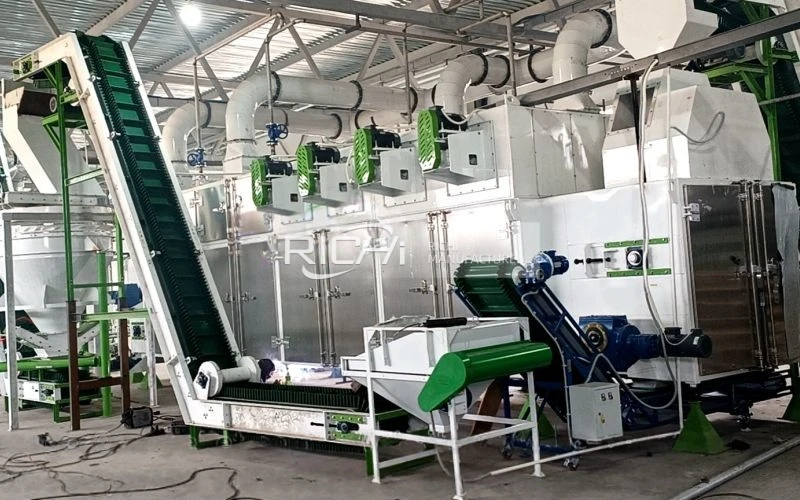
For a chili processor in Telangana, the difficult part was not simply removing water from fresh red chilies. The company needed a drying process that could bring high-moisture whole pods down to a storage-stable moisture level while limiting color deterioration, uneven drying and unnecessary thermal damage. This made controllable airflow, residence time and temperature more important than achieving the shortest possible drying cycle.
The company selected a DHG-1000 dried chili belt dryer with hot air circulation in India for continuous processing of export-oriented red chilies. The multi-layer configuration provided longer, more controllable contact with circulating hot air, allowing the plant to adjust drying conditions according to chili variety, initial moisture, pod size and final moisture requirement instead of depending on weather-sensitive sun drying.
Name:
chili dryer
Country:
India
Date:
2025
Capacity:
Flexible
Model:
DHG-1000
Drying area:
43 m²
Primary product:
Whole red chilies
Target final moisture:
10–12%
Telangana is an important chili-growing and trading region in India, and the processor purchases fresh red chilies from growers and collection channels around its production area. Its business depends heavily on finished-product appearance and storage stability because a considerable share of production is prepared for spice traders and export customers.
Previously, part of the crop was sun-dried. This required substantial drying space and made production highly dependent on sunshine, ambient humidity and unexpected rainfall. Drying could extend over many days, and batches were exposed to dust, handling losses and inconsistent moisture removal.
The company had also tested faster hot-air drying. The problem was not hot air itself, but insufficient control over temperature distribution and residence time. When operators attempted to accelerate the process with excessively aggressive drying conditions, some pods darkened before moisture in thicker portions of the material had fallen sufficiently.
The customer therefore wanted a continuous dryer that could operate within a moderate temperature range and move the product gradually through controlled drying zones. Rather than purchasing an entire spice processing line, the dryer was added to the customer’s existing receiving, cleaning, sorting and finished-product handling system.
The original project specification identified the DHG-1000 as an electrically heated, five-layer belt dryer with approximately 43 m² of drying area. The configuration was selected to provide an extended drying path rather than exposing the chilies to a short period of intense heat.
| Project Parameter | Configuration |
|---|---|
| Country | India |
| Region | Telangana |
| Dryer model | DHG-1000 |
| Drying method | Continuous multi-layer belt drying |
| Heat source for this project | Electric heating |
| Drying layers | 5 layers |
| Drying area | Approximately 43 m² |
| Primary product | Whole red chilies |
| Target final moisture | Approximately 10–12% |
| Typical operating temperature | Adjusted within a moderate drying range according to the product |
The important engineering advantage was controllability. Belt speed determines residence time, while air temperature, circulating-air volume and material loading influence the rate at which moisture leaves the pods. These parameters can be adjusted together instead of treating 60°C or any other single temperature as a universal setting for every chili variety and incoming moisture condition.
Fresh chilies are very different from material that has already been partially field-dried. In the project specification, incoming whole pods were considered at approximately 75–80% moisture, with a finished target around 10–12%.
That difference has a major effect on dryer sizing.
For example, one tonne of fresh chilies at 78% moisture contains only about 220 kg of dry solids. If those solids leave the dryer in a product containing 11% moisture, the theoretical finished mass is only about 247 kg. In other words, approximately 753 kg of water must be removed from every tonne of fresh material.
This mass balance is why dryer capacity should never be quoted simply as “tons per hour” without stating whether the figure refers to wet feed, finished dried product or water evaporation. For a customer planning a dried chili belt dryer with hot air circulation, the required evaporation load is one of the most important sizing parameters.
The processor handles several commercial chili types. The original project plan included varieties such as Teja, Byadgi, Kashmiri-type chilies and Sannam, with whole pods typically several centimeters long.
These materials should not automatically receive identical dryer settings. Pod wall thickness, initial moisture, maturity, size and desired finished appearance can all change drying behavior.
For a high-color batch, the operator may prioritize gentler drying and longer residence time. A thinner pod entering at lower moisture can usually tolerate a different belt speed. A particularly wet incoming batch may require a lower loading density or longer residence time rather than simply increasing temperature.
This ability to change the drying recipe was one of the main reasons the customer preferred a continuous belt system over a less controllable drying arrangement.
The hot air circulation system is central to this project. Heated air passes through and around the chili layer, absorbs evaporated moisture and is managed so that useful heat can continue contributing to the drying process while moisture-laden air is discharged as required.
The objective is not simply to keep hot air inside the machine. Recirculation and moisture exhaust must remain balanced. If too much humid air is retained, the drying potential of the air decreases. If too much heated air is exhausted unnecessarily, thermal efficiency suffers.
Uniform airflow also helps reduce local hot spots. In an inadequately designed dryer, chilies close to one airflow path may dry rapidly while material elsewhere remains too wet. The multi-layer belt arrangement gives the material a much longer controlled path through the dryer and allows moisture removal to proceed progressively.
The original operating concept centered around approximately 55–65°C, with 60°C used as an initial commissioning reference. That is a reasonable moderate-temperature region to investigate for whole chili drying, but the final setpoint should be established by product testing rather than treated as a fixed rule.
Color is particularly important. Red chili color is associated with carotenoid pigments including capsanthin and capsorubin. Excessive thermal exposure can accelerate quality deterioration, but temperature is not the only variable involved. Drying duration, oxygen exposure, chili variety, maturity and pre-drying handling also influence the finished color.
The same caution applies to pungency. The original draft attributed changes almost entirely to capsaicin being “destroyed” above a particular temperature. Actual quality retention is more complex, so RICHI’s commissioning approach focuses on comparing finished batches under different temperature, airflow and residence-time combinations rather than promising a fixed percentage of capsaicin retention from one temperature setting.
Material distribution across the belt is just as important as temperature. A deep, irregular chili bed creates different airflow resistance across the belt and can leave hidden moisture pockets. On the other hand, requiring every individual chili to be manually separated by a fixed 5–10 mm spacing would unnecessarily restrict practical industrial capacity.
The better approach is to establish a reasonably uniform loading thickness that allows hot air to contact the material effectively without excessive overlap or compaction.
During commissioning, the customer adjusts three operating variables together:
If discharge moisture begins to rise, the operator can first investigate incoming moisture, loading depth and airflow before simply raising the temperature. This provides a much more stable method of controlling an agricultural product whose condition naturally changes from batch to batch.
The project documentation used approximately 8–10 hours as an initial drying-time reference for the five-layer configuration. However, this should not be interpreted as a guaranteed residence time for every fresh chili batch.
A load entering at 75% moisture and another entering at 60% moisture impose very different evaporation requirements. Whole thick-walled pods also behave differently from thinner chilies or partially pre-dried material.
RICHI therefore establishes the final belt speed during material trials and commissioning. The target is not the shortest possible residence time. It is the shortest stable drying condition that reaches the required final moisture without sacrificing the quality characteristics important to the customer.
For this processor, the target finished moisture range was approximately 10–12%. The original project also considered initial moisture around 75–80%, illustrating the substantial amount of water that must be removed during drying.
Final moisture uniformity matters as much as the average reading. A batch can appear sufficiently dry overall while still containing individual wetter pods. Those moisture pockets create greater storage risk, particularly when chilies are packed and held for extended periods before export.
For this reason, the customer checks samples from different positions across the dryer discharge rather than relying on a single measurement. Product should also be allowed to cool appropriately before final packaging so that residual heat does not create unnecessary condensation inside sealed bags.
The DHG-1000 was purchased as a drying-system upgrade, not as an entire chili processing factory. The customer already had infrastructure for raw material receiving and subsequent handling, so the new dryer was incorporated between product preparation and final sorting or packing.
A practical workflow for the project is:
Fresh Chili Receiving → Inspection and Cleaning → Sorting → Controlled Feeding → Multi-Layer Hot Air Belt Drying → Cooling → Final Sorting → Moisture Check → Packing
Removing damaged, moldy or foreign material before drying is particularly important. A dryer can remove moisture, but it cannot restore poor-quality raw material. The quality of export-grade dried chili therefore starts at receiving and sorting, not inside the dryer.
The initial proposal specified stem removal before drying. For some processed products this can be useful, but it should not be presented as mandatory for every dried chili operation.
Whether chilies are dried with or without stems depends on the final product specification, buyer requirements, available labor and subsequent processing method. If the customer sells whole dried chilies with stems, removing them before drying would obviously change the product being sold.
For the Telangana project, incoming material preparation was therefore determined according to each sales specification. The dryer itself can be adjusted around the physical characteristics of the prepared product.
The customer evaluates much more than discharge moisture. Appearance, color consistency, aroma, pungency, broken-pod percentage and evidence of mold or contamination all influence the commercial value of dried chilies.
ASTA color can be used as a useful laboratory quality indicator, but RICHI does not guarantee that a particular dryer temperature will automatically generate an ASTA value of 170, 185 or 200. Final color depends heavily on chili variety and incoming quality as well as the drying process.
This distinction was important when commissioning the equipment. Instead of promising a predetermined laboratory result, the customer established its preferred operating window by comparing test batches and selecting the conditions that delivered the required combination of final moisture, appearance and production rate.
The customer selected the electrically heated version because its facility could support the required electrical load and valued controllable heat input. The original project configuration specifically identified electric heating for the DHG-1000.
Electrical heating can provide straightforward temperature control and avoids introducing combustion gases directly into the drying air. However, whether it is the most economical option depends on local electricity tariffs and the available electrical infrastructure.
For another chili processor, RICHI would compare the available heat source, energy price, required evaporation capacity, operating hours and product hygiene requirements before recommending a heating configuration. A dryer should be selected around total drying economics rather than purchase price alone.
Before shipment, RICHI prepared the equipment according to the customer’s confirmed electrical and installation requirements. India operates at 50 Hz, while the actual site voltage, transformer capacity and electrical protection requirements were confirmed from the customer’s plant rather than assumed solely from national standards.
Commissioning focused on finding the relationship between feed rate, loading depth, circulating-air temperature, exhaust conditions, belt speed and final moisture. Operators were also trained to recognize a critical point: when incoming chili moisture changes, the dryer should not continue operating blindly under the previous settings.
Trial runs were therefore used to create operating references for the customer’s main chili varieties. These settings provide starting points for future batches while still allowing operators to make adjustments according to actual material conditions.
The drying equipment was exported from Qingdao Port in China to India. For a Telangana destination, the most suitable Indian gateway should be determined according to the final factory location, shipping schedule, container availability, port charges and inland freight rather than automatically assuming one port for every shipment.
The original project concept used the Mumbai region as the import gateway. For an actual shipment, RICHI and the customer would compare available routes before booking because Hyderabad and Telangana can be served through more than one Indian port depending on the logistics arrangement.
RICHI provided equipment drawings, electrical documentation, installation guidance and commissioning support so that the customer could integrate the dryer with its existing chili handling system.
“Our biggest improvement is consistency. With sun drying, every batch depended on the weather, and with our previous hot-air method we were always trying to balance speed against color. With the belt dryer, we can change the residence time and temperature according to the incoming chilies. We now have much better control over final moisture and appearance, which is what our export customers care about.”
The customer also found that mechanical drying made production planning more predictable. Incoming chilies no longer had to wait for several consecutive days of favorable drying weather, allowing purchasing and processing schedules to be coordinated more closely.
For the production manager, that predictability was nearly as important as drying speed. Export orders are scheduled against delivery dates, and a drying process that can be planned is easier to integrate with sorting, laboratory testing, packing and container loading.
This type of system is particularly relevant when a processor is handling enough material to justify continuous drying and finished-product value depends on moisture consistency and appearance. It is not automatically the best choice for every small chili grower.
Before selecting a dryer, RICHI needs to know the incoming and target moisture, tonnes of fresh material to be processed per day, chili variety and pod dimensions, whether the product is whole or cut, available heat source, operating hours and required finished-product quality.
These figures allow the dryer to be sized according to water evaporation rather than an ambiguous capacity figure.
The dried chili belt dryer with hot air circulation in India gave this Telangana processor something that neither open-air drying nor its previous drying arrangement could provide consistently: control over the drying environment.
The DHG-1000 uses a five-layer drying path and circulating hot air to remove moisture progressively while allowing operators to adjust temperature, belt speed and material loading according to actual chili conditions. For this project, the target was to reduce high-moisture whole red chilies to approximately 10–12% finished moisture while maintaining the appearance and quality required by the customer’s downstream market.
For another chili processor, RICHI Machinery would not simply duplicate the same temperature and residence time. Fresh moisture, chili variety, daily throughput, available heat source and quality target should first be established. The appropriate belt area, heat input, airflow and drying time can then be configured around the actual evaporation requirement, giving the processor a drying system designed for its product rather than a generic machine operating at a fixed recipe.
Having the right mix of reliable, high-quality pellet machine and pelletizing systems and expert support is essential to your success. Watch how our end-to-end feed pellet plant solutions have helped our customers optimize their performance.
Our customized and future-proofed turnkey pellet plant solutions is designed with you at the core. From vision to reality and beyond, our team stays connected with yours. Giving you peace-of-mind with an expert at your side.
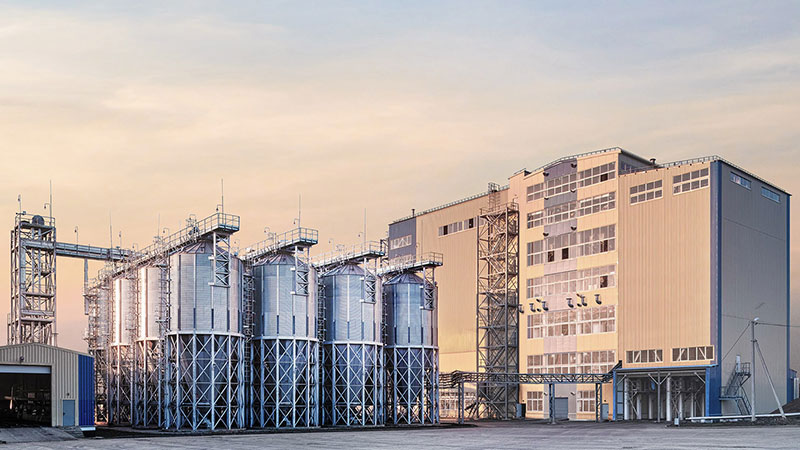
At RICHI, we go beyond project completion. With RICHI Servicee, we’re your dedicated partners in success. Count on us for expert guidance, minimal downtime, and optimized productivity. Choose RICHI for unmatched service and support.
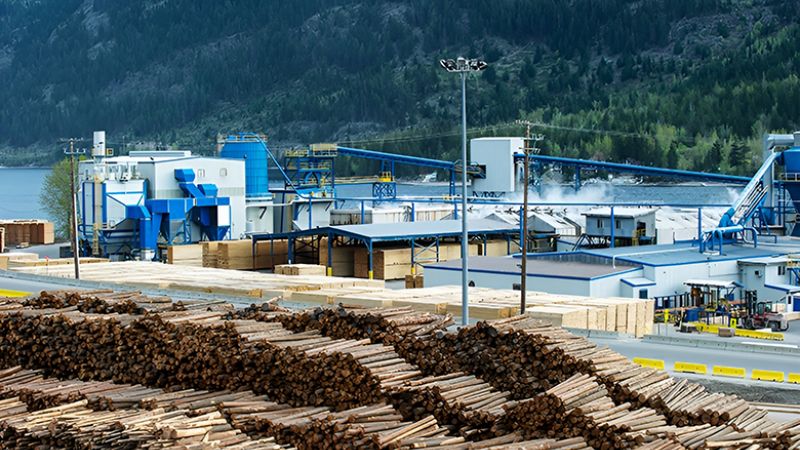


Meet global product demands and quality standards with industry-leading pellet plant design, engineering, equipment, and construction services for pellet processors.

Your Partner Beyond Project Completion
2000+ cases
RICHI is the leading designer, manufacturer and builder of pellet plants in the world, completing over 2000 projects in 140 countries across 6 continents.
Read More
Increase plant productivity, profitability, and safety by integrating high quality equipment into your pellet production line. Over the years, RICHI has become China's top pellet equipment manufacturer. At the same time, RICHI has established valuable partnerships with the world's leading component and raw material manufacturers to bring you the best there is in technology, automation, and efficiency in pelleting plant machinery.

For nearly 30 years, RICHI has been providing best-in-class pellet plant equipment and services to clients across a variety of industries, sizes, and needs. We pride ourselves on the knowledge and skill that each team member possesses – from our technical sales team to our process design engineers. You can count on RICHI Machinery to take your operation to the next level of innovation, quality, and success.
Need help with your pellet manufacturing plant project? Contact us today.
ANIMAL FEED
BIOMASS
WOOD
ORGANIC FERTILIZER
AQUA FEED
CAT LITTER
MUNICIPAL WASTE RECYCLING
SPECIAL PELLET PRODUCTION
RICHI Machinery continues to deliver world class pellet mill equipment, pellet plant engineering and project solutions that add value to our customers in the animal feed, wood waste, agriculture waste, organic fertilizer, cat litter and special pellet products industries. Throughout the years, we RICHI Machinery have built strong brand, becoming industry-leading pellet machine manufacturer. We value integrity, promise quality, and prioritize your success.
Learn MoreWith our expert team, we precisely implement your process engineering requirements in pellet mill and pelletizing plant systems. No matter which industry you’re in – we understand your needs and deliver solutions that meet the highest standards.
At RICHI, quality comes first. Our pellet making machine and related pellet line equipment undergo rigorous quality controls to ensure they meet the highest standards. Rely on products that are durable, safe, and efficient.
With decades of experience in pellet machine and pellet production line production, we have earned a reputation as a trusted partner in various industries. Our expertise allows us to cover a wide range of applications.
Not only do we offer premium pelleting equipment, but we are also experts at designing, building, installing, and maintaining facilities from the ground up. Our expertise is within pellt plant process design, discovering the most efficient, productive, and profitable way to handle your materials in an end-to-end cycle.
○ RICHI MACHINERY
Keeping in touch with us is an effective way to solve all your problems. If you have any needs or questions, please leave your contact information, then RICHI technical consultants will send design, quotation, videos to your mailbox. You can also contact us directly via WhatsApp: +86 13838389622
Copyright©2015-2026 by HENAN RICHI MACHINERY CO., LTD. All rights reserved.