
A dog food belt dryer for high moisture content in Canada was selected by a premium pet food manufacturer in Ontario that needed to improve the drying stage of a newly developed meat-rich kibble product. The company already operated extrusion, coating, conveying and packaging equipment, so the project did not require a complete dog food production line. The bottleneck was the existing drying section.
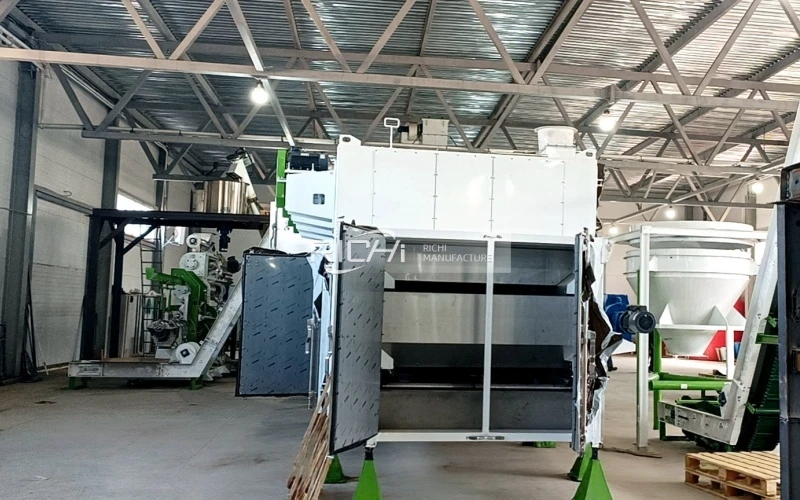
A dog food belt dryer for high moisture content in Canada was selected by a premium pet food manufacturer in Ontario that needed to improve the drying stage of a newly developed meat-rich kibble product. The company already operated extrusion, coating, conveying and packaging equipment, so the project did not require a complete dog food production line. The bottleneck was the existing drying section.
The new formulation contained a high proportion of fresh animal ingredients, including chicken, turkey and fish. Because of the formulation and extrusion conditions, the kibble leaving the extruder carried considerably more moisture than the company’s conventional dry dog food. The existing dryer could process its standard recipes, but production became difficult when the new product entered the plant at approximately 38–42% moisture. Drying had to be slowed significantly, and moisture uniformity between the surface and center of the kibble became difficult to control.
The customer therefore needed more than additional heating capacity. It needed longer controllable residence time, uniform airflow through the product bed and sufficient drying area to remove a large amount of water without damaging the kibble. After reviewing the material condition, target output and existing factory arrangement, RICHI recommended a DHG-2000 multi-layer belt dryer as the standalone drying upgrade.
Name:
Dog Food Dryer
Country:
Canada
Date:
2025
Capacity:
Flexible
Model:
DHG-2000
Effective drying area:
58 m²
Belt width:
1.6 m
Target moisture:
8–10%
For this customer, the key engineering issue was the amount of water that had to be removed after extrusion. The target finished moisture was approximately 8–10%, while the new kibble could enter the dryer at around 38–42% moisture.
That difference has a direct effect on dryer sizing. If 1,000 kg of extruded kibble enters the dryer at 40% moisture, it contains approximately 600 kg of dry solids and 400 kg of water. To reach 10% final moisture, the finished product would weigh about 667 kg. In other words, approximately 333 kg of water must be evaporated for every 1,000 kg of wet product entering the belt dryer.
At commercial production rates, this becomes a substantial evaporation load. Selecting a dog food dryer only according to finished-product tonnage would therefore have been misleading. RICHI evaluated the project according to wet feed rate, inlet moisture, target moisture, product dimensions, bed thickness and required evaporation capacity.
This was one of the main reasons the customer moved to a belt-type system. A multi-layer belt dryer provides a relatively long and adjustable drying path, making it possible to control belt speed, product depth, airflow and temperature according to the actual moisture load.
The DHG-2000 was selected as the dog food belt dryer for high moisture content in Canada because its multi-layer configuration provided the residence time and drying area required by this application. The customer also wanted electric heating because the installation area did not have an available steam system for the new dryer.
The main project configuration included:
The actual capacity of a belt dryer cannot be determined from belt area alone. It changes with product moisture, kibble diameter, bulk density, allowable drying temperature, bed depth and residence time. For this reason, RICHI configured the dryer around the customer’s meat-rich kibble rather than treating the nominal model capacity as a fixed output for every pet food formula.
The Ontario manufacturer positioned the new product as a premium dry dog food containing a relatively high proportion of fresh animal ingredients. The formulation used fresh chicken, turkey and fish together with carbohydrate sources, pulses, fats, vitamins and minerals.
This created a different drying challenge from a conventional lower-moisture kibble formula. Immediately after extrusion, the product was relatively soft. Drying too aggressively could create a dry outer layer while leaving excessive moisture inside the pellet. Drying too slowly, on the other hand, would restrict the output of the entire extrusion line.
RICHI therefore focused on three variables during commissioning: product layer thickness, drying-air temperature and residence time.
Product loading on the belt was deliberately kept relatively shallow during the initial trials. At higher inlet moisture, a thick bed can restrict airflow through the kibble and create uneven drying between material at the top and bottom of the layer.
The first commissioning runs therefore used a product bed of approximately 15 mm as a starting point. This was not treated as a universal setting. The customer could subsequently adjust the spreading gate according to kibble diameter, bulk density and incoming moisture.
Belt speed provided another control point. Instead of forcing the product through the dryer at a fixed residence time, operators could slow or accelerate the belts as the incoming moisture changed. For the high-moisture recipe, the initial commissioning target used an extended residence time of roughly 150 minutes through the five-layer drying path.
This combination of shallow loading and longer residence time allowed moisture to migrate from inside the kibble while reducing the risk of an over-dried exterior and wetter center.
Another important requirement for this dog food belt dryer for high moisture content was temperature control across the drying process. The customer did not want the entire dryer operating at one aggressive temperature simply to increase evaporation.
During commissioning, different temperature zones were tested so that heat input could be matched to the changing moisture condition of the product. Higher-temperature air could be used during the earlier high-moisture stage, followed by gentler finishing conditions as the kibble approached its target moisture.
A representative commissioning profile used drying-air settings from approximately 110°C in the initial zone down toward approximately 80°C in the finishing stage. These values are process settings for this particular product trial, not fixed temperatures that should be copied to every dog food formula.
Fresh-meat percentage, starch content, kibble diameter, density and extrusion conditions can all change drying behavior. For another customer, RICHI would establish the temperature profile through material testing and commissioning rather than prescribing the same settings automatically.
The Canadian customer purchased the DHG-2000 as a standalone dryer because the surrounding production equipment remained suitable for the new product. The installation therefore focused on connecting the dryer between the existing extrusion and downstream handling sections.
The relevant production route was:
Matching the dryer to the extruder was particularly important. A dryer that cannot remove water at the same rate that the extruder supplies wet product eventually becomes the capacity bottleneck of the entire plant. Conversely, oversizing the dryer without considering actual evaporation demand increases investment and operating costs unnecessarily.
For the customer's premium product, simply checking whether the kibble felt dry was not sufficient. Finished moisture had to remain within the specified range across continuous production.
The operators therefore monitored incoming product moisture, finished moisture, drying temperature, belt speed and product-bed thickness together. If extrusion conditions changed and wetter kibble entered the dryer, belt speed could be reduced or other drying parameters adjusted. When inlet moisture decreased, the system could be operated differently to avoid unnecessary over-drying.
This approach also helped protect yield. Removing more moisture than necessary means selling less finished product from the same amount of raw material and consuming additional energy at the same time. The customer's objective was therefore controlled drying to specification, not simply achieving the lowest possible moisture level.
The high fresh-meat content created another practical consideration: sanitation. Wet pet food residues can adhere to conveying and drying surfaces, so the dryer had to be incorporated into the plant’s regular cleaning program.
The customer established routine inspection of the mesh belts, spreading section, product transfer points and internal areas where fines could accumulate. Cleaning frequency depended on production hours and the recipe being processed.
This was particularly important when changing products. In a commercial pet food factory, hygienic design and access for cleaning are just as relevant as drying capacity. RICHI therefore considered maintenance access and belt cleaning when arranging the equipment inside the customer's existing building.
Because the Ontario customer selected electric heating, available electrical capacity had to be checked before shipment. A high-capacity electrically heated dryer can represent a significant connected load, so the customer's electrical engineers reviewed the supply and protection requirements together with the final dryer configuration.
The motors and electrical system were configured for the customer's local power conditions, including 60 Hz operation. Control components were incorporated into a PLC-based system so operators could adjust belt operation and drying parameters from the control interface.
This pre-installation electrical review prevented the customer from receiving a dryer that could not be supported by the existing plant utilities—an issue that is especially important when a standalone machine is being retrofitted into an operating factory.
The dryer system was prepared for export from China and shipped to Canada before inland delivery to the Ontario facility. Because a multi-layer belt dryer consists of the drying body, belt sections, fans, heating components, electrical controls and supporting assemblies, logistics planning covered both shipment dimensions and the sequence required for installation.
Before the equipment arrived, the customer prepared the installation area, electrical connection points and interfaces with the existing extruder and downstream equipment. This reduced modification work during commissioning and allowed the installation to focus on alignment, electrical connection, control testing and product trials.
The most important stage was not running the empty dryer; it was testing the system with the customer's actual high-moisture dog food.
The commissioning team started conservatively and adjusted the process according to measured moisture rather than appearance. Product depth, belt speed and drying temperatures were changed step by step until the kibble reached the required moisture range without excessive surface drying or unacceptable breakage.
The final operating window provided the customer with a repeatable starting recipe for the high-moisture product. Operators could then make smaller corrections according to normal variations in raw materials and extrusion conditions.
This is also why RICHI recommends that buyers provide actual product information when selecting a dog food belt dryer. An inlet moisture figure alone is not enough. Kibble size, formulation, wet-product capacity, bulk density, target moisture and available heat source all influence dryer configuration.
The problem at this factory was highly specific. The mixer, extruder and downstream equipment were still usable. Replacing them would have added investment without solving an additional production problem.
The DHG-2000 therefore became a targeted capacity upgrade. The customer could continue producing its established dog food products while gaining a drying system with greater flexibility for the new high-moisture formulation.
For other established pet food manufacturers, this type of retrofit can be more practical than purchasing another complete dog food production line. RICHI can evaluate the inlet height, outlet height, available floor area, existing conveyors, electrical supply and required wet-product throughput so that a standalone dryer can be connected to the current process.
The main lesson from this Canadian project is that high-moisture pet food drying should be evaluated as an evaporation problem, not simply as a machine-capacity question. Two plants producing 2 tons per hour of finished kibble can require very different dryers if one product enters at 24% moisture and the other at 40%.
For this Ontario manufacturer, the DHG-2000 provided the longer residence time, controllable product bed and staged drying conditions needed for its meat-rich formulation. More importantly, the dryer was integrated into the equipment the customer already owned instead of turning a single drying problem into an unnecessary full-line investment.
If you are evaluating a dog food belt dryer for high moisture content in Canada or another market, the most useful information to provide RICHI is your product moisture immediately after extrusion, required final moisture, wet-product throughput, kibble diameter and density, formulation characteristics, available heating source, electrical standard and installation space. With those parameters, RICHI Machinery can calculate the required water evaporation load and recommend the dryer size, belt area, residence time and heating configuration around the actual product.
Having the right mix of reliable, high-quality pellet machine and pelletizing systems and expert support is essential to your success. Watch how our end-to-end feed pellet plant solutions have helped our customers optimize their performance.
Our customized and future-proofed turnkey pellet plant solutions is designed with you at the core. From vision to reality and beyond, our team stays connected with yours. Giving you peace-of-mind with an expert at your side.
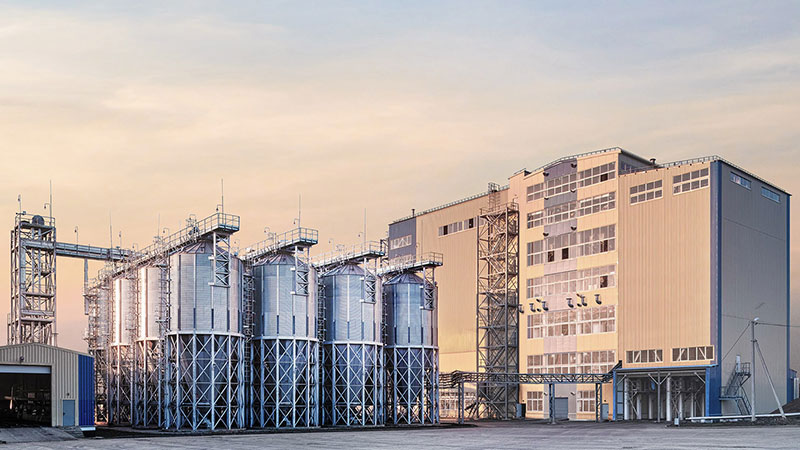
At RICHI, we go beyond project completion. With RICHI Servicee, we’re your dedicated partners in success. Count on us for expert guidance, minimal downtime, and optimized productivity. Choose RICHI for unmatched service and support.
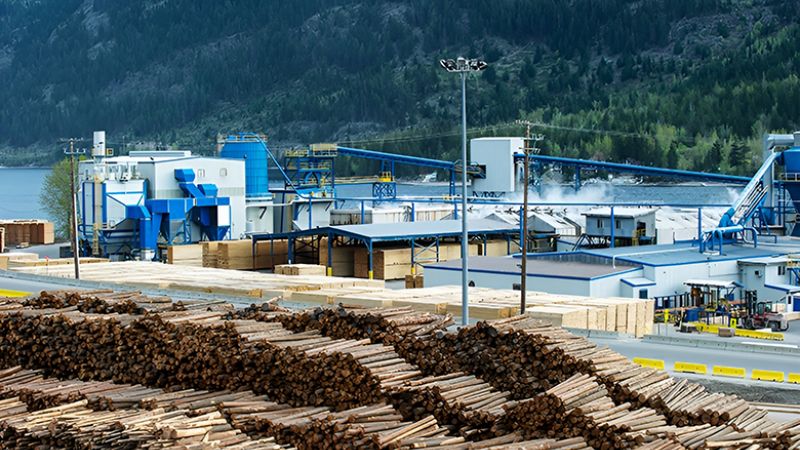


Meet global product demands and quality standards with industry-leading pellet plant design, engineering, equipment, and construction services for pellet processors.

Your Partner Beyond Project Completion
2000+ cases
RICHI is the leading designer, manufacturer and builder of pellet plants in the world, completing over 2000 projects in 140 countries across 6 continents.
Read More
Increase plant productivity, profitability, and safety by integrating high quality equipment into your pellet production line. Over the years, RICHI has become China's top pellet equipment manufacturer. At the same time, RICHI has established valuable partnerships with the world's leading component and raw material manufacturers to bring you the best there is in technology, automation, and efficiency in pelleting plant machinery.

For nearly 30 years, RICHI has been providing best-in-class pellet plant equipment and services to clients across a variety of industries, sizes, and needs. We pride ourselves on the knowledge and skill that each team member possesses – from our technical sales team to our process design engineers. You can count on RICHI Machinery to take your operation to the next level of innovation, quality, and success.
Need help with your pellet manufacturing plant project? Contact us today.
ANIMAL FEED
BIOMASS
WOOD
ORGANIC FERTILIZER
AQUA FEED
CAT LITTER
MUNICIPAL WASTE RECYCLING
SPECIAL PELLET PRODUCTION
RICHI Machinery continues to deliver world class pellet mill equipment, pellet plant engineering and project solutions that add value to our customers in the animal feed, wood waste, agriculture waste, organic fertilizer, cat litter and special pellet products industries. Throughout the years, we RICHI Machinery have built strong brand, becoming industry-leading pellet machine manufacturer. We value integrity, promise quality, and prioritize your success.
Learn MoreWith our expert team, we precisely implement your process engineering requirements in pellet mill and pelletizing plant systems. No matter which industry you’re in – we understand your needs and deliver solutions that meet the highest standards.
At RICHI, quality comes first. Our pellet making machine and related pellet line equipment undergo rigorous quality controls to ensure they meet the highest standards. Rely on products that are durable, safe, and efficient.
With decades of experience in pellet machine and pellet production line production, we have earned a reputation as a trusted partner in various industries. Our expertise allows us to cover a wide range of applications.
Not only do we offer premium pelleting equipment, but we are also experts at designing, building, installing, and maintaining facilities from the ground up. Our expertise is within pellt plant process design, discovering the most efficient, productive, and profitable way to handle your materials in an end-to-end cycle.
○ RICHI MACHINERY
Keeping in touch with us is an effective way to solve all your problems. If you have any needs or questions, please leave your contact information, then RICHI technical consultants will send design, quotation, videos to your mailbox. You can also contact us directly via WhatsApp: +86 13838389622
Copyright©2015-2026 by HENAN RICHI MACHINERY CO., LTD. All rights reserved.