
Cotton stalk drying machine in Burkina Faso for drying chopped cotton stalks before biomass briquette, pellet or other suitable biomass processing.
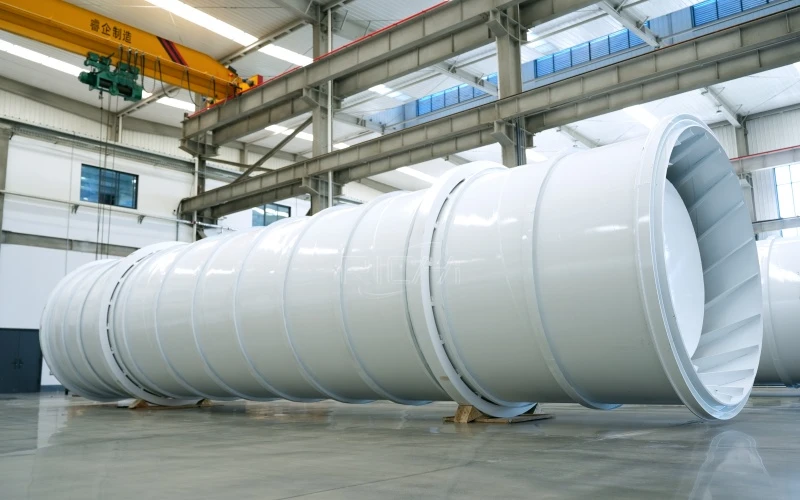
The cotton stalk drying machine in Burkina Faso was selected for a biomass processor planning to make better use of agricultural residues left after cotton harvesting. The project focused on chopped cotton stalks collected from local farming areas, where seasonal cotton production creates a substantial volume of plant material that can be difficult to handle economically if it is left scattered across fields or burned without further utilization. The operator wanted to prepare this fibrous material for densification into biomass fuel, with moisture control identified as an important step before pressing.
Rather than investing in a complete new biomass production line, the customer in this project scenario planned to purchase one rotary drum dryer and connect it to existing or separately sourced chopping and briquetting equipment. The proposed model was φ0.8 × 8 m. Its role would be limited to drying prepared cotton stalk material after size reduction and before the next processing stage. This approach allows the business to concentrate its investment on raw-material preparation while retaining flexibility to adjust the rest of the process as feedstock availability develops.
Name:
Cotton Stalk Dryer
Country:
Burkina Faso
Date:
2026
Capacity:
Flexible
Model:
φ0.8 × 8 m
Drum Configuration:
Single-cylinder
Drum Speed:
3–12 rpm
Main Feedstock:
Chopped cotton stalks
Cotton is an important agricultural commodity in Burkina Faso. The country's cotton sector supports farming households and related commercial activities, while the crop itself produces more than the cotton fiber sold into the textile supply chain. After harvesting, stalks and other plant residues remain in the fields. Some are retained or used locally, while suitable portions may be collected for other applications when collection costs, competing uses and local conditions make this practical.
The scale of the cotton industry makes the country a credible setting for a cotton-residue utilization project. Burkina Faso's government reported that the 2025–2026 cotton campaign covered 391,407 hectares and produced 314,293 tonnes of seed cotton, including conventional and organic cotton. These figures describe seed cotton production, not the amount of stalks available for industrial processing, but they demonstrate the scale of the underlying crop.
The customer was conceived as a regional agricultural-residue processor working with cotton growers and local raw-material collectors. Instead of relying on a single farm, the business would obtain chopped stalks from several collection points during and after harvest. This sourcing arrangement could provide a wider collection base, although actual supply would depend on harvesting schedules, competing uses for crop residues, transport distance and the availability of suitable storage.
Cotton stalks are not automatically ready for a briquette press when they arrive at the processing site. Their moisture content can vary with harvest timing, field drying, rainfall exposure and storage conditions. The stalks are also fibrous and irregular in shape. A suitable preparation sequence therefore needs to account for chopping, removal of excessive soil and other foreign matter, moisture adjustment and consistent feeding to the next machine.
The project requirement was specific: the customer needed a more controllable way to dry chopped cotton stalks before densification. A new crusher alone would not address this requirement because size reduction and moisture removal perform different functions. Likewise, replacing the briquette press would not necessarily solve variations in the condition of the incoming material.
Adding one rotary drum dryer provides a more focused route. The existing or separately purchased equipment can continue to handle chopping, conveying and pressing, while the new machine takes responsibility for the drying stage. This arrangement also gives the operator a clearer point at which to inspect and measure moisture before material moves into the next process.
The decision is especially relevant to an agricultural-residue business whose raw-material supply changes throughout the year. Stalks collected shortly after harvesting may have different moisture characteristics from material that has been field-dried and stored under cover. The dryer settings therefore need to be established according to the actual feedstock rather than fixed permanently around a single assumed moisture level.
For a developing biomass operation, buying one machine at a time can also make the investment easier to stage. The customer can concentrate first on a well-defined drying duty, then evaluate whether additional conveying, screening, storage or briquetting capacity is needed as the collection network expands.
The proposed configuration is one φ0.8 × 8 m single-cylinder rotary drum dryer. Its dimensions make it a smaller option within the supplied dryer range, appropriate for evaluating a more limited processing setup rather than assuming a large industrial throughput before the raw-material supply has been confirmed.
The following figures describe the selected model and the supplied reference operating ranges. They do not establish a guaranteed drying capacity for cotton stalks. The actual throughput must be determined from the incoming moisture, required final moisture, particle size, heat supply and operating conditions.
| Parameter | Selected Specification |
|---|---|
| Equipment | Rotary drum biomass dryer |
| Model | φ0.8 × 8 m |
| Quantity | 1 unit |
| Drum Diameter | 0.8 m |
| Drum Length | 8 m |
| Drum Configuration | Single-cylinder |
| Reference Drum Speed | 3–12 rpm |
| Reference Inlet Air Temperature | 400–500°C |
| Reference Outlet Air Temperature | 70–80°C |
| Main Feedstock | Chopped cotton stalks |
| Intended Application | Moisture reduction before biomass briquetting or other suitable biomass processing |
The temperature figures are reference parameters for the dryer series. The inlet hot-air temperature is not the same as the temperature reached by the cotton stalks themselves. Actual operating settings must be selected according to the heat source, moisture load, airflow, feed rate and material characteristics. A process review is necessary before setting the operating temperature for fibrous agricultural residues.
Cotton stalks differ from sawdust and other fine biomass materials. They are fibrous, woody and irregular, so whole stalks should not simply be fed into a dryer designed for prepared material without checking the feeding and conveying arrangement. Chopping is normally required to make the material more manageable and to create a more suitable feed for the subsequent drying and densification stages.
For this project, the incoming material would consist mainly of chopped cotton stalks collected after cotton harvesting. A preliminary preparation route would separate the stalks from unsuitable field debris, reduce their length, and remove excessive soil or stones before they reach the dryer. The exact chopping size should be determined from the dryer feeding arrangement and the requirements of the downstream press.
The customer could receive stalks from multiple agricultural collection points, with some loads field-dried and others collected sooner after harvesting. No fixed moisture percentage should be assigned without representative testing. The initial moisture range, particle-size distribution and bulk density need to be measured before the drying duty and practical throughput can be estimated.
Cotton stalks may also contain leaves, branches and other plant fractions. These can affect material flow and the final fuel characteristics. The processing specification should therefore define whether the feedstock is stalk-only material or a controlled mixture of stalks and other cotton-field residues.
Once the chopped stalks have been dried to a suitable condition, the material can move to the next preparation stage. Depending on the existing plant layout, this may include screening, additional size reduction, blending or direct feeding to a biomass briquette press.
Moisture control is important because cotton stalks are fibrous and their behavior during compaction depends on more than particle size alone. Material that is too wet may feed inconsistently or require additional conditioning. Material that is excessively dry may also behave differently during pressing, depending on the machine, particle structure and any binder or blending strategy being used.
The correct final moisture should therefore be established through trials with the actual cotton stalks and the intended press. A generic moisture target should not be treated as a guaranteed specification for every cotton-stalk briquette line. The required condition will depend on the feedstock, briquette dimensions, press design and the quality requirements of the intended buyers.
For this project scenario, the primary objective is to prepare cotton stalks for densified biomass fuel. Suitable briquettes may be considered by commercial users with compatible biomass-fired heating equipment. Their suitability for a particular boiler, furnace or other combustion system depends on fuel dimensions, moisture, ash content, calorific value and equipment requirements.
Drying is only one stage of fuel preparation. It does not, by itself, guarantee briquette strength, combustion performance or market acceptance. The chopping system, feeding consistency, press settings, cooling and storage conditions also influence the finished product.
A rotary drum dryer moves material through a rotating cylinder while exposing it to a controlled drying medium. Material movement and residence time help determine how evenly moisture is removed. For chopped cotton stalks, the dryer and auxiliary equipment must be selected with attention to the feedstock's fibrous structure and tendency to form irregular pieces.
Feeding consistency is particularly important. Long fibers, uneven particle lengths and excessive fines can change how the material flows through the equipment. If the feed contains too many oversized pieces, the customer may need to improve chopping or screening before drying. If the material contains significant soil or mineral contamination, additional cleaning may be appropriate because such contamination can affect downstream equipment and finished-fuel quality.
Dust management and fire safety also need to be included in the equipment layout. Dry agricultural residues are combustible, and the system design should address heat-source control, exhaust handling, dust collection, inspection access and safe removal of accumulated material. The required arrangements should be established in accordance with the actual installation and applicable local requirements.
These details are part of matching the machine to the material. A rotary dryer intended for fine sawdust cannot automatically be assumed to deliver the same throughput or operating behavior with chopped cotton stalks. The physical properties of the feedstock must guide the final design and commissioning procedure.
Before confirming the equipment arrangement, RICHI Machinery would need to understand the customer's raw-material supply and the existing production equipment. The review should cover the expected feed rate, incoming moisture variation, chopping size, target outlet condition, available heat source and the intended connection to the next processing stage.
Installation planning would also include the available site area, foundation requirements, feeding and discharge positions, exhaust route and access for routine maintenance. These points are particularly important when a single dryer is being added to an existing line, because the new equipment must fit the established process rather than be treated as an isolated machine.
Technical documentation and equipment drawings can help the site team prepare foundations and coordinate the required connections before the machine arrives. Operating guidance should cover inspection, lubrication, start-up and shutdown procedures, and the checks needed to keep material feeding stable.
During commissioning, the operator should record the moisture content of the incoming and outgoing material, feed rate and operating conditions. These measurements can then be used to refine the settings and establish a practical operating window for the actual cotton stalk supply.
The planned shipping route is from Qingdao Port in China to the Port of Abidjan in Côte d'Ivoire. Burkina Faso is landlocked, and the Port of Abidjan is an established maritime gateway for cargo destined for the country. The Abidjan–Ouagadougou corridor is used for goods moving from the port toward Burkina Faso.
Before shipment, the customer should confirm the installation dimensions, equipment interfaces, site readiness and the requirements for the heat source and exhaust system. This preparation helps the installation team coordinate the dryer with the existing chopping and briquetting equipment once the shipment arrives.
The most useful measure of success is whether the dryer produces cotton stalk material that is suitable for the next process stage. The operator should compare moisture levels before and after drying and check whether the material feeds consistently into the briquette press.
Trials should cover more than one batch because incoming cotton stalks can differ with collection date, field drying and storage. The operating settings should be reviewed whenever the material characteristics change significantly rather than assuming that one setting will work for every delivery.
Finished briquettes should also be assessed for dimensions, strength, handling durability and the fuel properties required by the intended market. These checks provide a more reliable evaluation of the complete production process than dryer dimensions alone.
No verified customer quotation or commissioning record has been provided for this project scenario. Any direct customer testimonial, measured throughput, final moisture figure or claim of improved production should be added only after confirmation from the actual project records.
The cotton stalk drying machine in Burkina Faso is planned around one defined task: reducing excess moisture in chopped cotton stalks before biomass densification. The proposed φ0.8 × 8 m rotary drum dryer would be purchased as a single machine, allowing the operator to improve raw-material preparation without replacing the entire production line.
For businesses considering a cotton stalk dryer, agricultural residue dryer or biomass rotary dryer, the most important starting information includes the type of stalk material, incoming moisture range, particle size, required outlet condition and expected feed rate. Those details make it possible to evaluate the drying duty and select a configuration that fits the actual production process.
RICHI Machinery can assess these requirements and help coordinate the dryer with the customer's existing equipment. The objective is to prepare cotton residues more consistently, support the production of suitable biomass fuel and make better use of an agricultural by-product that is available within the local cotton supply chain.
Having the right mix of reliable, high-quality pellet machine and pelletizing systems and expert support is essential to your success. Watch how our end-to-end feed pellet plant solutions have helped our customers optimize their performance.
Our customized and future-proofed turnkey pellet plant solutions is designed with you at the core. From vision to reality and beyond, our team stays connected with yours. Giving you peace-of-mind with an expert at your side.
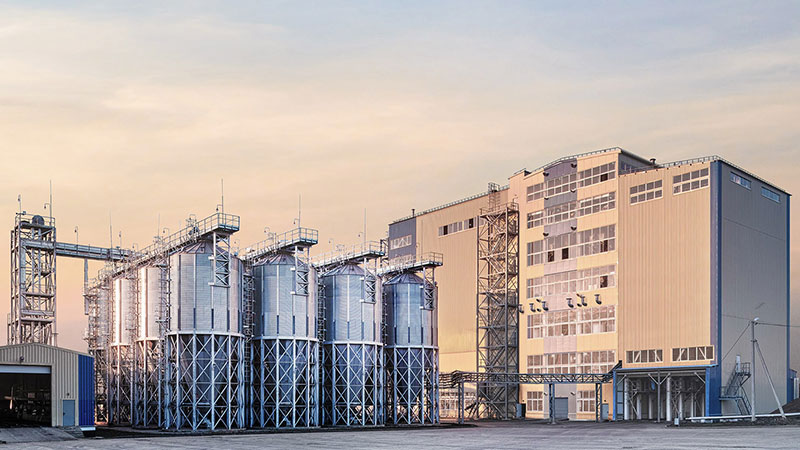
At RICHI, we go beyond project completion. With RICHI Servicee, we’re your dedicated partners in success. Count on us for expert guidance, minimal downtime, and optimized productivity. Choose RICHI for unmatched service and support.
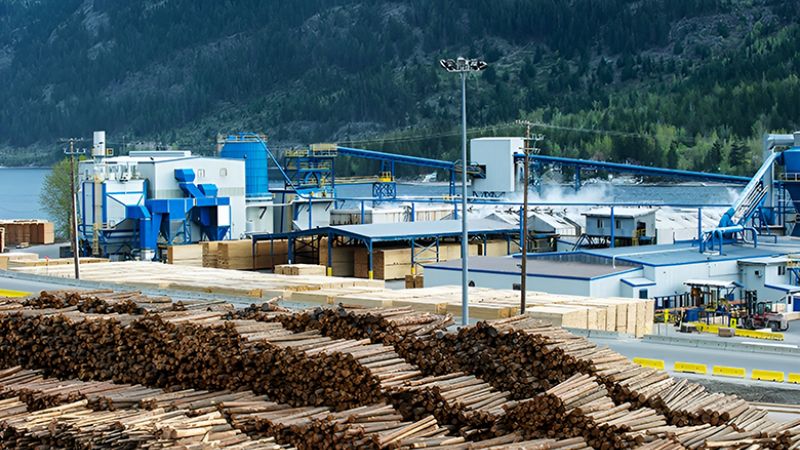


Meet global product demands and quality standards with industry-leading pellet plant design, engineering, equipment, and construction services for pellet processors.


Your Partner Beyond Project Completion
2000+ cases
RICHI is the leading designer, manufacturer and builder of pellet plants in the world, completing over 2000 projects in 140 countries across 6 continents.
Read More
Increase plant productivity, profitability, and safety by integrating high quality equipment into your pellet production line. Over the years, RICHI has become China's top pellet equipment manufacturer. At the same time, RICHI has established valuable partnerships with the world's leading component and raw material manufacturers to bring you the best there is in technology, automation, and efficiency in pelleting plant machinery.

For nearly 30 years, RICHI has been providing best-in-class pellet plant equipment and services to clients across a variety of industries, sizes, and needs. We pride ourselves on the knowledge and skill that each team member possesses – from our technical sales team to our process design engineers. You can count on RICHI Machinery to take your operation to the next level of innovation, quality, and success.
Need help with your pellet manufacturing plant project? Contact us today.
ANIMAL FEED
BIOMASS
WOOD
ORGANIC FERTILIZER
AQUA FEED
CAT LITTER
MUNICIPAL WASTE RECYCLING
SPECIAL PELLET PRODUCTION
RICHI Machinery continues to deliver world class pellet mill equipment, pellet plant engineering and project solutions that add value to our customers in the animal feed, wood waste, agriculture waste, organic fertilizer, cat litter and special pellet products industries. Throughout the years, we RICHI Machinery have built strong brand, becoming industry-leading pellet machine manufacturer. We value integrity, promise quality, and prioritize your success.
Learn MoreWith our expert team, we precisely implement your process engineering requirements in pellet mill and pelletizing plant systems. No matter which industry you’re in – we understand your needs and deliver solutions that meet the highest standards.
At RICHI, quality comes first. Our pellet making machine and related pellet line equipment undergo rigorous quality controls to ensure they meet the highest standards. Rely on products that are durable, safe, and efficient.
With decades of experience in pellet machine and pellet production line production, we have earned a reputation as a trusted partner in various industries. Our expertise allows us to cover a wide range of applications.
Not only do we offer premium pelleting equipment, but we are also experts at designing, building, installing, and maintaining facilities from the ground up. Our expertise is within pellt plant process design, discovering the most efficient, productive, and profitable way to handle your materials in an end-to-end cycle.
○ RICHI MACHINERY
Keeping in touch with us is an effective way to solve all your problems. If you have any needs or questions, please leave your contact information, then RICHI technical consultants will send design, quotation, videos to your mailbox. You can also contact us directly via WhatsApp: +86 13838389622
Copyright©2015-2026 by HENAN RICHI MACHINERY CO., LTD. All rights reserved.