
This is a project regarding a cotton gin waste dryer in Brazil. The client, a family-owned ginning business that has operated for over twenty years, had been paying a third-party contractor to haul this waste to a designated disposal area, costing them nearly 8,000 Brazilian reais per month.
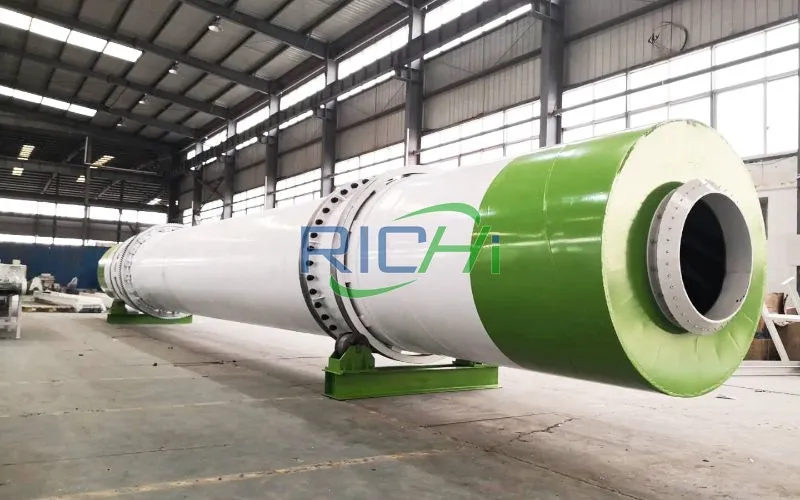
The Cotton Gin Waste Dryer in Brazil was installed for a cotton ginning operation located in the western region of Bahia state, the heart of Brazil's cotton belt. Brazil is currently the world's fourth-largest cotton producer, with annual harvests exceeding 2.8 million tons of lint, which generates approximately 1.2 million tons of cotton gin waste – a mixture of sticks, burs, immature seeds, leaf fragments, and fine fiber.
The client, a family-owned ginning business that has operated for over twenty years, had been paying a third-party contractor to haul this waste to a designated disposal area, costing them nearly 8,000 Brazilian reais per month.
After attending an agricultural waste valorization seminar in Luís Eduardo Magalhães, the client realized that properly dried cotton gin waste could be sold as biomass fuel for industrial boilers, animal bedding for dairy operations, and as a raw material for composting.
Name:
Cotton Gin Dryer
Country:
Brazil
Date:
2025
Capacity:
60 tons daily
Model:
φ1.5×15
Drum rotation speed:
5-10 rpm
Input moisture range:
30-45%
Output moisture range:
10-12%
He decided to purchase a single RICHI rotary drum dryer to replace his current practice of open-air stockpiling, which often led to spontaneous combustion during the dry season and mold growth during the rainy months. This Cotton Gin Waste Dryer in Brazil now processes 6 to 8 tons of wet gin waste per hour, reducing moisture from 35% to 12% in a single pass, transforming a costly liability into a reliable revenue stream.
This particular Cotton Gin Waste Dryer in Brazil was selected after the client evaluated three competing technologies from European and domestic Brazilian manufacturers. His raw material is heterogeneous: approximately 50% cotton burs and sticks, 25% leaf material and fines, 15% immature seeds, and 10% short fibers that escaped the ginning process.
The material arrives at his drying yard directly from the gin stand discharge, with moisture content varying between 30% and 45% depending on whether the cotton was harvested before or after seasonal rains in the Cerrado region. The client purchased only the rotary dryer as a standalone unit because he already owned a hammer mill for size reduction and a manual baling press for packaging the dried material.
He needed a drying solution that could sit between these existing pieces of equipment without requiring a full production line overhaul. The RICHI dryer has been operational for nine months, running eight hours per day during the gin season and four hours per day during the off-season, processing accumulated waste stockpiles.
The client deliberately avoided purchasing a complete drying and pelletizing line because he wanted to prove the market for dried cotton gin waste first, then reinvest profits into a RICHI pellet mill to produce higher-value fuel pellets for export to Uruguay and Paraguay.
Client Identity and Operational Context
The client is a second-generation cotton gin owner in São Desidério, Bahia, a municipality that produces more cotton than many entire countries. He processes approximately 25,000 tons of seed cotton annually, serving 180 local farmers. His gin operates from May to September, accumulating gin waste continuously.
Before the dryer, he tried several disposal methods: spreading waste on fallow fields (which attracted pests), selling it to a mushroom farm (which only wanted the clean fiber fraction), and simply burning it in a pit (which earned him complaints from neighbors and the local environmental agency, IBAMA). The RICHI dryer has eliminated all of these problems.
Why a Single Dryer Instead of a Complete Line?
The client specifically chose to purchase only the rotary drum dryer as a single machine for three reasons. First, his capital was limited after investing in a new gin stand the previous year. A complete drying-grinding-pelletizing line would have cost three times more. Second, he already owned a hammer mill (used for grinding corn for his cattle operation) and a manual baler. The dryer was the missing link.
Third, he wanted to test the market response for dried gin waste before committing to pellet production. The dried material in loose form has immediate buyers – a cement plant in Barreiras has already signed a trial agreement for 500 tons per month. If that contract becomes permanent, he will add a RICHI biomass pellet mill in 2026.
Cotton gin waste is often called "gin trash" in the industry, but it is far from worthless. The client's material composition varies by harvest week, but typical analysis shows:
As-received moisture ranges from 30% (end of dry season harvest) to 45% (early harvest after rains). The client uses a simple front-end loader to feed the material into a vibrating screen that removes rocks and large sticks (over 50mm) before the material enters a small hammer mill that reduces everything to under 15mm.
The dried output at 10-12% moisture has a bulk density of 160-200 kg/m³ and a net calorific value of approximately 3,800-4,200 kcal/kg, depending on the proportion of woody burs versus leafy material.
After analyzing the client's throughput requirements and the unique drying characteristics of cotton gin waste – which is fibrous, slightly oily, and prone to sticking – RICHI recommended the φ1.5×15 single-pass rotary dryer. Below are the full specifications:
This model was selected over smaller units like the φ1.2×12 because the client's daily waste generation during peak season reaches 60 tons of wet material. A φ1.2×12 could only process 40 tons per day, leaving a 20-ton backlog that would accumulate over the five-month ginning season. The φ1.5×15 gives him a comfortable buffer.
A larger φ1.8×18 would have required a significantly larger furnace and higher electrical consumption, which was not justified given his current waste volume.
Brazil has been actively promoting the circular economy through its National Biofuel Policy (RenovaBio) and various state-level incentives for agricultural waste utilization. The Cotton Gin Waste Dryer in Brazil plays a direct role in this national strategy. The client's dried gin waste serves four distinct markets:
The client notes that the dried gin waste has reduced his dependence on a single buyer. If the cement plant pays slowly, he diverts material to the dairy bedding market. If the mushroom grower reduces orders, he increases compost production. This flexibility was impossible with wet waste, which had to be moved immediately to avoid spontaneous combustion or mold.
Drying cotton gin waste is notoriously difficult because the material contains light fibers that tend to float out of the dryer exhaust, oily seeds that can ignite if overheated, and abrasive soil particles that wear down standard steel components. The client chose RICHI because our dryer includes specific design features that address each of these challenges.
Specialized Lifting Flight Design for Light, Fibrous Materials
Standard rotary dryers use simple angle-iron flights that lift material and drop it through the hot air stream. For cotton gin waste, these flights allow the light fibers and fines to become entrained in the exhaust air, resulting in material loss and increased cyclone loading.
RICHI engineers designed a three-stage flight pattern: section one uses pocket flights that gently lift the material without throwing it into the air stream; section two uses cascade flights that expose the material to hot air once moisture has dropped below 20%; section three uses cleaning flights that prevent buildup of sticky seed residues. The client's material loss to the cyclone has been measured at only 2.5%, compared to 12-15% on competitor machines.
Variable Frequency Drive on the Induced Draft Fan
The fan speed is independently controlled from the drum speed. When processing high-moisture material (above 40%), the client increases fan speed to remove water vapor quickly. When processing the seed-heavy fraction, he reduces fan speed to prevent seeds from being lifted out of the drum. This level of control is not available on budget dryers that use a single fixed-speed motor for both drum and fan.
Heavy-Duty Shell with 10mm Thick Steel
Standard dryer shells are 6mm or 8mm thick. The RICHI φ1.5×15 uses 10mm steel in the first 4 meters (where the material is heaviest and most abrasive) and 8mm steel for the remaining 11 meters. This extends the lifespan by approximately 40% in abrasive applications like cotton gin waste, which contains sand and soil from the field.
Flame Arrestor and Spark Detection System
The risk of fire is real when drying oily cotton seeds. RICHI installed a spark detection sensor in the dryer inlet and a flame arrestor between the furnace and the drum.
If a spark is detected, the system automatically closes the inlet damper and sounds an alarm. The client has experienced two spark events in nine months – both times the system activated within 0.5 seconds, preventing a drum fire. He considers this feature alone worth the investment.
The RICHI φ1.5×15 rotary dryer was manufactured at our Qingdao, China, factory and shipped in three sections: the main drum (15 meters long, requiring a flat rack container), the support frame and roller assemblies (one 20-foot container), and the drive system and electrical panel (one 20-foot container). The total shipping weight was 14.2 metric tons.
The cargo departed Qingdao Port and arrived at Santos Port in São Paulo state after 38 days of sea freight, navigating the South China Sea, the Indian Ocean, and the South Atlantic. Santos is Brazil's busiest port and the primary gateway for agricultural machinery entering the country.
From Santos, the equipment traveled 1,500 kilometers north by flatbed truck to São Desidério, Bahia, a journey that took five days. RICHI provided all necessary documentation for Brazil's complex import regulations, including the Proforma Invoice, Packing List, Bill of Lading, and a detailed technical drawing set required by INMETRO (Brazil's national metrology institute).
The client cleared customs through a brokerage firm in Santos and paid approximately 12% import duty, reduced from the standard 16% because the dryer qualifies as an "agricultural waste processing machine" under Brazil's MERCOSUR tariff code.
The client provided detailed feedback during a site visit by RICHI's regional sales manager for South America. His comments have been summarized below:
"The first two weeks were a learning curve. We were feeding the dryer too fast, and the outlet temperature would drop below 65°C, leaving the material at 18% moisture. Once we installed a small screw feeder with a VFD – which RICHI recommended but we initially tried to save money by using a belt conveyor – everything stabilized.
Now we run at 6.5 rpm drum speed, 420°C inlet, and we dry 7 tons per hour consistently. The most surprising thing is how clean the exhaust is. Our neighbors used to complain about dust blowing from our waste pile. Now there is no dust because the dryer is enclosed and the cyclone catches everything. I collect the cyclone fines and sell them to the mushroom grower. Nothing goes to waste.
The spark detector has activated twice. The first time, a small ember came from the furnace because our fireman left the combustion door open too long. The dryer shut down automatically. We inspected the drum and found no damage. On a competitor's dryer that a gin in Mato Grosso bought, they had a fire that destroyed the drum seals. That cost them 40,000 reais in repairs. I am glad I spent extra on the RICHI safety system.
If any other gin owner in Brazil asks me about this equipment, I tell them to buy the RICHI dryer but also buy the RICHI feeder and the RICHI cyclone as a package. Do not try to save money by buying cheaper peripheral components. The dryer itself is bulletproof, but the system only works if everything is matched properly."
The client also reported that his monthly net income from dried gin waste sales has reached 18,000 reais, which covers the dryer's monthly financing payment and leaves a small profit. He expects to fully repay the dryer investment within 18 months.
Brazil produces a staggering variety of agricultural residues, and the RICHI φ1.5×15 rotary dryer is capable of processing many of them without modification. The client has already tested the following materials, either for toll drying services or for his own business expansion:
This versatility means the client's single dryer can serve multiple industries within a 200-kilometer radius, turning him from a cotton gin operator into a regional biomass drying service provider.
Before the Brazilian client signed the purchase agreement, RICHI provided several services that demonstrated our expertise and built his confidence:
After installation, RICHI Machinery has continued to support the client through a WhatsApp group that includes our after-sales engineers and the client's two shift operators. Response time for technical questions has averaged four hours, considering the time difference between Bahia and China.
The market for dried agricultural residues in Brazil is expanding rapidly, driven by three macroeconomic trends:
The client plans to expand his operation by adding a second shift during the off-season, dedicated to drying coffee husks and orange peels for other agricultural processors. He estimates that within two years, the dryer will operate 16 hours per day year-round, processing a mix of materials from five different local industries.
The RICHI rotary dryer is not limited to cotton gin waste. Across Brazil's diverse agricultural landscape, the same φ1.5×15 model is being used for:
RICHI has now supplied rotary dryers to over twenty customers in Brazil, ranging from single-owner operations to multinational grain processors. Each installation includes a 2-year warranty on the drum shell and free remote technical support for the first year.
The Cotton Gin Waste Dryer in Brazil – specifically the RICHI φ1.5×15 rotary dryer – has fundamentally changed the client's business model. What was once a costly waste disposal problem now generates revenue from four distinct markets: industrial fuel, dairy bedding, mushroom substrate, and compost.
By purchasing a single dryer rather than a full processing line, the client minimized his initial capital risk while gaining the flexibility to expand into pellet production later.
The dryer's specialized flight design, spark detection system, and robust construction make it uniquely suited for the challenging material that is cotton gin waste.
If you operate a cotton gin, a sugar mill, a coffee processing plant, or any agricultural business that produces wet biomass residues in Brazil or anywhere in South America, contact RICHI Machinery. We will test your material free of charge at our Qingdao laboratory, recommend the correct dryer size and flight configuration, and provide remote installation support.
You do not need a complete processing line to start. A single RICHI rotary dryer can be the foundation of a profitable waste-to-value business. We have delivered equipment to over 60 countries, and every machine comes with our commitment to practical, hands-on support that helps you succeed from day one.
Having the right mix of reliable, high-quality pellet machine and pelletizing systems and expert support is essential to your success. Watch how our end-to-end feed pellet plant solutions have helped our customers optimize their performance.
Our customized and future-proofed turnkey pellet plant solutions is designed with you at the core. From vision to reality and beyond, our team stays connected with yours. Giving you peace-of-mind with an expert at your side.
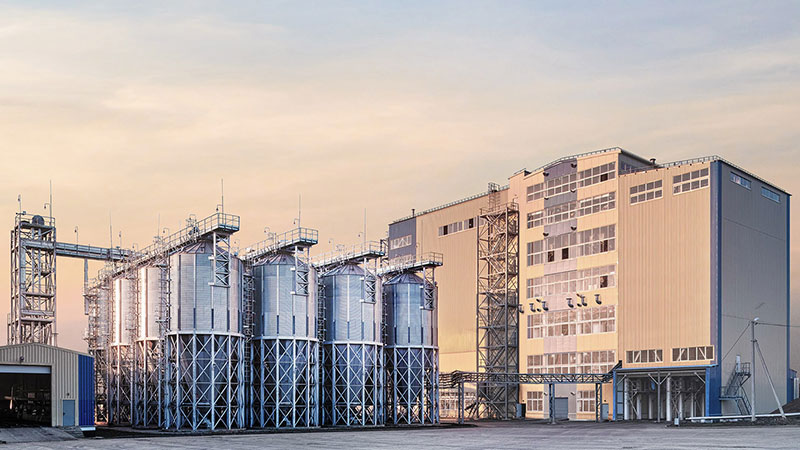
At RICHI, we go beyond project completion. With RICHI Servicee, we’re your dedicated partners in success. Count on us for expert guidance, minimal downtime, and optimized productivity. Choose RICHI for unmatched service and support.
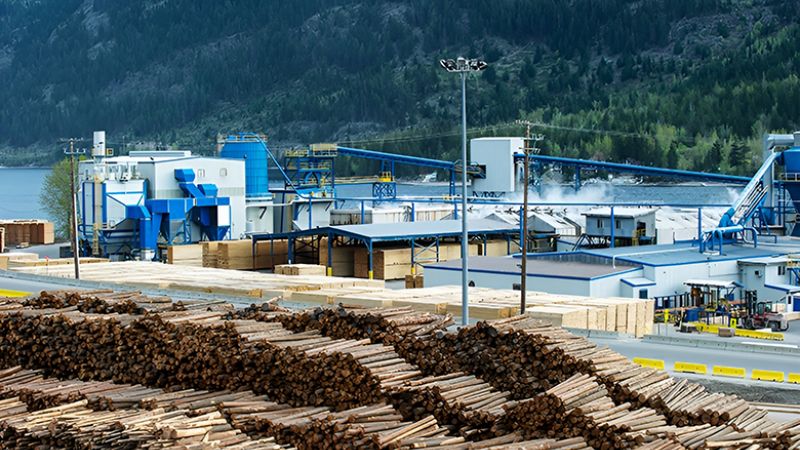


Meet global product demands and quality standards with industry-leading pellet plant design, engineering, equipment, and construction services for pellet processors.


Your Partner Beyond Project Completion
2000+ cases
RICHI is the leading designer, manufacturer and builder of pellet plants in the world, completing over 2000 projects in 140 countries across 6 continents.
Read More
Increase plant productivity, profitability, and safety by integrating high quality equipment into your pellet production line. Over the years, RICHI has become China's top pellet equipment manufacturer. At the same time, RICHI has established valuable partnerships with the world's leading component and raw material manufacturers to bring you the best there is in technology, automation, and efficiency in pelleting plant machinery.

For nearly 30 years, RICHI has been providing best-in-class pellet plant equipment and services to clients across a variety of industries, sizes, and needs. We pride ourselves on the knowledge and skill that each team member possesses – from our technical sales team to our process design engineers. You can count on RICHI Machinery to take your operation to the next level of innovation, quality, and success.
Need help with your pellet manufacturing plant project? Contact us today.
ANIMAL FEED
BIOMASS
WOOD
ORGANIC FERTILIZER
AQUA FEED
CAT LITTER
MUNICIPAL WASTE RECYCLING
SPECIAL PELLET PRODUCTION
RICHI Machinery continues to deliver world class pellet mill equipment, pellet plant engineering and project solutions that add value to our customers in the animal feed, wood waste, agriculture waste, organic fertilizer, cat litter and special pellet products industries. Throughout the years, we RICHI Machinery have built strong brand, becoming industry-leading pellet machine manufacturer. We value integrity, promise quality, and prioritize your success.
Learn MoreWith our expert team, we precisely implement your process engineering requirements in pellet mill and pelletizing plant systems. No matter which industry you’re in – we understand your needs and deliver solutions that meet the highest standards.
At RICHI, quality comes first. Our pellet making machine and related pellet line equipment undergo rigorous quality controls to ensure they meet the highest standards. Rely on products that are durable, safe, and efficient.
With decades of experience in pellet machine and pellet production line production, we have earned a reputation as a trusted partner in various industries. Our expertise allows us to cover a wide range of applications.
Not only do we offer premium pelleting equipment, but we are also experts at designing, building, installing, and maintaining facilities from the ground up. Our expertise is within pellt plant process design, discovering the most efficient, productive, and profitable way to handle your materials in an end-to-end cycle.
○ RICHI MACHINERY
Keeping in touch with us is an effective way to solve all your problems. If you have any needs or questions, please leave your contact information, then RICHI technical consultants will send design, quotation, videos to your mailbox. You can also contact us directly via WhatsApp: +86 13838389622
Copyright©2015-2026 by HENAN RICHI MACHINERY CO., LTD. All rights reserved.