
The business case behind this corn cob cat litter granule machine in Argentina was not simply “corn is abundant, so corn cobs must be cheap.” The customer first had to prove that a consistent fraction of its corn-processing residue could be separated, dried, milled and formulated into an absorbent pet-litter product whose performance justified more value than selling the same material as low-grade biomass or agricultural residue.
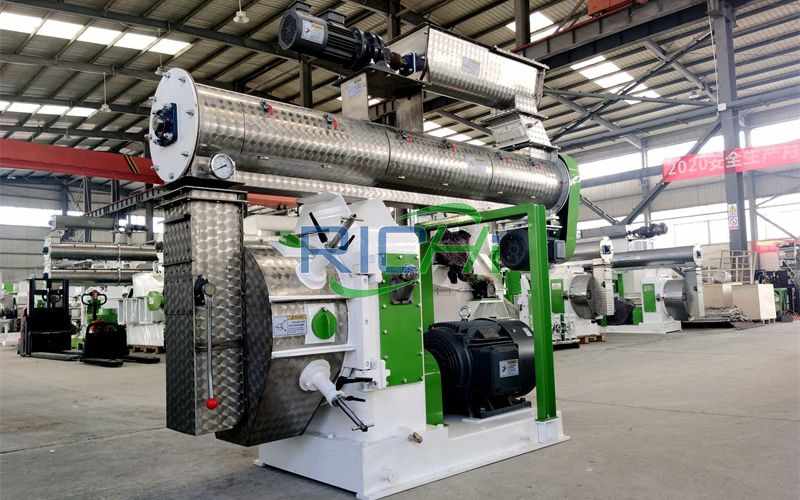
The business case behind this corn cob cat litter granule machine in Argentina was not simply “corn is abundant, so corn cobs must be cheap.” The customer first had to prove that a consistent fraction of its corn-processing residue could be separated, dried, milled and formulated into an absorbent pet-litter product whose performance justified more value than selling the same material as low-grade biomass or agricultural residue.
The customer is an agricultural processing company in Córdoba Province with established access to corn cobs from its own grain-handling network and neighboring producers. Instead of building a complete cat litter factory immediately, it added two MSZLH320 ring-die machines to an existing workshop that already had crushing, drying and basic mixing equipment. The two-machine arrangement gave the company enough capacity for commercial production while allowing one unit to run independently during formulation trials, smaller orders or scheduled maintenance.
Name:
cat litter pelletizer
Country:
Argentina
Date:
2025
Capacity:
3–4 T/H
Model:
MSZLH320
Main Motor Power:
37 kW
Raw Materials:
corn cobs, corn starch powder
Pellet diameter:
3–4 mm
Argentina is one of the world’s major corn-producing countries, and Córdoba, Buenos Aires and Santa Fe form an important part of its grain-producing belt. For a processor already handling corn, obtaining cob residues is much more realistic than building a pet-litter business around an imported plant fiber.
The customer does not divert marketable corn grain into the litter product. Its principal cellulose source is the cob remaining after suitable separation and cleaning.
Corn cob is attractive because its structure contains a high proportion of cellulose and hemicellulose and can absorb liquid when properly processed. Corn-cob material has long been evaluated for absorbent bedding applications, and plant-derived cat litters based on corn and other agricultural fibers are commercially established product categories.
That does not mean untreated corn cob automatically becomes premium cat litter. Absorption, clumping, dust, odor control, mechanical strength and breakdown after wetting all have to be engineered through particle preparation and formulation.
The company initially compared two possible products.
The first was loose crushed corn-cob litter. It required relatively little processing but remained bulky, produced an irregular appearance and was difficult to position as a differentiated retail pet product.
The second was a formed plant-fiber litter produced by grinding the cob, blending it with functional ingredients and passing the mixture through a ring die.
The customer chose the second route.
The finished product is designed as a biodegradable plant-fiber cat litter with controlled clumping behavior rather than simply a bag of crushed agricultural residue. This positioning better fits supermarkets, pet stores, e-commerce distributors and private-label buyers that expect predictable particle size and packaging appearance.
The formulation is built around corn cob powder, but the customer does not assume that the raw fiber will deliver strong clumping by itself.
A representative production blend uses corn-cob material as the dominant fraction, supplemented with starch-based and other approved plant-derived binders. Where stronger clumping is required, a small quantity of a suitable natural gum or other formulation component can be evaluated.
The exact percentages are established through litter testing rather than kept permanently at 70% cob + 15% starch + 15% additives.
This matters because adding excessive binder may improve physical strength while reducing porosity and liquid uptake. Insufficient binder can create fragile granules and excessive fines.
For the customer, the objective is therefore a balance between dry mechanical strength and rapid wetting behavior.
Whole corn cobs cannot be fed directly into the MSZLH320.
The collected material is first inspected and cleaned. Stones, metal, plastic, soil contamination and other foreign matter are removed before size reduction.
The cob then passes through primary crushing followed by finer grinding. The final feed should be much smaller and more uniform than the original 30–50 mm shredded material sometimes used in biomass processing.
For this cat litter project, the customer prepares a fine fibrous powder generally below several millimeters, with oversized pieces removed before mixing.
Moisture is checked after grinding. Material that is too wet can feed poorly and create soft granules; material that is excessively dry may increase dust and make binding less stable.
After trial production, the customer selected two MSZLH320 cat litter pellet machines rather than one larger machine.
| Project Parameter | Configuration |
|---|---|
| Model | MSZLH320 |
| Quantity | 2 units |
| Main Motor Power | 37 kW per unit |
| Feeder Power | 1.5 kW per unit |
| Conditioner Power | 4 kW per unit |
| Ring Die Inner Diameter | 320 mm |
| Available Pellet Diameter | 2–12 mm |
| Project Granule Diameter | Approximately 3–4 mm |
| Reference Capacity | Approximately 3–4 T/H per unit under suitable formulation conditions |
The nominal capacity is treated as a machine reference, not a guarantee that every corn-cob cat-litter formulation will continuously reach 4 T/H. Binder percentage, moisture, cob particle size, required granule density, ring-die compression and product diameter all influence actual throughput.
The two-machine arrangement also suits the customer’s business model. One machine can be used for routine domestic orders, while both can operate when larger distributor or export batches are scheduled.
The original development work considered larger 4–6 mm cylinders, but the customer ultimately preferred a somewhat smaller product for its principal clumping litter.
Very large pellets can feel coarse in the litter tray and create a different consumer experience from conventional clumping litter. Smaller cylindrical granules provide more contact area with liquid and are easier to distribute in a shallow litter bed.
The main commercial product therefore uses approximately 3–4 mm diameter granules.
That does not make this dimension universally correct. A non-clumping absorbent litter or a product designed for different packaging and consumer expectations could use a larger granule.
The MSZLH320 includes a conditioner, but the customer does not simply inject large amounts of steam because the machine has that capability.
Corn-cob cat litter requires enough moisture and thermal treatment to support stable forming, but excessive conditioning can alter starch behavior, soften the fiber excessively and increase the post-pelleting drying load.
Operators therefore adjust water and, where useful, controlled steam addition according to the actual formulation.
The goal is a mixture that enters the ring die consistently and forms durable cylinders without becoming pasty or over-wet.
Changing from a biomass pellet formula to cat litter is not simply a matter of installing a different hole size.
Ring-die compression affects density, hardness, throughput and the way the granule breaks down after absorbing liquid.
If compression is too high, the granules may become unnecessarily hard and slow to absorb. If it is too low, they may fracture during cooling, screening, bagging and transport.
The customer's die specification was therefore selected through testing with the corn-cob formulation rather than copied from a sawdust-pellet project.
This is one of the reasons the corn cob cat litter granule machine in Argentina is treated as part of a product-development process rather than as generic biomass equipment.
A granule can absorb water well and still form a poor clump.
Conversely, adding more binder can produce a firm clump but reduce the rate at which liquid enters the granule structure.
The customer's quality team therefore evaluates several characteristics independently: liquid uptake, clump formation time, wet-clump strength, dry dust, tracking tendency, odor behavior and granule durability during packaging.
Product adjustments are based on the balance among these properties.
This is more meaningful than claiming that corn cob automatically delivers “superior absorbency” simply because it is an agricultural fiber.
Plant litter is often marketed around low-dust performance, but the pellet machine alone cannot guarantee it.
Fresh granules produce some loose fines during discharge, cooling and subsequent conveying. These particles need to be removed before retail packing.
The customer therefore cools the product first and then screens it.
Acceptable clean fines can be returned to the preparation section, while the finished granules continue to packaging.
The number of transfer points is also controlled because unnecessary dropping and aggressive conveying can create new breakage after screening.
Granules leaving the ring die are warm and have not yet reached their final mechanical stability.
They are not sent directly into retail bags.
Cooling brings the product closer to ambient conditions and allows the formed structure to stabilize before screening and packaging.
The customer also checks finished moisture because biodegradable plant litter can absorb environmental moisture during storage. Moisture-resistant packaging and dry warehouse conditions therefore remain important even after successful granulation.
Using corn cob creates an important environmental marketing advantage: the principal raw material is plant-derived and biodegradable.
However, the customer avoids making unrestricted claims such as “flushable anywhere” or “safe for every home compost.”
Used cat litter contains animal waste and may carry pathogens. Disposal requirements can differ among municipalities and wastewater systems.
The retail positioning therefore focuses on renewable plant-based raw material, reduced reliance on mineral litter and lower product weight rather than promising one universal disposal method.
The raw-material side of the project is especially convincing.
Argentina has a large commercial corn sector, so a processor in the central agricultural region can build a corn-cob supply chain around existing grain activity rather than depending entirely on imported litter substrates.
The demand side is also plausible. Argentina’s consumer authorities now explicitly describe a growing “pet economy,” reflecting increasing spending on specialized products and services for companion animals.
This does not prove that corn-cob litter will automatically displace bentonite.
It does mean a differentiated plant-based litter has a credible market to test, particularly if the manufacturer can compete on dust, weight, clumping, odor control, packaging and price rather than sustainability claims alone.
Two MSZLH320 machines provide substantial production capacity for a new litter category.
The company therefore developed sales in stages.
Initial batches were supplied to selected pet-product distributors and private-label customers, allowing the processor to collect information on granule size, clump behavior and packaging preferences.
Only after product specifications became more stable did the company begin evaluating larger orders and neighboring South American markets.
This commercialization sequence makes better sense than installing 6–8 T/H of equipment and assuming Argentina’s domestic market would immediately absorb continuous full-capacity production.
The client had access to small flat-die machines through local equipment traders, but these were not preferred for the planned production scale.
The two ring-die units provide controlled feeding, continuous commercial production and easier integration with existing upstream and downstream equipment.
The customer was also interested in producing a consistent retail product rather than irregular agricultural granules.
Through controlled feed preparation, die selection, cutting and screening, the MSZLH320 provides better scope for standardizing particle dimensions across large batches.
The customer keeps ring dies, roller components and selected feeder parts in stock rather than relying entirely on international delivery after wear occurs.
Wear is not predicted by a fixed number of hours.
Corn cob itself is fibrous, but soil contamination and mineral particles collected with agricultural residue can accelerate wear significantly. Binder formulation and die compression also affect load on the ring die and rollers.
The maintenance team therefore monitors motor current, throughput, fines generation and granule quality together.
One advantage of the two-unit arrangement is that scheduled maintenance on one machine does not necessarily stop all granule production.
The two machines were shipped from Qingdao Port in China to the Port of Buenos Aires.
The equipment package included the pelletizers, feeders, conditioners, selected ring dies, specified wear parts and the documentation required for installation.
Before shipment, RICHI provided interface information so the customer could prepare electrical supply, foundations, upstream feeding connections and downstream cooling arrangements.
The inland transport from Buenos Aires was then coordinated to the customer’s production facility in central Argentina.
The customer already owned equipment for agricultural-residue preparation. Replacing those machines would have increased investment without solving an additional problem.
The new pelletizers were therefore inserted after grinding and mixing and before cooling, screening and packaging.
That is why this remains a single-machine-category project even though two identical units were purchased.
RICHI helped the customer match the machines to the existing workshop rather than forcing the customer to redesign its entire processing facility around a standardized line.
“At first we thought the main question was whether corn cob could be made into a pellet. That part was relatively easy. The harder work was making a litter granule that absorbed quickly, formed a useful clump and still stayed strong enough for packing. We changed the binder level and die conditions several times before we were satisfied with the balance.”
The customer's experience also changed the way it evaluates raw materials.
Corn cob is no longer purchased or collected only by weight. The processing team also checks moisture, cleanliness, particle structure and storage condition because those factors directly affect both grinding and granulation.
The MSZLH platform can be configured for other cat-litter formulations, but this Argentine project is dedicated to corn-cob litter.
The customer does not routinely switch the same machine between bentonite, tofu litter, wood fuel pellets, grass pellets and unrelated biomass products simply because the equipment can physically densify several materials.
Changing materials can require different dies, conditioning, cleaning, formulation and product-contact procedures.
Keeping the project focused on one commercial product allows much better control over quality and avoids cross-contamination between unrelated material systems.
The customer ultimately selected RICHI Machinery because the discussion went beyond nominal machine capacity.
The project involved reviewing raw-material particle size, moisture, binder behavior, die specification, granule diameter, cooling, screening and the interfaces with equipment already installed at the factory.
That engineering approach was particularly important because corn-cob cat litter is not a standardized commodity in the way conventional wood fuel pellets are. The equipment has to support development of the customer's own product specification.
This corn cob cat litter granule machine in Argentina project shows a realistic route for an agricultural processor entering the pet-products market without abandoning the equipment and raw-material network it already owns.
Two MSZLH320 machines with 37 kW main motors provide the central granulation capacity. Corn cob is cleaned, finely ground and formulated with suitable binders before entering the ring die. The main product is approximately 3–4 mm plant-fiber cat litter granules, followed by cooling, screening and controlled packaging.
The strength of the project is not simply that Argentina produces corn. It is the combination of a low-value agricultural residue, existing preparation equipment, a growing companion-animal market and a product-development process that turns the cob into something with measurable absorption, clumping and handling characteristics.
For another investor evaluating a corn cob cat litter granule machine in Argentina, RICHI would first examine annual corn-cob availability, cleaning method, incoming moisture, grinding size, binder choice, desired clumping behavior, target granule diameter, daily production plan, cooling and screening capacity, packaging format and confirmed sales channel before finalizing machine quantity.
That calculation is especially important with two MSZLH320 units. The question is not whether they can produce several tonnes per hour. The question is whether the customer can continuously prepare enough consistent raw material and sell enough qualified cat litter to use that capacity profitably.
Having the right mix of reliable, high-quality pellet machine and pelletizing systems and expert support is essential to your success. Watch how our end-to-end feed pellet plant solutions have helped our customers optimize their performance.
Our customized and future-proofed turnkey pellet plant solutions is designed with you at the core. From vision to reality and beyond, our team stays connected with yours. Giving you peace-of-mind with an expert at your side.
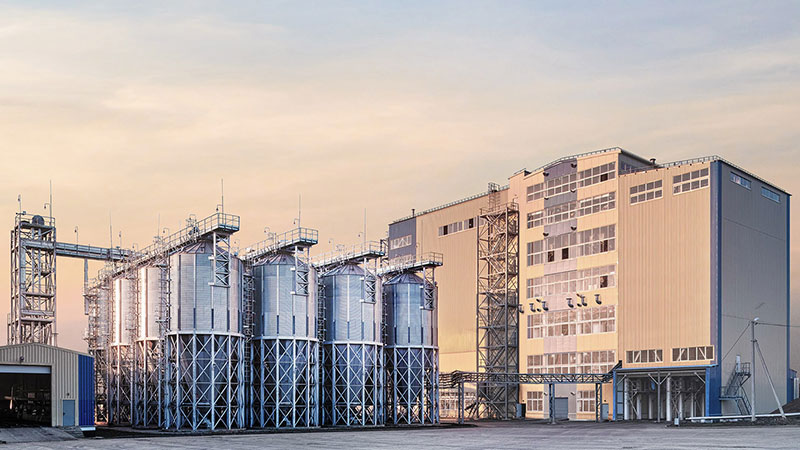
At RICHI, we go beyond project completion. With RICHI Servicee, we’re your dedicated partners in success. Count on us for expert guidance, minimal downtime, and optimized productivity. Choose RICHI for unmatched service and support.
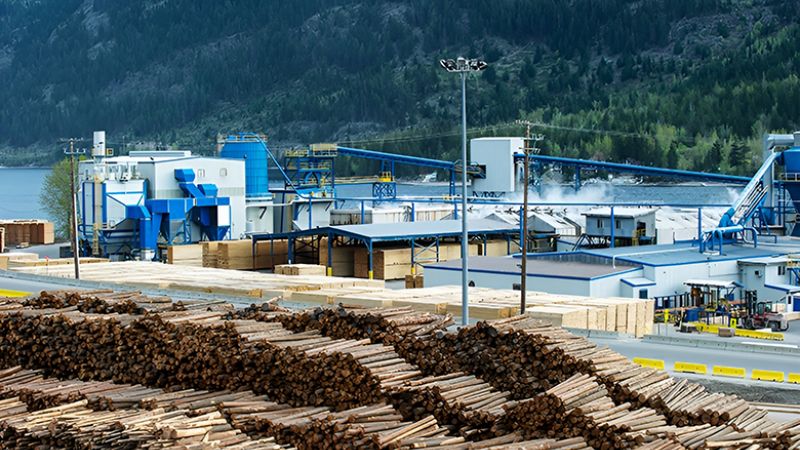


Meet global product demands and quality standards with industry-leading pellet plant design, engineering, equipment, and construction services for pellet processors.

Your Partner Beyond Project Completion
2000+ cases
RICHI is the leading designer, manufacturer and builder of pellet plants in the world, completing over 2000 projects in 140 countries across 6 continents.
Read More
Increase plant productivity, profitability, and safety by integrating high quality equipment into your pellet production line. Over the years, RICHI has become China's top pellet equipment manufacturer. At the same time, RICHI has established valuable partnerships with the world's leading component and raw material manufacturers to bring you the best there is in technology, automation, and efficiency in pelleting plant machinery.

For nearly 30 years, RICHI has been providing best-in-class pellet plant equipment and services to clients across a variety of industries, sizes, and needs. We pride ourselves on the knowledge and skill that each team member possesses – from our technical sales team to our process design engineers. You can count on RICHI Machinery to take your operation to the next level of innovation, quality, and success.
Need help with your pellet manufacturing plant project? Contact us today.
ANIMAL FEED
BIOMASS
WOOD
ORGANIC FERTILIZER
AQUA FEED
CAT LITTER
MUNICIPAL WASTE RECYCLING
SPECIAL PELLET PRODUCTION
RICHI Machinery continues to deliver world class pellet mill equipment, pellet plant engineering and project solutions that add value to our customers in the animal feed, wood waste, agriculture waste, organic fertilizer, cat litter and special pellet products industries. Throughout the years, we RICHI Machinery have built strong brand, becoming industry-leading pellet machine manufacturer. We value integrity, promise quality, and prioritize your success.
Learn MoreWith our expert team, we precisely implement your process engineering requirements in pellet mill and pelletizing plant systems. No matter which industry you’re in – we understand your needs and deliver solutions that meet the highest standards.
At RICHI, quality comes first. Our pellet making machine and related pellet line equipment undergo rigorous quality controls to ensure they meet the highest standards. Rely on products that are durable, safe, and efficient.
With decades of experience in pellet machine and pellet production line production, we have earned a reputation as a trusted partner in various industries. Our expertise allows us to cover a wide range of applications.
Not only do we offer premium pelleting equipment, but we are also experts at designing, building, installing, and maintaining facilities from the ground up. Our expertise is within pellt plant process design, discovering the most efficient, productive, and profitable way to handle your materials in an end-to-end cycle.
○ RICHI MACHINERY
Keeping in touch with us is an effective way to solve all your problems. If you have any needs or questions, please leave your contact information, then RICHI technical consultants will send design, quotation, videos to your mailbox. You can also contact us directly via WhatsApp: +86 13838389622
Copyright©2015-2026 by HENAN RICHI MACHINERY CO., LTD. All rights reserved.