
Discover a construction wood crusher project in Latvia using the RICHI XPJ500×500 drum chipper to process sorted timber offcuts and suitable construction wood waste into 20–40 mm wood chips.
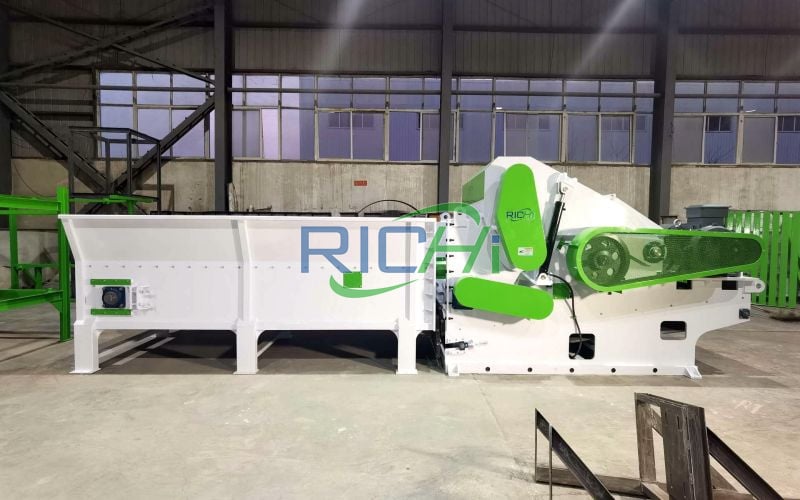
A timber recycling operator in Latvia needed a practical way to process clean wooden offcuts collected from renovation contractors, building refurbishment projects and local woodworking businesses. The incoming material varied considerably.
Some deliveries contained solid timber battens and short lengths of framing lumber; others included broken untreated boards and dimensional timber left over after cutting. Selling these pieces individually was time-consuming, and storing them in their original form occupied valuable yard space.
Rather than invest immediately in a complete wood waste processing line, the operator chose one RICHI XPJ500×500 drum wood chipper. The machine was intended to process selected, properly sorted timber waste into approximately 20–40 mm wood chips.
This gave the business a defined first processing stage while leaving drying, fine grinding and pellet production for possible future investment.
Name:
Construction Wood Crusher
Country:
Latvia
Date:
2026
Capacity:
Flexible
Model:
XPJ500×500
Power:
110 kW
Raw Materials:
solid timber waste
Final product size:
20–40mm
For companies researching a construction wood crusher in Latvia, the project highlights an important distinction: not every piece of construction waste is suitable for a conventional wood chipper.
The selected equipment is designed for compatible solid wood material, not mixed demolition debris. Its value depends on the operator's ability to sort incoming waste, maintain consistent feeding conditions and identify a suitable market for the resulting chips.
The operator already handled collection, sorting and temporary storage. The problem was the next step. Some recoverable timber was too short or irregular to sell as standard lumber, yet still had potential as a secondary raw material. Keeping every piece intact required considerable handling, while sending all wooden residues away without further processing limited the options available to the business.
A dedicated wood chipper offered a middle ground. It could reduce suitable timber offcuts to a more manageable size without requiring the operator to install a hammer mill, dryer, pellet mill and associated conveying equipment at the same time. The purchase addressed the immediate processing bottleneck rather than attempting to solve every waste-handling requirement in one investment.
The decision was particularly relevant to a recycling yard that receives material from different sources. Construction timber does not arrive with the same uniform dimensions as factory-produced wood feedstock. The business therefore needed to establish a clear acceptance and sorting procedure before feeding material into the machine.
Reusable boards, treated timber of uncertain composition and mixed demolition debris were kept separate from the intended chipping stream. Only suitable solid wood pieces that met the equipment's feed requirements were prepared for processing. This approach helped protect the cutting system and kept the resulting material aligned with the intended end use.
Latvia's construction and renovation sector generates different types of timber offcuts, but their suitability depends on their condition rather than simply their origin. For this project, the proposed feedstock consisted primarily of clean, untreated solid wood recovered from renovation and building-related operations.
Suitable batches could include spruce and pine framing offcuts, solid timber battens, short sections of untreated construction lumber and broken wooden boards. These softwoods are commonly used in European building and woodworking applications. The exact mix would depend on the material collected by the operator; the project does not assume that every delivery contains both species in fixed proportions.
Before chipping, incoming loads require inspection and sorting. Metal fasteners, screws, nails, bolts and other foreign objects must be removed to the extent required by the equipment's operating procedures. Concrete, masonry, plasterboard, insulation and plastic are not feedstock for this drum chipper. Nor should painted, pressure-treated or chemically contaminated timber be automatically mixed into a biomass fuel stream.
Construction wood waste can contain materials that require separate handling under local environmental rules. Where the composition or treatment history is uncertain, the material should be identified and assessed before processing or sale. The chipper does not make contaminated wood suitable for fuel, nor does size reduction remove chemical contamination.
The operator chose the XPJ500×500 because its configuration suited the intended stream of smaller solid timber sections and offcuts. It is a drum chipper with a nominal inlet dimension of 500 × 500 mm and a listed feed diameter of up to 500 mm. The model provides a practical option for a business that needs to process compatible wood pieces without selecting a larger machine solely for occasional oversized material.
The main motor is rated at 110 kW. Two feeding motors rated at 4 kW and 3 kW support the feeding arrangement, while the hydraulic pump uses a 1.5 kW motor. The discharge conveyor has a 2.2 kW motor. The cutting system includes six flying knives and two fixed knives.
These are the equipment's specified motor and cutting-system ratings, not a guaranteed hourly production figure. Actual throughput depends on timber species, density, moisture, piece geometry, feeding consistency, knife condition and operating practice. A production estimate should be based on the actual material and the required chip specification rather than motor power alone.
| Parameter | Specification |
|---|---|
| Equipment type | Drum wood chipper |
| Model | XPJ500×500 |
| Nominal inlet dimensions | 500 × 500 mm |
| Listed feed diameter | 500 mm |
| Feeding motor power | 4 + 3 kW |
| Main motor power | 110 kW |
| Hydraulic pump power | 1.5 kW |
| Discharge conveyor motor power | 2.2 kW |
| Flying knives | 6 |
| Fixed knives | 2 |
| Target chip size | Approximately 20–40 mm |
| Primary material | Sorted, compatible solid timber waste |
| Purchase configuration | One standalone machine |
The listed feed diameter is a reference, not permission to feed any piece of that diameter regardless of its length, shape or condition. Material must fit the feed opening and comply with the manufacturer's operating limits. Long, awkward or unstable pieces may require preparation before they can be fed safely.
The XPJ drum chipper reduces solid wood through a cutting action between knives mounted on a rotating drum and fixed knives. In this project, the target output is approximately 20–40 mm wood chips rather than fine sawdust or powder.
The resulting chips are easier to handle in bulk than many irregular offcuts. They can be collected for further evaluation, transported to a suitable buyer or used as an intermediate raw material where the receiving process accepts the specified size and wood quality.
The target dimension should not be interpreted as a guarantee that every chip will have identical measurements. Wood species, grain direction, incoming dimensions and knife condition all affect the output. If a downstream customer requires a narrow particle-size distribution, screening or another size-control step may be needed after the initial chipping stage.
A drum chipper is also different from a hammer mill. The chipper cuts suitable solid wood into chips; a hammer mill reduces prepared material further into smaller particles through impact. A pellet mill then compresses appropriately prepared material into pellets. Each machine has a distinct function, and the correct combination depends on the final product required.
The operator's first objective was to create a consistent intermediate product from selected timber residues. One potential market is an industrial biomass user whose fuel-handling system accepts the resulting chip size and whose other requirements can also be met. Before committing to that route, the buyer must confirm moisture, species, bark content, contamination limits and any relevant fuel-quality specifications.
Another possible route is further wood processing. If a downstream customer needs finer material, the chips may be suitable for additional size reduction after their condition has been checked. If the operator later decides to manufacture wood pellets, the process would normally require additional equipment and preparation steps.
A typical pellet production route may include drying when necessary, hammer milling, pelletizing, cooling and screening. Conveyors, storage and dust-control systems may also be required. The XPJ500×500 performs the initial chipping operation; it does not dry the material or turn it directly into finished pellets.
For this reason, the yard did not include a dryer or pellet mill in the initial purchase. The first task was to establish whether sufficient suitable timber waste was available and whether local buyers would accept the resulting chips. Additional equipment could then be selected against confirmed material and market requirements.
Construction-related timber residues vary in length and cross-section. Some pieces are easy to grip, while others may shift or slip if they are not presented correctly. The XPJ series uses hydraulic-assisted feeding to help the feeding rollers grip and advance suitable material into the cutting chamber.
The feeding system supports more controlled material intake, but it does not eliminate the need for sorting and preparation. Pieces outside the machine's limits must be excluded, and unsuitable items should never be forced into the opening. Workers must follow the operating instructions and keep clear of hazardous areas around the feed system and moving parts.
The chipper's body is constructed from welded steel plate to provide structural support. Its flying and fixed knives are specified as 6GrW2Si material with heat treatment intended to improve hardness and wear resistance. Dedicated fastening components secure the flying knives, while rotor dynamic balancing helps control vibration during operation.
These design and manufacturing details matter in a recycling yard because the machine may encounter different batches of wood over the course of a working week. Nevertheless, performance and service life still depend on correct operation, suitable feedstock, knife condition and routine maintenance. No knife material or balancing procedure can compensate for feeding metal-contaminated construction waste.
The operator needs a maintenance routine that fits the actual working schedule. Knife condition, fastening security, unusual vibration, changes in chip quality and irregular operating noise should be checked according to the manufacturer's instructions. Any abnormal condition needs investigation before the machine returns to normal operation.
Cleaning, knife replacement and inspection require safe isolation of the equipment's power supply. The machine must be stopped and made safe before access to cutting components. Appropriate tools, lifting arrangements and trained personnel should be available for maintenance tasks.
Incoming material quality also affects maintenance requirements. Clean, sorted wood reduces the risk of damage caused by foreign objects. Where construction residues contain unknown coatings, embedded metal or other contaminants, sorting and material acceptance procedures are essential before the chipper is used.
The purchase was deliberately limited to one drum chipper. The operator already had a material collection and sorting operation, while the immediate gap was the ability to process selected solid timber offcuts. Installing a complete biomass production line before confirming the volume and quality of the incoming waste would have introduced additional cost and operating requirements without establishing whether each stage was needed.
A standalone crusher machine also provides useful operating data. Over representative shifts, the business can record the types of wood processed, the amount rejected during sorting, the resulting chip quality, operating hours and maintenance requirements. These records make it easier to assess the economics of the chipping operation.
If customers later require lower moisture content, a dryer may be considered. If they need finer particles, a hammer mill may be appropriate. If demand for finished pellets becomes commercially reliable, a complete wood pellet production line can be planned around the actual feedstock and product specification.
RICHI Machinery supplies individual wood-processing machines as well as equipment for complete biomass processing systems. Its technical planning can take into account the incoming material, required chip size, working schedule, electrical supply, installation area and any future processing stages. The aim is to select equipment that fits the current job while allowing sensible expansion if the business case supports it.
For this type of project, the most useful operator feedback concerns three points: whether the feed system handles the accepted timber consistently, whether the chip dimensions meet buyers' requirements, and whether the maintenance workload is manageable under local operating conditions.
The recycling business also needs to monitor how much of the incoming material can actually be processed. A large incoming load does not necessarily translate into an equal quantity of saleable chips. Reusable boards, unsuitable timber, foreign objects and material rejected during sorting must be accounted for separately.
These observations help the operator decide whether the XPJ500×500 is the right long-term configuration and whether downstream equipment would improve the economics. Actual throughput, electricity use, customer acceptance and savings should be calculated from operating records rather than assumed from the model specifications.
For a publishable customer case, any direct quotation or claim of measured performance should be verified against project records or approved by the customer. This keeps the technical account credible and avoids presenting an illustrative operating assessment as an independently confirmed testimonial.
The planned sea-freight route is from Qingdao Port in China to Riga Port in Latvia. Before dispatch, the equipment configuration, packing arrangements, electrical requirements and any agreed spare parts should be confirmed.
The receiving site should prepare adequate foundation support, installation clearance, lifting access and a safe area for feeding and chip collection. The electrical supply and protection arrangements must be checked against the final machine configuration, and the installation and commissioning plan should be agreed before arrival.
For a construction wood recycling operation, preparation of the site and feedstock is as important as choosing the machine. A clear separation between reusable timber, suitable chipping material and contaminated waste helps the equipment operate within its intended scope and supports a more predictable final product.
Buyers comparing a construction wood crusher in Latvia should begin with the actual material rather than motor power alone. The important questions are whether the feedstock is clean and compatible, whether the dimensions fit the machine, what chip size the customer requires and whether the downstream user has confirmed acceptance criteria.
The RICHI XPJ500×500 offers a drum-chipping configuration with a 500 × 500 mm nominal inlet, a 110 kW main motor, six flying knives and two fixed knives. Its suitability depends on the characteristics of the material and the intended operating schedule. A larger machine is not automatically a better investment if most incoming residues are relatively small offcuts and the required output can be achieved with a more appropriately sized configuration.
RICHI Machinery can help buyers assess the feedstock, select a suitable model and determine whether the project requires only a standalone chipper or a more extensive wood-processing arrangement. The first step is to describe the incoming material accurately, including dimensions, species, moisture, contamination risks and the intended application of the chips.
For the Latvian recycling operator, the purpose of the investment is straightforward: convert suitable construction timber residues into approximately 20–40 mm wood chips, improve material handling and establish a measurable processing stage. Starting with one machine keeps the initial investment focused while leaving the business free to expand only when feedstock availability and customer demand justify the next step.
Having the right mix of reliable, high-quality pellet machine and pelletizing systems and expert support is essential to your success. Watch how our end-to-end feed pellet plant solutions have helped our customers optimize their performance.
Our customized and future-proofed turnkey pellet plant solutions is designed with you at the core. From vision to reality and beyond, our team stays connected with yours. Giving you peace-of-mind with an expert at your side.
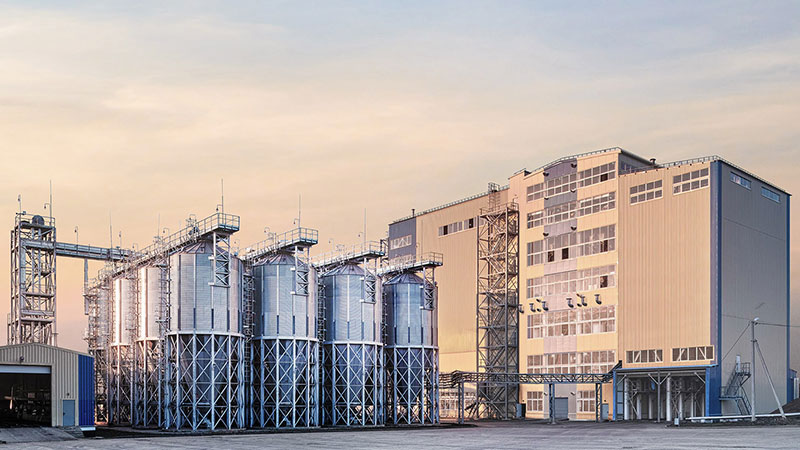
At RICHI, we go beyond project completion. With RICHI Servicee, we’re your dedicated partners in success. Count on us for expert guidance, minimal downtime, and optimized productivity. Choose RICHI for unmatched service and support.
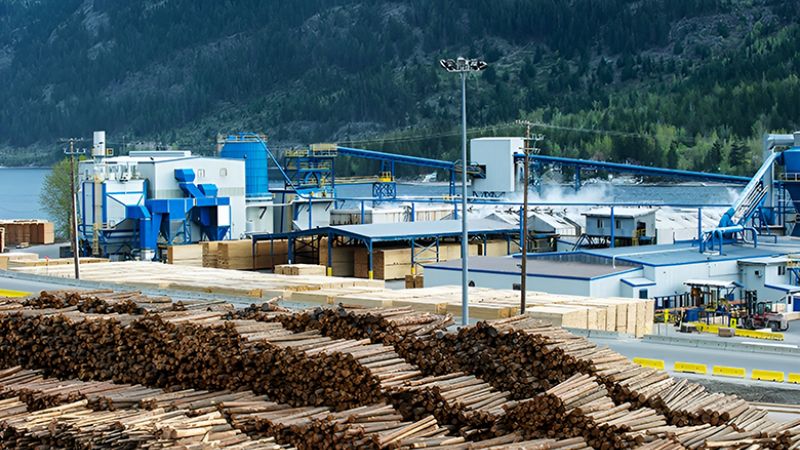


Meet global product demands and quality standards with industry-leading pellet plant design, engineering, equipment, and construction services for pellet processors.


Your Partner Beyond Project Completion
2000+ cases
RICHI is the leading designer, manufacturer and builder of pellet plants in the world, completing over 2000 projects in 140 countries across 6 continents.
Read More
Increase plant productivity, profitability, and safety by integrating high quality equipment into your pellet production line. Over the years, RICHI has become China's top pellet equipment manufacturer. At the same time, RICHI has established valuable partnerships with the world's leading component and raw material manufacturers to bring you the best there is in technology, automation, and efficiency in pelleting plant machinery.

For nearly 30 years, RICHI has been providing best-in-class pellet plant equipment and services to clients across a variety of industries, sizes, and needs. We pride ourselves on the knowledge and skill that each team member possesses – from our technical sales team to our process design engineers. You can count on RICHI Machinery to take your operation to the next level of innovation, quality, and success.
Need help with your pellet manufacturing plant project? Contact us today.
ANIMAL FEED
BIOMASS
WOOD
ORGANIC FERTILIZER
AQUA FEED
CAT LITTER
MUNICIPAL WASTE RECYCLING
SPECIAL PELLET PRODUCTION
RICHI Machinery continues to deliver world class pellet mill equipment, pellet plant engineering and project solutions that add value to our customers in the animal feed, wood waste, agriculture waste, organic fertilizer, cat litter and special pellet products industries. Throughout the years, we RICHI Machinery have built strong brand, becoming industry-leading pellet machine manufacturer. We value integrity, promise quality, and prioritize your success.
Learn MoreWith our expert team, we precisely implement your process engineering requirements in pellet mill and pelletizing plant systems. No matter which industry you’re in – we understand your needs and deliver solutions that meet the highest standards.
At RICHI, quality comes first. Our pellet making machine and related pellet line equipment undergo rigorous quality controls to ensure they meet the highest standards. Rely on products that are durable, safe, and efficient.
With decades of experience in pellet machine and pellet production line production, we have earned a reputation as a trusted partner in various industries. Our expertise allows us to cover a wide range of applications.
Not only do we offer premium pelleting equipment, but we are also experts at designing, building, installing, and maintaining facilities from the ground up. Our expertise is within pellt plant process design, discovering the most efficient, productive, and profitable way to handle your materials in an end-to-end cycle.
○ RICHI MACHINERY
Keeping in touch with us is an effective way to solve all your problems. If you have any needs or questions, please leave your contact information, then RICHI technical consultants will send design, quotation, videos to your mailbox. You can also contact us directly via WhatsApp: +86 13838389622
Copyright©2015-2026 by HENAN RICHI MACHINERY CO., LTD. All rights reserved.