
Complete Feed Bag Filling Machine in Pakistan: DCS-50P belt feeding for pellets and mash, 40–50 kg bags, weighing checks and realistic dispatch planning.
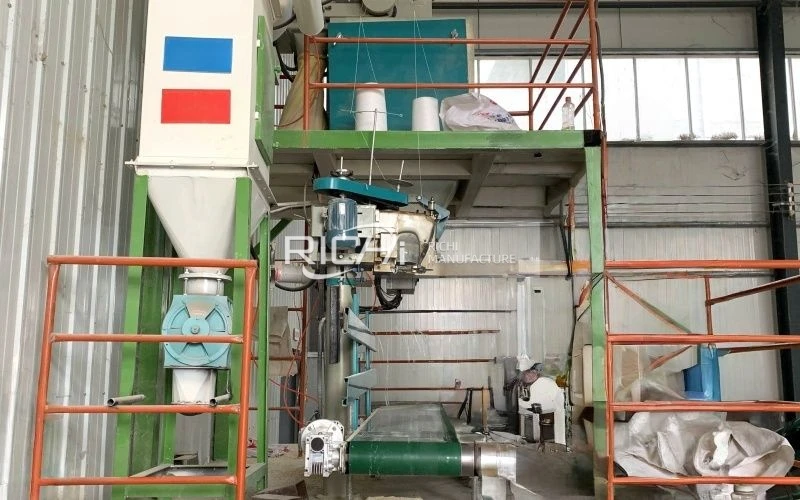
A packing machine’s bag counter can keep moving while finished bags pile up before the sewing station. For a feed mill trying to dispatch more product with the same crew, the useful figure is correctly weighed, closed bags leaving the packing area.
This illustrative application for a complete feed bag filling machine in Pakistan concerns a mixed-feed producer in Punjab, within the Lahore supply area. Its planning volume is 25,000 tonnes annually. The purchase brief is one replacement filling and weighing unit connected to existing feed bins, a takeaway conveyor and sewing equipment.
Name:
Feed Bag Filling Machine
Country:
Pakistan
Date:
2026
Capacity:
6–8 bags/minute
Model:
DCS-50P
Power:
1.5 + 0.55 + 0.37 = 2.42 kW
Selected bag weights:
50 kg & 40 kg
Bag closure:
Sewn woven bags
The mill handles complete poultry feeds as cooled broiler pellets approximately 3–4 mm in diameter, screened crumbles and layer mash. It also packs dairy concentrate mash for feeding alongside forage. Maize, wheat bran, rice polishings, soybean meal and cottonseed meal contribute different particle shapes, dust levels and bulk densities.
Dry pellets can discharge freely, while bran-rich mash may bridge or arrive unevenly. That makes feeding method a procurement decision. For a shared outlet handling both forms, the DCS-50P belt-fed model Automatic Packing Machine is the candidate. Gravity-fed DCS-50K selection would require a pellet-only duty or separate confirmation of material suitability.
The sample acceptance plan starts with dry products at approximately 11–13% moisture on a wet basis. Supplier trials should include the dustiest mash and the least free-flowing routine formula. Wet, sticky material would require another assessment.
For this application, poultry products use 50 kg open-mouth woven polypropylene bags and dairy concentrate uses 40 kg bags. The planning split is 70% of annual tonnage in 50 kg bags and 30% in 40 kg bags. Bag dimensions, fabric and sewing headspace are checked with filled samples.
The calculation gives 350,000 poultry bags and 187,500 dairy bags: 537,500 bags annually. Over 300 operating days, that averages approximately 1,792 bags per day. Seven productive packing hours require about 256 completed bags per hour.
A provisional acceptance target of five completed bags per minute would provide 2,100 bags across seven productive hours. The full-shift trial must demonstrate that rate with the chosen products, bag weights and downstream handling. The published machine cycle is a separate reference.
| Item | Reference specification or project basis |
|---|---|
| Selected candidate | One DCS-50P feed bag filling scale |
| Feeding method | Belt feeding for pellet and powder applications |
| Published packing speed | 6–8 bags/minute; verify by product and bag weight |
| Project completed-bag target | 5 bags/minute, subject to line trials |
| Selected bag weights | 50 kg poultry feed; 40 kg dairy feed |
| Listed motor power | 1.5 + 0.55 + 0.37 = 2.42 kW; compressor and dust extraction additional |
| Published accuracy | Static ±0.1%; dynamic ±0.2%, reference basis to agree |
| Compressed-air reference | 0.4–0.6 MPa; listed 1.5 m³/hour, conditions to confirm |
| Bag closure | Sewn woven bags using the agreed conveyor interface |
The belt feeder needs controlled coarse and fine dosing settings for each product. Material still falling after cut-off affects the final weight, so a pellet setting should not be assumed suitable for a dusty mash. Hopper level and product flow should remain reasonably consistent during acceptance tests.
Bag dimensions also matter. At an illustrative loose bulk density of 400 kg/m³, a 50 kg fill occupies 125 litres before allowing sewing headspace. A bag selected only by nominal weight may be too small for a lighter mash.
The inlet bin, transition chute and dust extraction connection need review together. Dust capture should contain emissions without pulling on the weighing assembly. Flexible connections and separation from conveyor vibration help the scale settle consistently.
The bin review also checks usable buffer volume and residual feed above the weigh hopper. Low-level alarms can distinguish an empty supply bin from a dosing fault. Bagging trials should include both a full bin and its normal low operating level, because feed pressure can affect flow.
Product changes require clearing retained feed from the hopper, belt and discharge path. Layer and dairy recipes need identification checks before packing restarts. The controls should store product-specific settings, with verification bags checked after each changeover.
The purchase contract should define whether percentage error refers to target fill weight or another reference, together with the test load, operating speed and sampling method. If ±0.2% is explicitly defined against a 50 kg target, it corresponds to ±100 g. A catalogue percentage alone does not establish a tighter gram-level guarantee.
Commissioning records should include individual bag errors and the average bias for each product. An independent reference scale checks net feed weight after accounting for bag tare. Routine checks should follow an agreed schedule and restart after maintenance or a suspected drift.
Average overfill deserves separate attention. A hypothetical positive bias of 20 g across 537,500 bags would represent 10,750 kg of feed annually. Bias is therefore tracked separately from individual bag errors during the weighing assessment.
The proposed arrangement uses one operator presenting bags and another guiding them through closure. The interface plan includes mechanical bag-handling assistance at the warehouse end, with pallet clearance coordinated by warehouse staff. Its capacity and availability are included in the staffing assessment.
The line trial therefore includes bag placement, filling, conveyor transfer, sewing, pallet clearance and ordinary interruptions. The crew requirement can be confirmed only after those operations are observed together. A faster filler cannot compensate for a slower sewing head or blocked discharge.
The interface survey records bin outlet height, bag-clamp access, conveyor elevation and maintenance clearance. Electrical design provisionally uses 400 V, three-phase, 50 Hz, confirmed against the site panel. Compressed air must maintain the specified pressure during simultaneous plant demand.
Delivery planning can assess Qingdao to Karachi and onward transport to Punjab. The quotation should identify included weighing, belt feeding, controls and closure components, plus installation assistance and spare parts. The spares list should cover clamp seals, pneumatic components and sewing consumables by specification.
For a complete feed bag filling machine in Pakistan, send RICHI Machinery samples of each feed form, bag specifications and a dispatch breakdown by bag weight. Add photographs of the existing sewing and pallet-handling area. Those details allow the proposal to address finished dispatch capacity and staffing together.
Having the right mix of reliable, high-quality pellet machine and pelletizing systems and expert support is essential to your success. Watch how our end-to-end feed pellet plant solutions have helped our customers optimize their performance.
Our customized and future-proofed turnkey pellet plant solutions is designed with you at the core. From vision to reality and beyond, our team stays connected with yours. Giving you peace-of-mind with an expert at your side.
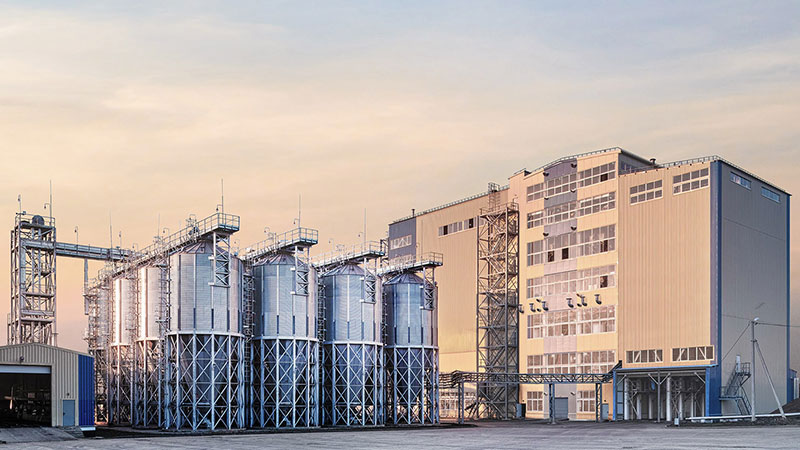
At RICHI, we go beyond project completion. With RICHI Servicee, we’re your dedicated partners in success. Count on us for expert guidance, minimal downtime, and optimized productivity. Choose RICHI for unmatched service and support.
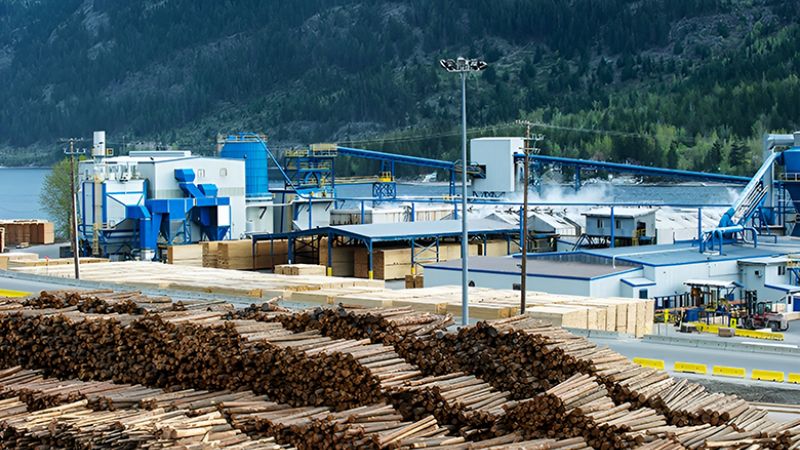


Meet global product demands and quality standards with industry-leading pellet plant design, engineering, equipment, and construction services for pellet processors.


Your Partner Beyond Project Completion
2000+ cases
RICHI is the leading designer, manufacturer and builder of pellet plants in the world, completing over 2000 projects in 140 countries across 6 continents.
Read More
Increase plant productivity, profitability, and safety by integrating high quality equipment into your pellet production line. Over the years, RICHI has become China's top pellet equipment manufacturer. At the same time, RICHI has established valuable partnerships with the world's leading component and raw material manufacturers to bring you the best there is in technology, automation, and efficiency in pelleting plant machinery.

For nearly 30 years, RICHI has been providing best-in-class pellet plant equipment and services to clients across a variety of industries, sizes, and needs. We pride ourselves on the knowledge and skill that each team member possesses – from our technical sales team to our process design engineers. You can count on RICHI Machinery to take your operation to the next level of innovation, quality, and success.
Need help with your pellet manufacturing plant project? Contact us today.
ANIMAL FEED
BIOMASS
WOOD
ORGANIC FERTILIZER
AQUA FEED
CAT LITTER
MUNICIPAL WASTE RECYCLING
SPECIAL PELLET PRODUCTION
RICHI Machinery continues to deliver world class pellet mill equipment, pellet plant engineering and project solutions that add value to our customers in the animal feed, wood waste, agriculture waste, organic fertilizer, cat litter and special pellet products industries. Throughout the years, we RICHI Machinery have built strong brand, becoming industry-leading pellet machine manufacturer. We value integrity, promise quality, and prioritize your success.
Learn MoreWith our expert team, we precisely implement your process engineering requirements in pellet mill and pelletizing plant systems. No matter which industry you’re in – we understand your needs and deliver solutions that meet the highest standards.
At RICHI, quality comes first. Our pellet making machine and related pellet line equipment undergo rigorous quality controls to ensure they meet the highest standards. Rely on products that are durable, safe, and efficient.
With decades of experience in pellet machine and pellet production line production, we have earned a reputation as a trusted partner in various industries. Our expertise allows us to cover a wide range of applications.
Not only do we offer premium pelleting equipment, but we are also experts at designing, building, installing, and maintaining facilities from the ground up. Our expertise is within pellt plant process design, discovering the most efficient, productive, and profitable way to handle your materials in an end-to-end cycle.
○ RICHI MACHINERY
Keeping in touch with us is an effective way to solve all your problems. If you have any needs or questions, please leave your contact information, then RICHI technical consultants will send design, quotation, videos to your mailbox. You can also contact us directly via WhatsApp: +86 13838389622
Copyright©2015-2026 by HENAN RICHI MACHINERY CO., LTD. All rights reserved.