
The County Cork feed mill was not trying to replace Ireland’s grass-based dairy system with pelleted feed. Its customers still relied heavily on grazed grass and conserved silage. The mill’s job was different: produce consistent concentrate feed that could supplement forage when milk yield, winter housing, silage quality, weather conditions, or individual herd requirements created a nutritional gap.
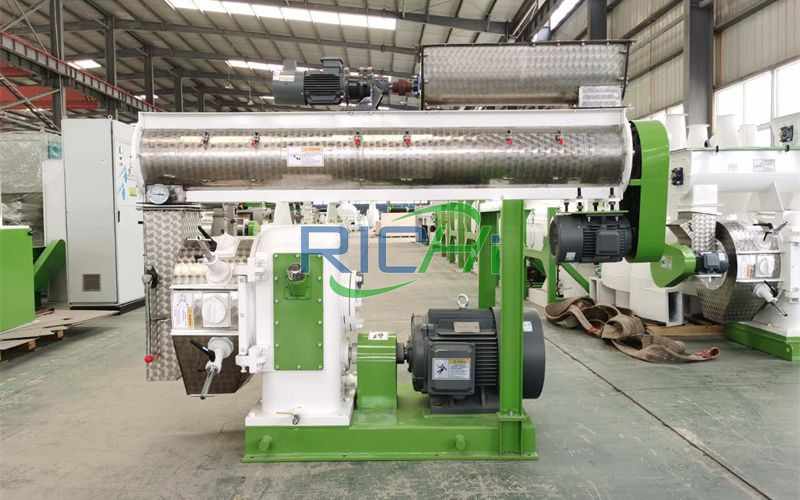
The County Cork feed mill was not trying to replace Ireland’s grass-based dairy system with pelleted feed. Its customers still relied heavily on grazed grass and conserved silage. The mill’s job was different: produce consistent concentrate feed that could supplement forage when milk yield, winter housing, silage quality, weather conditions, or individual herd requirements created a nutritional gap.
That distinction defined this cattle feed processing machine in Ireland project. The customer already operated a commercial compound-feed plant with grain intake, storage, grinding, batching, mixing, cooling, bulk dispatch, and bagging equipment. Its ageing pellet mill had become the limiting point. Instead of rebuilding the entire factory, the company purchased one SZLH420 ring-die pellet mill to replace the existing pelleting unit and restore reliable production at approximately 10–12 T/H.
Name:
Cattle Feed Machine
Country:
Ireland
Date:
2025
Capacity:
10–12 T/H
Model:
SZLH420
Main Motor Power:
110 kW
Raw Materials:
barley, wheat, soybean meal
Pellet diameter:
6mm
This was a retrofit project.
The customer had already invested in silos, hammer mills, dosing systems, mixers, steam supply, coolers, screens, finished-feed bins, and dispatch equipment. Those sections remained serviceable, so replacing them would have increased investment without solving the actual production problem.
The old pelletizer was causing three increasingly expensive issues. Throughput declined as wear accumulated, pellet quality became less predictable between formulations, and maintenance shutdowns began interfering with feed deliveries during busy periods.
The SZLH420 was therefore selected around the existing line capacity, available steam system, workshop dimensions, electrical infrastructure, and downstream cooler rather than simply choosing the largest pellet mill the customer could purchase.
A 10–12 T/H cattle-feed pellet mill would be unnecessarily large for an individual Irish dairy farm. It makes much more sense in an established compound feed business supplying many farms.
The Cork customer produces cattle concentrates for dairy and beef enterprises across southern Ireland. Production changes seasonally: winter housing increases demand for certain concentrate feeds, while weather and forage conditions can alter supplementation requirements during the grazing season.
Recent Teagasc data continue to show that concentrate feeding remains significant in Irish dairy systems even though grass is the nutritional foundation. Dairy compound-feed use was estimated at roughly 1.4 tonnes per cow in 2025, illustrating why commercial mills remain important to Ireland’s grass-based dairy economy.
For this customer, the SZLH420 is therefore commercial production equipment rather than an on-farm machine or experimental unit.
| Project Parameter | Configuration |
|---|---|
| Equipment | Cattle feed processing machine / ring-die pellet mill |
| Model | SZLH420 |
| Quantity | 1 unit |
| Main Motor Power | 110 kW |
| Feeder Power | 1.5 kW |
| Conditioner Power | 7.5 kW |
| Ring Die Inner Diameter | 420 mm |
| Available Pellet Diameter | 2–12 mm |
| Project Pellet Diameter | 6 mm |
| Reference Capacity | Approximately 10–12 T/H depending on formulation and operating conditions |
The 10–12 T/H figure is treated as a reference capacity for suitable conventional compound-feed formulations. Actual output changes with formulation, die specification, grinding size, fat and molasses inclusion, conditioning, moisture, steam quality, and required pellet durability.
The mill’s principal products are complementary cattle feeds designed to be offered alongside grazed grass, silage, hay, or other forage.
The raw-material system therefore looks very different from an alfalfa pellet plant or a high-forage cattle pellet project.
Typical ingredients available to the formulation team include barley, wheat, maize or maize-derived ingredients, soybean meal, rapeseed meal, distillers grains, beet pulp, soya hulls, wheat feed, molasses, minerals, vitamins, and other approved feed materials.
Barley is particularly relevant in Irish cattle feeding. Teagasc describes barley, maize grain, and wheat as energy ingredients, with soybean meal and other higher-protein materials used to balance the ration. It also notes that Irish livestock feeding continues to depend on imported ingredients, particularly protein sources, even while interest in increasing home-grown feed use remains strong.
The mill does not permanently run 35–40% barley, 25–30% wheat, 15–20% soybean meal, 10–15% rapeseed meal, 5–8% molasses, and 3–5% premix as one fixed formulation.
Feed formulations change according to ingredient prices, nutrient analysis, dairy or beef application, protein requirement, energy specification, customer contract, and forage quality.
A dairy concentrate designed to complement high-quality grazed grass may differ considerably from a winter feed intended to complement moderate-quality grass silage.
Similarly, finishing beef cattle can receive cereal-rich concentrates with a different protein profile from feeds designed for high-yield dairy cows.
The pellet mill therefore needs formulation tolerance rather than one “Irish recipe.”
The customer uses molasses where formulation and pellet characteristics justify it, but the inclusion rate is controlled.
Teagasc notes that compound rations commonly use molasses at approximately 2–5% and minerals and vitamins around 2% in many cattle concentrate formulations.
These inclusion levels provide a practical reference for many cattle concentrate formulations, while the final percentages are determined by the actual feed specification.
Molasses can contribute palatability and assist physical binding, but higher inclusion also changes flow behavior, conditioner loading, die performance, and the risk of material buildup.
During early troubleshooting of the old production system, operators had sometimes attributed excessive fines entirely to pelletizer wear.
The retrofit review showed that upstream particle size also mattered.
Coarsely ground cereal particles can weaken pellet structure, while excessive fine grinding increases energy use and can alter feed characteristics unnecessarily.
The hammer mill screens and grinding consistency were therefore checked before commissioning the SZLH420.
This allowed the new pellet mill to receive a more repeatable meal rather than being expected to correct variation created upstream.
Pellet quality is visible, but nutritional uniformity is less visible and arguably more important.
Minerals, vitamins, salt, and other low-inclusion ingredients must be distributed correctly before the material enters the conditioner.
The customer therefore retained its existing batch-mixing system but verified mixing sequence and batch consistency during the upgrade.
A feed pellet machine can compact an uneven mixture into attractive pellets; it cannot correct poor formulation accuracy.
The customer’s previous machine had often been operated by changing roller settings whenever pellet durability declined.
With the new SZLH420, more attention was placed on conditioning.
Steam quality, meal temperature, moisture, residence time, formulation, and feed rate all influence how the material behaves inside the die.
Cereal-rich cattle feeds generally benefit from controlled steam conditioning before compression, but the plant does not operate with one permanent temperature for every product.
A high-barley ration can behave differently from a formulation containing more fibrous by-products, molasses, or oil.
Excessive conditioning can create its own problems.
If too much moisture enters the meal, pellet discharge becomes softer, cooling demand rises, and stability in storage can deteriorate.
Insufficient conditioning creates the opposite problem: higher die resistance, weaker pellets, greater wear, and potentially lower production efficiency.
The operators therefore use motor load, conditioner performance, pellet appearance, fines after cooling, and product temperature together rather than chasing one theoretical conditioning number.
The SZLH420 can produce several pellet diameters, but the Cork mill standardized much of this cattle-feed production around 6 mm.
That dimension provides a practical compromise for bulk cattle concentrate and reduces unnecessary ring-die changes.
The customer can install another die where a contract requires a different pellet size, but it does not change diameter simply because the machine offers a 2–12 mm range.
Standardization also simplifies cooling, screening, spare-die inventory, and quality control.
The customer does not market pelleting as a process that automatically increases milk yield or feed conversion.
The nutritional result depends first on the ration.
Pelleting can provide useful physical advantages: reduced ingredient separation, controlled particle form, easier bulk conveying, improved handling, and less segregation during transport.
Steam conditioning can also alter starch characteristics to some degree, but the practical livestock response still depends on total diet formulation and forage intake.
For Ireland in particular, the concentrate must be considered alongside grass and silage rather than evaluated as an isolated feed.
Irish weather can alter concentrate demand substantially because it changes grass growth, grazing conditions, silage quality, and fodder availability.
Teagasc reported that dairy feed use rose significantly in 2024 following adverse weather, while later fodder surveys continued to emphasize the relationship between forage availability and supplementary feed requirements.
That does not mean the pellet mill needs a special “Irish humidity design.”
Indoor raw-material storage, moisture management, cooling, ventilation, and finished-feed storage are the relevant engineering controls. Outdoor weather affects the feed business; correct plant design prevents it from becoming an excuse for inconsistent pellet quality.
Replacing a feed pellet mill with a higher-capacity model can simply move the bottleneck downstream.
Before installation, the customer checked whether the existing cooler could accept the expected hot-pellet flow.
The same review covered elevators, conveyors, screens, finished-feed bins, bulk loading, and bagging.
This is particularly important for a retrofit project. A 12 T/H pellet mill does not create a 12 T/H feed plant if the cooler can handle only 8 T/H.
Pellets leaving the ring die are warm and retain process moisture.
They therefore pass through the existing cooling section before final screening and storage.
Correct cooling stabilizes the pellet and reduces the risk of condensation or unnecessary breakage later in the handling chain.
The screen removes loose fines before finished feed enters bulk bins or the bagging section.
Clean fines can be returned to the process where the plant’s quality system permits.
Energy use is important to an Irish feed manufacturer, but machine efficiency cannot be expressed honestly as “30% lower energy cost per tonne” without a documented before-and-after comparison under equivalent production conditions.
The customer instead monitors actual kWh per tonne for each major product.
This provides a meaningful operating benchmark because a high-throughput cereal formulation and a more difficult fibrous formulation may produce different energy figures on the same SZLH420.
Capacity gains are measured against the old machine after commissioning under comparable operating conditions.
The feed mill tests fines and physical durability as part of routine quality control.
Actual PDI depends on the formulation and operating conditions rather than the pellet mill model alone.
Pellet durability responds to formulation, grinding, starch characteristics, oil and molasses inclusion, conditioning, die compression, roller condition, cooling, and conveying.
When fines rise, the production team therefore investigates the process instead of immediately changing the die.
The machine is not presented as specialized only for “high-fat dairy feed.”
The Cork mill uses it across a controlled range of cattle concentrate formulations serving dairy and beef customers.
This makes better commercial sense because Irish feed mills frequently need to respond to seasonal and species-specific demand rather than dedicating a 10–12 T/H pelletizer to one narrow ration.
The customer can schedule production campaigns by formulation while retaining appropriate flushing and sequencing between products.
County Cork sits inside one of Ireland’s strongest dairy regions, giving a compound-feed producer access to a large concentration of commercial dairy farms.
The customer also supplies beef operations, creating demand outside peak dairy concentrate orders.
The location therefore supports a substantial commercial feed mill serving multiple livestock operations.
Replacing the old pelletizer required careful scheduling because the mill could not stop customer deliveries for an extended period.
Foundation dimensions, feed inlet height, conditioner interface, electrical load, steam connection, discharge elevation, and cooler connection were reviewed before the SZLH420 arrived.
Where possible, fabrication and preparation work was completed while the old machine remained in service.
This shortened the actual production interruption during changeover.
The SZLH420 was manufactured and tested in China and exported from Qingdao Port.
The European entry and final Irish delivery route were selected according to the confirmed freight schedule, container arrangement, customs requirements, and the customer's Cork location rather than forcing every Ireland project through one permanent seaport.
RICHI supplied the customer with packing information, machine dimensions, electrical drawings, foundation requirements, installation interfaces, and recommended spare parts before shipment.
“The main improvement is predictability. Our old pellet mill could still make pellets, but we were constantly adjusting it to compensate for wear. With the new machine we pay more attention to grinding, conditioning, and feed rate, and the whole process is easier to control. We can also schedule cattle-feed batches without the pellet section becoming the obvious bottleneck.”
The customer’s maintenance approach also changed.
Instead of running until pellet quality deteriorates badly, the team now monitors roller condition, ring-die wear, lubrication, feeder performance, motor current, conditioner cleanliness, and fines trends as part of preventive maintenance.
The SZLH420 in this project performs one specific job: pelleting an already formulated and prepared cattle feed mixture.
Raw-material receiving determines ingredient quality. Grinding establishes particle size. Dosing controls formulation accuracy. Mixing distributes nutrients. Conditioning prepares the meal. The pellet mill forms it. Cooling stabilizes it. Screening removes fines. Storage and dispatch protect the final product.
None of those stages can be ignored simply because the customer has installed a new pelletizer.
This cattle feed processing machine in Ireland project is therefore an industrial retrofit rather than a new cattle-feed factory.
The County Cork customer uses one SZLH420 ring-die pellet mill with a 110 kW main motor, 1.5 kW feeder, 7.5 kW conditioner, and 420 mm ring die. Its reference output is approximately 10–12 T/H on suitable compound-feed formulations, with 6 mm selected as the principal cattle pellet diameter.
The raw-material strategy also matches Ireland more closely than a forage-pellet concept. Barley and other cereals provide important energy sources; protein materials such as soybean meal, rapeseed meal, distillers grains, and other ingredients are selected according to formulation economics and nutrient requirements; fibrous feed materials and molasses can be incorporated where appropriate. Ireland still depends on imported feed ingredients, especially protein sources, even though domestic cereal production remains important.
For another Irish feed producer considering an SZLH420 or another cattle feed processing machine, RICHI Machinery would first examine required tonnes per hour, cattle categories served, formulation range, grain particle size, molasses and oil inclusion, steam availability, existing mixer capacity, cooler capacity, pellet diameter, electrical supply, workshop dimensions, annual operating hours, and whether the project is a replacement, capacity expansion, or greenfield plant.
That engineering review matters more than choosing a machine from capacity alone. In an established Irish feed mill, the best pelletizer is the one that fits the formulation, steam system, upstream equipment, downstream cooler, and seasonal production pattern without creating a new bottleneck somewhere else.
Having the right mix of reliable, high-quality pellet machine and pelletizing systems and expert support is essential to your success. Watch how our end-to-end feed pellet plant solutions have helped our customers optimize their performance.
Our customized and future-proofed turnkey pellet plant solutions is designed with you at the core. From vision to reality and beyond, our team stays connected with yours. Giving you peace-of-mind with an expert at your side.
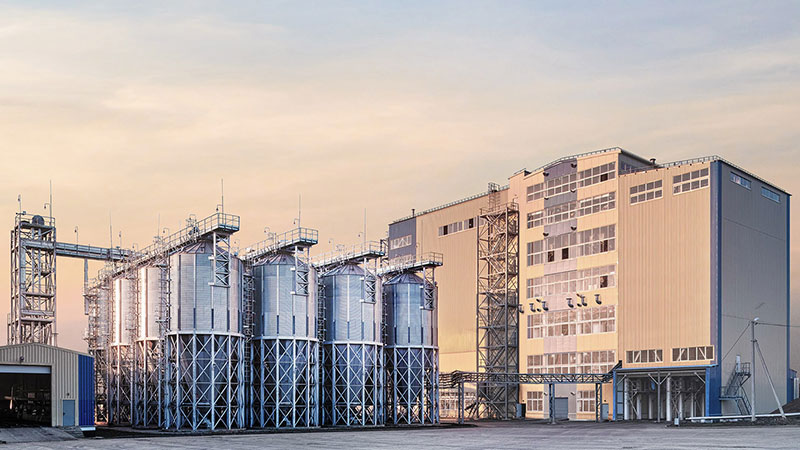
At RICHI, we go beyond project completion. With RICHI Servicee, we’re your dedicated partners in success. Count on us for expert guidance, minimal downtime, and optimized productivity. Choose RICHI for unmatched service and support.
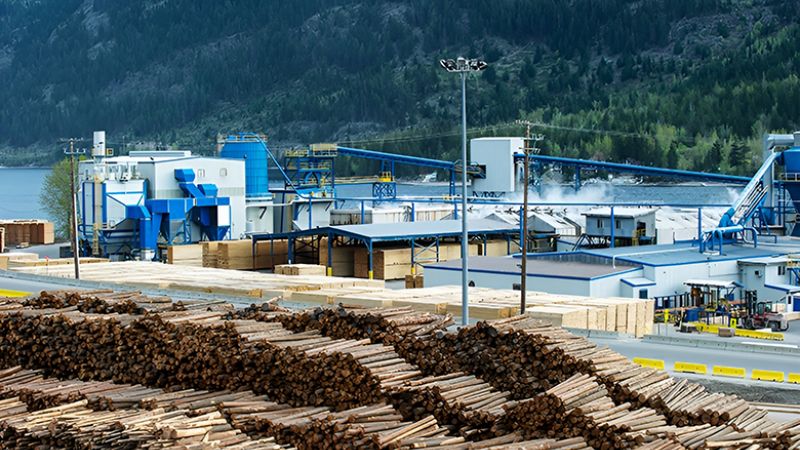


Meet global product demands and quality standards with industry-leading pellet plant design, engineering, equipment, and construction services for pellet processors.


Your Partner Beyond Project Completion
2000+ cases
RICHI is the leading designer, manufacturer and builder of pellet plants in the world, completing over 2000 projects in 140 countries across 6 continents.
Read More
Increase plant productivity, profitability, and safety by integrating high quality equipment into your pellet production line. Over the years, RICHI has become China's top pellet equipment manufacturer. At the same time, RICHI has established valuable partnerships with the world's leading component and raw material manufacturers to bring you the best there is in technology, automation, and efficiency in pelleting plant machinery.

For nearly 30 years, RICHI has been providing best-in-class pellet plant equipment and services to clients across a variety of industries, sizes, and needs. We pride ourselves on the knowledge and skill that each team member possesses – from our technical sales team to our process design engineers. You can count on RICHI Machinery to take your operation to the next level of innovation, quality, and success.
Need help with your pellet manufacturing plant project? Contact us today.
ANIMAL FEED
BIOMASS
WOOD
ORGANIC FERTILIZER
AQUA FEED
CAT LITTER
MUNICIPAL WASTE RECYCLING
SPECIAL PELLET PRODUCTION
RICHI Machinery continues to deliver world class pellet mill equipment, pellet plant engineering and project solutions that add value to our customers in the animal feed, wood waste, agriculture waste, organic fertilizer, cat litter and special pellet products industries. Throughout the years, we RICHI Machinery have built strong brand, becoming industry-leading pellet machine manufacturer. We value integrity, promise quality, and prioritize your success.
Learn MoreWith our expert team, we precisely implement your process engineering requirements in pellet mill and pelletizing plant systems. No matter which industry you’re in – we understand your needs and deliver solutions that meet the highest standards.
At RICHI, quality comes first. Our pellet making machine and related pellet line equipment undergo rigorous quality controls to ensure they meet the highest standards. Rely on products that are durable, safe, and efficient.
With decades of experience in pellet machine and pellet production line production, we have earned a reputation as a trusted partner in various industries. Our expertise allows us to cover a wide range of applications.
Not only do we offer premium pelleting equipment, but we are also experts at designing, building, installing, and maintaining facilities from the ground up. Our expertise is within pellt plant process design, discovering the most efficient, productive, and profitable way to handle your materials in an end-to-end cycle.
○ RICHI MACHINERY
Keeping in touch with us is an effective way to solve all your problems. If you have any needs or questions, please leave your contact information, then RICHI technical consultants will send design, quotation, videos to your mailbox. You can also contact us directly via WhatsApp: +86 13838389622
Copyright©2015-2026 by HENAN RICHI MACHINERY CO., LTD. All rights reserved.