
A cattle feed manufacturer in coastal Ecuador uses one SFSP66×80 hammer mill to grind prepared Guinea grass, maize stover and rice straw before mixing and pelletizing.
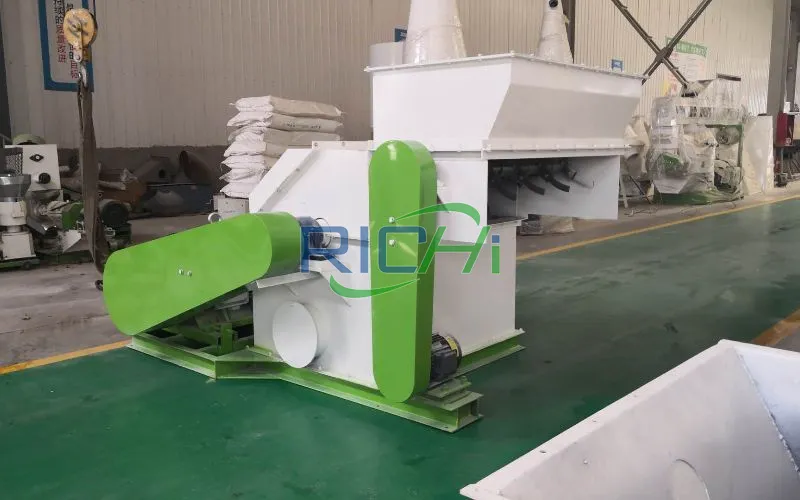
A regional cattle-feed manufacturer in Los Ríos selected one SFSP66×80 Cattle Feed Grinder in Ecuador to strengthen the fibrous-ingredient grinding stage for pelleted supplements. The mill serves dairy and beef farms in the coastal region and already operates batching, mixing, pelleting, cooling and packing equipment, so the project centers on one secondary grinder rather than a complete feed line.
The grinder is dedicated mainly to dry, pre-cut forage and crop residues used in cattle formulas. Its 75 kW main motor, 660 mm rotor and 800 mm grinding chamber provide about 2.0–2.5 T/H reference forage capacity under suitable preparation conditions. This duty fits the mill's roughage stream without confusing forage throughput with the much higher capacity possible on dense cereal grain.
Name:
Hammer mill for cattle-feed
Country:
Ecuador
Date:
2026
Capacity:
2.0–2.5 T/H
Model:
SFSP66×80
Main Motor Power:
75 kW
Raw Materials:
grass, maize stover, rice straw
Final product size:
4–6 mm
The mill did not need another mixer machine or feed pellet machine. Its main constraint was the irregular preparation of dry fibrous ingredients before batching, especially when long stems or poorly reduced crop residues reached the grinding area. Installing one dedicated animal feed hammer mill allows the plant to keep forage grinding separate from dense grain processing and gives operators a clearer basis for screen selection and feeder control.
The customer also avoids using the machine as a bale breaker. Whole hay bales, long grass bundles and uncut stalks create unstable loading and can bridge above a high-speed hammer mill. Suppliers therefore deliver loose material or the plant performs coarse cutting before fine grinding. This keeps the SFSP66×80 focused on secondary size reduction, where its chamber and screens can work more predictably.
This separation is especially useful in a cattle-feed plant because the fibrous fraction is only one part of the final formula. Ground forage is blended with grain, protein ingredients, minerals and other approved materials downstream. The grinder is not expected to process the cattle's entire roughage requirement, and the fine fraction prepared for pelleting does not replace long forage in the animals' total feeding program.
| Project Parameter | Configuration |
|---|---|
| Equipment | Hammer mill for cattle-feed fibrous ingredients |
| Model | SFSP66×80 |
| Quantity | 1 unit |
| Rotor Diameter | 660 mm |
| Grinding Chamber Width | 800 mm |
| Main Motor Power | 75 kW |
| Rotating Speed | Approximately 2980 rpm |
| Hammer Tip Speed | Approximately 103 m/s |
| Reference Forage Capacity | Approximately 2.0–2.5 T/H under suitable pre-cut conditions |
| Typical Screen Basis | Approximately 4–6 mm for fibrous pellet-feed preparation, adjusted by material |
| Main Materials | Dry Guinea grass, prepared maize stover and selected rice straw |
| Downstream Use | Mixing and ring-die pelleting of cattle-feed supplements |
The 2.0–2.5 T/H range is a forage reference, not a universal hammer-mill rating. Throughput varies with stem length, bulk density, moisture, screen opening, hammer wear and feeding stability. Dry Guinea grass can move through the chamber differently from maize stalk fibre or rice straw, so the plant logs tonnes per hour by ingredient instead of carrying one capacity figure across every material.
The selected 75 kW forage configuration also differs from higher-powered SFSP66×80 installations used mainly for grain. Motor power and capacity cannot be transferred between duties without considering material density and required fineness. For this project, the machine is sized around fibrous material preparation, while cereal grain can remain on another grinding route if the plant needs higher grain throughput.
Guinea grass is a credible tropical forage in coastal Ecuador, but the grinder receives it dry and already shortened rather than freshly cut from the field. Leafy material and stems fracture at different rates, so the discharge is a particle distribution rather than identical pieces. Moist forage would reduce grinding efficiency and can create buildup, making drying and storage condition important before hammer milling.
Maize stover is treated as a lower-density fibrous ingredient rather than as a direct substitute for grain. Stalks, leaves and husks are coarsely cut before entering the SFSP66×80, and soil contamination is controlled because field-collected residues can carry sand or stones. The plant uses the ground material only when the formulation assigns it a nutritional role appropriate to the cattle product being made.
Rice straw follows similar preparation logic but can be more abrasive when contaminated with soil or silica-rich dust from field handling. The plant does not assume that one screen and one feed rate will suit every straw load. Incoming fibre length, dryness and cleanliness are checked first, then screen selection and feeder rate are set to produce a stable material for mixing rather than the finest possible powder.
The Cattle Feed Grinder in Ecuador therefore performs secondary size reduction only. It does not formulate the ration, improve low-quality straw nutritionally or create a finished pellet by itself. This boundary matters because a hammer mill can produce a more uniform fibrous ingredient, but cattle performance still depends on formulation, forage quality, feeding management and the complete ration supplied on the farm.
A magnetic separator ahead of the grinder can reduce the risk from ferrous metal, but it cannot remove stones, sand, plastic twine or non-ferrous debris. Receiving inspection and coarse cleaning remain necessary, especially for field residues. The mill also avoids feeding baling string through the machine because long plastic fibres can wrap around rotating parts and contaminate the downstream feed.
The project uses screens around the 4–6 mm class as a practical starting point for fibrous ingredients that will enter a pelletized cattle supplement. That does not mean every discharged particle measures 4–6 mm. Hammer milling produces a distribution of shorter fibres and fines, and the plant verifies the ground material by sieve behaviour and downstream mixing rather than by the screen label alone.
For pellet-feed preparation, the useful fraction is generally much finer than long roughage, with the plant targeting a controlled fibrous meal that can mix evenly and pass through the pelletizing system without long stems. Operators avoid unnecessary ultra-fine grinding because extra fineness reduces throughput, increases power per tonne and removes physical fibre structure that may still be useful in the formula.
The fine ground fraction is not fed as the cattle's only roughage component. Dairy and beef rations still need suitable long or coarse forage outside the pelletized supplement to support normal rumen function. This distinction prevents the grinder specification from being mistaken for a recommendation to reduce all hay, grass or crop residue on the farm to the same small particle size.
A 75 kW main motor is only one part of the installed load. Feed conveyors, aspiration, product separation and downstream transport add their own demand, so the plant checks transformer capacity, starting method, protection and cable sizing for the complete section. Stable feeding is also important because surging fibrous material can cause rapid motor-load swings even when average tonnes per hour look acceptable.
Dry forage grinding generates dust, so the installation includes enclosed transfer points and an aspiration route sized for the actual hammer-mill airflow. Housekeeping around the grinder, ducts and collection points reduces dust buildup, while grounding and bearing inspection support fire-risk control. The plant does not treat dust extraction as an optional accessory simply because the raw material is animal feed.
Hammer and screen wear is tracked from processed tonnes, particle quality and material cleanliness rather than one fixed service interval. Soil and sand from crop residues can accelerate wear quickly, while uneven hammer wear can alter airflow and grinding behaviour. Operators monitor motor current, throughput and sieve results as practical indicators that inspection or component rotation may be needed.
For a coastal Ecuador project, Guayaquil is a practical maritime gateway before inland transport to Los Ríos. Final vessel service, customs processing and trucking depend on the actual booking, so the case does not assign a fixed delivery period. Site preparation focuses on the grinder support, inlet and discharge elevations, aspiration connections, electrical service and maintenance clearance required for installation.
Future expansion starts with the material that waits ahead of the grinder. If the SFSP66×80 is fully utilized while the mixer and pellet mill still have reserve, a second forage grinder may become useful. If coarse cutting, drying, aspiration or downstream batching is already restrictive, more hammer-mill capacity would simply move the bottleneck rather than increase finished cattle-feed output.
For another buyer evaluating a Cattle Feed Grinder in Ecuador, RICHI Machinery would review forage species, incoming form, moisture, pre-cut length, contamination, required screen basis, target particle distribution, hourly fibrous-material demand, mixer and pellet-mill capacity, aspiration, electrical supply and available workshop dimensions before confirming the grinder and integration scope.
Having the right mix of reliable, high-quality pellet machine and pelletizing systems and expert support is essential to your success. Watch how our end-to-end feed pellet plant solutions have helped our customers optimize their performance.
Our customized and future-proofed turnkey pellet plant solutions is designed with you at the core. From vision to reality and beyond, our team stays connected with yours. Giving you peace-of-mind with an expert at your side.
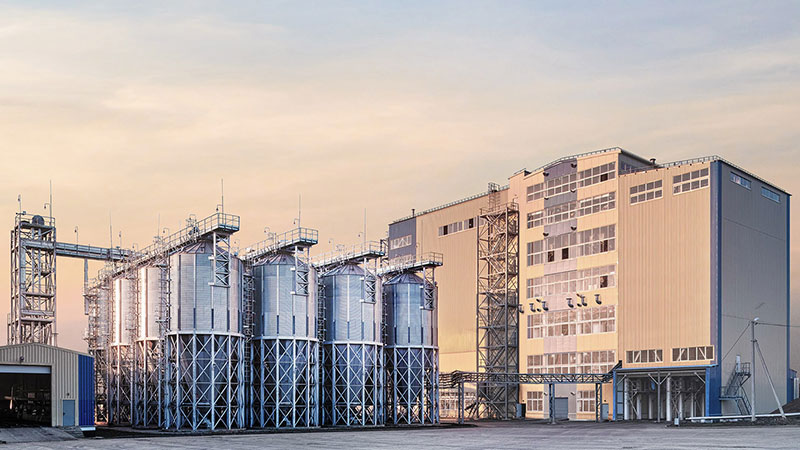
At RICHI, we go beyond project completion. With RICHI Servicee, we’re your dedicated partners in success. Count on us for expert guidance, minimal downtime, and optimized productivity. Choose RICHI for unmatched service and support.
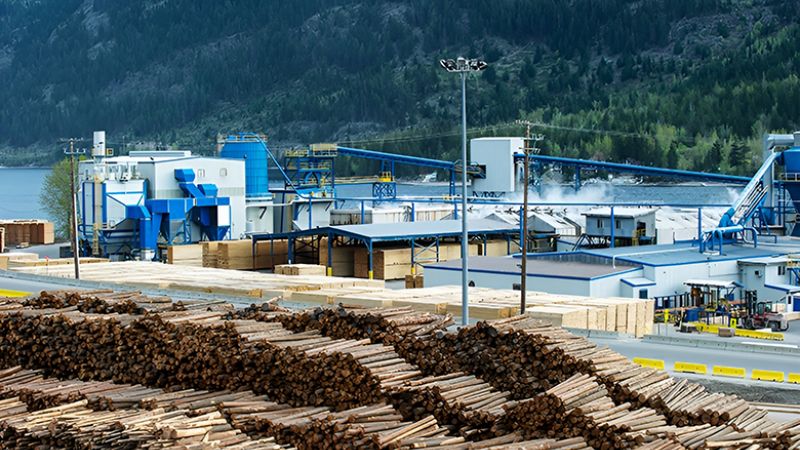


Meet global product demands and quality standards with industry-leading pellet plant design, engineering, equipment, and construction services for pellet processors.


Your Partner Beyond Project Completion
2000+ cases
RICHI is the leading designer, manufacturer and builder of pellet plants in the world, completing over 2000 projects in 140 countries across 6 continents.
Read More
Increase plant productivity, profitability, and safety by integrating high quality equipment into your pellet production line. Over the years, RICHI has become China's top pellet equipment manufacturer. At the same time, RICHI has established valuable partnerships with the world's leading component and raw material manufacturers to bring you the best there is in technology, automation, and efficiency in pelleting plant machinery.

For nearly 30 years, RICHI has been providing best-in-class pellet plant equipment and services to clients across a variety of industries, sizes, and needs. We pride ourselves on the knowledge and skill that each team member possesses – from our technical sales team to our process design engineers. You can count on RICHI Machinery to take your operation to the next level of innovation, quality, and success.
Need help with your pellet manufacturing plant project? Contact us today.
ANIMAL FEED
BIOMASS
WOOD
ORGANIC FERTILIZER
AQUA FEED
CAT LITTER
MUNICIPAL WASTE RECYCLING
SPECIAL PELLET PRODUCTION
RICHI Machinery continues to deliver world class pellet mill equipment, pellet plant engineering and project solutions that add value to our customers in the animal feed, wood waste, agriculture waste, organic fertilizer, cat litter and special pellet products industries. Throughout the years, we RICHI Machinery have built strong brand, becoming industry-leading pellet machine manufacturer. We value integrity, promise quality, and prioritize your success.
Learn MoreWith our expert team, we precisely implement your process engineering requirements in pellet mill and pelletizing plant systems. No matter which industry you’re in – we understand your needs and deliver solutions that meet the highest standards.
At RICHI, quality comes first. Our pellet making machine and related pellet line equipment undergo rigorous quality controls to ensure they meet the highest standards. Rely on products that are durable, safe, and efficient.
With decades of experience in pellet machine and pellet production line production, we have earned a reputation as a trusted partner in various industries. Our expertise allows us to cover a wide range of applications.
Not only do we offer premium pelleting equipment, but we are also experts at designing, building, installing, and maintaining facilities from the ground up. Our expertise is within pellt plant process design, discovering the most efficient, productive, and profitable way to handle your materials in an end-to-end cycle.
○ RICHI MACHINERY
Keeping in touch with us is an effective way to solve all your problems. If you have any needs or questions, please leave your contact information, then RICHI technical consultants will send design, quotation, videos to your mailbox. You can also contact us directly via WhatsApp: +86 13838389622
Copyright©2015-2026 by HENAN RICHI MACHINERY CO., LTD. All rights reserved.