
A beet pulp rotary dryer in Poland was recently installed at a sugar processing facility in the Kuyavian-Pomeranian Voivodeship, near the city of Bydgoszcz. This customer had a clear goal. They did not want to sell dried beet pulp to the local commodity market. The local market pays approximately 850 złoty per ton.
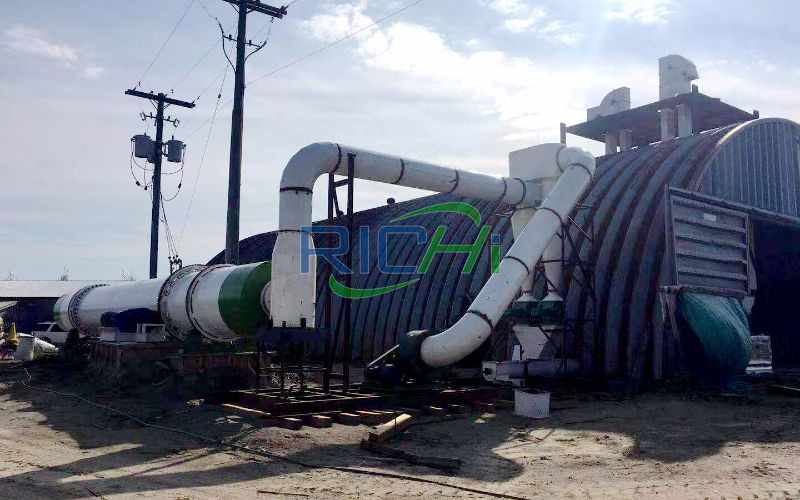
A Beet Pulp Rotary Dryer in Poland was selected by a sugar processing company in the Kuyavian-Pomeranian region to handle pressed beet pulp generated during the annual sugar beet campaign. Instead of depending mainly on nearby buyers for high-moisture pulp, the processor wanted to produce a stable dried feed material that could be stored for longer periods and sold to a wider livestock feed market.
The customer purchased one rotary dryer because the factory already had sugar beet processing, pulp pressing, conveying and storage equipment. RICHI therefore concentrated on the missing thermal drying stage, matching the dryer with the existing pressed-pulp output rather than proposing equipment that the customer did not need.
Name:
Beet Pulp Dryer
Country:
Poland
Date:
2026
Capacity:
5 to 7 tons per hour
Model:
φ1.8*18
Raw material:
Organic beet pulp
Main Drive Power:
30 kW
Final Product Moisture:
10 to 12%
The customer operates an established sugar beet processing facility rather than a newly built feed plant. During the beet processing season, large quantities of pulp are generated after sugar-bearing juice is extracted from sliced beet material. The factory already had a system for pressing and moving this byproduct, but the high residual moisture still restricted what the company could do with it.
Pressed beet pulp has recognized feed value, particularly as a fibrous ingredient for cattle feeding. The difficulty is that a considerable proportion of its weight is still water. Selling it close to the factory can be practical, but transporting high-moisture material over greater distances means paying to move water along with the useful dry matter.
The customer also faced a seasonal imbalance. Beet pulp is generated intensively during the sugar campaign, while demand from individual livestock farms does not necessarily follow the same daily production pattern.
The new Beet Pulp Rotary Dryer in Poland was therefore purchased to give the factory another processing route. Instead of requiring all pulp to leave the site quickly in wet form, a selected proportion can now be dried and converted into a material that is considerably easier to store and distribute.
The original project concept placed too much emphasis on an assumed price difference between conventional Polish beet pulp and German organic feed. In practice, selling prices change with season, moisture, product specification, contracts, energy costs and the wider feed market. A dryer investment should not be justified by one fixed selling price or an unsupported promise of a specific premium.
This customer approached the project from a more practical direction.
The factory wanted to reduce its dependence on immediate sales of wet pulp and create a dried product that could enter broader feed channels. Domestic buyers remain important, while cross-border sales are also possible when product quality, documentation and commercial conditions meet buyer requirements.
The dryer therefore gives the processor flexibility. When local demand for wet pulp is strong, part of the material can continue to move through that channel. When preservation and longer-distance distribution make more sense, pulp can be directed toward the drying section.
The raw material is pressed sugar beet pulp from the customer's existing extraction process. It is not mixed municipal biomass, grain bran or an artificially formulated feed blend.
This distinction matters because a Beet Pulp Rotary Dryer in Poland has to be configured around the physical behavior of beet pulp. The material is fibrous, moist and relatively cohesive. Its handling characteristics are very different from those of grain, sawdust or free-flowing feed ingredients.
Before thermal drying, the factory first removes as much water as is practical through its existing mechanical pressing process. This is important for overall energy efficiency. Water that can be removed mechanically should not unnecessarily become part of the evaporation load of the dryer.
The pressed material is then transferred at a controlled rate into the drying system. Stable feeding is important because sudden changes in feed volume or incoming moisture can affect residence time, heat balance and final product moisture.
The customer selected a single-pass rotary configuration for continuous beet pulp drying. Once the prepared pulp enters the rotating drum, the internal lifting arrangement repeatedly raises and disperses the material as the drum turns.
This movement increases contact between the wet pulp and the drying medium. Instead of moving through the drum as one dense mass, the material is continuously lifted, dropped and redistributed.
Residence time, feed rate, drum operation and thermal conditions have to work together. If material moves through too quickly, final moisture can remain above the target. If drying conditions are unnecessarily aggressive, product quality and energy efficiency may suffer.
For this reason, RICHI did not configure the Beet Pulp Rotary Dryer in Poland around the idea that a higher temperature automatically means better drying. The objective is stable moisture removal while maintaining a usable feed material.
After evaluating the customer's wet feed quantity, existing pressing system and required dried-product output, the project was based on a Φ1.8×18 single-pass rotary drying unit.
| Project Item | Specification |
|---|---|
| Equipment | Single-pass beet pulp rotary dryer |
| Drum Diameter | 1.8 m |
| Drum Length | 18 m |
| Dryer Structure | Single-pass rotary type |
| Main Drive Power | 30 kW |
| Wet Feed Capacity | Approximately 5–7 T/H under suitable operating conditions |
| Main Raw Material | Pressed sugar beet pulp |
| Final Application | Dried beet pulp for feed use and further processing |
The actual evaporation rate and finished-product output are not fixed solely by drum dimensions. Incoming moisture, target moisture, feed temperature, heat source and operating conditions all affect the real performance of a beet pulp drying system.
RICHI therefore evaluates capacity using the customer's moisture balance rather than promising that every 5–7 T/H wet feed will produce the same amount of dried material.
This project is a typical standalone equipment investment.
The customer did not need a complete sugar beet processing line from RICHI. Beet reception, washing, slicing, extraction and pulp pressing were already established at the factory. Existing material handling equipment could also be retained where its capacity and arrangement were suitable.
The missing process was thermal moisture reduction.
Purchasing one Beet Pulp Rotary Dryer in Poland allowed the processor to add that capability without rebuilding the entire byproduct handling system. The new machine was therefore selected around existing upstream equipment and the required connection points.
This is different from supplying a greenfield beet pulp drying plant. For a standalone project, inlet height, feeding arrangement, discharge position, available workshop space and downstream handling all have to be checked against equipment that may have been supplied by other manufacturers.
A rotary dryer is useful for this application because it provides continuous handling of relatively large quantities of wet fibrous material. The rotating drum and internal lifting structure keep the pulp moving while exposing changing material surfaces during the drying process.
It is also a comparatively flexible industrial drying arrangement. Normal fluctuations in incoming material can be managed through appropriate adjustment of feed rate and drying conditions rather than requiring every batch to enter at exactly the same moisture level.
The rotary dryer is not limited to sugar beet pulp, although equipment configuration needs to be matched to each raw material. Agricultural byproducts with different fiber structure, density and moisture behavior cannot simply be assumed to use identical operating settings.
For the Polish customer, the advantage was not theoretical versatility alone. The important point was that the dryer could operate continuously during the beet campaign and fit the capacity range of the existing pulp preparation section.
Beet pulp contains residual organic matter and sugars, so drying needs to be controlled carefully. The purpose is to remove moisture, not to scorch the fiber.
For this reason, the customer's operating team monitors inlet and outlet conditions together with feed rate and final moisture. These values are considered as part of one process rather than isolated numbers.
The actual temperature experienced by the material is also different from simply quoting the temperature of the incoming drying medium. Evaporative cooling, material moisture and movement through the drum all affect product conditions.
This is why RICHI avoids presenting one high inlet temperature as a universal setting for every Beet Pulp Rotary Dryer in Poland. Commissioning settings are established according to actual pulp moisture, dryer loading and the required finished product.
One of the customer's main reasons for investing in drying equipment was transportation.
When a feed material contains a large amount of water, its economic transport radius is limited. The buyer is effectively paying freight on both useful dry matter and moisture. For nearby livestock farms this may still be acceptable, but it becomes increasingly important as transport distance increases.
Dried beet pulp provides a different logistics option. The product contains a much greater proportion of dry matter per ton, can be stored more conveniently and does not need to leave the factory immediately after production.
This gives the customer more control over sales timing as well. The company can maintain inventory and organize deliveries according to contracts instead of having every ton of freshly produced pulp become an urgent logistics problem.
The customer's immediate objective is to produce dried beet pulp for feed use. Depending on buyer requirements, dried material can be sold in loose form or enter additional processing before final distribution.
One possible downstream route is pellet production. Drying is particularly important when beet pulp is intended for subsequent densification because pelletizing requires a much more controlled material condition than freshly pressed pulp provides.
However, the customer did not purchase a pellet production line as part of this order. The Beet Pulp Rotary Dryer in Poland remains a standalone drying project. Future pelletizing can be evaluated separately according to market demand and the required final product.
This keeps the current investment focused. The customer first solves the moisture and preservation problem, develops the dried-product market, and then decides whether additional processing will generate sufficient value to justify another stage of investment.
Drying high-moisture agricultural material requires substantial thermal energy, so the heat source cannot be treated as an afterthought.
RICHI discussed locally available fuel options and the customer's existing energy infrastructure during project planning. The final heat-source arrangement needs to provide stable thermal output while remaining compatible with local environmental requirements and the economics of the factory.
Rather than claiming that one fuel is universally cheapest, the project evaluation considered fuel availability, calorific value, handling requirements and operating cost.
The customer was particularly interested in biomass-based heat because agricultural and wood-derived fuels are available in Poland. However, fuel quality and combustion control remain important. A cheap but highly inconsistent fuel can create unstable heat output and ultimately make dryer operation more difficult.
For a standalone dryer project, technical matching is often more important than the machine specification alone.
RICHI requested information about the customer's existing pressed-pulp output, approximate incoming moisture, working hours and available installation space. The technical team also considered how the material would enter the dryer and where the dried pulp would go after discharge.
These details influenced the equipment arrangement before manufacturing began.
The customer also needed to prepare foundations, power supply and surrounding connections. Providing drawings and installation information in advance allowed part of this work to proceed while the machine was being manufactured and shipped.
This reduced the risk of the Beet Pulp Rotary Dryer in Poland arriving on site only for the customer to discover that an existing conveyor, foundation or discharge arrangement needed major modification.
The dryer equipment was shipped by sea from Qingdao Port in China to Poland through the Port of Gdańsk.
RICHI prepared the rotary drum and related components for long-distance ocean transportation and supplied the corresponding packing and technical documentation. Large drying equipment requires careful shipment planning because the drum dimensions, supporting components and auxiliary equipment have to arrive in a condition suitable for installation.
Before dispatch, the customer received equipment drawings and installation information so that site preparation could continue while the shipment was in transit.
For RICHI, overseas delivery is therefore part of the project rather than the end of it. Technical communication continues through installation preparation and commissioning.
The first production runs focused on finding the appropriate balance between wet feed rate and drying conditions.
The customer quickly found that incoming beet pulp was not completely identical from one operating period to another. Moisture and physical condition changed with upstream processing, so the dryer could not simply be started with one setting and left unchanged throughout the entire campaign.
Operators learned to watch the material at both ends of the process. If discharge moisture began to rise, they could evaluate feed rate and thermal conditions rather than immediately assuming a mechanical fault. If material became unnecessarily dry, the process could also be adjusted to avoid wasting energy.
RICHI provided operating guidance covering startup, shutdown, inspection, lubrication, transmission checks and routine maintenance. Particular attention was given to keeping the material flow stable and preventing accumulation inside the drying system.
After the first main operating period, the customer reported that the biggest improvement was flexibility in pulp handling. Previously, high-moisture pulp had to be moved quickly toward nearby users or managed within a relatively narrow time window. The drying section gave the factory another option when fresh-pulp demand and production did not match.
The operators needed some time to become familiar with the relationship between feed moisture and dryer settings. During the first weeks, adjustments were more frequent. Once the team accumulated operating experience with its own beet pulp, daily control became much more straightforward.
The customer also found that the standalone approach had been the right investment strategy. Existing pressing and conveying equipment could continue working, while the new dryer solved the specific processing gap without requiring unnecessary replacement of the rest of the beet pulp section.
This Beet Pulp Rotary Dryer in Poland project is ultimately about making better use of an existing agricultural byproduct. The customer already had sugar beets, an operating extraction plant and a continuous source of pressed pulp. What it lacked was a practical way to reduce moisture sufficiently for longer storage and broader distribution.
Adding one rotary drying unit filled that gap.
The project also shows why selecting a beet pulp dryer should begin with material conditions rather than a generic capacity figure. Wet feed quantity, incoming moisture, existing mechanical pressing, required final moisture, operating hours, available heat source and downstream product plans all affect the appropriate dryer configuration.
A customer processing a small amount of beet pulp will not need the same equipment as a large sugar factory operating continuously during the campaign. Likewise, a plant selling dried loose pulp has different downstream requirements from one planning to manufacture beet pulp pellets.
RICHI Machinery evaluates these conditions before configuring a Beet Pulp Rotary Dryer in Poland or a similar beet pulp drying project elsewhere. For customers that already have pressing, conveying or other usable equipment, a standalone dryer can be integrated into the existing process. For greenfield projects, the system can be expanded to include mechanical dehydration, conveying, drying, cooling, storage and further processing according to the required product.
The objective is not simply to install a large rotating drum. The dryer has to fit the customer's actual pulp volume, moisture balance and market plan. When those elements are matched correctly, wet beet pulp that was once difficult to preserve and transport can become a much more manageable feed material with a wider range of commercial possibilities.
Having the right mix of reliable, high-quality pellet machine and pelletizing systems and expert support is essential to your success. Watch how our end-to-end feed pellet plant solutions have helped our customers optimize their performance.
Our customized and future-proofed turnkey pellet plant solutions is designed with you at the core. From vision to reality and beyond, our team stays connected with yours. Giving you peace-of-mind with an expert at your side.
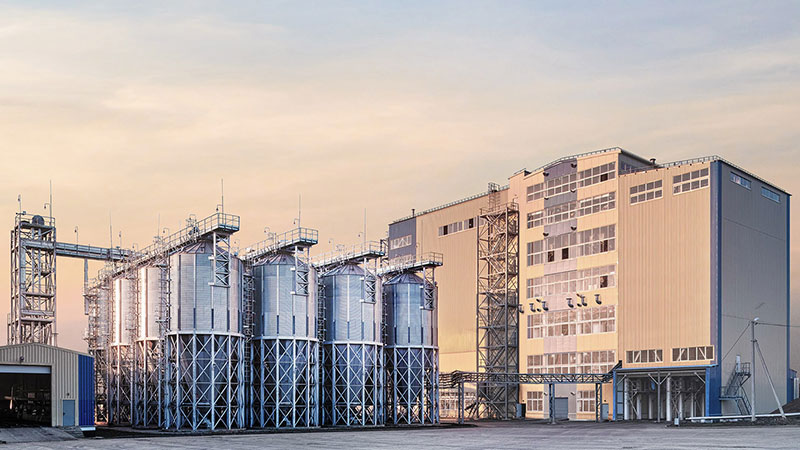
At RICHI, we go beyond project completion. With RICHI Servicee, we’re your dedicated partners in success. Count on us for expert guidance, minimal downtime, and optimized productivity. Choose RICHI for unmatched service and support.
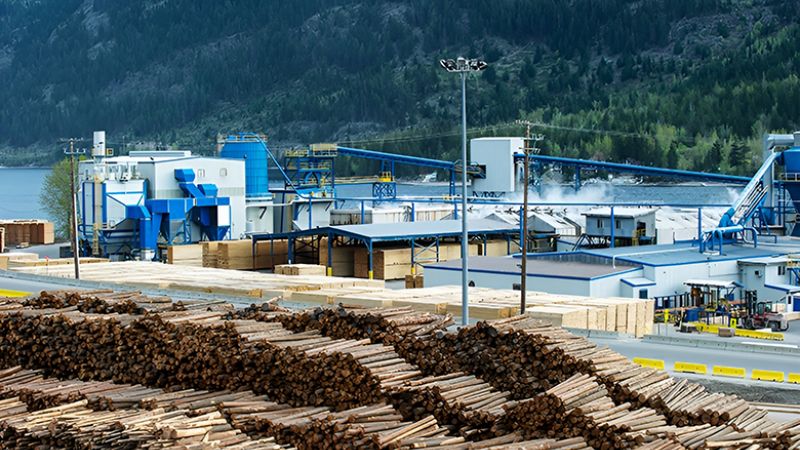


Meet global product demands and quality standards with industry-leading pellet plant design, engineering, equipment, and construction services for pellet processors.


Your Partner Beyond Project Completion
2000+ cases
RICHI is the leading designer, manufacturer and builder of pellet plants in the world, completing over 2000 projects in 140 countries across 6 continents.
Read More
Increase plant productivity, profitability, and safety by integrating high quality equipment into your pellet production line. Over the years, RICHI has become China's top pellet equipment manufacturer. At the same time, RICHI has established valuable partnerships with the world's leading component and raw material manufacturers to bring you the best there is in technology, automation, and efficiency in pelleting plant machinery.

For nearly 30 years, RICHI has been providing best-in-class pellet plant equipment and services to clients across a variety of industries, sizes, and needs. We pride ourselves on the knowledge and skill that each team member possesses – from our technical sales team to our process design engineers. You can count on RICHI Machinery to take your operation to the next level of innovation, quality, and success.
Need help with your pellet manufacturing plant project? Contact us today.
ANIMAL FEED
BIOMASS
WOOD
ORGANIC FERTILIZER
AQUA FEED
CAT LITTER
MUNICIPAL WASTE RECYCLING
SPECIAL PELLET PRODUCTION
RICHI Machinery continues to deliver world class pellet mill equipment, pellet plant engineering and project solutions that add value to our customers in the animal feed, wood waste, agriculture waste, organic fertilizer, cat litter and special pellet products industries. Throughout the years, we RICHI Machinery have built strong brand, becoming industry-leading pellet machine manufacturer. We value integrity, promise quality, and prioritize your success.
Learn MoreWith our expert team, we precisely implement your process engineering requirements in pellet mill and pelletizing plant systems. No matter which industry you’re in – we understand your needs and deliver solutions that meet the highest standards.
At RICHI, quality comes first. Our pellet making machine and related pellet line equipment undergo rigorous quality controls to ensure they meet the highest standards. Rely on products that are durable, safe, and efficient.
With decades of experience in pellet machine and pellet production line production, we have earned a reputation as a trusted partner in various industries. Our expertise allows us to cover a wide range of applications.
Not only do we offer premium pelleting equipment, but we are also experts at designing, building, installing, and maintaining facilities from the ground up. Our expertise is within pellt plant process design, discovering the most efficient, productive, and profitable way to handle your materials in an end-to-end cycle.
○ RICHI MACHINERY
Keeping in touch with us is an effective way to solve all your problems. If you have any needs or questions, please leave your contact information, then RICHI technical consultants will send design, quotation, videos to your mailbox. You can also contact us directly via WhatsApp: +86 13838389622
Copyright©2015-2026 by HENAN RICHI MACHINERY CO., LTD. All rights reserved.