
A specialty feed ingredient manufacturer in the Kaunas region selected a RICHI beet pulp drying system in Lithuania to add controlled dehydration capacity to its existing equine-feed operation. The company already had flaxseed cold-pressing, ingredient preparation, blending and packaging equipment, but it lacked a dedicated thermal-processing section for high-moisture pressed sugar beet pulp.

A specialty feed ingredient manufacturer in the Kaunas region selected a RICHI beet pulp drying system in Lithuania to add controlled dehydration capacity to its existing equine-feed operation. The company already had flaxseed cold-pressing, ingredient preparation, blending and packaging equipment, but it lacked a dedicated thermal-processing section for high-moisture pressed sugar beet pulp.
The project uses a φ1.8×18 single-pass rotary dryer with a 30 kW drum drive, followed by a φ1.8×12 rotary cooling unit with a 22 kW drive. Only beet pulp passes through the drying system. Cold-pressed flaxseed meal remains outside the hot process and is introduced later at the blending stage after the dried beet pulp has been cooled.
Name:
Beet Pulp Dryer
Country:
Lithuania
Date:
2026
Capacity:
Flexible
Model:
φ1.8×18
Dryer Type:
Single-pass
Raw Materials:
Pressed sugar beet pulp
Dryer Drive Power:
30 kW
The customer is not a sugar factory.
Its business is purchasing or contracting suitable feed ingredients, processing them into controlled product forms and supplying specialty feed markets in Lithuania and the wider Baltic region.
Pressed sugar beet pulp fits this business model because Lithuania has an established sugar-beet processing sector and beet pulp is already produced commercially as an animal-feed by-product.
The difficulty is moisture.
Pressed beet pulp can contain only about one-quarter dry substance, meaning that roughly three-quarters of the incoming material can be water depending on the supplier and pressing conditions.
That makes untreated pressed pulp unsuitable for ordinary dry warehouse storage or direct incorporation into a shelf-stable bagged feed product.
The customer therefore needed a drying section capable of converting a seasonal wet ingredient into a more stable dried feed material.
Because its existing flaxseed processing and packaging equipment remained usable, purchasing a dedicated dryer and cooler was more appropriate than building another complete feed plant.
| Project Parameter | Configuration |
|---|---|
| Main Material | Pressed sugar beet pulp |
| Dryer Type | Single-pass rotary dryer |
| Dryer Model | φ1.8×18 |
| Dryer Drum Size | 1.8 m diameter × 18 m length |
| Dryer Drive Power | 30 kW |
| Cooling Equipment | Single-pass rotary cooler |
| Cooler Model | φ1.8×12 |
| Cooler Drum Size | 1.8 m diameter × 12 m length |
| Cooler Drive Power | 22 kW |
| Downstream Ingredient | Cold-pressed flaxseed meal added after cooling |
| Main Application | Dried beet pulp ingredient for specialty equine feed |
The most important number in this project is not simply tonnes of wet beet pulp per hour.
Dryer engineering starts with dry solids and required water evaporation.
For example, if 1,000 kg of pressed beet pulp arrives at approximately 75% moisture, it contains about 250 kg of dry solids.
If the final dried ingredient is produced at approximately 10% moisture, those solids correspond to roughly 278 kg of final product.
The dryer therefore needs to remove approximately 722 kg of water for every tonne of wet feed entering under those example conditions.
If incoming moisture changes to 70%, the evaporation requirement changes significantly.
That is why a rotary dryer should not be advertised only as a fixed “X tonnes per hour” machine without stating whether the figure refers to wet input, water evaporation or dry output.
RICHI sizes the beet pulp drying system from actual incoming moisture, target final moisture, wet feed rate and available thermal energy.
The customer also processes cold-pressed flaxseed, but the flaxseed meal is deliberately kept outside the rotary dryer.
This is an important design decision.
Cold-pressed flaxseed meal retains residual oil containing polyunsaturated fatty acids, including alpha-linolenic acid.
There is no technical benefit in exposing that ingredient to the high-temperature drying environment simply because it will later be blended with beet pulp.
The process therefore remains separated:
pressed beet pulp → rotary drying → rotary cooling → screening or size control where required → storage/buffer → blending with prepared flaxseed meal → packaging.
The flaxseed meal follows its own route:
flaxseed receiving → cold pressing → oil separation → meal preparation → controlled storage → blending after beet pulp cooling.
This protects process flexibility as well.
The customer can sell dried beet pulp as a standalone ingredient or use it in several formulations without forcing every tonne of beet pulp into one flaxseed blend.
A rotary drying system should not be operated around one universally prescribed inlet-gas temperature or one fixed product-discharge temperature.
The hot-gas inlet can be much hotter than the material itself, but the actual operating point depends on dryer airflow, feed moisture, feed rate, drum loading and the thermal sensitivity of the product.
For beet pulp, the engineering objective is efficient water removal without scorching the fibre or producing excessive local overheating.
The operator therefore monitors several variables together rather than simply setting the burner to one number.
Important indicators include incoming moisture, dryer feed rate, exhaust condition, material discharge moisture and product appearance.
Drum rotational speed also should not be fixed universally at 5 rpm just because one commissioning condition performs well.
Rotation, internal lifting and airflow collectively determine how the material is exposed to the drying gas and how long it remains in the drum.
The appropriate setting is established during commissioning with the actual Lithuanian beet pulp.
The φ1.8×12 rotary cooler is installed after the dryer because dried beet pulp should be stabilized before it enters downstream storage and blending.
Hot material discharged from a rotary dryer can continue transferring heat inside bins, conveyors or mixed feed.
Cooling reduces this thermal load and gives the customer better control over the temperature at which flaxseed meal is introduced.
However, the cooler is not described as guaranteeing one ALA-retention percentage.
The oxidation and stability of flaxseed lipids depend on ingredient composition, residual oil, oxygen exposure, temperature, storage time, light, antioxidants and packaging conditions.
Therefore, there is no defensible basis for claiming that ALA remains “stable for 30 days at 40°C” or “stable for twelve months at 15–20°C” without actual product testing.
The engineering principle is simpler and stronger:
dry the high-moisture beet pulp first, remove excess heat through a dedicated cooling stage, and only then introduce the temperature-sensitive flaxseed meal.
The customer can establish its final blending temperature and storage specification through product trials and laboratory analysis.
The two ingredients are selected for different nutritional characteristics.
Beet pulp is a fibrous sugar-industry by-product widely used in animal feeding and is particularly valued as a digestible fibre source.
Flaxseed meal provides another fibre and protein component while residual flax oil supplies alpha-linolenic acid.
Research on equine feed ingredients has found relatively high water-holding capacity in beet pulp and partially extracted linseed compared with cereal grains.
That makes the combination commercially relevant for specialty equine formulations.
However, the dryer manufacturer should not convert that ingredient logic into medical promises.
The finished product is not described as treating joint inflammation, metabolic disorders or skin disease.
Likewise, there is no fixed guarantee that adding flaxseed meal will improve coat condition or immune function in every horse.
The customer’s nutrition team establishes the final formulation and feeding directions.
RICHI’s responsibility in this project is to provide controlled beet-pulp drying and cooling so the ingredient entering that formulation has the required physical condition.
An 80:20 beet-pulp-to-flaxseed-meal blend can be one product concept, but it should not be treated as the only commercially valid formulation.
The customer may use different inclusion ratios depending on flaxseed meal analysis, residual oil, product positioning and nutritional targets.
The final ALA concentration cannot be calculated reliably from the name “cold-pressed flaxseed meal” alone.
Cold pressing removes part of the oil, and the amount remaining in the meal depends on press performance, seed condition and operating parameters.
Consequently, a fixed statement such as “10% residual oil” or “minimum 3.5% ALA dry basis” requires laboratory evidence from the actual ingredient and finished blend.
For production control, the customer can analyze incoming flax meal for residual oil and fatty-acid composition, then formulate accordingly.
This also protects consistency when flaxseed lots or pressing conditions change.
The same principle applies to dried beet pulp.
Final moisture and other feed-quality parameters need routine verification rather than relying only on dryer settings.
Sugar beet processing is seasonal, which affects both dryer utilization and storage planning.
Lithuanian sugar factories process beet during a defined campaign rather than supplying identical quantities of fresh pressed pulp every day of the year.
A specialty feed company therefore needs to decide whether it will dry material intensively during the beet campaign, contract staged deliveries, or combine drying with larger dried-product storage.
Raw-material logistics also affect economics.
Transporting pressed beet pulp means transporting a large quantity of water.
A feed manufacturer located relatively close to the beet-processing source has a stronger logistics case than one hauling wet pulp over very long distances.
The customer therefore evaluates the supply route using wet tonnes, moisture and haulage distance rather than only the purchase price per tonne.
Once dried, the material has a much higher dry-matter concentration and can be stored and transported more efficiently, provided moisture and storage conditions are controlled.
The rotary drum’s 30 kW motor is only the mechanical drive for the dryer.
It is not the thermal energy required to evaporate water from wet beet pulp.
This distinction is critical.
A project evaporating hundreds or thousands of kilograms of water per hour requires a substantial separate heat source.
The customer can evaluate biomass, gas or another suitable thermal-energy system according to fuel availability, emissions requirements, operating cost and local permitting.
If wood chips are considered in Lithuania, fuel quality, moisture and burner compatibility need to be specified.
RICHI Machinery does not assume that wood chips are always the cheapest option or that one heat-recovery configuration will automatically reduce consumption by 15%.
Heat recovery can improve system efficiency, but the actual benefit depends on dryer exhaust conditions, heat-exchanger design, fouling risk and overall process integration.
The correct comparison is based on thermal energy per tonne of evaporated water or dried product, not on the rotary drum motor power.
This beet pulp drying system in Lithuania uses a φ1.8×18 single-pass rotary dryer and a φ1.8×12 rotary cooler at a specialty feed ingredient facility in the Kaunas region.
The dryer uses a 30 kW drum drive, while the cooler uses a 22 kW drive.
Pressed sugar beet pulp is the only material entering the hot drying stage.
Cold-pressed flaxseed meal remains in a separate ingredient stream and is introduced after the beet pulp has been dried and cooled.
This process arrangement prevents the thermal requirements of beet-pulp dehydration from being imposed unnecessarily on the flaxseed ingredient.
Dryer capacity is calculated from mass balance.
For example, one tonne of pressed pulp at 75% moisture contains approximately 250 kg of dry solids. Drying those solids to around 10% final moisture gives roughly 278 kg of dried material and requires removal of approximately 722 kg of water.
The actual project calculation uses the customer’s measured incoming moisture and target finished specification.
The rotary cooler then reduces the temperature of the dried material before downstream blending and storage.
No fixed 35–40°C outlet temperature is guaranteed because actual performance depends on incoming product temperature, ambient air, airflow, humidity, material loading and residence time.
For another buyer searching for a beet pulp drying system in Lithuania, beet pulp dehydration machine, sugar beet pulp dryer, pressed beet pulp rotary dryer, beet pulp feed dryer or rotary dryer for animal feed ingredients, RICHI first separates three different capacity numbers.
These are wet beet pulp input in T/H, required water evaporation in kg/h or T/H, and final dried-product output in T/H.
Useful project information includes incoming beet-pulp moisture, wet tonnes per hour, target final moisture, particle or fibre condition, available heat source, fuel specification, ambient conditions, annual operating season, existing conveyors and storage, and whether a cooler is required before blending or packaging.
If the dried beet pulp will be combined with flaxseed meal or another heat-sensitive ingredient, RICHI also evaluates where that ingredient should enter the process.
In many cases, the better route is to dry and cool the wet high-moisture material first, then add the sensitive ingredient downstream rather than forcing both materials through the same thermal system.
For a Lithuania beet-pulp drying project, send RICHI your wet feed rate, incoming moisture, required final moisture, annual operating hours, available fuel, existing feed-processing equipment and downstream product plan. These values provide the basis for calculating evaporation duty, rotary dryer size, cooling requirements and the correct integration with the existing plant.
Having the right mix of reliable, high-quality pellet machine and pelletizing systems and expert support is essential to your success. Watch how our end-to-end feed pellet plant solutions have helped our customers optimize their performance.
Our customized and future-proofed turnkey pellet plant solutions is designed with you at the core. From vision to reality and beyond, our team stays connected with yours. Giving you peace-of-mind with an expert at your side.
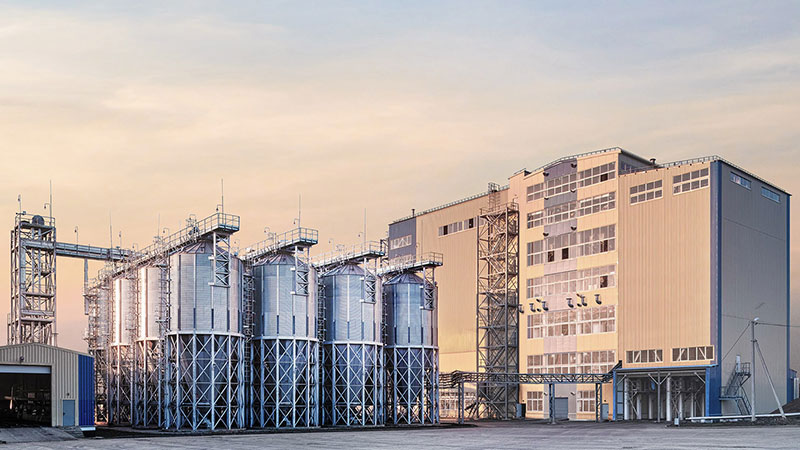
At RICHI, we go beyond project completion. With RICHI Servicee, we’re your dedicated partners in success. Count on us for expert guidance, minimal downtime, and optimized productivity. Choose RICHI for unmatched service and support.
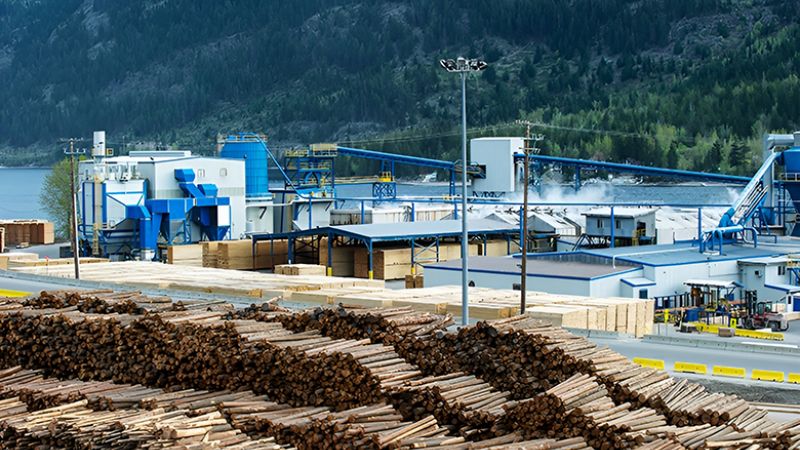


Meet global product demands and quality standards with industry-leading pellet plant design, engineering, equipment, and construction services for pellet processors.


Your Partner Beyond Project Completion
2000+ cases
RICHI is the leading designer, manufacturer and builder of pellet plants in the world, completing over 2000 projects in 140 countries across 6 continents.
Read More
Increase plant productivity, profitability, and safety by integrating high quality equipment into your pellet production line. Over the years, RICHI has become China's top pellet equipment manufacturer. At the same time, RICHI has established valuable partnerships with the world's leading component and raw material manufacturers to bring you the best there is in technology, automation, and efficiency in pelleting plant machinery.

For nearly 30 years, RICHI has been providing best-in-class pellet plant equipment and services to clients across a variety of industries, sizes, and needs. We pride ourselves on the knowledge and skill that each team member possesses – from our technical sales team to our process design engineers. You can count on RICHI Machinery to take your operation to the next level of innovation, quality, and success.
Need help with your pellet manufacturing plant project? Contact us today.
ANIMAL FEED
BIOMASS
WOOD
ORGANIC FERTILIZER
AQUA FEED
CAT LITTER
MUNICIPAL WASTE RECYCLING
SPECIAL PELLET PRODUCTION
RICHI Machinery continues to deliver world class pellet mill equipment, pellet plant engineering and project solutions that add value to our customers in the animal feed, wood waste, agriculture waste, organic fertilizer, cat litter and special pellet products industries. Throughout the years, we RICHI Machinery have built strong brand, becoming industry-leading pellet machine manufacturer. We value integrity, promise quality, and prioritize your success.
Learn MoreWith our expert team, we precisely implement your process engineering requirements in pellet mill and pelletizing plant systems. No matter which industry you’re in – we understand your needs and deliver solutions that meet the highest standards.
At RICHI, quality comes first. Our pellet making machine and related pellet line equipment undergo rigorous quality controls to ensure they meet the highest standards. Rely on products that are durable, safe, and efficient.
With decades of experience in pellet machine and pellet production line production, we have earned a reputation as a trusted partner in various industries. Our expertise allows us to cover a wide range of applications.
Not only do we offer premium pelleting equipment, but we are also experts at designing, building, installing, and maintaining facilities from the ground up. Our expertise is within pellt plant process design, discovering the most efficient, productive, and profitable way to handle your materials in an end-to-end cycle.
○ RICHI MACHINERY
Keeping in touch with us is an effective way to solve all your problems. If you have any needs or questions, please leave your contact information, then RICHI technical consultants will send design, quotation, videos to your mailbox. You can also contact us directly via WhatsApp: +86 13838389622
Copyright©2015-2026 by HENAN RICHI MACHINERY CO., LTD. All rights reserved.