
A feed-ingredient processor in Vojvodina uses a φ1.8×18 rotary beet pulp dryer with 2.8–3.5 T/H water evaporation capacity to stabilize pressed pulp for cattle-feed applications.
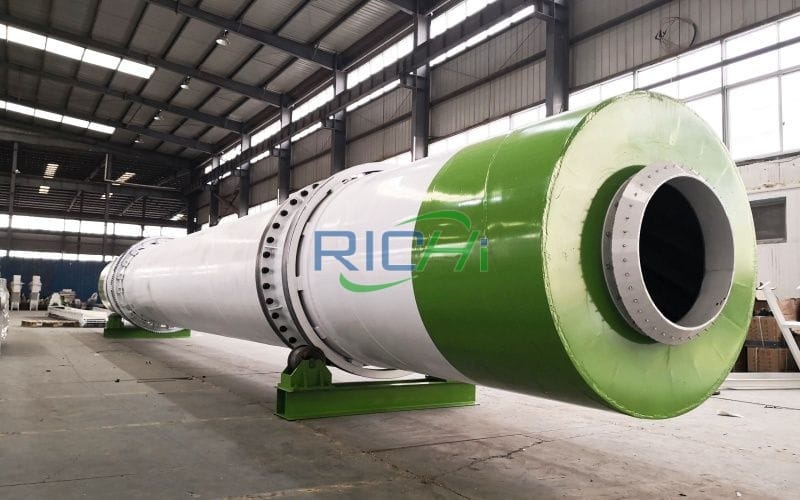
A feed-ingredient processor in Vojvodina installed one φ1.8×18 Beet Pulp Drying Machine in Serbia to convert high-moisture pressed sugar beet pulp into a more stable material for storage and cattle-feed manufacturing. The facility is located in the wider Zrenjanin agricultural area, where sugar beet and maize production create a practical setting for processing beet-industry by-products together with selected cereal residues.
The customer purchased one single-pass rotary dryer rather than rebuilding its complete material-handling system. The 1.8 m diameter drum has an effective length of 18 m, a 30 kW main drive and a project water-evaporation basis of approximately 2.8–3.5 T/H. Wet-feed tonnage is therefore calculated from incoming pulp moisture instead of being treated as one fixed capacity for every beet campaign.
Name:
Single-pass rotary beet pulp dryer
Country:
Serbia
Date:
2026
Capacity:
2.8–3.5 T/H
Model:
φ1.8×18
Power:
30 kW
Main Material:
Mechanically pressed sugar beet pulp
Application:
Dried cattle-feed ingredient
The material entering this drying section is the fibrous pulp remaining after sugar extraction.
Harvested beet roots first pass through washing, slicing and sugar-extraction processes. Only after that process does the wet pulp become available for feed-related use.
This distinction matters because a beet pulp dryer is not designed to dry harvested sugar beet roots.
The dryer receives mechanically dewatered pulp whose remaining moisture still makes long-distance transport and long-term storage difficult.
| Project Parameter | Configuration |
|---|---|
| Equipment | Single-pass rotary beet pulp dryer |
| Model | φ1.8×18 |
| Quantity | 1 unit |
| Drum Diameter | 1.8 m |
| Drum Length | 18 m |
| Number of Passes | 1 |
| Main Drive Power | 30 kW |
| Rotational Speed Range | Approximately 3–10 rpm |
| Reference Water Evaporation | Approximately 2.8–3.5 T/H |
| Main Material | Mechanically pressed sugar beet pulp |
| Typical Finished Moisture | Approximately 10–12% depending on storage specification |
| Main Application | Dried cattle-feed ingredient |
| Installation Type | Standalone drying section integrated with an operating agricultural by-product facility |
The drum-drive power should not be confused with the thermal energy required to evaporate water. The burner or furnace provides the drying heat, while the 30 kW motor rotates the drum.
Pressed beet pulp can contain roughly three-quarters water when dry matter is around 25%.
At that condition, processing 4 T/H of wet pulp and finishing near 11% moisture requires evaporation of approximately 2.9 T/H of water.
At around 4.5 T/H, evaporation rises to roughly 3.2 T/H.
That fits the 2.8–3.5 T/H project evaporation window more realistically than stating that every batch will run at one permanent wet-feed tonnage.
If mechanical pressing raises dry matter before the dryer, more wet pulp can be handled because less water has to be evaporated from each tonne.
Water removed mechanically is generally much cheaper to remove than water evaporated with heat.
The plant therefore pays close attention to the condition of pulp leaving the press.
Even a modest increase in incoming dry matter can reduce burner load or increase usable wet-feed throughput.
This means the press and dryer should be evaluated as one moisture-management system even though only the dryer is part of this machine purchase.
The Beet Pulp Drying Machine in Serbia depends on stable material delivery.
Wet beet pulp can arrive in compacted masses rather than flowing like grain. If large surges enter the drum, some material can remain wetter while other portions receive excessive heat.
The customer therefore uses an intermediate wet-material hopper and controlled feeder before the rotary drum.
Feed rate is adjusted together with incoming moisture and thermal input.
Pressed beet pulp remains biologically active and contains enough moisture for rapid deterioration.
The wet hopper therefore acts as a production buffer rather than long-term storage.
During the beet campaign, incoming pulp is scheduled so it can move through the drying section without remaining warm and wet for extended periods.
Drying converts that perishable seasonal by-product into a material that can be held and distributed over a much longer period.
The customer aims for a finished moisture condition suitable for dry-feed storage rather than the lowest moisture the equipment can physically achieve.
Approximately 10–12% provides a practical working range for dehydrated beet pulp.
Drying substantially below the required level consumes additional fuel and can create more brittle material and dust.
Stopping too wet creates the opposite risk: heating, mould development and poor storage stability.
The correct endpoint is therefore established from product temperature, moisture and intended storage period together.
The hot gas entering a rotary dryer can be much hotter than the beet pulp itself.
For that reason, an inlet-temperature number should never be interpreted as the temperature reached by every feed particle.
Evaporation absorbs a large amount of heat while wet pulp moves through the drum.
Operators coordinate gas temperature, airflow, feed rate and drum speed instead of trying to achieve one fixed temperature regardless of incoming moisture.
The φ1.8×18 drum can operate within a variable rotational range.
Slower or faster rotation changes material lifting, cascading and residence behavior.
However, drum speed is not an independent capacity control.
If incoming pulp becomes wetter, increasing drum speed alone would reduce residence time and can make discharge moisture worse.
Operating adjustments therefore consider feed rate, moisture, heat input and airflow together.
Vojvodina accounts for the great majority of Serbia's sugar beet production.
That concentration makes northern Serbia the logical location for businesses handling pressed beet pulp and other sugar-industry by-products.
The same agricultural region also produces substantial maize volumes, which gives the customer access to several cereal residues for separate feed-processing applications.
The dryer project therefore fits the agricultural structure of the region rather than depending on an unusual imported wet material.
The customer also handles corn cobs generated after maize shelling.
Corn cob is physically much drier and nutritionally much poorer than beet pulp.
It contains very high fibre and little protein, so it should be treated as a low-quality roughage ingredient rather than a complete dairy feed.
Grinding can make the material easier to mix and compact, but mechanical processing does not increase its protein or energy value.
This is an important energy decision in the Serbian project.
Corn cobs can already be near a storage-stable moisture level after harvest and proper storage.
If they are sufficiently dry, sending them through a high-evaporation rotary dryer simply to reduce moisture by a few percentage points may not be economical.
The plant therefore checks cob moisture first.
Qualified dry cob material can be ground and added after beet-pulp drying rather than consuming unnecessary thermal capacity.
Whole cobs are too large and hard for uniform blending.
The customer's separate grinding section reduces them before incorporation into a formulated feed ingredient.
A several-millimeter particle range provides a practical basis for mixing and block pressing, but the exact screen depends on the downstream product.
Grinding does not make cobs nutritionally equivalent to grain, hay or beet pulp.
Maize by-products require careful storage and quality control.
Damaged or mouldy cobs can carry mycotoxin contamination, and size reduction does not remove that risk.
The customer therefore inspects incoming cob material and rejects batches showing serious mould or storage damage.
Where feed-safety procedures require it, representative material is tested before incorporation into commercial cattle feed.
Dried beet pulp is valued in cattle rations because much of its fibre is highly digestible.
It also supplies useful energy through pectin and other fermentable carbohydrates while containing relatively little starch.
Protein content, however, is modest.
A dairy formulation using substantial beet pulp therefore still requires appropriate protein, minerals, vitamins and long structural fibre elsewhere in the ration.
The dryer improves storage and transport properties; it does not turn beet pulp into a nutritionally complete feed.
The plant can combine dried beet pulp with prepared corn cob material for a compressed cattle-feed product, but the mixture should not be marketed as a complete dairy ration solely because both ingredients contain fibre.
Corn cob contributes structural bulk but has low feeding value, while beet pulp contributes more digestible fibre and energy.
The inclusion level of each ingredient should be determined by nutritional formulation and analysis.
Protein feed, forage and mineral supplementation remain necessary according to the total dairy ration.
The customer can manufacture different blends for different buyers.
A permanent 70% beet pulp and 30% corn cob ratio would ignore variation in beet pulp composition, cob quality and the rest of the farm ration.
Commercial formulation therefore considers:
The drying machine prepares one ingredient; it does not formulate the dairy ration.
Beet pulp contains highly digestible fibre but very little lignin.
Dairy cattle still require adequate physically effective forage to maintain normal rumination and rumen function.
The customer's dried product is therefore used as a ration ingredient rather than as an automatic substitute for all hay or silage.
This is especially important when beet pulp inclusion becomes substantial.
The customer's compressed-block equipment is separate from the φ1.8×18 drying machine.
Dried beet pulp first needs to reach an appropriate moisture and temperature condition before it is mixed and compressed.
The block press then determines final block shape, dimensions and compaction.
This keeps drying and densification as two separate process steps.
Material leaving the rotary drum can still be too warm for immediate closed storage.
Hot material can create local condensation as temperatures equalize.
The customer therefore allows sufficient cooling before final storage or compression.
If the downstream block press performs better with material below a defined temperature, conveyor length and airflow are selected around that actual requirement.
A universal cooling-conveyor length should not be copied from another drying project.
Beet pulp contains residual carbohydrates that can contribute to compaction behavior, but block strength depends on much more than one ingredient property.
Moisture, particle size, cob inclusion, press pressure and storage conditions all influence whether a block remains intact.
The customer therefore evaluates the actual compressed product instead of assuming that no binder will ever be required for every possible blend.
The downstream press can be configured around the customer's chosen product dimensions.
Block weight and dimensions should reflect handling, stacking, transport and farm feeding practice.
The dryer does not determine whether the finished product weighs 10 kg, 15 kg or another value.
This allows the same dried beet pulp to enter bulk feed, conventional compound feed or compressed-block applications depending on market demand.
The Serbian customer does not need to blend every tonne of dried pulp with another residue.
Qualified dried beet pulp can be marketed independently to feed manufacturers or livestock businesses that want to incorporate it into their own formulations.
This gives the dryer commercial flexibility beyond the block product.
The customer can select the downstream route according to buyer demand while keeping the drying section focused on moisture control.
Sugar beet pulp is generated mainly during the processing campaign.
The dryer therefore operates more intensively when wet pulp is continuously available.
Dry product can then be stored and distributed outside the main beet-processing period.
This seasonal conversion is one of the main reasons thermal drying has commercial value despite its substantial energy demand.
The 30 kW drum-drive motor represents only a small part of total dryer energy demand.
Evaporating approximately 3 tonnes of water per hour requires a large thermal input before stack and equipment losses are included.
Fuel cost, furnace efficiency and incoming dry matter therefore have a much larger effect on operating economics than the drum motor alone.
A buyer comparing dryer options should calculate cost per tonne of evaporated water rather than looking only at installed electrical power.
Where a suitable gas connection is available, natural gas can provide controllable process heat with relatively simple fuel handling.
Burner modulation can respond to changes in wet-feed load and discharge moisture.
The commercial decision still depends on local fuel price and connection capacity.
The customer compares this option with qualified agricultural biomass rather than assuming one fuel is always cheaper.
Vojvodina also generates corn stalks, wheat straw and sunflower residues.
Some of these materials can provide process heat through a properly designed biomass furnace.
Low-density stalk material cannot simply be substituted into a gas burner.
It requires dedicated storage, metering, combustion-air control, ash removal and a furnace designed around the physical fuel.
The thermal section therefore changes substantially if the plant moves from gas to baled or chopped agricultural biomass.
Long stalks can bridge in hoppers and feeding systems.
If corn residue is used as fuel, it normally requires controlled size reduction and a feeding system able to handle low-density fibrous material.
Moisture and mineral content also influence useful heat output and ash production.
The customer therefore evaluates fuel handling together with furnace selection rather than focusing only on the nominal calorific value.
Agricultural biomass can produce substantially more ash than clean wood fuel.
The furnace and downstream hot-gas system therefore need a practical ash-removal arrangement.
Ash should also be kept separate from dried cattle-feed material so combustion residue does not contaminate the finished ingredient.
This is one reason the feed and fuel material paths remain physically separate.
Temperature alone does not determine drying capacity.
The fan system must move enough air and combustion gas to carry evaporated moisture away from the drum.
Too little airflow can reduce effective evaporation even when the burner has adequate thermal power.
Excessive gas velocity can increase entrainment of dried fibre.
Fan sizing, duct resistance and solid separation are therefore part of the drying design.
As pulp dries, lighter fibres and fines can become entrained in the exhaust stream.
The air/material separation section recovers useful product before exhaust air reaches final particulate control.
This reduces material loss and limits dust loading on downstream equipment.
The separation system has to be sized for the actual airflow and dried-product characteristics rather than simply matching the drum diameter.
Wet beet pulp generates little airborne dust compared with dehydrated material.
After drying, conveying and screening can release fine organic particles.
The customer therefore encloses dry transfer points where practical and includes suitable dust management around collection, conveying and block preparation.
Routine housekeeping remains necessary even when mechanical filtration is installed.
A dryer combines high thermal input with combustible agricultural material.
The plant therefore requires appropriate temperature monitoring, burner interlocks, emergency shutdown logic and fire-risk management.
Overheated dry material must not continue directly into storage unnoticed.
The detailed protection arrangement is designed around the furnace, ducting, separation equipment and building layout.
Checking discharge moisture alone can miss a thermal problem.
A batch may reach the required moisture while leaving the drum hotter than intended.
The operator therefore follows both conditions.
This also provides better feedback when incoming pulp moisture changes during the beet campaign.
A stable drying operation starts with reasonably consistent pressed pulp.
If the mechanical press alternates between relatively dry pulp and much wetter material, thermal load can change rapidly.
The wet-feed buffer helps smooth short fluctuations, but it cannot compensate indefinitely for a major loss of pressing efficiency.
The plant therefore monitors press performance as one of the variables influencing dryer throughput.
The dryer can only use its full evaporation capacity when cooled material can leave the drying section continuously.
Conveyors, temporary storage and any downstream block-forming equipment therefore have to accept the dry-product mass flow.
If the block press is slower than the dryer, a dry buffer may be needed between the two processes.
This prevents the dryer from being stopped solely because the final forming machine is changing molds or undergoing maintenance.
Because Serbia is landlocked, imported equipment requires an ocean port in a neighboring country followed by rail or road transport.
For this project, the φ1.8×18 dryer can be routed from Qingdao to Koper before continuing inland toward Vojvodina.
Koper has established intermodal connections into Serbia, making it a practical option for machinery and industrial cargo.
The final logistics plan depends on vessel service, equipment dimensions, inland carrier availability and delivery schedule rather than one fixed transit time.
An 18 m rotary dryer cannot be handled exactly like a small containerized machine.
The shipping arrangement considers how the drum is divided for transport, lifting points, supports and site reassembly.
Drive components, fans, furnace equipment, ducting and controls can travel as separate cargo units where required.
Foundation preparation can proceed using confirmed installation dimensions while the equipment is in transit.
If beet-pulp volume increases, the customer should first compare incoming moisture and actual evaporation hours.
Improving mechanical pressing can release additional dryer capacity without adding another drum.
Longer daily operating hours may also provide more seasonal output if the installed machine is not yet fully utilized.
A second dryer becomes relevant when the required water evaporation regularly exceeds what the φ1.8×18 can remove within the available campaign schedule.
Adding parallel drying capacity means more than installing another rotating drum.
The plant would need enough fuel delivery, furnace capacity, airflow, dust separation, dry conveying, cooling and electrical infrastructure to support the additional evaporation load.
Wet beet-pulp supply and dry-product storage would also have to increase accordingly.
This makes thermal balance the correct starting point for expansion planning.
A Beet Pulp Drying Machine in Serbia should be selected from incoming dry matter and required finished moisture rather than wet tonnes alone. Two processors handling the same tonnes of pulp can need very different dryers if one press delivers 25% dry matter and another delivers 35%.
For another Serbian beet-processing project, RICHI Machinery would first review wet pulp tonnes per hour, dry matter after pressing, required final moisture, campaign hours, available thermal fuel, downstream product route, dry-product storage, cooling arrangement, airflow and particulate-control requirements.
Those values determine the required water-evaporation capacity and whether a φ1.8×18 single-pass rotary dryer provides the right balance for the actual beet-pulp operation.
Having the right mix of reliable, high-quality pellet machine and pelletizing systems and expert support is essential to your success. Watch how our end-to-end feed pellet plant solutions have helped our customers optimize their performance.
Our customized and future-proofed turnkey pellet plant solutions is designed with you at the core. From vision to reality and beyond, our team stays connected with yours. Giving you peace-of-mind with an expert at your side.
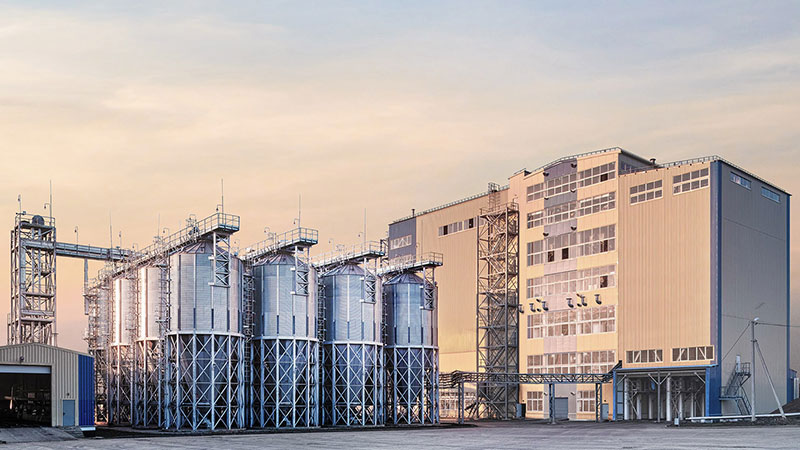
At RICHI, we go beyond project completion. With RICHI Servicee, we’re your dedicated partners in success. Count on us for expert guidance, minimal downtime, and optimized productivity. Choose RICHI for unmatched service and support.
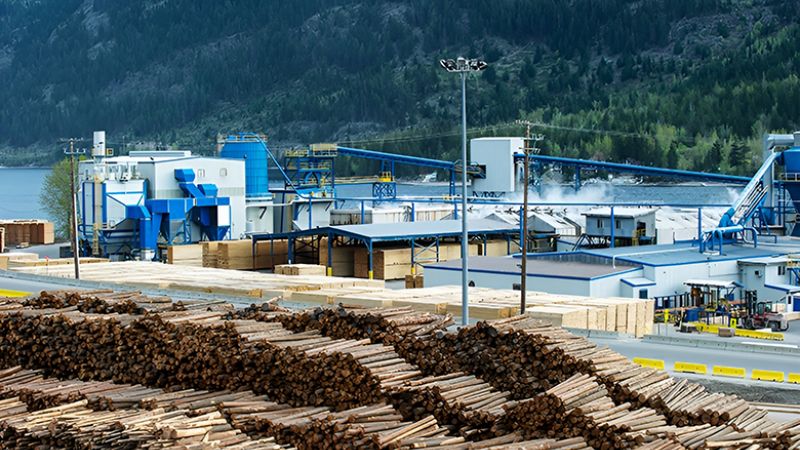


Meet global product demands and quality standards with industry-leading pellet plant design, engineering, equipment, and construction services for pellet processors.


Your Partner Beyond Project Completion
2000+ cases
RICHI is the leading designer, manufacturer and builder of pellet plants in the world, completing over 2000 projects in 140 countries across 6 continents.
Read More
Increase plant productivity, profitability, and safety by integrating high quality equipment into your pellet production line. Over the years, RICHI has become China's top pellet equipment manufacturer. At the same time, RICHI has established valuable partnerships with the world's leading component and raw material manufacturers to bring you the best there is in technology, automation, and efficiency in pelleting plant machinery.

For nearly 30 years, RICHI has been providing best-in-class pellet plant equipment and services to clients across a variety of industries, sizes, and needs. We pride ourselves on the knowledge and skill that each team member possesses – from our technical sales team to our process design engineers. You can count on RICHI Machinery to take your operation to the next level of innovation, quality, and success.
Need help with your pellet manufacturing plant project? Contact us today.
ANIMAL FEED
BIOMASS
WOOD
ORGANIC FERTILIZER
AQUA FEED
CAT LITTER
MUNICIPAL WASTE RECYCLING
SPECIAL PELLET PRODUCTION
RICHI Machinery continues to deliver world class pellet mill equipment, pellet plant engineering and project solutions that add value to our customers in the animal feed, wood waste, agriculture waste, organic fertilizer, cat litter and special pellet products industries. Throughout the years, we RICHI Machinery have built strong brand, becoming industry-leading pellet machine manufacturer. We value integrity, promise quality, and prioritize your success.
Learn MoreWith our expert team, we precisely implement your process engineering requirements in pellet mill and pelletizing plant systems. No matter which industry you’re in – we understand your needs and deliver solutions that meet the highest standards.
At RICHI, quality comes first. Our pellet making machine and related pellet line equipment undergo rigorous quality controls to ensure they meet the highest standards. Rely on products that are durable, safe, and efficient.
With decades of experience in pellet machine and pellet production line production, we have earned a reputation as a trusted partner in various industries. Our expertise allows us to cover a wide range of applications.
Not only do we offer premium pelleting equipment, but we are also experts at designing, building, installing, and maintaining facilities from the ground up. Our expertise is within pellt plant process design, discovering the most efficient, productive, and profitable way to handle your materials in an end-to-end cycle.
○ RICHI MACHINERY
Keeping in touch with us is an effective way to solve all your problems. If you have any needs or questions, please leave your contact information, then RICHI technical consultants will send design, quotation, videos to your mailbox. You can also contact us directly via WhatsApp: +86 13838389622
Copyright©2015-2026 by HENAN RICHI MACHINERY CO., LTD. All rights reserved.