
A beet pulp dryer in Russia was delivered to a sugar processing facility in the Lipetsk region. But this customer had no interest in selling dried pulp to dairy farms.
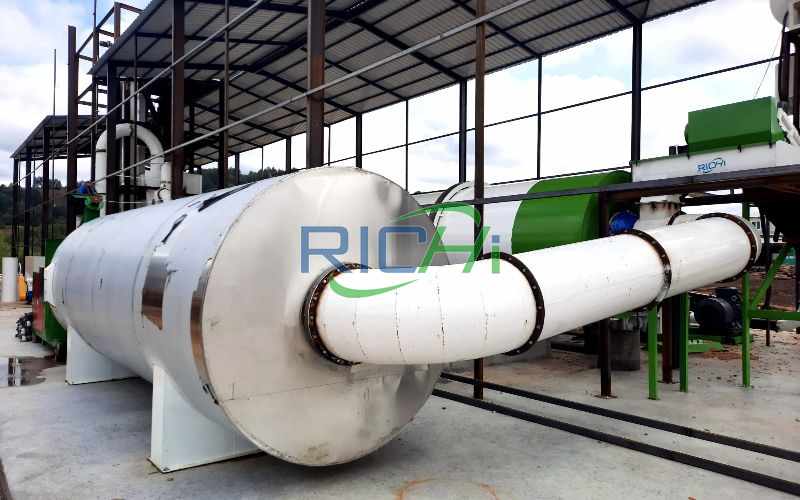
A beet pulp dryer in Russia was delivered to a sugar processing facility in the Lipetsk region. But this customer had no interest in selling dried pulp to dairy farms. That is the standard market. Everyone does that. Instead, they wanted to enter a completely different business: biomass fuel pellets.
Here is why. The customer produces about 90,000 tons of wet beet pulp annually.
If dried to 12% moisture, that becomes roughly 25,000 tons of dry fiber. The local dairy market near Lipetsk can absorb maybe 10,000 tons of that.
The remaining 15,000 tons would need to be trucked to buyers hundreds of kilometers away, which would eat up most of the profit margin.
Name:
Beet Pulp Dryer
Country:
Russia
Date:
2025
Capacity:
1.8 to 2.4 T/H
Model:
φ1.8*20
Inlet Temperature:
450 to 520°C
Raw Materials:
wet beet pulp
Target moisture content:
8%
The customer's management team realized they had a volume problem. They produce more pulp than the local feed market can consume.
Their solution was to dry the pulp to a lower moisture target - 8% instead of 12% - and then pelletize it for biomass fuel.
Beet pulp pellets have an energy content of about 4,200 kcal/kg, comparable to wood pellets.
The market for biomass fuel in Russia is growing, especially in regions that have switched from coal to pellet heating.
The customer identified buyers in Moscow and St. Petersburg who were already importing wood pellets from Belarus.
They could sell beet pulp pellets at a discount to wood pellets and still make a good margin.
But there was a problem. Standard beet pulp dryers are designed to reach 12% moisture, not 8%.
Getting to 8% requires higher outlet temperatures and longer retention times.
The customer's existing supplier told them it could not be done with their standard equipment.
That is when they called us.
Drying beet pulp to 8% moisture is not easy.
At around 12% moisture, the pulp starts behaving differently. It becomes more brittle and dustier.
The fibers begin to break apart.
If the temperature is too high, the pulp can scorch.
If the retention time is too long, the pulp can over-dry and become hydrophobic - meaning it will not absorb water later, which is bad for pellet binding.
We ran tests on the customer's wet pulp samples.
The results showed that 8% moisture was achievable, but it required three modifications to our standard dryer design:
The customer selected a modified φ1.8*20 beet pulp dryer with these three changes.
Here is the configuration:
| Configuration Item | Specification | Details |
|---|---|---|
| Selected Model | φ1.8*20 | Modified for low-moisture drying |
| Drum Diameter | 1.8 meters | Rotary dryer |
| Drum Length | 20 meters | Extended retention zone |
| Standard Moisture Out | 12% | Conventional drying target |
| Modified Moisture Out | 8% | Biomass pellet application |
| Inlet Temperature | 450 to 520°C | Higher than standard |
| Outlet Temperature | 80 to 90°C | Higher than standard |
| Main Drive Power | 37 kW | Upsized motor |
| Wet Feed Capacity | 6 to 8 T/H | Wet beet pulp |
| Dry Output at 8% | 1.8 to 2.4 T/H | Finished dry product |
The customer did not buy a pellet mill from us. They sourced that locally from a Russian manufacturer.
But they asked us to design the dryer discharge to integrate seamlessly with a pellet mill.
This meant adding a cooling conveyor after the dryer to bring the pulp temperature down from 80°C to 35°C before pelletizing.
Hot pulp does not bind well into pellets.
The cooling conveyor is a simple belt with perforated deck and fans underneath.
It adds 12 meters to the overall line length but requires no additional power beyond the fans.
The customer built the cooling conveyor themselves using locally available materials based on our drawings.
The customer has access to a fuel source that is even cheaper than wood waste.
Lipetsk is a steel-producing region. There are several metallurgical plants nearby that generate blast furnace gas as a byproduct.
This gas has a low heating value - about 800 kcal/m³ compared to 8,000 for natural gas - but it is essentially free.
The steel plants are required to dispose of it anyway.
The customer built a pipeline from a steel plant 4 kilometers away to their facility.
The gas is delivered at low pressure.
The burners on our dryers were modified to handle this low-BTU fuel by increasing the gas orifice size and adding a forced draft fan.
This modification added about $8,000 to the cost of each burner but eliminated fuel costs entirely.
After one full season of operation, the customer's technical director reported:
"The dryer achieved 8.2% moisture on our third test run.
We have since tuned it to consistently produce 7.9% to 8.1%.
The pellets we make from this material have tested at 4,180 kcal/kg, which is slightly lower than our target but acceptable.
We sold our first 500 tons to a greenhouse operation in Moscow Oblast at 6,800 rubles per ton.
The buyer tested the pellets and confirmed they burn cleaner than the wood pellets they were using.
Our only issue is dust.
The cyclone separator we installed is undersized for the fine particles at 8% moisture.
We are adding a baghouse filter next month.
The blast furnace gas works perfectly.
Our fuel cost for the season was zero except for the electricity to run the forced draft fan.
We are planning to add a second dryer next year for sunflower husks from a nearby oilseed plant."
The customer has already identified that the same low-moisture drying capability can be applied to other materials.
The key is the modified flight design and the higher temperature capability.
The beet pulp dryer was shipped from Qingdao port to Port of St. Petersburg, Russia's primary Baltic gateway for industrial imports.
The equipment was transferred to rail at the port and shipped to Lipetsk, approximately 1,000 kilometers south.
Having the right mix of reliable, high-quality pellet machine and pelletizing systems and expert support is essential to your success. Watch how our end-to-end feed pellet plant solutions have helped our customers optimize their performance.
Our customized and future-proofed turnkey pellet plant solutions is designed with you at the core. From vision to reality and beyond, our team stays connected with yours. Giving you peace-of-mind with an expert at your side.
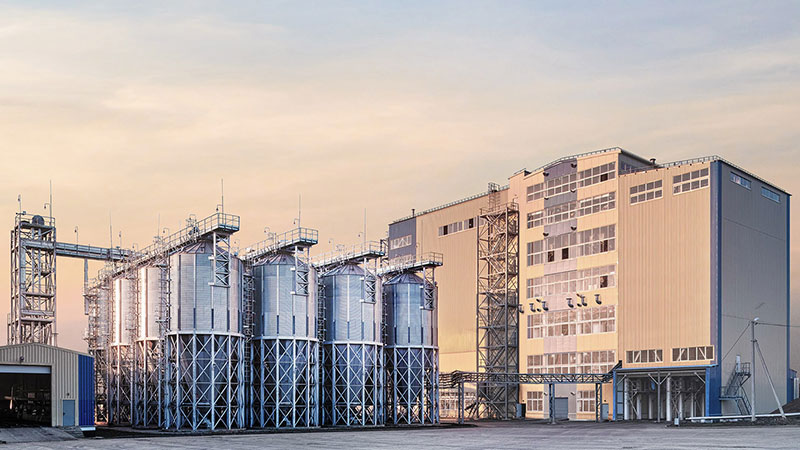
At RICHI, we go beyond project completion. With RICHI Servicee, we’re your dedicated partners in success. Count on us for expert guidance, minimal downtime, and optimized productivity. Choose RICHI for unmatched service and support.
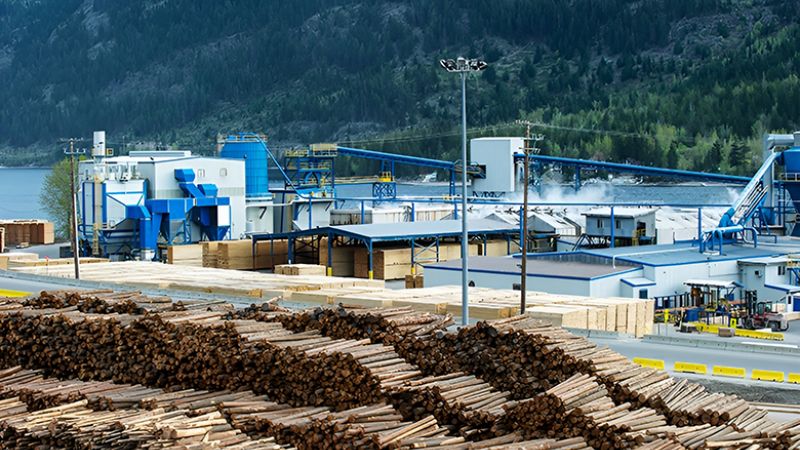


Meet global product demands and quality standards with industry-leading pellet plant design, engineering, equipment, and construction services for pellet processors.


Your Partner Beyond Project Completion
2000+ cases
RICHI is the leading designer, manufacturer and builder of pellet plants in the world, completing over 2000 projects in 140 countries across 6 continents.
Read More
Increase plant productivity, profitability, and safety by integrating high quality equipment into your pellet production line. Over the years, RICHI has become China's top pellet equipment manufacturer. At the same time, RICHI has established valuable partnerships with the world's leading component and raw material manufacturers to bring you the best there is in technology, automation, and efficiency in pelleting plant machinery.

For nearly 30 years, RICHI has been providing best-in-class pellet plant equipment and services to clients across a variety of industries, sizes, and needs. We pride ourselves on the knowledge and skill that each team member possesses – from our technical sales team to our process design engineers. You can count on RICHI Machinery to take your operation to the next level of innovation, quality, and success.
Need help with your pellet manufacturing plant project? Contact us today.
ANIMAL FEED
BIOMASS
WOOD
ORGANIC FERTILIZER
AQUA FEED
CAT LITTER
MUNICIPAL WASTE RECYCLING
SPECIAL PELLET PRODUCTION
RICHI Machinery continues to deliver world class pellet mill equipment, pellet plant engineering and project solutions that add value to our customers in the animal feed, wood waste, agriculture waste, organic fertilizer, cat litter and special pellet products industries. Throughout the years, we RICHI Machinery have built strong brand, becoming industry-leading pellet machine manufacturer. We value integrity, promise quality, and prioritize your success.
Learn MoreWith our expert team, we precisely implement your process engineering requirements in pellet mill and pelletizing plant systems. No matter which industry you’re in – we understand your needs and deliver solutions that meet the highest standards.
At RICHI, quality comes first. Our pellet making machine and related pellet line equipment undergo rigorous quality controls to ensure they meet the highest standards. Rely on products that are durable, safe, and efficient.
With decades of experience in pellet machine and pellet production line production, we have earned a reputation as a trusted partner in various industries. Our expertise allows us to cover a wide range of applications.
Not only do we offer premium pelleting equipment, but we are also experts at designing, building, installing, and maintaining facilities from the ground up. Our expertise is within pellt plant process design, discovering the most efficient, productive, and profitable way to handle your materials in an end-to-end cycle.
○ RICHI MACHINERY
Keeping in touch with us is an effective way to solve all your problems. If you have any needs or questions, please leave your contact information, then RICHI technical consultants will send design, quotation, videos to your mailbox. You can also contact us directly via WhatsApp: +86 13838389622
Copyright©2015-2026 by HENAN RICHI MACHINERY CO., LTD. All rights reserved.