
RICHI supplied a 0.8–1.2 T/H SFSP56×40 Barley Straw Hammer Mill in Jordan to grind 20–50 mm prepared straw into 5–10 mm roughage for sheep feed.
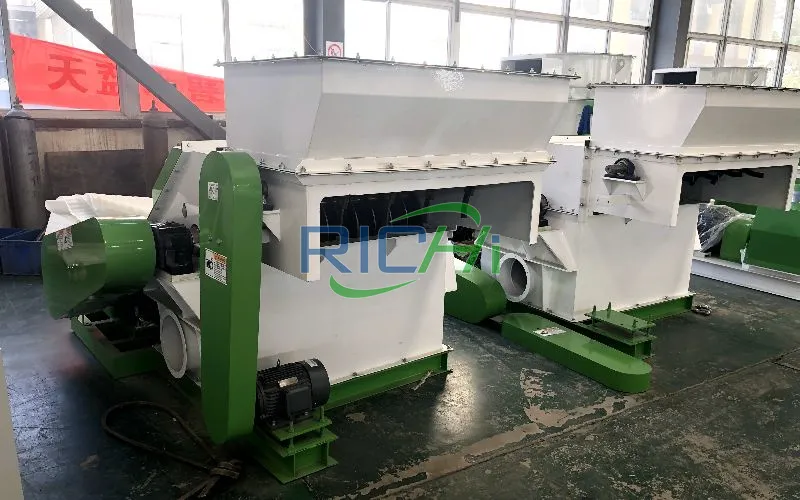
A sheep feed processor near Mafraq selected one RICHI SFSP56×40 Barley Straw Hammer Mill in Jordan to prepare dry cereal straw for an existing mixed-ration operation. The customer supplies feed to its own Awassi sheep flock and several nearby livestock farms, using barley straw as one roughage component together with concentrate ingredients and other forage materials. Bale handling, grain grinding and mixing equipment were already available, so the project required a dedicated straw-grinding machine rather than a complete feed mill.
The SFSP56×40 straw grass crusher machine uses a 37 kW main motor. For low-density dry barley straw, the project working capacity is approximately 0.8–1.2 T/H, depending on straw moisture, stem condition, pre-cut length, screen selection and feeding stability. Bales are opened and the long straw is reduced to approximately 20–50 mm before entering the hammer mill. The target ground material is approximately 5–10 mm for controlled addition to the customer's sheep mixed ration.
Name:
Barley Straw Crusher
Country:
Jordan
Date:
2026
Capacity:
0.8–1.2 T/H
Model:
SFSP56×40
Main Motor Power:
37 kW
Raw Materials:
Dry baled barley straw
Final product size:
5-20mm
Barley has an established role in Jordan's dryland farming and livestock systems, particularly in northern and eastern production areas. After grain harvest, straw can be baled and used as a roughage resource for sheep and goats. For the Mafraq customer, barley straw is purchased seasonally from local farms and stored under cover before grinding.
The project does not treat barley straw as a complete feed or a high-value protein ingredient. Cereal straw is relatively high in structural fiber and low in protein and available energy compared with concentrate ingredients. Its role is to contribute roughage to a balanced sheep ration, while barley grain, protein sources, minerals and other ingredients provide the remaining nutritional requirements.
The hammer mill changes only the physical size of the straw. It does not increase protein content or automatically improve digestibility simply because the material has been ground.
| Project Parameter | Specification |
|---|---|
| Equipment | Barley straw hammer mill |
| Model | SFSP56×40 |
| Main Motor | 37 kW |
| Project Capacity | Approximately 0.8–1.2 T/H |
| Raw Material | Dry baled barley straw |
| Prepared Straw Size | Approximately 20–50 mm |
| Target Ground Size | Approximately 5–10 mm |
| Typical Grinding Moisture | Approximately 10–15% |
| Annual Grinding Requirement | Approximately 700–800 tonnes |
| Main Application | Roughage component for Awassi sheep mixed ration |
The 0.8–1.2 T/H range is a project-specific straw capacity rather than the throughput expected when the same hammer-mill structure processes denser grain materials. Straw has much lower bulk density, occupies more volume per tonne and requires controlled feeding to prevent long fibers from accumulating ahead of the grinding chamber.
The SFSP56×40 crusher machine is a fine grinding machine, not a complete bale breaker. Rectangular or compressed straw bales first pass through an opening and coarse-preparation stage. Twine and visible foreign material are removed, and the straw is loosened and reduced to approximately 20–50 mm.
This prepared material is then transferred through a controlled feeder toward the hammer mill. Metering is important because loose straw has irregular bulk density. Feeding a large bundle suddenly can overload the chamber even when the average hourly tonnage appears low.
The two-stage arrangement — bale opening and coarse cutting first, hammer milling second — also gives the customer more stable control over the final particle distribution than attempting to push long stems directly into the grinder.
Inside the SFSP56×40, high-speed hammer impact reduces the prepared barley straw until material can pass through the selected screen. For this sheep-feed project, the target output is an approximately 5–10 mm fibrous fraction.
The customer can test different screen apertures during commissioning because screen size affects both throughput and the amount of fines produced. A smaller opening generally requires more grinding energy and can reduce T/H, while an excessively coarse setting may leave long pieces that distribute less evenly through the mixer.
Screen aperture should not be confused with exact finished particle size. A hammer mill produces a distribution containing shorter fibers and some fines as well as particles closer to the selected screen dimension.
The purpose of this project is to prepare a roughage ingredient for sheep feeding rather than manufacture very fine straw powder. Reducing barley straw unnecessarily far below the required size would increase dust, lower practical hammer-mill capacity and change the physical structure of the roughage.
For ruminant diets, particle size should be selected as part of the overall ration design. The customer therefore targets a relatively coarse 5–10 mm ground material that can be metered into the mixer while still remaining identifiable as a fibrous ingredient.
The nutritionist determines how much barley straw enters each ration. Grinding convenience does not justify increasing the straw percentage beyond the level supported by the required energy, protein and effective-fiber balance.
Barley straw for this project is normally ground at approximately 10–15% moisture. Very wet material becomes more difficult to fracture cleanly, can reduce screen throughput and creates additional storage concerns. Very dry, brittle straw can generate a higher proportion of fines during aggressive grinding.
Moisture is therefore checked from representative bales before a large batch is processed. The customer also stores the bales under cover to protect them from rain and ground moisture before they enter the feed-preparation area.
The exact acceptable range can vary with storage duration and straw condition, so 10–15% is used as the normal project operating range rather than a universal limit at which the hammer mill suddenly begins or stops working.
Dry cereal straw can generate substantial airborne fiber and fine dust during grinding. The SFSP56×40 therefore operates with an aspiration and product-separation system rather than discharging directly into an open workshop.
A cyclone can separate much of the conveyed ground material, while suitable filtration handles finer dust from the exhaust air. The required filter area depends on actual airflow and dust loading, so the project does not claim one fixed collection efficiency without a defined filtration system.
Magnetic protection is also installed ahead of the grinder. Baled straw may occasionally contain wire or other ferrous material from harvesting, baling or storage. Twine should be removed during bale opening, while the magnet provides another protection stage before the rotor.
After grinding, the 5–10 mm barley straw moves to the customer's existing mixer. It is combined with concentrate ingredients and other forage components according to the required Awassi sheep ration rather than fed as a standalone complete diet.
Jordanian feeding research has long identified barley and wheat straws as important roughage sources for local ruminants, while also noting their relatively low protein and high fiber and lignin levels. This is why the customer treats grinding as a handling and formulation step, not as a substitute for nutritional supplementation.
The mixer benefits from receiving a more controlled straw length because very long stems can segregate or bridge during mechanical handling. The hammer mill therefore helps prepare the material for dosing and mixing, while formulation determines the actual feeding value of the finished ration.
The customer expects to process approximately 700–800 tonnes of barley straw annually. At a practical hammer-mill rate of 0.8–1.2 T/H, this requires approximately 580–1,000 effective grinding hours per year.
Across roughly 250 operating days, the grinder therefore needs about 2.3–4 effective hours per day on average. Straw can also be processed in larger seasonal batches after harvest and held as prepared inventory, so the hammer mill does not need to operate every day throughout the year.
This operating pattern makes the SFSP56×40 suitable for the project without artificially describing the machine as a 5–6 T/H straw grinder simply because a larger throughput may be possible on dense grain materials.
The SFSP56×40 Barley Straw Hammer Mill in Jordan is prepared for export from Qingdao, China, with Aqaba Container Terminal used as the national maritime gateway before inland delivery toward Mafraq in northern Jordan.
Before shipment, RICHI reviews the bale-opening discharge, coarse straw size, feeding arrangement, 37 kW electrical load, grinder foundation, aspiration ducting, cyclone or filter system and downstream mixer interface. This allows the hammer mill to be integrated into the customer's existing feed operation without replacing equipment that remains correctly sized.
This Barley Straw Hammer Mill in Jordan project uses one RICHI SFSP56×40 with a 37 kW main motor to prepare dry barley straw for an Awassi sheep feeding operation near Mafraq. Bales are opened and reduced to approximately 20–50 mm before hammer milling, and the machine produces an approximately 5–10 mm ground roughage fraction at a project working capacity of around 0.8–1.2 T/H.
For another sheep farm or feed processor evaluating a straw grinder, RICHI Machinery needs the straw type, bale dimensions, moisture, incoming cut length, required finished particle range, annual tonnage, operating hours and existing bale-breaking, mixing and dust-control equipment. These parameters provide a more reliable basis for selecting the hammer mill than motor power or screen aperture alone.
Having the right mix of reliable, high-quality pellet machine and pelletizing systems and expert support is essential to your success. Watch how our end-to-end feed pellet plant solutions have helped our customers optimize their performance.
Our customized and future-proofed turnkey pellet plant solutions is designed with you at the core. From vision to reality and beyond, our team stays connected with yours. Giving you peace-of-mind with an expert at your side.
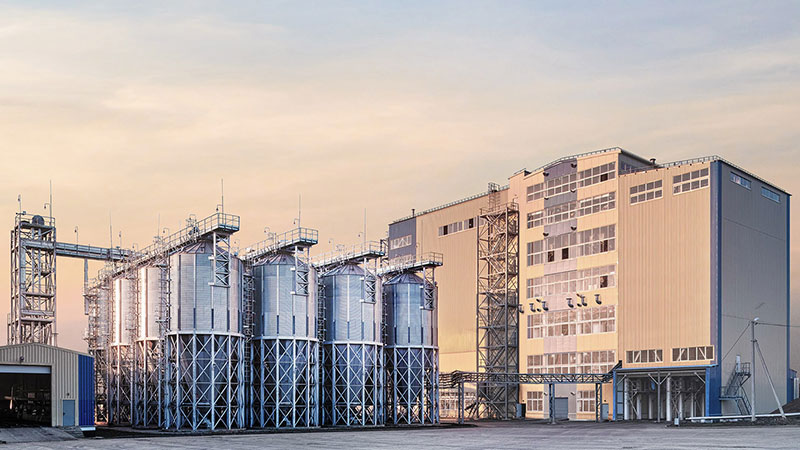
At RICHI, we go beyond project completion. With RICHI Servicee, we’re your dedicated partners in success. Count on us for expert guidance, minimal downtime, and optimized productivity. Choose RICHI for unmatched service and support.
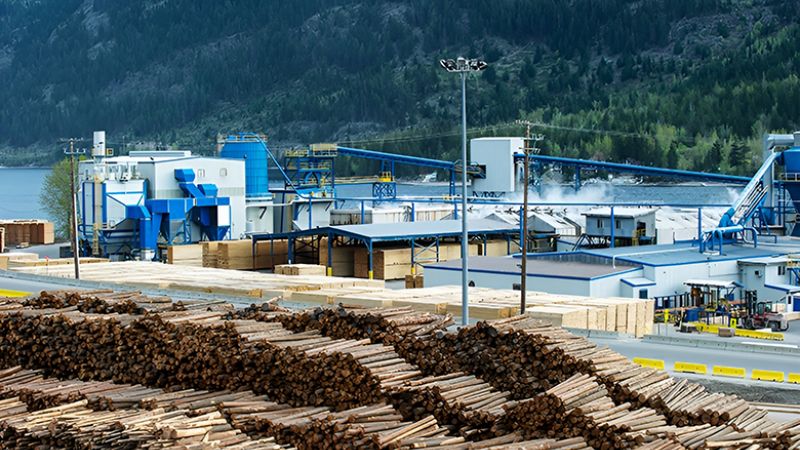


Meet global product demands and quality standards with industry-leading pellet plant design, engineering, equipment, and construction services for pellet processors.


Your Partner Beyond Project Completion
2000+ cases
RICHI is the leading designer, manufacturer and builder of pellet plants in the world, completing over 2000 projects in 140 countries across 6 continents.
Read More
Increase plant productivity, profitability, and safety by integrating high quality equipment into your pellet production line. Over the years, RICHI has become China's top pellet equipment manufacturer. At the same time, RICHI has established valuable partnerships with the world's leading component and raw material manufacturers to bring you the best there is in technology, automation, and efficiency in pelleting plant machinery.

For nearly 30 years, RICHI has been providing best-in-class pellet plant equipment and services to clients across a variety of industries, sizes, and needs. We pride ourselves on the knowledge and skill that each team member possesses – from our technical sales team to our process design engineers. You can count on RICHI Machinery to take your operation to the next level of innovation, quality, and success.
Need help with your pellet manufacturing plant project? Contact us today.
ANIMAL FEED
BIOMASS
WOOD
ORGANIC FERTILIZER
AQUA FEED
CAT LITTER
MUNICIPAL WASTE RECYCLING
SPECIAL PELLET PRODUCTION
RICHI Machinery continues to deliver world class pellet mill equipment, pellet plant engineering and project solutions that add value to our customers in the animal feed, wood waste, agriculture waste, organic fertilizer, cat litter and special pellet products industries. Throughout the years, we RICHI Machinery have built strong brand, becoming industry-leading pellet machine manufacturer. We value integrity, promise quality, and prioritize your success.
Learn MoreWith our expert team, we precisely implement your process engineering requirements in pellet mill and pelletizing plant systems. No matter which industry you’re in – we understand your needs and deliver solutions that meet the highest standards.
At RICHI, quality comes first. Our pellet making machine and related pellet line equipment undergo rigorous quality controls to ensure they meet the highest standards. Rely on products that are durable, safe, and efficient.
With decades of experience in pellet machine and pellet production line production, we have earned a reputation as a trusted partner in various industries. Our expertise allows us to cover a wide range of applications.
Not only do we offer premium pelleting equipment, but we are also experts at designing, building, installing, and maintaining facilities from the ground up. Our expertise is within pellt plant process design, discovering the most efficient, productive, and profitable way to handle your materials in an end-to-end cycle.
○ RICHI MACHINERY
Keeping in touch with us is an effective way to solve all your problems. If you have any needs or questions, please leave your contact information, then RICHI technical consultants will send design, quotation, videos to your mailbox. You can also contact us directly via WhatsApp: +86 13838389622
Copyright©2015-2026 by HENAN RICHI MACHINERY CO., LTD. All rights reserved.