
Explore bark chippers in Sweden for processing bark-covered branches, small-diameter logs and sawmill offcuts into wood chips for biomass applications. Learn about the XPJ500×230 drum chipper and its technical features.
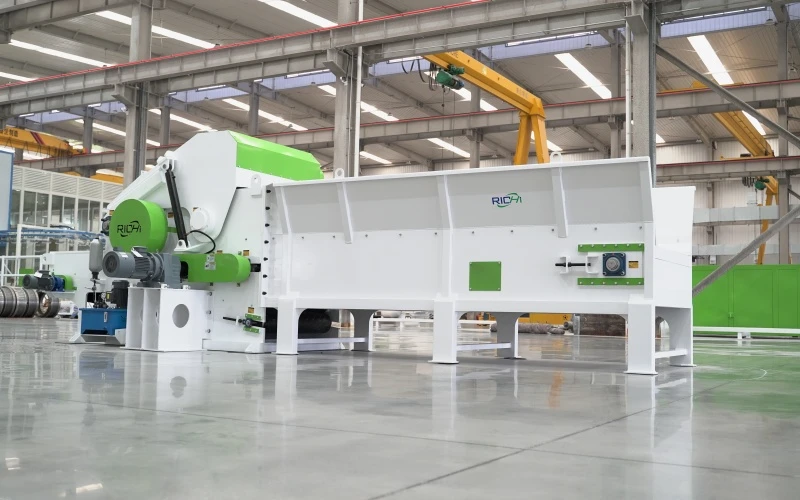
Bark chippers in Sweden are relevant to sawmills and forestry businesses that need to prepare suitable wood residues for biomass applications. In this representative project scenario, a small sawmill operator plans to purchase one XPJ500×230 drum wood chipper to process bark-covered branches, small-diameter spruce and pine logs, and selected bark-bearing timber offcuts.
The machine will be added to the site's existing wood-handling operation, giving the business a dedicated way to reduce suitable oversized residues into wood chips rather than purchasing an entire new processing line.
The buyer's objective is to make better use of material that is not suitable for sale as sawn timber. Existing handling equipment can already move logs and collect residues, but the yard needs a machine capable of cutting selected wood pieces into a more consistent size.
Name:
Drum wood chipper
Country:
Sweden
Date:
2026
Capacity:
Flexible
Model:
XPJ500×230
Power:
75 kW
Raw Materials:
branches, smaller logs
Final product size:
20–40mm
The proposed chipper will prepare material for further handling and potential use as biomass fuel, subject to the receiving customer's specifications. It is a single-machine purchase, not a complete wood pellet or biomass production line.
Sweden has a substantial forest-products industry, with sawmills, pulp producers and energy companies handling different streams of wood and forestry residues. The Swedish Energy Agency reported that unrefined wood fuels produced in Sweden reached the equivalent of 55,500 GWh in 2024. Industrial by-products, including sawdust, bark and dry wood chips, accounted for approximately 27,000 GWh of that production. This provides a credible industrial setting for a wood-residue processing project.
In this scenario, the buyer is a regional sawmill operator handling softwood timber. Spruce and pine logs arrive for sawing, while branches, small stems, slabs and irregular offcuts accumulate during timber preparation. Some residues remain suitable for other wood-processing uses, but others are too small, irregular or bark-covered to enter the main sawing process economically.
The business does not intend to chip every by-product indiscriminately. Clean sawdust is already a fine material and does not need to pass through a drum chipper. Loose bark also behaves differently from solid wood. The new machine is intended for suitable solid pieces containing bark, including small-diameter logs, branches and bark-bearing wood strips that fit within its feed dimensions.
This distinction matters when choosing bark chippers. A drum wood chipper cuts solid wood into chips; it is not a dedicated machine for grinding loose bark into fine particles. If the buyer later wants to process loose bark separately, the required equipment should be selected according to the desired final product and particle size.
The proposed raw-material mix is based on the buyer's softwood sawmill activities. Spruce and pine are suitable species to consider in a Swedish forestry setting, but they should be processed according to their actual dimensions and condition. The main feedstock consists of bark-covered branches, small-diameter stems and selected slab offcuts generated during timber handling.
For this project, the operator intends to prioritize straight or moderately irregular pieces with a maximum diameter compatible with the selected machine. Long branches and wood strips should be presented to the feeding system in accordance with the manufacturer's operating requirements. Material that is too large, heavily contaminated or otherwise unsuitable must be separated before feeding.
The buyer also needs to distinguish between freshly cut material and wood that has been stored for a period of time. Fresh branches and logs may contain substantial moisture, while sheltered material may be drier. The drum chipper performs cutting rather than drying, so it cannot guarantee a particular moisture content in the finished chips.
Metal fragments, stones and excessive soil should be excluded from the incoming material. Bark-covered wood may carry dirt, especially when branches have been collected from the ground. Keeping contaminants away from the knives helps reduce unnecessary wear and protects the cutting system. Root stumps and heavily soiled root material should not be treated as ordinary branch feed without a separate suitability assessment.
The proposed equipment is one XPJ500×230 drum wood chipper. Its feed opening is intended for relatively small wood pieces, making it a more appropriate starting point for a sawmill residue stream dominated by branches, smaller logs and narrow offcuts than for a yard routinely handling large-diameter trunks.
| Technical item | XPJ500×230 |
|---|---|
| Equipment type | Drum wood chipper |
| Purchase quantity | 1 unit |
| Feed inlet dimensions | 500 × 230 mm |
| Maximum feed diameter | 230 mm |
| Feeding motor power | 4 + 3 kW |
| Main motor power | 75 kW |
| Hydraulic pump power | 0.75 kW |
| Discharge conveyor motor power | 1.5 kW |
| Flying knives | 2 |
| Fixed knives | 1 |
| Target wood-chip size | 20–40 mm, subject to configuration and material testing |
The manufacturer's stated chip size is approximately 20–40 mm, and the screen or cutting configuration can be customized according to the required output. The final particle distribution depends on the wood species, incoming dimensions, knife condition and machine configuration. If the buyer's biomass customer specifies a narrower size range, that requirement should be discussed before the order is finalized.
No rated hourly capacity has been provided for the XPJ500×230 in the supplied specification. An accurate throughput figure therefore cannot be stated from the motor power alone. RICHI can review the expected feed dimensions, species, moisture conditions and operating schedule to determine whether this model fits the buyer's workload and whether further capacity confirmation is required.
The machine will be installed beside the existing timber-handling area, with enough room for feeding, discharge, inspection and maintenance. Incoming material is first sorted to remove unsuitable pieces. The operator checks the dimensions and condition of each batch before it reaches the chipper, helping keep oversized logs and contaminated residues out of the cutting chamber.
The hydraulic auxiliary feeding system helps the feed rollers grip and advance suitable material. The rotating drum carries the flying knives, which cut the wood against the fixed knife arrangement. The resulting chips are discharged by the conveyor for collection, temporary storage or transfer to the next processing stage.
Because the purchase covers one machine, the layout can be adapted to the existing yard rather than requiring a complete production-line redesign. Before installation, the buyer should confirm the foundation, electrical supply, lifting access, material flow and safe working clearances. The discharge arrangement should also be checked against the available collection equipment.
Keeping incoming wood separate from finished chips makes it easier to control the operation. If spruce and pine are processed in separate batches, the operator can identify the species and record the resulting material. This is useful when different customers have different requirements for wood-chip composition, moisture or particle size.
The primary proposed application is the preparation of wood chips for potential biomass fuel use. Sweden has an established market for wood-derived fuels, including bark and wood-processing residues used in energy production. The Swedish Energy Agency's statistics provide evidence that these industrial by-products form a significant part of the country's unrefined wood-fuel supply.
However, the output from this particular machine should not automatically be described as suitable for every boiler. The receiving facility may impose requirements for moisture, chip dimensions, bark content, contamination and the proportion of different wood species. The buyer must confirm these conditions before committing each batch to a particular customer.
Wood chips can also serve as an intermediate material for further biomass processing. Depending on their size and moisture content, they may be sent for additional screening, drying or fine grinding before being used in a wood pellet production process. The exact route depends on the downstream plant's equipment and the specifications of its finished product.
The XPJ500×230 does not replace a dryer, hammer mill or pellet mill. Its function is to reduce suitable solid wood pieces to chips. If the business later decides to produce wood pellets, RICHI can evaluate the additional equipment needed to create a complete process around the chipper and the buyer's existing machinery.
The drum chipper's machine body is fabricated from high-strength steel plate to provide structural support during operation. The flying knives are fixed to the rotor using dedicated bolts and a pressure-fastening arrangement intended to prevent movement during cutting. Correct assembly, inspection and maintenance remain essential to safe operation.
The specified flying and fixed knives are made from 6GrW2Si steel and receive quenching treatment to improve hardness and wear resistance. Knife service life depends on the type of wood, operating conditions, contamination and maintenance practices. Regular inspection and proper fastening help maintain cutting performance and reduce avoidable interruptions.
The rotor is checked using dynamic balancing equipment to support stable high-speed operation. Correct balancing can help reduce unnecessary vibration, while the machine's overall stability also depends on proper installation, the foundation and adherence to the operating instructions.
The hydraulic auxiliary feeding arrangement helps the feed rollers accommodate differences in material diameter and grip the incoming wood. This is useful when the raw material consists of branches and irregular offcuts rather than uniformly sized logs. Operators must still follow the prescribed feeding procedure and keep away from moving parts during operation.
The purchase addresses a specific gap in the sawmill's current operation. The business already has equipment for moving timber and handling ordinary residues, but it needs a dedicated machine for reducing selected solid wood pieces into chips. Buying one drum chipper allows the operator to add this processing step without immediately investing in drying, fine grinding, pelletizing and other equipment that may not yet be necessary.
The XPJ500×230 chipper crusher machine is proposed because its maximum feed diameter of 230 mm corresponds to a small-log and branch-processing application. It would not be the right choice for a site that routinely needs to chip trunks larger than this limit. If the incoming material is consistently oversized, RICHI should evaluate a model with a larger feed opening before the buyer makes a decision.
The purchase decision also considers the buyer's actual output requirement. The goal is not simply to make chips, but to prepare material that can be handled, stored and accepted by the intended customer. A discussion of chip dimensions, material condition, operating hours and downstream requirements is therefore more useful than selecting a machine solely by motor power.
Before confirming the order, RICHI can review photographs or representative samples of the buyer's branches, logs and bark-bearing offcuts. Information about the largest expected feed diameter, average dimensions, wood species and material condition helps the technical team assess the suitability of the proposed configuration.
RICHI can also discuss the target chip size, installation footprint, electrical requirements, discharge arrangement and maintenance access. If the finished chips are intended for a particular biomass facility, the buyer should provide that facility's material specification so the machine configuration and processing expectations can be assessed against the actual application.
Pre-shipment coordination can cover equipment dimensions, lifting requirements, operating documentation and recommended spare parts. This helps the buyer prepare the installation area and plan the work required when the machine arrives. Any additional downstream equipment can be considered separately if the business later expands its processing activities.
RICHI supplies individual wood-processing machines as well as complete biomass and pellet production systems to international markets. The company can assess a project ranging from one drum chipper to a wider processing line, with the proposed equipment selected according to the raw material and the intended finished product.
The proposed shipping arrangement is sea freight from Qingdao Port in China to the Port of Gothenburg, Sweden. The final shipping route, transit time and cargo arrangements should be confirmed with the freight forwarder before dispatch.
Before shipment, the buyer should confirm the packed dimensions, gross weight, unloading arrangements and access available at the installation site. These checks help the receiving team prepare suitable lifting equipment and organize delivery without treating transport planning as an afterthought.
For this representative project scenario, the buyer's main evaluation criteria are straightforward: whether the machine can accept the intended bark-covered branches and small logs, whether the resulting chips meet the agreed size requirement, and whether the chipper fits the existing yard workflow.
After commissioning, the operator should record the wood species, feed dimensions, operating hours, chip-size distribution and maintenance observations. Those records can support future operating decisions and provide a sound basis for an authentic customer testimonial. No named customer quotation or unverified production result is attributed to this illustrative scenario.
The most suitable bark chippers are selected by matching the machine to the material that actually enters the cutting chamber. For this Swedish sawmill scenario, the XPJ500×230 is proposed for suitable small-diameter spruce and pine logs, branches and bark-bearing wood offcuts, with a nominal chip-size target of 20–40 mm.
For bark chippers in Sweden, RICHI Machinery can review the raw materials, required chip dimensions and site conditions before confirming the equipment configuration. Whether the requirement is one drum chipper or a future complete biomass processing system, the project should be planned around the buyer's real material stream and downstream requirements.
Having the right mix of reliable, high-quality pellet machine and pelletizing systems and expert support is essential to your success. Watch how our end-to-end feed pellet plant solutions have helped our customers optimize their performance.
Our customized and future-proofed turnkey pellet plant solutions is designed with you at the core. From vision to reality and beyond, our team stays connected with yours. Giving you peace-of-mind with an expert at your side.
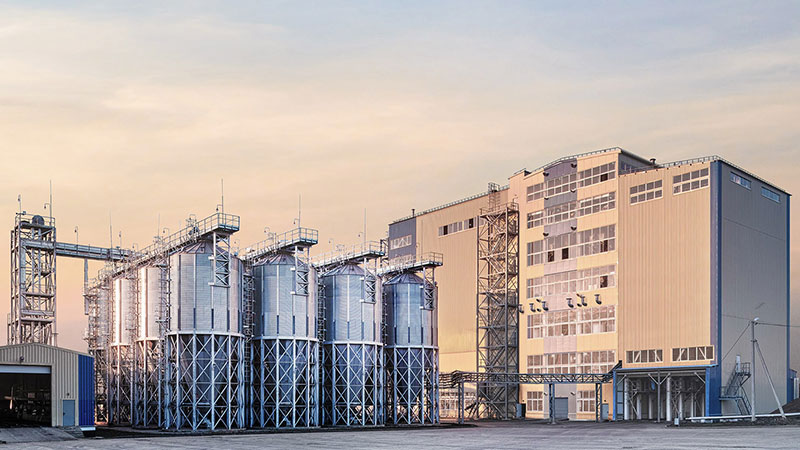
At RICHI, we go beyond project completion. With RICHI Servicee, we’re your dedicated partners in success. Count on us for expert guidance, minimal downtime, and optimized productivity. Choose RICHI for unmatched service and support.
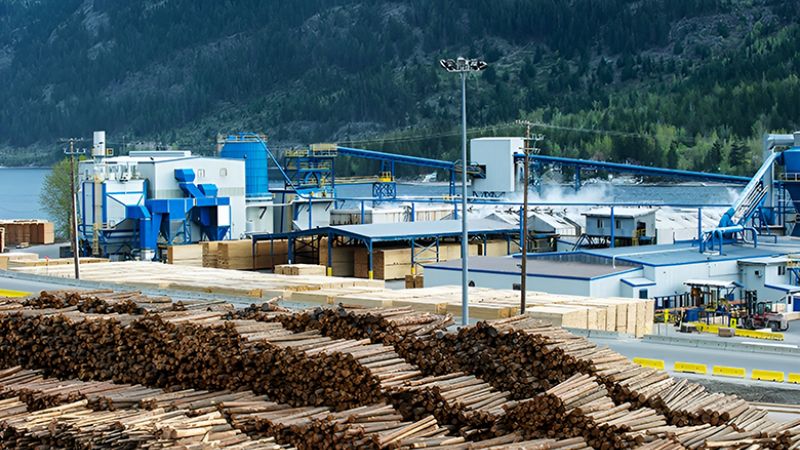


Meet global product demands and quality standards with industry-leading pellet plant design, engineering, equipment, and construction services for pellet processors.


Your Partner Beyond Project Completion
2000+ cases
RICHI is the leading designer, manufacturer and builder of pellet plants in the world, completing over 2000 projects in 140 countries across 6 continents.
Read More
Increase plant productivity, profitability, and safety by integrating high quality equipment into your pellet production line. Over the years, RICHI has become China's top pellet equipment manufacturer. At the same time, RICHI has established valuable partnerships with the world's leading component and raw material manufacturers to bring you the best there is in technology, automation, and efficiency in pelleting plant machinery.

For nearly 30 years, RICHI has been providing best-in-class pellet plant equipment and services to clients across a variety of industries, sizes, and needs. We pride ourselves on the knowledge and skill that each team member possesses – from our technical sales team to our process design engineers. You can count on RICHI Machinery to take your operation to the next level of innovation, quality, and success.
Need help with your pellet manufacturing plant project? Contact us today.
ANIMAL FEED
BIOMASS
WOOD
ORGANIC FERTILIZER
AQUA FEED
CAT LITTER
MUNICIPAL WASTE RECYCLING
SPECIAL PELLET PRODUCTION
RICHI Machinery continues to deliver world class pellet mill equipment, pellet plant engineering and project solutions that add value to our customers in the animal feed, wood waste, agriculture waste, organic fertilizer, cat litter and special pellet products industries. Throughout the years, we RICHI Machinery have built strong brand, becoming industry-leading pellet machine manufacturer. We value integrity, promise quality, and prioritize your success.
Learn MoreWith our expert team, we precisely implement your process engineering requirements in pellet mill and pelletizing plant systems. No matter which industry you’re in – we understand your needs and deliver solutions that meet the highest standards.
At RICHI, quality comes first. Our pellet making machine and related pellet line equipment undergo rigorous quality controls to ensure they meet the highest standards. Rely on products that are durable, safe, and efficient.
With decades of experience in pellet machine and pellet production line production, we have earned a reputation as a trusted partner in various industries. Our expertise allows us to cover a wide range of applications.
Not only do we offer premium pelleting equipment, but we are also experts at designing, building, installing, and maintaining facilities from the ground up. Our expertise is within pellt plant process design, discovering the most efficient, productive, and profitable way to handle your materials in an end-to-end cycle.
○ RICHI MACHINERY
Keeping in touch with us is an effective way to solve all your problems. If you have any needs or questions, please leave your contact information, then RICHI technical consultants will send design, quotation, videos to your mailbox. You can also contact us directly via WhatsApp: +86 13838389622
Copyright©2015-2026 by HENAN RICHI MACHINERY CO., LTD. All rights reserved.