
RICHI supplied a DCS-50P Aquafeed Packing Scale in Norway for 20–25 kg high-lipid salmon feed bags, with 6–8 bags/min reference speed and ±0.2% accuracy.
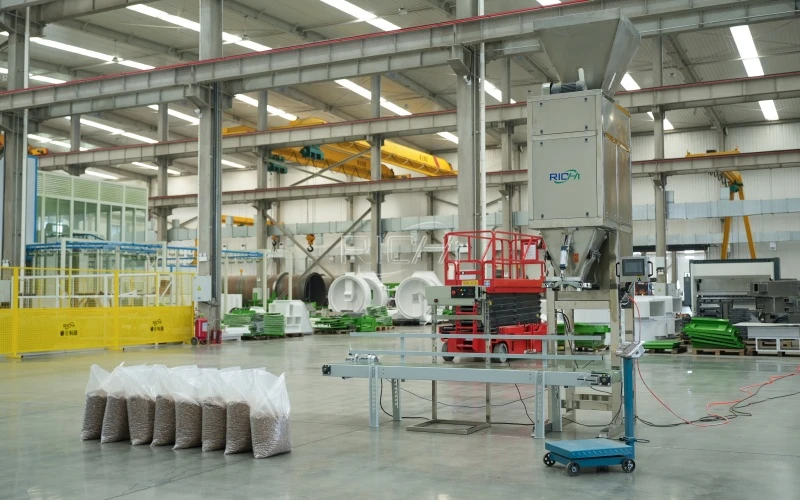
A salmon feed manufacturer on Norway's west coast selected one RICHI DCS-50P Aquafeed Packing Scale in Norway to replace an older gravity-fed weighing unit on a small-bag packaging line near Bergen. The factory produces approximately 60,000 T/Y of extruded Atlantic salmon feed, but only part of that volume is packed into 20 kg and 25 kg bags. Most large commercial aquaculture customers use bulk or larger-volume delivery formats, while the DCS-50P serves packaged orders requiring smaller sacks.
The customer's main packaging challenge was the physical behavior of high-lipid extruded pellets after oil coating. Depending on formula, coating level and pellet surface condition, oil residue can reduce free flow and accumulate on contact surfaces. The DCS-50P uses belt feeding to provide controlled dosing into the weighing section and has a reference speed of approximately 6–8 bags per minute. This equals approximately 7.2–9.6 T/H for 20 kg bags and 9–12 T/H for 25 kg bags under suitable operating conditions.
Name:
Aquafeed Packing Scale
Country:
Norway
Date:
2026
Capacity:
6–8 bags/min
Model:
DCS-50P
Feeding Method:
Belt feeding
Bag Sizes:
20 kg and 25 kg
Finished Feed:
Extruded Atlantic salmon pellets
The previous packing scale had been selected for relatively dry, free-flowing feed. Salmon pellets created a different operating condition. After extrusion and drying, the porous pellets receive oil through the coating stage. The oil is intended to enter the pellet structure, but finished-feed surface condition still varies with formulation, coating efficiency, pellet temperature and handling.
When oily residue accumulated on the old hopper and feed chute, material flow became less consistent and operators had to interrupt production for cleaning. The customer therefore needed better control of the feed entering the weighing hopper rather than simply a faster scale.
The new machine is installed as a standalone replacement. Existing upstream finished-feed storage, conveyors and downstream bag handling remain in service where their capacities match the new packaging section.
| Project Parameter | Specification |
|---|---|
| Equipment | Belt-fed aquafeed weighing and packing scale |
| Model | DCS-50P |
| Feeding Method | Belt feeding |
| Reference Packing Speed | Approximately 6–8 bags/min |
| 20 kg Equivalent Capacity | Approximately 7.2–9.6 T/H |
| 25 kg Equivalent Capacity | Approximately 9–12 T/H |
| Reference Dynamic Accuracy | ±0.2% |
| 20 kg Reference Deviation | Approximately ±40 g |
| 25 kg Reference Deviation | Approximately ±50 g |
| Finished Feed | Extruded Atlantic salmon pellets |
| Typical Pellet Range | Approximately 4–12 mm |
| Bag Sizes | 20 kg and 25 kg |
| Main Plant Production | Approximately 60,000 T/Y |
The tonnes-per-hour values are calculated from bag size and filling cycles. They describe the bagger's theoretical filling rate rather than the total output of the aquafeed factory. The 60,000 T/Y plant also supplies feed through other delivery formats, so one DCS-50P is not presented as packaging every tonne manufactured by the site.
Belt feeding was chosen because the customer's coated salmon pellets required more controlled material delivery than the previous gravity system could provide. The belt meters product toward the weighing section while reducing dependence on unrestricted gravity flow.
The project also uses a scraper arrangement to manage residue on the belt surface. Scraper pressure and position must be adjusted so oil and fines are removed without creating unnecessary belt wear. Cleaning frequency is then based on actual residue accumulation rather than a fixed claim that the machine only requires cleaning once per day.
This does not mean belt feeding is universally mandatory for every aquafeed. Some well-cooled, well-coated pellets may remain sufficiently free-flowing for another feeding arrangement. Feeder selection should be based on actual bulk density, oil condition, fines content, pellet strength and flowability.
The product entering the packing scale is finished Atlantic salmon feed, not mash or conventional livestock pellets. The production route includes grinding and formulation, preconditioning, extrusion, drying, oil coating, cooling and screening before the feed reaches finished-product storage.
Extrusion creates a porous pellet structure that allows additional oil to be incorporated downstream. Modern salmon diets can contain substantial total lipid, but that lipid is not necessarily all fish oil. Vegetable oils, marine oils and other approved lipid sources may be used according to nutritional formulation and raw-material strategy.
The DCS-50P does not need the exact nutritional formula to weigh each bag, but it does need the physical product information: pellet diameter, bulk density, surface oil condition, fines percentage and flow behavior.
The plant produces different salmon feed sizes according to fish stage, with the small-bag packaging section handling pellets in an approximate 4–12 mm range. Different pellet diameters can have different bulk densities and flow characteristics, so the operator verifies the weighing settings after major product changeovers.
The belt feeder should move the pellets without unnecessary compression or impact. However, pellet damage cannot be attributed solely to the packing scale. Fines may originate during conveying, elevators, coating, cooling, screening or transfer into the finished-feed bin.
If the plant observes excessive breakage, samples should be checked at several points in the process before modifying the bagging equipment.
The DCS-50P Automatic Packing Machine reference dynamic accuracy is approximately ±0.2% under suitable calibration and operating conditions. This corresponds to approximately ±40 g on a 20 kg target and ±50 g on a 25 kg target.
The project does not claim that every bag remains within ±15 or ±20 g. Real weighing performance is affected by belt cut-off, pellet flow, load-cell condition, vibration, product buildup and calibration. Routine check weighing remains part of the plant's quality-control procedure.
This is especially relevant for aquafeed because product value is high and repeated small overfills can become commercially significant across a large number of bags. Accurate filling therefore protects both customer weight compliance and the manufacturer's material balance.
The customer uses 20 kg and 25 kg lined bags for the small-pack segment. Where the selected bag construction uses an inner thermoplastic liner, that liner can be heat sealed before the outer layer is sewn. The combination provides a closure suited to the actual packaging specification without assuming that every salmon feed bag requires exactly the same sealing method.
Sealing temperature is established from the liner material and sealing equipment. It is not fixed universally at 180°C or 190°C, and surface oil should not be used as the only reason to increase temperature. Excessive heat can damage some films just as insufficient heat can produce an incomplete seal.
High-lipid aquafeed makes hygienic design and routine cleaning particularly important. Oil mixed with fines can accumulate around belts, scrapers, chutes and corners if those areas are ignored. The packaging section therefore needs accessible contact surfaces and a cleaning procedure matched to the feed manufacturer's hygiene program.
The customer inspects belt tracking, scraper condition, bag clamps, weighing components and product-contact areas according to actual operating hours. Wear-part life is not specified as a fixed number of bags or months because it depends on belt tension, cleaning practices, oil exposure and production schedule.
Compressed air used for pneumatic functions must also be clean and suitable for the equipment. Air-system treatment should follow the customer's plant standard rather than assuming one universal pressure or filter arrangement for every installation.
Norway remains the world's dominant Atlantic salmon farming country. Norwegian Directorate of Fisheries statistics show approximately 1.75 million tonnes of salmon were sold from Norwegian aquaculture in 2025, representing about 93% of total Norwegian aquaculture sales volume. This creates a substantial domestic production and logistics base for salmon feed.
Commercial salmon feed is commonly delivered in bulk or large bags for transfer to fish farms, so the DCS-50P in this project is specifically a small-pack packaging unit rather than the sole dispatch system for the entire 60,000 T/Y factory.
The DCS-50P Aquafeed Packing Scale in Norway is prepared for export from Qingdao, China, with the Port of Bergen used as a practical freight gateway for the west-coast plant. Bergen's freight terminal handles containerized cargo and connects directly with regional industrial customers.
Before shipment, RICHI checks finished-feed-bin discharge, installation height, electrical supply, compressed-air interface, belt-feeder layout, bag dimensions, closing equipment and downstream conveyor position. These interfaces determine whether the new scale can replace the existing unit without creating another bottleneck.
This Aquafeed Packing Scale in Norway project uses one RICHI DCS-50P to package high-lipid Atlantic salmon feed at a west-coast aquafeed mill. The belt-fed machine provides approximately 6–8 bags/min reference speed, equivalent to around 7.2–9.6 T/H for 20 kg bags and 9–12 T/H for 25 kg bags. Reference dynamic weighing accuracy is approximately ±0.2%, equal to about ±40 g and ±50 g respectively.
For another aquafeed producer selecting a packing scale, RICHI Machinery needs the pellet diameter, total and surface oil condition, fines percentage, bulk density, bag weight, required bags per minute, annual small-bag tonnage, bag construction, closing method and existing finished-feed-bin arrangement. These parameters determine whether the DCS-50P belt-fed configuration is the correct choice for the actual product.
Having the right mix of reliable, high-quality pellet machine and pelletizing systems and expert support is essential to your success. Watch how our end-to-end feed pellet plant solutions have helped our customers optimize their performance.
Our customized and future-proofed turnkey pellet plant solutions is designed with you at the core. From vision to reality and beyond, our team stays connected with yours. Giving you peace-of-mind with an expert at your side.
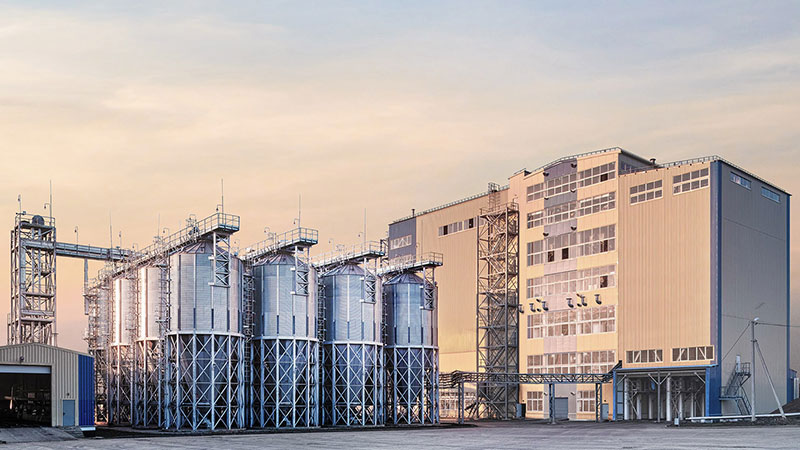
At RICHI, we go beyond project completion. With RICHI Servicee, we’re your dedicated partners in success. Count on us for expert guidance, minimal downtime, and optimized productivity. Choose RICHI for unmatched service and support.
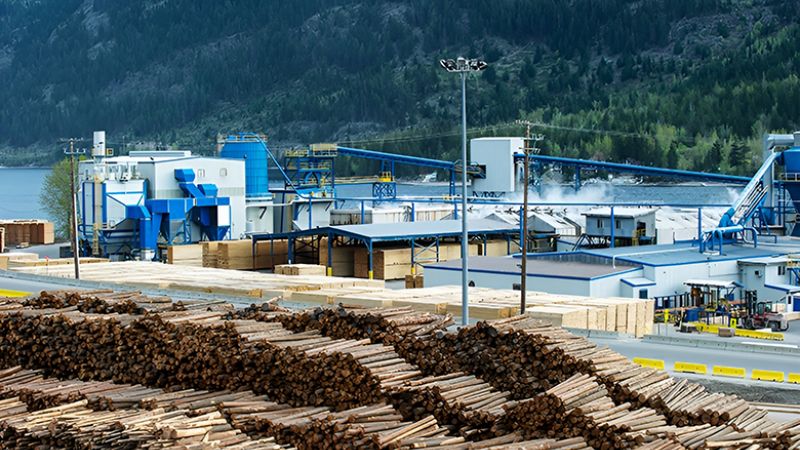


Meet global product demands and quality standards with industry-leading pellet plant design, engineering, equipment, and construction services for pellet processors.


Your Partner Beyond Project Completion
2000+ cases
RICHI is the leading designer, manufacturer and builder of pellet plants in the world, completing over 2000 projects in 140 countries across 6 continents.
Read More
Increase plant productivity, profitability, and safety by integrating high quality equipment into your pellet production line. Over the years, RICHI has become China's top pellet equipment manufacturer. At the same time, RICHI has established valuable partnerships with the world's leading component and raw material manufacturers to bring you the best there is in technology, automation, and efficiency in pelleting plant machinery.

For nearly 30 years, RICHI has been providing best-in-class pellet plant equipment and services to clients across a variety of industries, sizes, and needs. We pride ourselves on the knowledge and skill that each team member possesses – from our technical sales team to our process design engineers. You can count on RICHI Machinery to take your operation to the next level of innovation, quality, and success.
Need help with your pellet manufacturing plant project? Contact us today.
ANIMAL FEED
BIOMASS
WOOD
ORGANIC FERTILIZER
AQUA FEED
CAT LITTER
MUNICIPAL WASTE RECYCLING
SPECIAL PELLET PRODUCTION
RICHI Machinery continues to deliver world class pellet mill equipment, pellet plant engineering and project solutions that add value to our customers in the animal feed, wood waste, agriculture waste, organic fertilizer, cat litter and special pellet products industries. Throughout the years, we RICHI Machinery have built strong brand, becoming industry-leading pellet machine manufacturer. We value integrity, promise quality, and prioritize your success.
Learn MoreWith our expert team, we precisely implement your process engineering requirements in pellet mill and pelletizing plant systems. No matter which industry you’re in – we understand your needs and deliver solutions that meet the highest standards.
At RICHI, quality comes first. Our pellet making machine and related pellet line equipment undergo rigorous quality controls to ensure they meet the highest standards. Rely on products that are durable, safe, and efficient.
With decades of experience in pellet machine and pellet production line production, we have earned a reputation as a trusted partner in various industries. Our expertise allows us to cover a wide range of applications.
Not only do we offer premium pelleting equipment, but we are also experts at designing, building, installing, and maintaining facilities from the ground up. Our expertise is within pellt plant process design, discovering the most efficient, productive, and profitable way to handle your materials in an end-to-end cycle.
○ RICHI MACHINERY
Keeping in touch with us is an effective way to solve all your problems. If you have any needs or questions, please leave your contact information, then RICHI technical consultants will send design, quotation, videos to your mailbox. You can also contact us directly via WhatsApp: +86 13838389622
Copyright©2015-2026 by HENAN RICHI MACHINERY CO., LTD. All rights reserved.