
A forage processing company in central Poland selected one RICHI CZLH420 alfalfa pelletizer in Poland to add commercial pellet production to an existing dried-forage preparation system. The customer already had equipment for receiving alfalfa bales, opening the bales, reducing forage particle size and controlling material moisture, so the project did not require another complete production line.

A forage processing company in central Poland selected one RICHI CZLH420 alfalfa pelletizer in Poland to add commercial pellet production to an existing dried-forage preparation system. The customer already had equipment for receiving alfalfa bales, opening the bales, reducing forage particle size and controlling material moisture, so the project did not require another complete production line.
The new pelletizer is used primarily for locally sourced alfalfa. Instead of replacing usable preprocessing equipment, the customer added one ring die pelletizing unit to convert prepared alfalfa meal into dense, easier-to-handle forage pellets for cattle-feed customers. This standalone configuration also gives the company a practical way to establish pellet demand before deciding whether a larger multi-machine line is justified.
Name:
Alfalfa Pellet Mill
Country:
Poland
Date:
2026
Capacity:
1.8–2.0 T/H
Model:
CZLH420
Main Motor Power:
90 kW
Main Raw Material:
Dried alfalfa
Pellet diameter:
6–10 mm
The customer’s business is based on forage processing rather than complete compound-feed manufacturing.
This distinction matters.
The objective is not to formulate a complete dairy or beef ration inside the pelletizer. The machine receives prepared alfalfa material and changes its physical form from loose forage meal into compact pellets.
Loose chopped or ground alfalfa occupies considerably more storage volume than densified pellets and can generate fines during repeated handling. Pelletizing can make the material easier to meter, bag, transport and incorporate into downstream feed programs.
The company already had customers buying forage ingredients, so it did not need to build an entirely new market around a complex multi-species feed formula.
Starting with one grass pellet machine allows it to evaluate several practical variables: actual tonnes per hour with Polish alfalfa, die behavior, pellet diameter, moisture window, electrical load, cooling requirements and customer response to the densified product.
If those results support expansion, another pelletizer and additional cooling, screening or packaging capacity can later be added around the existing system.
| Project Parameter | Configuration |
|---|---|
| Equipment | Ring die alfalfa pelletizer |
| Model | CZLH420 |
| Main Motor | 90 kW |
| Main Raw Material | Dried alfalfa |
| Raw Material Form | Prepared forage meal after bale opening and grinding |
| Project Capacity | Approximately 1.8–2.0 T/H under the prepared forage conditions used for this project |
| Typical Pellet Diameter | Approximately 6–10 mm depending on customer requirement |
| Main Application | Densified alfalfa forage pellets |
| Project Type | Standalone pelletizer integrated into an existing forage-processing system |
The CZLH420 alfalfa pellet machine was selected around the customer’s prepared fibrous material and required commercial output.
The approximately 1.8–2.0 T/H figure is treated as a project operating reference for suitably prepared alfalfa rather than a universal capacity for every forage.
Pelletizer throughput can change when bale quality, moisture, particle distribution, leaf-to-stem ratio, bulk density or die configuration changes.
This is particularly important with alfalfa because forage harvested at different maturity stages can have very different stem content and physical behavior.
A leafy, well-prepared alfalfa meal does not necessarily pelletize at exactly the same rate as material containing a higher proportion of coarse mature stems.
Alfalfa, also called lucerne, is an established temperate forage crop and is used in European livestock production as a source of forage protein and fibre.
Polish agricultural statistics include lucerne together with clover and other fodder legumes among the country’s feed crops.
For this customer, local alfalfa is therefore a more credible organizing raw material than constructing a complex recipe around alfalfa, ryegrass, clover, barley, oats and several other ingredients at the same time.
The company purchases dried alfalfa bales from farms and forage suppliers according to crop season and quality specification.
Incoming bales are checked for moisture, mould, soil contamination and foreign material.
Twine, net wrap and other packaging material must be removed before the forage enters mechanical processing.
This receiving control is important because a ring die pelletizer cannot correct mouldy forage or remove soil contamination from a poor-quality bale.
The quality of the final alfalfa pellet begins with the forage entering the plant.
Alfalfa bales cannot be fed directly into the CZLH420.
The first stage is bale opening or coarse breaking.
This loosens the compressed forage and converts long stems into a form that can be conveyed more consistently.
An intermediate coarse size in the approximately 15–60 mm region can be useful before fine grinding, depending on the bale condition and preprocessing equipment.
The second stage is controlled grinding.
A grass crusher machine reduces the opened alfalfa into a particle distribution suitable for ring die pelletizing.
The customer therefore uses a process sequence rather than expecting one shredder to take an intact bale directly to finished pellet-mill feed:
The final grinding specification is selected from actual pelletizing behavior rather than one fixed 3–5 mm rule.
Some stem particles may need stronger size reduction, while excessive fine grinding can increase dust and electricity consumption without creating a proportional pellet-quality benefit.
Moisture strongly influences alfalfa pellet formation.
However, every batch should not be forced to exactly 12–14% simply because that range appears in a general pelletizing specification.
Stored alfalfa bales can arrive under different conditions depending on harvest moisture, drying method, storage building and ambient humidity.
If the material is too wet for stable grinding and pelletizing, additional drying may be necessary.
If it is already dry enough, running it unnecessarily through a dryer adds thermal energy consumption and can over-dry the forage.
A low-teens moisture region can provide a useful commissioning starting point, but the final operating window is established from actual pellet formation, motor load and finished-product condition.
The customer also needs to maintain moisture control after processing.
Finished pellets should be cooled before storage or bagging, and the warehouse needs to protect the product from rainwater and excessive humidity.
Pelletization makes alfalfa denser; it does not make the product immune to moisture uptake or poor storage conditions.
The customer can produce alfalfa pellets in different diameters according to downstream market requirements.
For this project, an approximately 6–10 mm range is a practical commercial window for cattle-oriented forage pellets.
The exact diameter is agreed with the buyer and matched to the die configuration.
It should not be claimed that a particular 6 mm or 8 mm pellet automatically improves rumen health, milk production, weight gain or nutrient absorption.
The pelletizer changes physical form.
It does not change alfalfa into a complete ration and does not independently determine animal performance.
Dairy and beef cattle still require a balanced feeding program containing appropriate forage structure, energy, protein, minerals and other nutrients.
Alfalfa pellets may form one part of that feeding system.
This distinction is especially important for ruminants because densified forage should not be confused with the physically effective long forage required in the total ration.
The customer therefore markets the product as a processed forage ingredient rather than claiming that pellet diameter itself provides a specific animal-health result.
One characteristic that makes alfalfa different from a uniform cereal grain is its variable plant structure.
Leaves and stems do not behave identically during grinding and compression.
Leaf-rich material can contain a different proportion of fine particles from mature, stem-heavy forage. Stem material contributes more long fibre and can change bulk density and die resistance.
This means two bales with similar moisture can still produce different pelletizer loads.
RICHI therefore evaluates representative raw material rather than configuring the CZLH420 only from the word “alfalfa.”
Useful information includes bale type, cutting stage, stem coarseness, moisture, existing particle size and the required final pellet.
If the customer later introduces ryegrass or clover, those materials need their own trials.
The fact that the CZLH420 can mechanically process fibrous forage does not mean every grass or legume will achieve identical capacity, energy consumption or pellet durability.
This is why the Polish customer keeps alfalfa as the principal production material while treating other forage species as future formulation or production trials rather than as guaranteed interchangeable feedstocks.
Purchasing one alfalfa pelletizer does not eliminate the need for supporting equipment.
Prepared forage must be fed to the CZLH420 at a stable rate.
Fresh pellets then leave the die warm and require cooling before final storage or packing.
Screening removes loose fines generated during pelletizing and handling.
If fines meet the customer’s process requirements, they can be collected for controlled return rather than becoming uncontrolled waste.
The existing cooler and screen therefore need enough capacity to support approximately 1.8–2.0 T/H.
The same applies to conveyors and elevators.
If the existing cooling section can handle only one tonne per hour, installing a larger pelletizer simply moves the bottleneck downstream.
RICHI Machinery also checks the structural and electrical interfaces for the 90 kW pelletizer, including installation elevation, feeding position, discharge connection, maintenance access and the site power system.
For a retrofit project, these interfaces can be as important as the machine itself.
This alfalfa pelletizer in Poland project uses one RICHI CZLH420 ring die machine to produce densified alfalfa forage pellets at an existing feed ingredient facility in central Poland.
The pelletizer is equipped with a 90 kW main motor and is configured around a project production level of approximately 1.8–2.0 T/H under suitable prepared-forage conditions.
The customer’s principal raw material is locally sourced dried alfalfa bale.
Bales are inspected and opened before coarse forage is transferred to the grinding section. The resulting alfalfa meal is checked for particle condition and moisture, then fed to the CZLH420 for densification.
Finished pellets are cooled and screened before storage or packaging.
The customer does not use the machine as a substitute for nutritional formulation.
The CZLH420 produces an alfalfa forage ingredient with improved density and handling characteristics; dairy and beef producers determine how that ingredient enters the complete ration.
The standalone configuration also creates a practical expansion path.
If commercial demand increases beyond the capacity of one CZLH420, RICHI can first determine whether the bottleneck is pelletizing, bale preparation, grinding, cooling, screening or packaging before recommending additional equipment.
This prevents the customer from simply adding another pelletizer when the existing preprocessing section cannot supply enough prepared forage.
For another buyer searching for an alfalfa pelletizer in Poland, alfalfa pellet machine Poland, lucerne pelletizer, forage pellet machine, alfalfa hay pellet mill or ring die pelletizer for alfalfa, RICHI first evaluates the condition in which the forage arrives.
Useful project information includes whether the material is fresh alfalfa, loose dried forage, square bales, round bales or pre-ground alfalfa meal; incoming moisture; bale dimensions; available tonnes per day; existing bale opener and hammer mill; required pellet diameter; daily operating hours; and downstream cooling and packing equipment.
A customer receiving already dried and ground alfalfa meal may need only the pelletizer and associated cooler.
A buyer receiving high-moisture fresh forage needs a much broader process including chopping and substantial drying capacity.
A customer receiving dry bales normally needs bale opening and fine grinding before pelletizing.
These differences explain why two projects using the same CZLH420 can require very different total equipment configurations.
For a Polish alfalfa-pellet project, send RICHI representative forage information, bale size, moisture, hourly or annual output target, current preprocessing equipment, pellet specification and operating schedule. These parameters allow the alfalfa pelletizer and the surrounding process to be matched to the actual material rather than a generic forage-pellet recipe.
Having the right mix of reliable, high-quality pellet machine and pelletizing systems and expert support is essential to your success. Watch how our end-to-end feed pellet plant solutions have helped our customers optimize their performance.
Our customized and future-proofed turnkey pellet plant solutions is designed with you at the core. From vision to reality and beyond, our team stays connected with yours. Giving you peace-of-mind with an expert at your side.
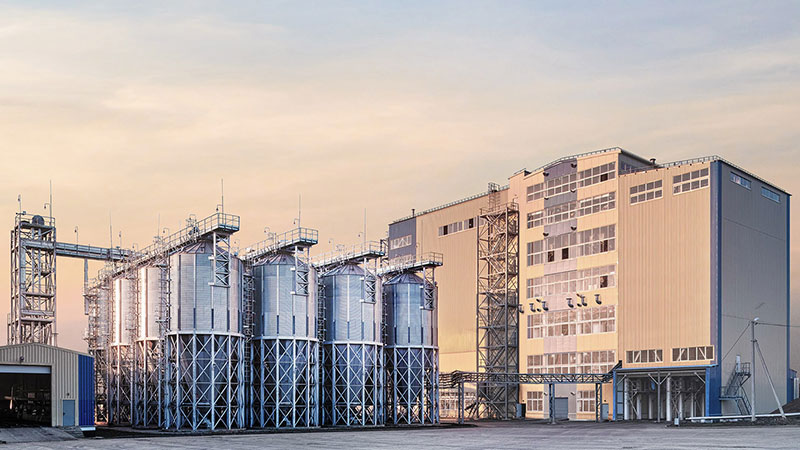
At RICHI, we go beyond project completion. With RICHI Servicee, we’re your dedicated partners in success. Count on us for expert guidance, minimal downtime, and optimized productivity. Choose RICHI for unmatched service and support.
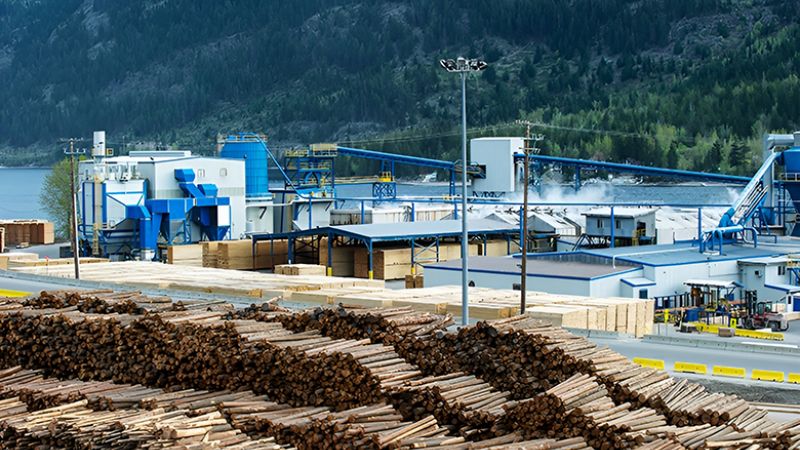


Meet global product demands and quality standards with industry-leading pellet plant design, engineering, equipment, and construction services for pellet processors.

Your Partner Beyond Project Completion
2000+ cases
RICHI is the leading designer, manufacturer and builder of pellet plants in the world, completing over 2000 projects in 140 countries across 6 continents.
Read More
Increase plant productivity, profitability, and safety by integrating high quality equipment into your pellet production line. Over the years, RICHI has become China's top pellet equipment manufacturer. At the same time, RICHI has established valuable partnerships with the world's leading component and raw material manufacturers to bring you the best there is in technology, automation, and efficiency in pelleting plant machinery.

For nearly 30 years, RICHI has been providing best-in-class pellet plant equipment and services to clients across a variety of industries, sizes, and needs. We pride ourselves on the knowledge and skill that each team member possesses – from our technical sales team to our process design engineers. You can count on RICHI Machinery to take your operation to the next level of innovation, quality, and success.
Need help with your pellet manufacturing plant project? Contact us today.
ANIMAL FEED
BIOMASS
WOOD
ORGANIC FERTILIZER
AQUA FEED
CAT LITTER
MUNICIPAL WASTE RECYCLING
SPECIAL PELLET PRODUCTION
RICHI Machinery continues to deliver world class pellet mill equipment, pellet plant engineering and project solutions that add value to our customers in the animal feed, wood waste, agriculture waste, organic fertilizer, cat litter and special pellet products industries. Throughout the years, we RICHI Machinery have built strong brand, becoming industry-leading pellet machine manufacturer. We value integrity, promise quality, and prioritize your success.
Learn MoreWith our expert team, we precisely implement your process engineering requirements in pellet mill and pelletizing plant systems. No matter which industry you’re in – we understand your needs and deliver solutions that meet the highest standards.
At RICHI, quality comes first. Our pellet making machine and related pellet line equipment undergo rigorous quality controls to ensure they meet the highest standards. Rely on products that are durable, safe, and efficient.
With decades of experience in pellet machine and pellet production line production, we have earned a reputation as a trusted partner in various industries. Our expertise allows us to cover a wide range of applications.
Not only do we offer premium pelleting equipment, but we are also experts at designing, building, installing, and maintaining facilities from the ground up. Our expertise is within pellt plant process design, discovering the most efficient, productive, and profitable way to handle your materials in an end-to-end cycle.
○ RICHI MACHINERY
Keeping in touch with us is an effective way to solve all your problems. If you have any needs or questions, please leave your contact information, then RICHI technical consultants will send design, quotation, videos to your mailbox. You can also contact us directly via WhatsApp: +86 13838389622
Copyright©2015-2026 by HENAN RICHI MACHINERY CO., LTD. All rights reserved.