
This is a project regarding an RDF pellet machine in Indonesia. This customer runs a wet processing plant. Textile dyeing and finishing use a lot of steam. His plant has two older fire tube boilers, each rated at 5 tons of steam per hour. His idea was simple. Instead of buying fuel, why not make fuel from the waste that is already piling up around his factory and the nearby industrial estate? Bandung generates thousands of tons of industrial waste every week.
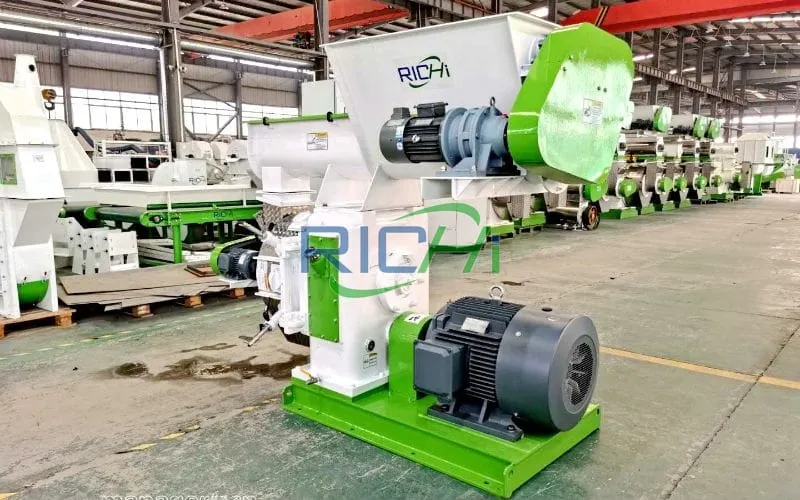
This is a project regarding an RDF pellet machine in Indonesia. Here is something a lot of people miss about Indonesia. The country has over 60,000 factories, and most of them run on either diesel or imported coal.
I was in Bandung last year, talking to a guy who runs a medium-sized textile dyeing operation. His boilers burn about eight tons of coal every single day. Coal prices from Kalimantan have gone up 60% in two years, and that is before you add trucking to Java. He showed me his fuel bills. I almost spilled my coffee.
He said, “I cannot compete with Chinese and Vietnamese factories anymore. Their energy is cheaper.” That stuck with me. He was not a waste specialist. He was not an environmentalist. He was just a factory owner trying to keep his margins alive. And that is exactly why he started looking at RDF pellet making machines for thermal energy. Not because he wanted to save the planet. Because he wanted to save his business.
Name:
RDF pelletizer
Country:
Indonesia
Date:
2025
Capacity:
1.5 to 2.0 tons per hour
Model:
MZLH520
Main Motor Power:
132 kW
Raw Materials:
polyester trim waste, nylon scraps
Pellet diameter:
14mm
This customer, let me call him Pak Agus (not his real name), runs a wet processing plant. Textile dyeing and finishing use a lot of steam. His plant has two older fire tube boilers, each rated at 5 tons of steam per hour.
He was burning sub-bituminous coal from South Kalimantan. The delivered price in Bandung had hit 2.4 million rupiah per ton. That is roughly 150 USD. Do that math for eight tons a day, 300 days a year. Almost 360,000 USD annually just for fuel.
His idea was simple. Instead of buying fuel, why not make fuel from the waste that is already piling up around his factory and the nearby industrial estate? Bandung generates thousands of tons of industrial waste every week.
Textile trimmings, rejected synthetic fabrics, plastic packaging from raw material deliveries, even old conveyor belts. Most of it goes to the Sarimukti landfill, which is almost full anyway.
He already owned a small shredder. He used it to destroy rejected finished goods. What he lacked was a densification machine that could turn shredded fabric and plastic mix into something that burns like coal. That is when he found our RDF pellet machine in Indonesia through a distributor in Surabaya. He did not need a full production line.
No hammer mill, no dryer, no cooler. His raw material came in at around 12% moisture because tropical humidity is brutal, but his waste was mostly synthetic fibers that don't absorb much water anyway. All he needed was a reliable ring die pellet press that would not choke on long fibers.
Let me break down what actually goes into their feedstock. It is not like European RDF plants that carefully sort and homogenize. This is messy, cheap, and effective.
About 45% comes from their own factory floor: polyester trim waste, nylon scraps, cotton-poly blend rejects, and empty chemical drums that have been crushed.
Another 35% comes from neighboring factories: a sneaker factory that throws away vulcanized rubber offcuts, a plastic packaging plant with tons of LDPE film waste, and a small automotive parts maker that discards non-recyclable ABS plastic.
The remaining 20% is municipal-derived: old clothes from a local thrift store that could not sell them, shredded car tires from a nearby retreading shop, and some wood pallets that have fallen apart.
They pre-shred everything to under 40mm using an old dual-shaft shredder they bought secondhand from a recycling yard in Jakarta. No magnetic separation. No air classification. Just brute force. Then it goes into a simple horizontal mixer where they add about 5% waste motor oil to boost the calorific value. That oil comes from a used oil collector who pays them a small fee to take it. So they actually get paid for part of their feedstock.
The pellet size coming out of their MZLH520 is 14mm. Why so big? Because their boiler grate spacing is coarse. They tried 8mm and 10mm pellets initially, but those fell through the grate before fully burning. The 15mm pellets sit on the grate longer, burn more completely, and produce less fly ash. They also make 18mm pellets on request for a nearby cement plant that is testing RDF as a partial coal replacement.
After going back and forth for two months, Pak Agus signed for two MZLH520 RDF pellet machines. No conditioner. No extra fat or binder addition system. Just the base unit with the forced feeder and the breaking feeder. Why two units? Simple answer: redundancy and capacity.
His boiler consumes about 800 kg of coal equivalent per hour. If he runs one MZLH520 at 1.5 tons per hour, he can replace almost all his coal. But RDF pelletizing is not stable. Material inconsistency causes die blockages. Roller bearings wear faster.
A single machine will inevitably have downtime. With two machines, he runs both at 70% load. If one jams, the other still produces while they clear the blockage. His effective output stays around 2.2 to 2.5 tons per hour combined.
Here are the specs for the MZLH520 they installed:
They also bought spare ring dies. Two of them. One with 14mm holes, one with 18mm. They learned the hard way that RDF dies wear twice as fast as wood dies. Four to six months instead of a year.
The installation is in the Rancaekek industrial area, about 30 km east of Bandung. That zone has over 200 textile and garment factories. The local government has been complaining about waste for years. Now one factory is turning that waste into thermal energy, and other factories are watching closely.
The pellets go directly into Pak Agus's boilers. He replaced 85% of his coal usage within three months of commissioning. His steam cost dropped from 480,000 rupiah per ton to 310,000 rupiah per ton. That is a 35% reduction.
And here is the kicker: the landfill tipping fee he avoids is another saving. He used to pay 150,000 rupiah per ton to dispose of his factory waste. Now that waste becomes fuel. So he saves on disposal AND fuel at the same time.
He is not selling pellets to anyone else yet. That might come later. Right now, he is focused on making his own operation cheaper. But three other factories in the same industrial park have already asked to buy pellets from him. If that demand grows, he will add a third MZLH520.
All our machinery from RICHI leaves from Qingdao port. For Indonesia, the main gateway is Tanjung Priok in North Jakarta. That is the busiest and most well-equipped port in the country. The shipment for Pak Agus included two MZLH520 units plus spare parts.
We packed each machine in two 40-foot open-top containers because the main body is too tall for standard containers. Sea freight took 18 days, pretty fast for Southeast Asia routes. Customs clearance at Tanjung Priok added another 9 days. Indonesian import procedures have become stricter in the last two years.
Every industrial machine now requires a surveyor report and an import license number. Pak Agus used a local customs broker in Jakarta who specializes in manufacturing equipment. That saved him at least two weeks of headaches.
He looked at three options. A German-made machine from a well-known brand. A Chinese flat-die machine from another exporter. And our MZLH520 RDF fuel pellet machine.
The German machine was beautiful. But it cost three times more, and spare parts had to come from Europe with a six-week lead time. For a factory that cannot afford to shut down for a month, that was a dealbreaker.
The Chinese flat-die machine was half our price. But it had no forced feeder. The export agent told him it could handle fabric waste. Pak Agus did a test with his material on a similar machine in Surabaya. It jammed within 15 minutes. The flat die has lower compression and less tolerance for fibrous materials. He walked away from that deal.
He chose us because of three things. First, the forced feeder design. We have it. The flat-die machine did not. Second, the hardened ring die for synthetic materials. Third, the local support through our distributor in Surabaya who stocks spare parts. He visited the distributor's warehouse before ordering. That sealed the deal.
RICHI Machinery—shipping from Qingdao, China—is proud to support Indonesia's textile industry. RICHI—your partner in RDF pelletizing.
Having the right mix of reliable, high-quality pellet machine and pelletizing systems and expert support is essential to your success. Watch how our end-to-end feed pellet plant solutions have helped our customers optimize their performance.
Our customized and future-proofed turnkey pellet plant solutions is designed with you at the core. From vision to reality and beyond, our team stays connected with yours. Giving you peace-of-mind with an expert at your side.
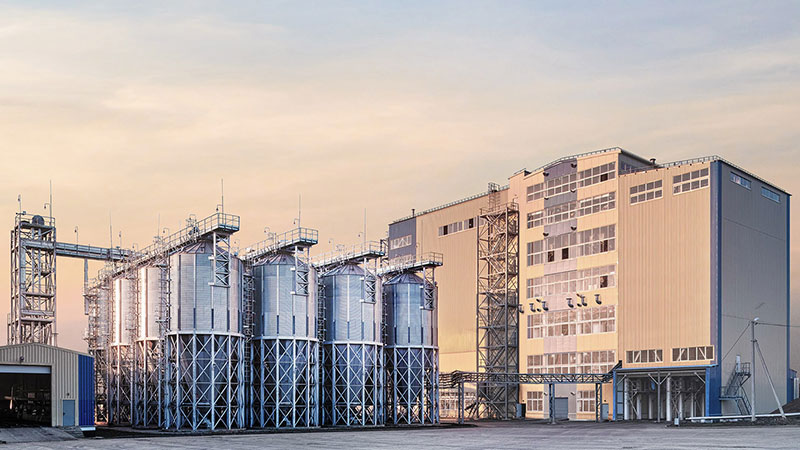
At RICHI, we go beyond project completion. With RICHI Servicee, we’re your dedicated partners in success. Count on us for expert guidance, minimal downtime, and optimized productivity. Choose RICHI for unmatched service and support.
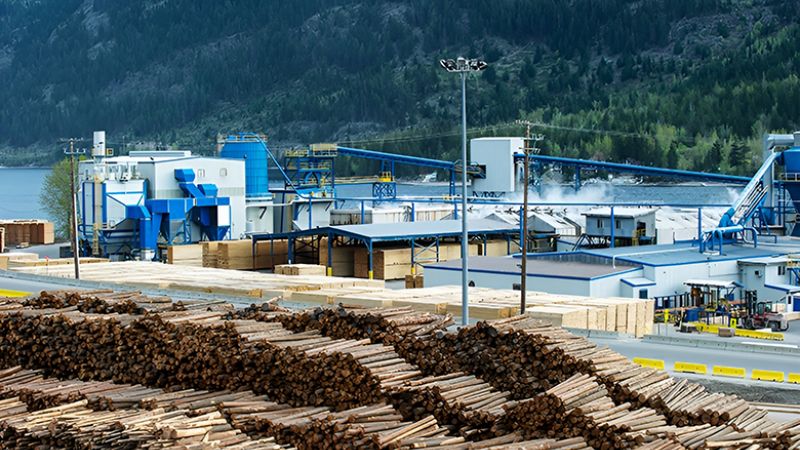


Meet global product demands and quality standards with industry-leading pellet plant design, engineering, equipment, and construction services for pellet processors.

Your Partner Beyond Project Completion
2000+ cases
RICHI is the leading designer, manufacturer and builder of pellet plants in the world, completing over 2000 projects in 140 countries across 6 continents.
Read More
Increase plant productivity, profitability, and safety by integrating high quality equipment into your pellet production line. Over the years, RICHI has become China's top pellet equipment manufacturer. At the same time, RICHI has established valuable partnerships with the world's leading component and raw material manufacturers to bring you the best there is in technology, automation, and efficiency in pelleting plant machinery.

For nearly 30 years, RICHI has been providing best-in-class pellet plant equipment and services to clients across a variety of industries, sizes, and needs. We pride ourselves on the knowledge and skill that each team member possesses – from our technical sales team to our process design engineers. You can count on RICHI Machinery to take your operation to the next level of innovation, quality, and success.
Need help with your pellet manufacturing plant project? Contact us today.
ANIMAL FEED
BIOMASS
WOOD
ORGANIC FERTILIZER
AQUA FEED
CAT LITTER
MUNICIPAL WASTE RECYCLING
SPECIAL PELLET PRODUCTION
RICHI Machinery continues to deliver world class pellet mill equipment, pellet plant engineering and project solutions that add value to our customers in the animal feed, wood waste, agriculture waste, organic fertilizer, cat litter and special pellet products industries. Throughout the years, we RICHI Machinery have built strong brand, becoming industry-leading pellet machine manufacturer. We value integrity, promise quality, and prioritize your success.
Learn MoreWith our expert team, we precisely implement your process engineering requirements in pellet mill and pelletizing plant systems. No matter which industry you’re in – we understand your needs and deliver solutions that meet the highest standards.
At RICHI, quality comes first. Our pellet making machine and related pellet line equipment undergo rigorous quality controls to ensure they meet the highest standards. Rely on products that are durable, safe, and efficient.
With decades of experience in pellet machine and pellet production line production, we have earned a reputation as a trusted partner in various industries. Our expertise allows us to cover a wide range of applications.
Not only do we offer premium pelleting equipment, but we are also experts at designing, building, installing, and maintaining facilities from the ground up. Our expertise is within pellt plant process design, discovering the most efficient, productive, and profitable way to handle your materials in an end-to-end cycle.
○ RICHI MACHINERY
Keeping in touch with us is an effective way to solve all your problems. If you have any needs or questions, please leave your contact information, then RICHI technical consultants will send design, quotation, videos to your mailbox. You can also contact us directly via WhatsApp: +86 13838389622
Copyright©2015-2026 by HENAN RICHI MACHINERY CO., LTD. All rights reserved.