
This is a project regarding an RDF pellet machine in Brazil. The customer had been collecting and sorting municipal solid waste for years—plastics, paper, textiles, and some wood offcuts. Their old business model was simple: bale recyclables, sell to bigger processors, and send the rest to landfills. But landfill fees in Brazil have jumped nearly 40% over the last two years. That changed everything.
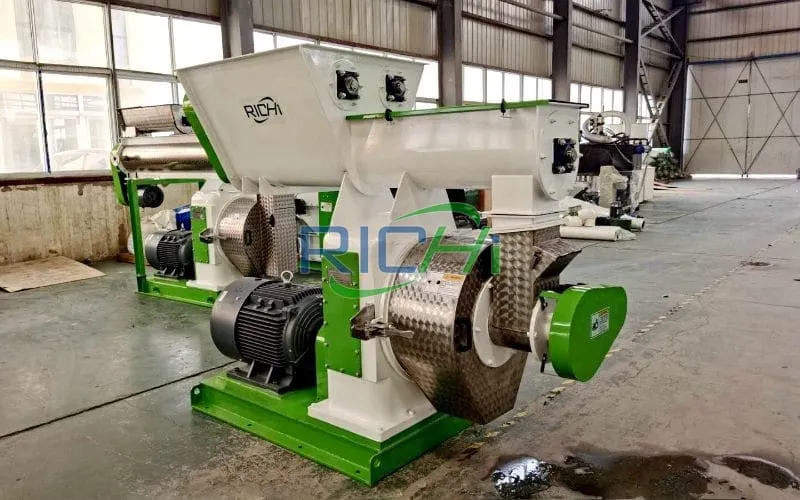
This is a project regarding an RDF pellet machine in Brazil. You don’t see many recycling cooperatives in Brazil trying to make RDF pellets for industrial heat. But waste is everywhere in this country, and energy costs are only going up. A few months ago, we got a call from a mid-sized waste recovery cooperative in the state of São Paulo.
They had been collecting and sorting municipal solid waste for years—plastics, paper, textiles, and some wood offcuts. Their old business model was simple: bale recyclables, sell to bigger processors, and send the rest to landfills. But landfill fees in Brazil have jumped nearly 40% over the last two years. That changed everything.
They started looking into RDF (Refuse-Derived Fuel) technology. Not a full sorting and shredding line—that would cost millions. They just wanted one reliable machine to turn their pre-shredded waste into uniform fuel pellets. That’s when they found our RDF pellet machine for thermal energy applications.
They didn't need a conditioner or a full mixing system. Their feedstock was already dried to about 15% moisture, coming from a simple rotary drum drier they had rigged up themselves. What they lacked was a consistent way to densify that material into something industrial boilers would actually accept.
Name:
RDF fuel pellet mill
Country:
Brazil
Date:
2025
Capacity:
1.0 - 1.2 tons per hour
Model:
MZLH420
Main Motor Power:
90kW
Raw Materials:
Paper and cardboard, Plastics
Pellet diameter:
12mm
Here’s the thing. This cooperative already owned a primary shredder and a magnetic separator. They had a small hammer mill for size reduction. They even had an old conveyor system.
Buying a complete pellet production line would mean throwing away half their existing equipment. That doesn’t make financial sense—especially for a cooperative watching every real. So they went shopping for a single RDF pellet press. Just the machine that forms the pellets. Everything else they would adapt or keep using.
They told me, “We don’t need a turnkey solution. We just need something that can handle mixed waste without jamming every ten minutes.” That’s exactly why they came to us. Most European machines they looked at were too sensitive to contaminants.
One Italian brand required feedstock with less than 5% inorganics. Their material had maybe 10-12% glass fines and tiny metal bits no magnet could catch. Our ring-die design handles that better. Not perfectly—nothing handles metal perfectly—but better.
Let me be specific here. Brazil generates about 80 million tons of urban waste annually, and only a small fraction is recycled. This cooperative processes roughly 50 tons per day of incoming waste. From that, they extract:
The RDF feedstock they are feeding into our MZLH420 model is a blend of rejected non-recyclable plastics, textile fibers, and fine wood particles. All of it is pre-shredded to under 30mm. They add no binder.
The natural lignin in the wood fibers and the thermoplastic nature of the plastics help bind the pellets. Moisture content stays between 12% and 16%. Any wetter, and the pellets fall apart. Any drier, and the machine produces too much dust.
Pellet size? They set the die to make 12mm diameter pellets. That’s the sweet spot for small industrial boilers in the region. Too small, and the pellets burn too fast. Too large, and they don’t fully combust in the grate furnaces used by local brick kilns and food processing plants.
They ordered two units of the MZLH420 RDF fuel pellet machine. No conditioner, no extra fat or liquid addition system. Just the bare machine with the forced feeder. Why two units? Redundancy. RDF production is not like wood pelleting. You get downtime.
A piece of metal sneaks through, the die cracks, you stop. With two machines, they can run one while servicing the other. Their target output is 1.0 to 1.2 tons per hour per machine, but realistically, running mixed waste, they see about 0.8 to 1.0 tons per hour. They run 16 hours a day, two shifts. That gives them roughly 25-30 tons of RDF pellets daily.
Specs for the MZLH420 RDF pellet machine they purchased:
The installation is in the industrial outskirts of São Paulo, near the city of Guarulhos. That area is a nightmare for waste disposal. But it’s also full of factories that need heat. Their pellets go to:
This is not a power plant. This is distributed industrial heat. That’s the real market for RDF pellets in Brazil right now. Large-scale waste-to-energy incinerators are almost nonexistent here. But tens of thousands of boilers in factories? Those are hungry for cheap fuel.
The cooperative compared three options:
They chose us because of the forced feeder. RDF material is fluffy and doesn’t gravity-feed well. Without a forced feeder, you get bridging and inconsistent pellet quality. That was the deciding factor. The local machines didn’t even offer that option.
Also, we provided something no one else did: a die and roller setup guide specifically for high-plastic-content RDF. Too many roller adjustments, and the plastic smears instead of compresses.
Too loose, and the pellets are crumbly. We spent two days on-site during commissioning, dialing in the gap and the die compression ratio. The client later told me that guide alone saved them weeks of trial and error.
Both machines were shipped from our Qingdao factory in June. The nearest major port to São Paulo is the Port of Santos, about 70 km away. That’s Brazil’s busiest container port, handling everything from soybeans to machinery.
The total sea freight took 38 days including a transshipment in Singapore. We packed each MZLH420 in two reinforced 40-foot high-cube containers—one for the main body, one for the ring die, motor, and feeders. Customs clearance at Santos took longer than expected: 12 days. Brazil is not fast with import paperwork.
The cooperative hired a local customs broker who specialized in agricultural and industrial machinery. That made the difference.
I talked to their plant manager last week. He told me three things he wished he had known before buying:
First, ring die wear is faster with RDF than with wood. The mixed material contains silica from dirt and glass fines. Their first die lasted only 900 hours. A wood pellet die might go 2,000 hours. They now keep two spare dies in stock and rotate them every 400 hours for maintenance.
Second, the forced feeder variable frequency drive (VFD) is critical. At startup, they run the feeder slow to avoid overloading the main motor. As the die warms up, they increase speed. Without the VFD, they had constant jams.
Third, pellet cooling matters more than they thought. Right out of the die, their RDF pellets are at 85-90°C. If you bag them hot, moisture condenses and pellets turn to mush. They built a simple counterflow cooler from a used grain auger and a fan. Not pretty, but it works.
Let me be honest. Our MZLH series was originally designed for biomass—sawdust, rice husks, straw. For standard RDF pellet mill in Brazil applications, we had to adapt. The main changes we recommend for RDF buyers:
The cooperative bought their own magnetic separator from a local supplier. We helped them position it. That single decision reduced die cracks by 80%.
The machine isn't perfect for RDF. No machine is. But it’s robust. The main bearing housing is oversized compared to Chinese competitors.
The gearbox uses hardened helical gears, not cheap spurs. When they inevitably push too much wet material through, the shear bolt on the feeder breaks before the gearbox does. That’s a feature, not a flaw.
About two months after commissioning, I called to check in. Their production manager, let’s call him Carlos (not real name), told me this:
“Look, the first week was hell. We broke two shear bolts on day one because our feedstock had hidden metal wires from shredded tires. Once we added the magnet, things settled. Now we run six days a week. The machines stop maybe once per shift for cleaning the die. But we expected that.
What surprised us is the power draw. The 90kW motor pulls close to full load when we feed plastic-rich material. We upgraded our electrical panel after the first month. That’s on us, not on RICHI Machinery.
But would we buy again? Yes. Our fuel cost is now 180 reais per ton of pellet. Natural gas here is 320 reais per equivalent energy. Even with maintenance and die changes, we save money. And the city pays us a small tipping fee to take the waste. So we get paid twice. That’s the real business.”
He also mentioned that a cement plant in Minas Gerais is testing their pellets as a partial coal replacement. If that works, they will need a third machine.
Here’s what I tell customers in Brazil, Colombia, or Mexico who call about RDF. Don’t buy a full line if you already have shredding and drying. Buy the best RDF pellet machine you can afford, adapt your existing equipment, and start small.
The technology is not magic. You will have downtime. You will curse when a bolt breaks. But the economics work if your waste is cheap and your local fuel is expensive.
The cooperative in São Paulo proved that. They didn’t wait for a perfect setup. They bought two MZLH420s, learned by doing, and now supply RDF pellets for thermal energy to factories that used to burn fossil fuels. That’s a win for their business and a win for the environment.
If you are sitting on a mountain of waste and paying too much for energy, give us a call. We can talk about whether a single RDF pellet machine makes sense for your material.
No pressure. No perfect-line sales pitch. Just honest advice from people who have seen ring-die machines chew through plastics, textiles, and wood in real-world conditions.
Having the right mix of reliable, high-quality pellet machine and pelletizing systems and expert support is essential to your success. Watch how our end-to-end feed pellet plant solutions have helped our customers optimize their performance.
Our customized and future-proofed turnkey pellet plant solutions is designed with you at the core. From vision to reality and beyond, our team stays connected with yours. Giving you peace-of-mind with an expert at your side.
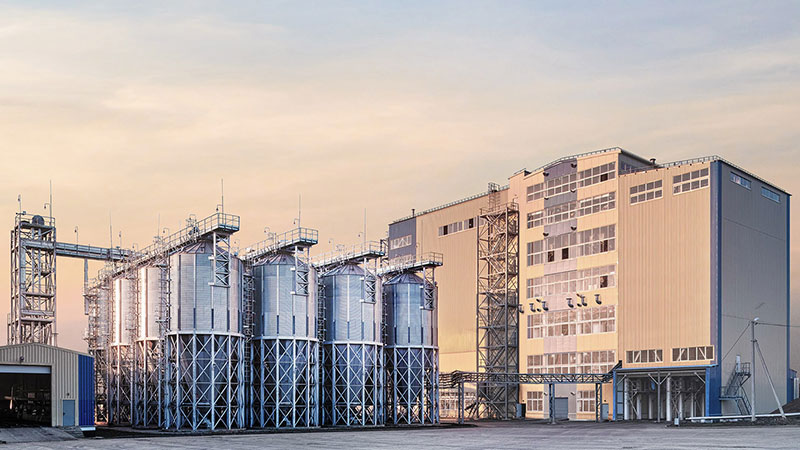
At RICHI, we go beyond project completion. With RICHI Servicee, we’re your dedicated partners in success. Count on us for expert guidance, minimal downtime, and optimized productivity. Choose RICHI for unmatched service and support.
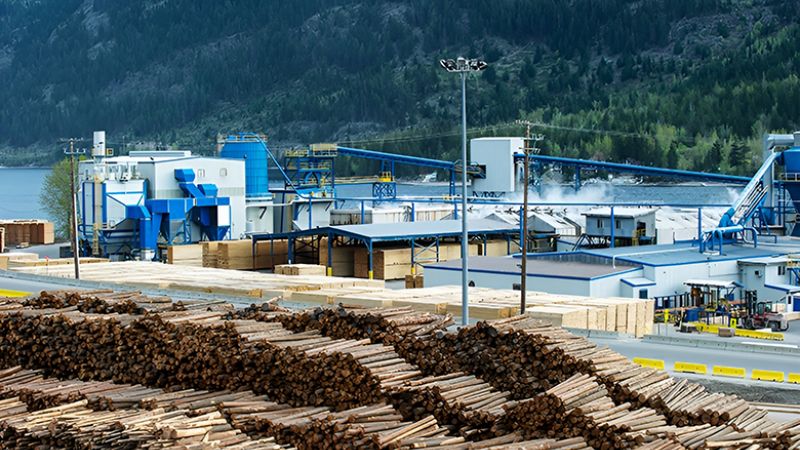


Meet global product demands and quality standards with industry-leading pellet plant design, engineering, equipment, and construction services for pellet processors.

Your Partner Beyond Project Completion
2000+ cases
RICHI is the leading designer, manufacturer and builder of pellet plants in the world, completing over 2000 projects in 140 countries across 6 continents.
Read More
Increase plant productivity, profitability, and safety by integrating high quality equipment into your pellet production line. Over the years, RICHI has become China's top pellet equipment manufacturer. At the same time, RICHI has established valuable partnerships with the world's leading component and raw material manufacturers to bring you the best there is in technology, automation, and efficiency in pelleting plant machinery.

For nearly 30 years, RICHI has been providing best-in-class pellet plant equipment and services to clients across a variety of industries, sizes, and needs. We pride ourselves on the knowledge and skill that each team member possesses – from our technical sales team to our process design engineers. You can count on RICHI Machinery to take your operation to the next level of innovation, quality, and success.
Need help with your pellet manufacturing plant project? Contact us today.
ANIMAL FEED
BIOMASS
WOOD
ORGANIC FERTILIZER
AQUA FEED
CAT LITTER
MUNICIPAL WASTE RECYCLING
SPECIAL PELLET PRODUCTION
RICHI Machinery continues to deliver world class pellet mill equipment, pellet plant engineering and project solutions that add value to our customers in the animal feed, wood waste, agriculture waste, organic fertilizer, cat litter and special pellet products industries. Throughout the years, we RICHI Machinery have built strong brand, becoming industry-leading pellet machine manufacturer. We value integrity, promise quality, and prioritize your success.
Learn MoreWith our expert team, we precisely implement your process engineering requirements in pellet mill and pelletizing plant systems. No matter which industry you’re in – we understand your needs and deliver solutions that meet the highest standards.
At RICHI, quality comes first. Our pellet making machine and related pellet line equipment undergo rigorous quality controls to ensure they meet the highest standards. Rely on products that are durable, safe, and efficient.
With decades of experience in pellet machine and pellet production line production, we have earned a reputation as a trusted partner in various industries. Our expertise allows us to cover a wide range of applications.
Not only do we offer premium pelleting equipment, but we are also experts at designing, building, installing, and maintaining facilities from the ground up. Our expertise is within pellt plant process design, discovering the most efficient, productive, and profitable way to handle your materials in an end-to-end cycle.
○ RICHI MACHINERY
Keeping in touch with us is an effective way to solve all your problems. If you have any needs or questions, please leave your contact information, then RICHI technical consultants will send design, quotation, videos to your mailbox. You can also contact us directly via WhatsApp: +86 13838389622
Copyright©2015-2026 by HENAN RICHI MACHINERY CO., LTD. All rights reserved.