
This pig manure poultry litter fertilizer production plant in France was built by a Breton agricultural cooperative facing the classic challenge of the region: too much manure in a nitrate-sensitive zone, and growing demand for organic fertilizers from farmers.
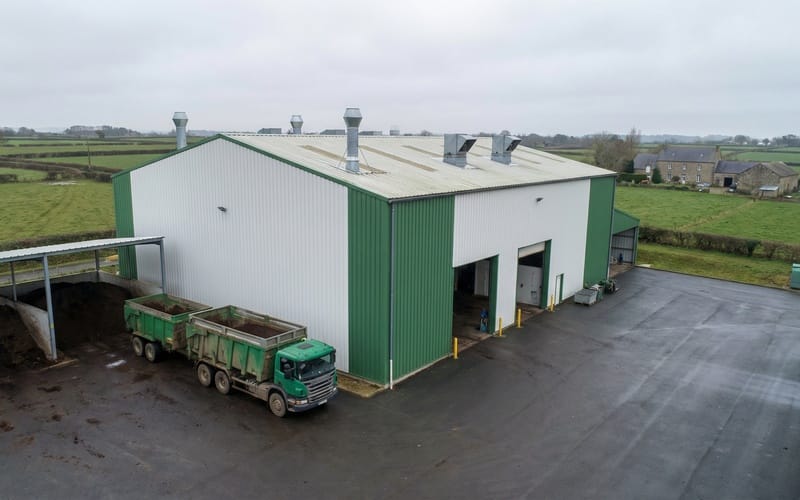
This pig manure poultry litter fertilizer production plant in France was built by a Breton agricultural cooperative facing the classic challenge of the region: too much manure in a nitrate-sensitive zone, and growing demand for organic fertilizers from farmers.
The 15,000-ton-per-year facility processes pre-fermented pig manure and poultry litter from 150 member farms, blending it with local straw and using a chemical drying agent instead of thermal energy to reduce moisture from 45% to below 30% without the high operating costs of gas-fired dryers.
The €700,000 turnkey plant, supplied by RICHI, produces 3-5mm granulated organic fertilizer in 40kg bags, targeting France's large arablesector, premium viticulture markets in Bordeaux and Champagne, and potentially export to other EU countries under the new Fertilizing Products Regulation.
The organic fertilizer production project solves multiple problems at once: it gives the cooperative's farmers a responsible outlet for manure that would otherwise require expensive long-distance transport, it produces a certified organic fertilizer that competes with imported products on price and freshness, and it positions the cooperative to benefit from France's policy-driven shift away from mineral fertilizers—the Stratégie Nationale Bas Carbone targets a 26% reduction by 2030.
With Brittany generating a surplus of over 200,000 tonnes of nitrogen annually from livestock operations, this 15,000-ton plant is a model that could be replicated across the region, turning a waste disposal headache into a revenue stream while improving local environmental outcomes.
Name:
Turnkey Organic Fertilizer Production Plant
Country:
France
Date:
2025
Capacity:
6 tons/hour
Annual output:
15,000 tons/year
Raw Materials:
Pig manure (pre-fermented), poultry litter, straw
End Products:
3-5mm granulated organic fertilizer
Packaging specifications:
40kg bags
I got the first inquiry in early 2024. A French cooperative in Brittany—let's just say they're in the heart of pig and poultry country—had a problem. Actually, they had several problems, all connected.
Brittany produces a lot of meat. Something like 55% of French pigs come from this region, plus millions of poultry. That means a lot of manure. Under the EU Nitrates Directive, there are strict limits on how much nitrogen you can spread per hectare. The cooperatives' members were hitting those limits, and the surplus manure was becoming a logistical nightmare. They were trucking it hundreds of kilometers to other regions, paying a fortune, and still getting complaints about odors.
At the same time, French farmers are buying more organic fertilizer every year. The market share of organic fertilizers in France hit 42.5% of total fertilizer volume by 2022, up from 33% a decade earlier. The government's "Stratégie Nationale Bas Carbone" targets a 26% reduction in mineral fertilizer use by 2030. So there's this perfect storm: too much manure in one place, growing demand for organic fertilizer everywhere else.
The cooperative had been thinking about this for years. They knew about Fertival, another Breton company that's been making organic fertilizers since 1993 and now produces 50,000 tons annually. They figured if Fertival could do it, they could too.
They called us because they'd seen our work in other European countries. We'd just finished a 30 t/h organic fertilizer plant in Romania, and they'd heard good things through the grapevine. The brief was simple: design a pig manure poultry litter fertilizer production plant in France that could take their members' waste and turn it into a saleable product. 15,000 tons per year. No more, no less. They wanted to start at a manageable scale before thinking bigger.
The site is in the Côtes-d'Armor, surrounded by rolling hills and farms. You'd never know it's an industrial site from the road—the buildings are set back, and there's a green buffer. The French are strict about that.
| Area | Dimensions | Function |
|---|---|---|
| Production Building | 4,250 m² (single story, steel) | Fermentation, crushing, granulation, screening, packaging |
| Office/Admin Building | 150 m² | Staff facilities, QC lab |
| Raw Material Storage | Within production building | Straw, additives (bagged) |
| Finished Product Storage | Within production building | 40kg bagged fertilizer |
| Access Road | Paved, with weighbridge | Delivered by truck |
The key design decision: we don't store raw manure on site. The client brings in pre-fermented manure from the farms. They have a network of collection points where the initial anaerobic fermentation happens. What arrives at our plant is already 50% moisture, partially stabilized, and much less smelly than fresh manure. This was a requirement from the local prefecture—no fresh manure storage allowed in this catchment area.
The production building is fully enclosed. We learned from past projects in Europe that open-sided sheds don't cut it here—the neighbors will complain, and the inspectors will cite you. All air from the fermentation area is extracted and treated.
The cooperative has about 150 member farms supplying material. The ratios are pretty consistent:
| Material | Annual Quantity (tons) | Source | Moisture | Storage |
|---|---|---|---|---|
| Pig manure (pre-fermented) | 8,820 | Member pig farms | ~50% | Direct to fermentation |
| Poultry litter | 3,780 | Member poultry farms | ~35% | Direct to fermentation |
| Straw | 5,400 | Local crop farms | ~15% | Bagged, dry storage |
| Bio-deodorizer | 10 | External supplier | - | Bagged |
| Mianhongsu (drying aid) | 50 | External supplier | - | Bagged |
| Bacillus subtilis | 7.5 | External supplier | - | Bagged |
| Total Input | ~18,067 |
Yield: About 15,000 tons of finished organic fertilizer per year. The weight loss is mostly water evaporation during processing.
The pig manure comes from farms using the TRAC system—a scraper system under slatted floors that separates urine from solids immediately. This reduces ammonia emissions at the farm level and means the manure we receive has higher solids content and less odor. The French are ahead of many countries on this technology—over 40 installations already operational in Brittany.
The poultry litter is a mix of manure and bedding material (straw, wood shavings). It's drier than pig manure and has higher fiber content, which helps with the carbon-to-nitrogen ratio in the final product.
The client's original equipment list was basic—they'd priced some local fabricators who offered "custom" machines at attractive prices. We sat down with them in Rennes and walked through the process. By the end, they'd agreed that proven technology was worth the premium. Here's what we supplied:
| Equipment | Model | Quantity | Power | Function |
|---|---|---|---|---|
| Compost Turner | Span 18m | 2 units | 22 kW each | Aerobic fermentation mixing |
| Mixer | Custom | 1 unit | 15 kW | Blending ingredients pre-granulation |
| Crusher | Custom | 1 unit | 30 kW | Size reduction of fermented material |
| Granulator | Custom | 1 unit | 45 kW | Forming pellets (wet granulation) |
| Packaging Machine | Custom | 1 unit | 7.5 kW | 40kg bag filling/sealing |
| Front-end Loaders | - | 2 units | - | Material handling |
| Forklifts | - | 2 units | - | Pallet handling |
| Weighbridge | 100t capacity | 1 unit | - | Truck weighing |
| Dust Collection System | Bag filter | 1 system | 15 kW | Process dust control |
Total installed power: approximately 150 kW
We also supplied the drying aid ("Mianhongsu") dosing system. This is clever—instead of thermal drying (which is energy-intensive and expensive in France with current gas prices), we use a chemical drying agent that binds with free water to form crystalline water. It drops moisture from 45% to below 30% without heat. The client was skeptical until we ran a pilot test with their material. It worked.
The compost turners are the workhorses. They run on rails along the 100m fermentation lanes, slowly moving through the pile, aerating and mixing. The client runs them twice per day during the 4-7 day active fermentation phase.
Step 1 – Receiving and Fermentation
Trucks arrive at the weighbridge, then back into the production building. They dump pre-fermented manure into the fermentation lanes—two lanes, each 100m long, 20m wide. Total pile depth about 1.5m.
We mix in straw at a ratio of roughly 7:3 manure:straw by weight. The straw adds carbon and structure. The compost turners run daily, moving slowly through the pile, flipping material to introduce oxygen. Temperature climbs to 60-65°C within days—hot enough to kill pathogens and weed seeds.
This is where the bio-deodorizer gets applied. It's a microbial product that suppresses odor-forming bacteria. We spray it on during turning. The building is under negative pressure, so any escaping air is captured, but honestly, with the deodorizer and the fact we're using pre-fermented manure, the smell is minimal.
Fermentation takes 4-7 days. By the end, the material has stabilized—it doesn't heat up anymore when turned, and it has that earthy smell of good compost.
Step 2 – Crushing
Fermented material goes through the crusher. This breaks up any clumps and reduces particle size for granulation. The material at this stage is about 45% moisture, so it's damp but not wet. Crushing is enclosed with dust extraction.
Step 3 – Granulation
This is the heart of the organic fertilizer production line. The granulator uses wet granulation—we add a small amount of water or steam to help the fines agglomerate. The rotating drum rolls the material into spherical pellets, typically 3-5mm diameter. It's gentle compared to extrusion, which is good because we don't want to damage the microbial life we'll add later.
Step 4 – Drying (Chemical)
Instead of a rotary dryer (which would require a burner, fuel, and an air permit), we add "Mianhongsu"—the drying aid. It's a powder that we meter into the granulator discharge. The chemistry: it binds with free water molecules to form crystalline hydrates. Moisture drops from 45% to under 30% in about 24 hours, just sitting in a holding bin. No energy input.
The client was worried about this step—would it affect fertilizer value? We tested samples in a French lab. NPK values were unaffected, and the product met all the specs in NY 884-2012 (the Chinese standard they referenced) and, more importantly, the French NFU 42-001 standards for organic fertilizers.
Step 5 – Microbial Inoculation
We add Bacillus subtilis at this stage—about 0.05% by weight. It's mixed in gently to distribute evenly. Bacillus is a beneficial soil bacterium that suppresses pathogens and promotes plant growth. For the French market, having a bio-enhanced product is a selling point, especially for vegetable growers and vineyards.
Step 6 – Screening and Packaging
The material goes through a vibrating screener. Oversize pellets (>5mm) get crushed and recycled. Fines (<2mm) go back to the granulator. On-spec product goes to the packaging machine, which fills 40kg bags at about 4 bags per minute. Bagged product gets palletized and moved to the finished product storage area (within the main building).
| Parameter | Target | Test Method |
|---|---|---|
| Organic matter (dry basis) | ≥40% | Loss on ignition |
| Total N+P2O5+K2O | ≥5.0% | Kjeldahl + spectrometry |
| Moisture | ≤30% | Gravimetric |
| pH | 5.5-8.5 | pH meter |
| Particle size | 3-5mm (90% min) | Sieve analysis |
| Heavy metals | Below EU limits | ICP-MS |
| Utility | Annual Consumption | Notes |
|---|---|---|
| Electricity | 60,000 kWh | Process equipment, lighting, fans |
| Water | 416 m³ | Staff use, occasional process addition |
| Fuel | None | No thermal drying |
The water comes from a well on site—the previous landowner had a agricultural water right that transferred with the sale. We had it tested; quality was fine for process use and sanitation.
Power is the main operating cost. At French industrial rates (about €0.12-0.15/kWh), that's €7,200-9,000 per year. Not nothing, but tiny compared to what a thermal dryer would cost to run.
France has strict environmental rules, especially in Brittany where nitrate zones are heavily regulated. We designed for compliance with:
Dust from crushing and granulation is captured by the baghouse and returned to the process. The exhaust is clean enough that we didn't need a tall stack—just a roof vent.
Zero process discharge. The only moisture leaves as:
Staff facilities have a septic tank ("fosse septique"). The local commune requires periodic pumping by a licensed contractor.
| Waste | Source | Quantity | Disposal |
|---|---|---|---|
| Dust collector fines | Baghouse | ~5 t/yr | Recycled to granulator |
| Oversize pellets | Screener | ~10 t/yr | Crushed and recycled |
| Used oil | Maintenance | 200 L/yr | Hazardous waste contractor |
| Packaging waste | Incoming bags | 2 t/yr | Recycled |
| General refuse | Staff | 1 t/yr | Municipal collection |
The hazardous waste storage (5 m²) has a sealed concrete floor and secondary containment, per French regulations. A licensed hauler takes the oil and oily rags every six months.
Soil and Groundwater Protection: We did a full hydrogeological study for the permit. The site has:
The client's original budget was €700,000 total. They got some grant funding—€300,000 from French national programs supporting circular economy projects—and put up the rest themselves.
| Category | Cost (EUR) | Notes |
|---|---|---|
| Land (lease) | - | Cooperative-owned land |
| Site preparation | €120,000 | Grading, foundations, drainage |
| Building construction | €250,000 | 4,250 m² steel structure + office |
| RICHI equipment (FOB Qingdao) | €210,000 | Turners, crusher machine, fertilizer granulator machine, mixer machine, packaging, dust control |
| Shipping (Qingdao to Le Havre) | €28,000 | 40' containers |
| Customs clearance & inland freight | €12,000 | Le Havre port to Brittany site |
| Installation (local + RICHI supervision) | €45,000 | 6 weeks onsite |
| Electrical installation | €25,000 | Transformers, cabling, panel connection |
| Permitting & consulting | €10,000 | ICPE application, hydrogeological study |
| Total Project Cost | €700,000 |
The equipment cost—€210,000 FOB Qingdao—was about 60% of what European suppliers quoted for comparable capacity. Shipping to Le Havre port added €28,000. From there, trucks hauled everything to site—about a 4-hour drive west.
We shipped in February 2024, and the containers arrived in Le Havre in late March. Customs clearance took longer than expected—about two weeks—because the French authorities wanted detailed specs on the compost turners. We'd sent the paperwork ahead, but there was still a delay. Lesson learned: allow extra time for French bureaucracy.
France is the largest agricultural producer in the EU, with 49% of the country's land in agriculture. The organic fertilizer market is growing steadily, driven by:
Brittany context: manure surplus about 200,000 tonnes of nitrogen and 120,000 tonnes of phosphorus generated annually from 1,100 farms. Turning that surplus into exportable fertilizer is environmentally necessary.
Client targets:
15,000 ton/year capacity is modest—Fertival produces 50,000 tons annually—but it's a start. Cooperative plans to expand if successful.
Tip: start permitting early. Once permit is obtained, equipment can be at Le Havre in 5-6 weeks. Rest is turning manure into money.
Having the right mix of reliable, high-quality pellet machine and pelletizing systems and expert support is essential to your success. Watch how our end-to-end feed pellet plant solutions have helped our customers optimize their performance.
Our customized and future-proofed turnkey pellet plant solutions is designed with you at the core. From vision to reality and beyond, our team stays connected with yours. Giving you peace-of-mind with an expert at your side.
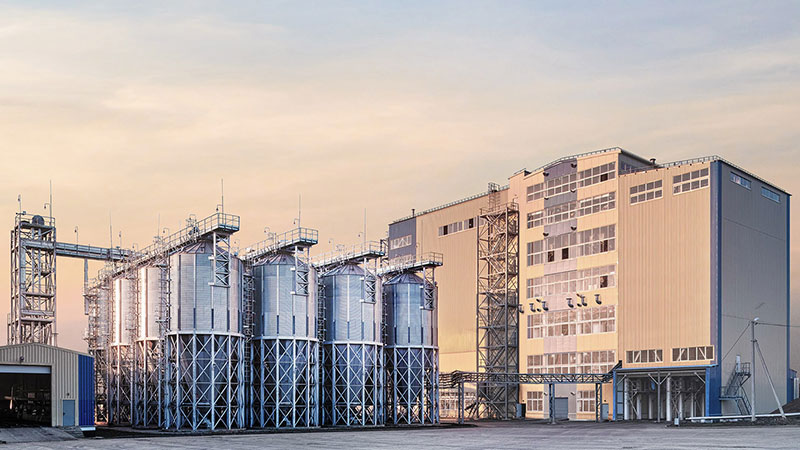
At RICHI, we go beyond project completion. With RICHI Servicee, we’re your dedicated partners in success. Count on us for expert guidance, minimal downtime, and optimized productivity. Choose RICHI for unmatched service and support.
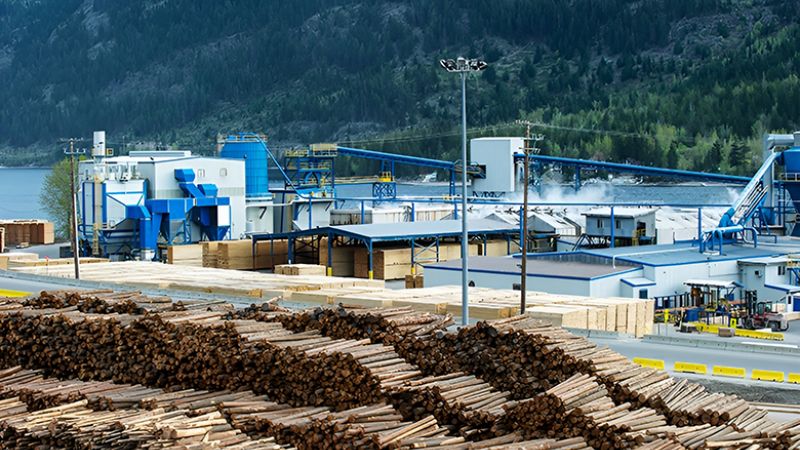

Meet global product demands and quality standards with industry-leading pellet plant design, engineering, equipment, and construction services for pellet processors.

Your Partner Beyond Project Completion
2000+ cases
RICHI is the leading designer, manufacturer and builder of pellet plants in the world, completing over 2000 projects in 140 countries across 6 continents.
Read More
Increase plant productivity, profitability, and safety by integrating high quality equipment into your pellet production line. Over the years, RICHI has become China's top pellet equipment manufacturer. At the same time, RICHI has established valuable partnerships with the world's leading component and raw material manufacturers to bring you the best there is in technology, automation, and efficiency in pelleting plant machinery.

For nearly 30 years, RICHI has been providing best-in-class pellet plant equipment and services to clients across a variety of industries, sizes, and needs. We pride ourselves on the knowledge and skill that each team member possesses – from our technical sales team to our process design engineers. You can count on RICHI Machinery to take your operation to the next level of innovation, quality, and success.
Need help with your pellet manufacturing plant project? Contact us today.
ANIMAL FEED
BIOMASS
WOOD
ORGANIC FERTILIZER
AQUA FEED
CAT LITTER
MUNICIPAL WASTE RECYCLING
SPECIAL PELLET PRODUCTION
RICHI Machinery continues to deliver world class pellet mill equipment, pellet plant engineering and project solutions that add value to our customers in the animal feed, wood waste, agriculture waste, organic fertilizer, cat litter and special pellet products industries. Throughout the years, we RICHI Machinery have built strong brand, becoming industry-leading pellet machine manufacturer. We value integrity, promise quality, and prioritize your success.
Learn MoreWith our expert team, we precisely implement your process engineering requirements in pellet mill and pelletizing plant systems. No matter which industry you’re in – we understand your needs and deliver solutions that meet the highest standards.
At RICHI, quality comes first. Our pellet making machine and related pellet line equipment undergo rigorous quality controls to ensure they meet the highest standards. Rely on products that are durable, safe, and efficient.
With decades of experience in pellet machine and pellet production line production, we have earned a reputation as a trusted partner in various industries. Our expertise allows us to cover a wide range of applications.
Not only do we offer premium pelleting equipment, but we are also experts at designing, building, installing, and maintaining facilities from the ground up. Our expertise is within pellt plant process design, discovering the most efficient, productive, and profitable way to handle your materials in an end-to-end cycle.
○ RICHI MACHINERY
Keeping in touch with us is an effective way to solve all your problems. If you have any needs or questions, please leave your contact information, then RICHI technical consultants will send design, quotation, videos to your mailbox. You can also contact us directly via WhatsApp: +86 13838389622
Copyright©2015-2026 by HENAN RICHI MACHINERY CO., LTD. All rights reserved.