
This is a project about an organic waste granule and powder fertilizer plant in Indonesia. The client’s supply chain was already in place, which was a huge advantage. They had agreements with poultry farms, rice mills, and mushroom growers across the region.
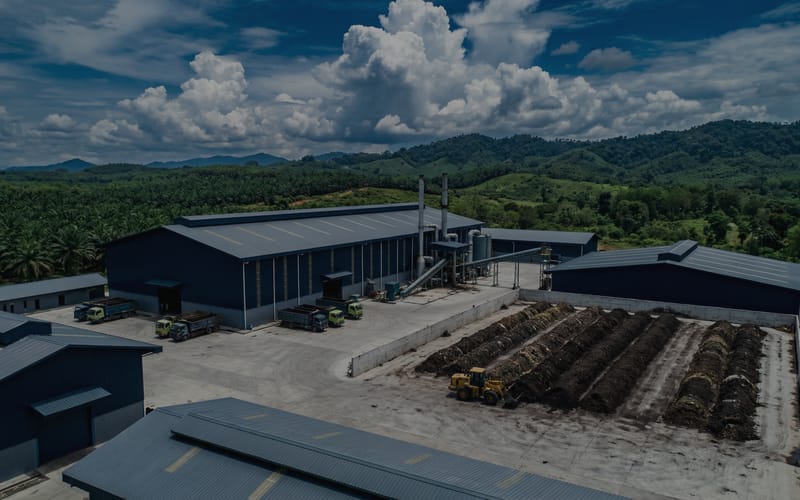
This is a project about an organic waste granule and powder fertilizer plant in Indonesia. The first time we spoke with the client—a mid-sized agricultural services company based near Surabaya—they had already done the math on waste volumes. East Java generates enormous amounts of agricultural residue and livestock manure, and they’d watched small-scale compost operations struggle with inconsistent quality and limited market reach. Their question wasn’t whether there was enough raw material.
It was whether a single facility could economically process mixed organic waste into both powder and granulated fertilizer at a scale that made sense for commercial agriculture. That’s what led to the conversation about a 15–20 t/h organic waste granule and powder fertilizer plant in Indonesia.
They had secured a 20,000 m² site within an existing industrial park, and they wanted to move fast. But fast doesn’t mean simple when you’re dealing with feedstocks ranging from wet chicken manure to dry corn stalks. Over the next several months, we worked through the engineering challenges step by step, starting with a clear look at what they had to work with.
Name:
Organic fertilizer factory
Country:
Indonesia
Date:
2025
Capacity:
15-20T/H
Raw material:
Crop residues, Poultry & livestock manure
Control Mode:
Automatic
final product:
granule and powder
Guiding Price:
$1.6 million
The client’s supply chain was already in place, which was a huge advantage. They had agreements with poultry farms, rice mills, and mushroom growers across the region. But the consistency of those materials varied widely, and that had to be built into the process design from day one.
Poultry manure from small farms came in at around 70% moisture, often mixed with rice hulls. Corn stalks and rice straw were drier but required size reduction before they could be blended effectively. Mushroom growing substrate—spent compost—had a different texture and nutrient profile altogether.
The client also had access to slaughterhouse bone meal and mineral-based materials like humic soil from local suppliers. The trick was designing a process that could take all of this and produce a uniform output, whether the final product was powder or granules.
Here’s what the annual feedstock breakdown looked like after we helped them quantify their supply contracts:
| Raw Material | Annual Quantity (tons) | Typical Moisture Content | Source / Notes |
|---|---|---|---|
| Crop residues (corn stalks, rice straw) | 70,000 | 70% | Pre-dried by farmers; delivered baled |
| Poultry & livestock manure | 90,000 | 70% | Mostly chicken; some cattle; pre-separated |
| Mushroom cultivation waste | 10,000 | 50% | Spent substrate from local growers |
| Bone meal (processed) | 10,000 | 25% | From slaughterhouses; pre-crushed |
| Humic soil / mineral source | 10,000 | 14% | Mined from local deposits |
| Soybean residue (okara) | 10,000 | 14% | From tofu and soy milk producers |
| EM microbial inoculant | 300 | — | Powder; 200 billion active bacteria/g |
| Packaging materials | 4 million bags | — | Standard 25kg and 50kg woven sacks |
| Coating additives | 50 | — | For granule protection |
| Macro-elements (N-P-K) | 300 | — | For blended fertilizers |
| Micro-elements (Ca, Mg, Zn, etc.) | 300 | — | Custom blends for specific crop needs |
| Organic adjuvants | 1,000 | — | Amino acid solutions |
One of the first things we discussed was the variability in manure quality. The client had been using a simple windrow method for their small-scale operation, and they’d noticed that batches from different farms produced different results. We explained that at 15–20 tons per hour, you can’t afford to guess.
We recommended they set up a simple testing protocol at receiving—moisture content and basic N-P-K spot checks—so they could adjust the blending ratios before material ever entered the main processing line. That became part of the final design.
The site was a former industrial warehouse complex, and the client had already leased four main buildings. Our job was to figure out how to fit a complete processing operation—receiving, fermentation, granulation, drying, cooling, screening, and packaging—into the existing structures without major new construction.
After walking the site (virtually, initially, then with our local partner), we settled on a layout that used the buildings for distinct functions:
One layout detail that made a difference: we positioned the liquid fertilizer production upstairs in building 15, directly above the granulation line. That allowed them to gravity-feed liquid additives into the mixing stages below, reducing pump requirements and simplifying maintenance.
The client had seen other facilities try to run both powder and granulated products on the same equipment, and they’d seen the compromises—either the powder line was underutilized or the granules were inconsistent. We approached it differently: a shared front end (fermentation and initial processing) with dedicated lines for each product type after that point.
Raw materials were weighed and mixed according to daily moisture and nutrient tests. The blend was loaded into fermentation channels—about 15 to 20 days in the primary phase, with turning every two days. Temperature monitoring was manual at first (they wanted to keep initial costs down), but we installed probes so they could add automated monitoring later.
The forced aeration floor maintained oxygen levels and controlled odor. During fermentation, moisture dropped from 70% to about 50%, ideal for moving to the next stage.
For powder products, fermented material went directly to crushing and screening. Because moisture was still relatively high (30–40% after final processing), dust generation was minimal. Process steps were straightforward:
About 80,000 tons per year of baseline powder product was the anchor output.
For granules, we installed a separate line that started with the same fermented material but added macro and micro elements for custom blends. The process was more complex:
Two-stage drying gave finer control over temperature and moisture, reducing risk of burning organic matter or creating hard clumps.
A simpler line but required clean conditions. Heated water mixed with adjuvants and macro/micro elements in stainless steel tanks, then cooled and packaged. Main challenge was dust control during powder additive handling—we specified a dedicated dust collection hood at the mixing station.
The client’s budget was around $1.6 million USD for equipment, which was realistic for this scale. We sourced about 70% from our facility, with the rest (motors, some conveyors) sourced locally to reduce lead times and simplify maintenance.
| Equipment | Quantity |
|---|---|
| Windrow turner (tracked) | 1 |
| Forced aeration system (blowers + piping) | 1 set |
| Front-end loader (50-type) | 4 |
| Equipment | Quantity |
|---|---|
| Crusher machine (hammer mill) | 2 |
| Rotary screener | 2 |
| Powder packaging machine (automatic) | 1 |
| Equipment | Quantity |
|---|---|
| Double-shaft mixer | 2 |
| Ring die organic fertilizer pellet machine | 2 |
| Rotary dryer (two-stage) | 2 |
| Cooler | 1 |
| Rotary screener | 2 |
| Coating drum | 1 |
| Micro-inoculant mixer | 1 |
| Crusher (for oversize) | 2 |
| Automatic bagging scale (double hopper) | 1 |
| Palletizer (high-level) | 1 |
| Equipment | Quantity |
|---|---|
| Automatic batching scale | 4 |
| Double-shaft mixer | 1 |
| Rotary drum granulator | 4 |
| Rotary dryer (two-stage) | 2 |
| Cooler | 1 |
| Rotary screener | 2 |
| Coating drum | 1 |
| Crusher (for oversize) | 1 |
| Packaging machine | 1 |
| Equipment | Quantity |
|---|---|
| Stainless steel mixing tanks (heated) | 2 |
| Micro-dosing systems | 3 |
| Liquid filling line | 1 |
| System | Location |
|---|---|
| UV photolysis + scrubber (DA001) | Building 17 |
| Gravity settling + scrubber (DA002) | Building 15 granule line |
| Gravity settling + scrubber (DA003) | Building 12 compound line |
| Local dust hoods | Liquid additive mixing areas |
The client initially questioned the need for three separate exhaust systems. We explained that each organic fertilizer production line had different emission profiles—fermentation building was primarily odor (ammonia, hydrogen sulfide), while granule lines had more particulate matter from drying and screening. Separating them allowed optimized treatment efficiency and lower operating costs.
Indonesia has its own standards for organic fertilizers, and we made sure the client understood what they needed to meet before equipment selection. Key references: SNI 7763:2018 for solid organic fertilizers and SNI 02-2801-1998 for compound fertilizers. These set limits on heavy metals (arsenic, cadmium, mercury, lead), pathogen counts, and minimum organic matter content.
The client’s biggest concern was heavy metal compliance, particularly from manure sources. We advised them to continue sourcing manure from farms that didn’t use high-metal feed additives, and built enough flexibility into blending to dilute any incoming material that tested high.
Odor control was another major consideration. The facility was located near a residential area on the edge of the industrial park, and the local government had made it clear that odor complaints would shut them down fast.
That’s why we specified negative pressure ventilation in the fermentation building and installed a UV + scrubber system rather than just a bio-filter. UV treatment breaks down complex odor molecules more effectively, especially for high-ammonia loads from poultry manure.
The client’s total project cost was around $2.8 million USD, broken down roughly as:
Feedstock was effectively free—they were charging tipping fees to farms that previously paid for disposal. Main operating costs included labor (25 people, 24-hour operation, 240 days/year), electricity (~$4,000/month), coal (~$2,500/month for dryers), maintenance (~$3,000/month), and microbial inoculant/additives tied to production volume.
Projected production costs: $45–55 per ton of finished product. Market prices for granulated organic fertilizer in Indonesia ranged $120–180 per ton, with premium microbial blends fetching $200+. At 100,000 tons annual capacity, payback looked like 2.5 to 3 years.
Water management was critical. The facility’s water use came from three main sources: process water for granulation (about 1,200 m³/year, incorporated into product), liquid fertilizer production (about 3,500 m³/year, also incorporated), scrubber makeup water (about 48 m³/year, blowdown applied to fermentation piles), and domestic water for staff (about 144 m³/year, treated and used for landscape irrigation). No process water was discharged—everything either went into product or was absorbed into fermentation.
To prevent leachate, we designed the fermentation floor with a slight slope and drainage channels. Policy: if incoming material was too wet, they’d increase the proportion of dry crop residues in the blend until moisture was below 60%, keeping a buffer stock of dry material at all times.
Installation took about four months, with our team spending the last six weeks on-site for commissioning and training. A few things came up that weren’t in the original plan:
The client’s project manager later told me the biggest surprise was how quickly the powder line hit full capacity—within two months they were running 15–18 tons per hour consistently. The granule line took longer (about four months) to dial in drying and coating parameters, but once dialed, they hit 20 tons per hour with no trouble.
Indonesia has a waste problem and a soil problem. Millions of tons of agricultural residue, livestock manure, and food processing waste are underutilized, while decades of intensive chemical fertilizer use have degraded organic matter across much of Java and Sumatra. Government programs push for a return to organic matter, but the supply chain isn’t mature yet.
A facility like this—a 15–20 t/h organic waste granule and powder fertilizer plant in Indonesia—sits right in that gap. It takes waste that would otherwise be burned or dumped and turns it into something farmers actually want to buy. Powder works for large plantations with existing spreaders. Granules appeal to smaller farmers needing concentrated, easy-to-handle material. Liquid opens up high-value horticulture markets.
The client’s long-term plan is to replicate this model in other provinces. They’ve already had inquiries from cooperatives in Central Java and Lampung. Economics work because raw materials are cheap and demand is growing. The main barrier has always been capital—equipment cost and the expertise to design a system that actually works with local materials.
That’s where we came in. We’ve done enough of these projects now to know what questions to ask upfront. Not just “what’s your throughput?” but “how does your manure change between wet and dry season?” and “who’s going to operate the dryer controls at 2 AM?” Those answers determine whether a line runs smoothly or becomes a maintenance headache.
If you’re looking at a similar project—whether in Indonesia or elsewhere in Southeast Asia—the starting point is always the same. Get your feedstock sorted first. Know what you have, how much of it, and how consistent it is. Then think about your market. Powder is cheaper to produce but sells for less. Granules cost more but command a premium. Liquid is the highest margin but most demanding in quality control.
From there, it’s about finding a partner who’s done this before. We’ve shipped equipment to Indonesia for years—everything goes from Qingdao to Tanjung Perak Port in Surabaya, about a 12-day sea transit. We’ve learned which equipment holds up in tropical conditions, how to design layouts that fit existing industrial buildings, and how to avoid the common mistakes.
The client we worked with on this project is now in their second year of operation. They’ve expanded raw material sourcing, added a second coating line, and are talking about exporting granulated product to Malaysia. They started with a vision of turning waste into something useful.
With the right process, that vision became a profitable business. If that sounds like where you want to be, let’s talk. We’ve got the engineering experience, the equipment, and the logistics network to make it happen.
Having the right mix of reliable, high-quality pellet machine and pelletizing systems and expert support is essential to your success. Watch how our end-to-end feed pellet plant solutions have helped our customers optimize their performance.
Our customized and future-proofed turnkey pellet plant solutions is designed with you at the core. From vision to reality and beyond, our team stays connected with yours. Giving you peace-of-mind with an expert at your side.
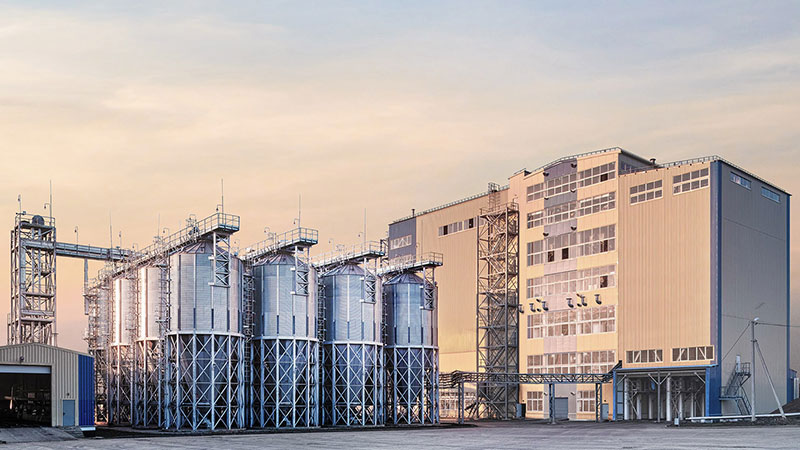
At RICHI, we go beyond project completion. With RICHI Servicee, we’re your dedicated partners in success. Count on us for expert guidance, minimal downtime, and optimized productivity. Choose RICHI for unmatched service and support.
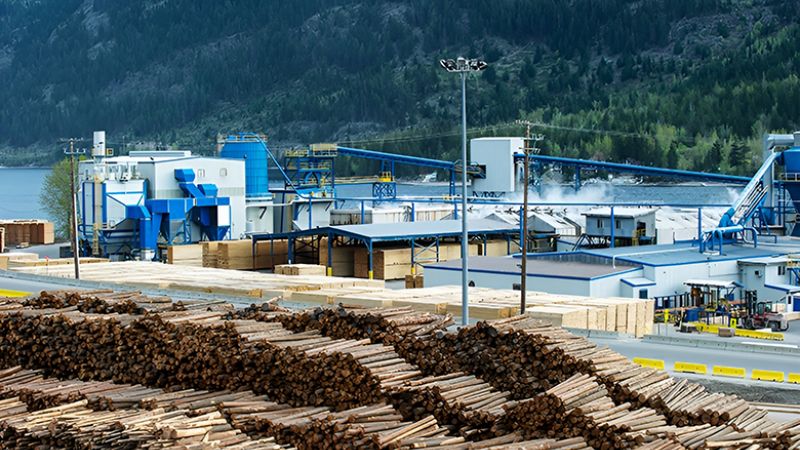


Meet global product demands and quality standards with industry-leading pellet plant design, engineering, equipment, and construction services for pellet processors.


Your Partner Beyond Project Completion
2000+ cases
RICHI is the leading designer, manufacturer and builder of pellet plants in the world, completing over 2000 projects in 140 countries across 6 continents.
Read More
Increase plant productivity, profitability, and safety by integrating high quality equipment into your pellet production line. Over the years, RICHI has become China's top pellet equipment manufacturer. At the same time, RICHI has established valuable partnerships with the world's leading component and raw material manufacturers to bring you the best there is in technology, automation, and efficiency in pelleting plant machinery.

For nearly 30 years, RICHI has been providing best-in-class pellet plant equipment and services to clients across a variety of industries, sizes, and needs. We pride ourselves on the knowledge and skill that each team member possesses – from our technical sales team to our process design engineers. You can count on RICHI Machinery to take your operation to the next level of innovation, quality, and success.
Need help with your pellet manufacturing plant project? Contact us today.
ANIMAL FEED
BIOMASS
WOOD
ORGANIC FERTILIZER
AQUA FEED
CAT LITTER
MUNICIPAL WASTE RECYCLING
SPECIAL PELLET PRODUCTION
RICHI Machinery continues to deliver world class pellet mill equipment, pellet plant engineering and project solutions that add value to our customers in the animal feed, wood waste, agriculture waste, organic fertilizer, cat litter and special pellet products industries. Throughout the years, we RICHI Machinery have built strong brand, becoming industry-leading pellet machine manufacturer. We value integrity, promise quality, and prioritize your success.
Learn MoreWith our expert team, we precisely implement your process engineering requirements in pellet mill and pelletizing plant systems. No matter which industry you’re in – we understand your needs and deliver solutions that meet the highest standards.
At RICHI, quality comes first. Our pellet making machine and related pellet line equipment undergo rigorous quality controls to ensure they meet the highest standards. Rely on products that are durable, safe, and efficient.
With decades of experience in pellet machine and pellet production line production, we have earned a reputation as a trusted partner in various industries. Our expertise allows us to cover a wide range of applications.
Not only do we offer premium pelleting equipment, but we are also experts at designing, building, installing, and maintaining facilities from the ground up. Our expertise is within pellt plant process design, discovering the most efficient, productive, and profitable way to handle your materials in an end-to-end cycle.
○ RICHI MACHINERY
Keeping in touch with us is an effective way to solve all your problems. If you have any needs or questions, please leave your contact information, then RICHI technical consultants will send design, quotation, videos to your mailbox. You can also contact us directly via WhatsApp: +86 13838389622
Copyright©2015-2026 by HENAN RICHI MACHINERY CO., LTD. All rights reserved.