
The 10-15t/h organic compost granule and powder production line in Thailand installed for a Suphanburi-based agricultural cooperative represents a significant step in addressing the region's livestock waste and crop residue challenges.
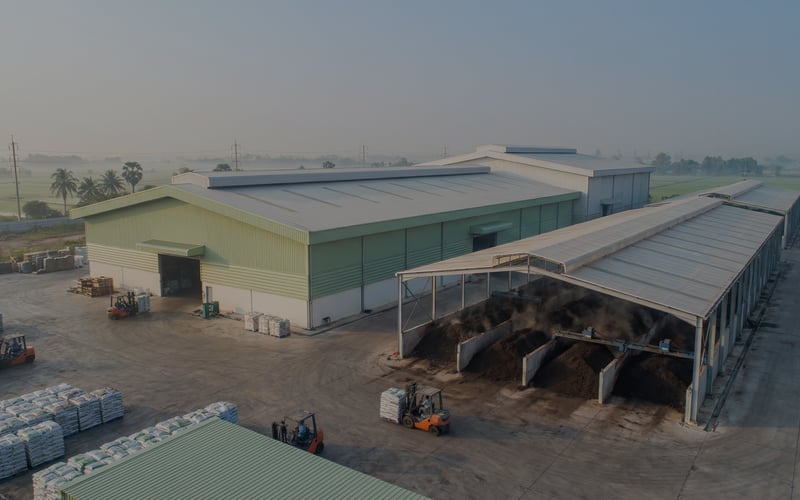
The 10-15t/h organic compost granule and powder production line in Thailand installed for a Suphanburi-based agricultural cooperative represents a significant step in addressing the region's livestock waste and crop residue challenges.
Designed to process 160,000 tons of animal manure and 72,000 tons of crop straw annually, this facility transforms locally abundant waste streams into 100,000 tons of finished organic fertilizer products.
The cooperative's total investment of approximately $0.5 million covers the complete processing system, including fermentation infrastructure, crushing and mixing equipment, granulation lines, drying and cooling systems, and automated packaging, all configured within a 60-acre site strategically located to serve central Thailand's agricultural heartland.
Name:
compost fertilizer plant
Country:
Thailand
Date:
2025
Capacity:
10-15T/H
Product Type:
granule and powder
Raw material:
rice straw, palm waste, cassava residue
Control Mode:
Automatic
Guiding Price:
$0.5 million
What makes this 10-15t/h organic compost granule and powder production line in Thailand particularly effective is its dual-product strategy. The line produces 50,000 tons per year of standard organic fertilizer in powder form, ideal for bulk soil amendment in rice paddies and sugarcane fields, alongside 50,000 tons of granular bio-organic fertilizer incorporating functional microbial strains for higher-value fruit and vegetable crops.
This flexibility allows the cooperative to serve both commodity farmers seeking low-cost soil conditioners and specialty crop growers requiring premium biological products.
The equipment package, shipped from Qingdao to Laem Chabang port, includes fermentation turners, multiple crusher types, continuous mixers, two fertilizer granulator machine configurations, a rotary dryer, cooling systems, and complete dust collection, all automated through PLC controls to ensure consistent quality meeting Thai agricultural standards.
The client first contacted us in March 2025. A technical director from a large agricultural cooperative in Suphanburi Province had been researching solutions for a problem that was becoming impossible to ignore.
Central Thailand generates enormous volumes of livestock manure—over 200,000 tons annually within their cooperative's catchment area alone—and crop residues from rice, corn, and sugarcane harvests.
Traditionally, most of this material was either left to decompose haphazardly or burned in the fields, creating air quality issues that were drawing increasing complaints from local communities.
During our initial video call, the client's team asked questions that showed they'd thought deeply about the challenge:
The cooperative already had a business model in place. They operated a "company plus farmers" system where they supplied inputs to member farmers and purchased their outputs. Adding fertilizer production was a logical vertical integration step—they could collect waste from livestock farmers, process it, and sell it back to crop farmers at fair prices.
We spent the next month working through the details. Site visits, material sampling, lab testing, layout planning, and equipment specification. The cooperative had secured a 60-acre site near Suphanburi, with good road access and existing utilities. The location was ideal—surrounded by livestock operations and within reasonable trucking distance of rice, sugarcane, and vegetable growing areas.
The only missing piece was the right equipment configured for their specific raw materials and product mix.
Before we could design the equipment, we needed to understand the feedstock characteristics and seasonal variations. Central Thailand's agricultural waste streams are abundant but irregular.
The cooperative's catchment area includes:
| Livestock Type | Operations | Annual Manure Production |
|---|---|---|
| Pig farms (large scale) | 62 operations | Approximately 140,000 tons |
| Pig farms (smallholder) | 740 households | Approximately 50,000 tons |
| Poultry farms | 130 operations | 49,000 tons (primarily chicken) |
Total manure available: roughly 200,000 tons annually. The cooperative planned to collect 160,000 tons per year—80% of the total—through their member network.
Crop residues added another dimension:
| Crop Residue Type | Annual Production in Area | Planned Collection |
|---|---|---|
| Rice straw | 150,000 tons | 36,000 tons |
| Corn stalks | 70,000 tons | 20,000 tons |
| Sugarcane trash | 50,000 tons | 16,000 tons |
| Total | 270,000 tons | 72,000 tons |
The seasonal challenge was real. Rice harvests happen twice per year in most of Thailand, three times in some irrigated areas. During harvest weeks, straw arrives by the truckload. Between harvests, supply drops sharply.
The client had a solution already in mind: they would use mushroom cultivation residue during the off-seasons. Thailand has a significant mushroom farming sector, and spent substrate—the material left after mushrooms are harvested—is an excellent organic fertilizer feedstock.
It's already partially decomposed by fungal activity and has good moisture content. They arranged contracts with mushroom farms to supply approximately 1,200 tons of spent substrate annually to fill the gaps between straw harvests.
Here's the final raw material matrix we designed for the Suphanburi operation:
| Raw Material | Source | Annual Consumption (tons) | Typical Moisture | Function |
|---|---|---|---|---|
| Pig manure | Member farms (large and small) | 111,000 | 65% | Primary nitrogen source |
| Chicken manure | Poultry operations | 49,000 | 65% | High-nitrogen booster |
| Rice straw | Member rice farmers | 36,000 | <20% | Carbon source and bulking agent |
| Corn stalks | Member corn farmers | 20,000 | <20% | Carbon source |
| Sugarcane trash | Local sugar mills | 16,000 | <20% | Carbon source |
| Mushroom residue | Spent substrate contracts | 1,200 | 35-40% | Off-season supplement |
| Inorganic nutrients (N/P/K/micro) | Imported | 1,100 | <1% | Nutrient balancing |
| Microbial cultures | Commercial suppliers | 180 | <5% | Fermentation and bio-organic lines |
| Amino acid solution | Local supplier | 1,000 | Liquid | Bio-organic additive |
The manure required careful handling. The client specified that all collected manure must undergo solid-liquid separation at the source before transport. Large farms had their own separation equipment. Smallholders performed manual separation—labor-intensive but effective. The separated solid manure, now at approximately 65% moisture, was bagged or loaded into covered trucks for transport to the facility.
Straw arrived in bales during harvest seasons. The cooperative built covered storage with capacity for 15,000 tons—enough to buffer between harvests. The storage area was designed with concrete floors and roof cover to prevent moisture absorption from rain, which can turn straw into a moldy mess if not protected.
The 60-acre site allowed generous spacing between different functional areas—important for both operational efficiency and environmental management.
We arranged the facility into several distinct zones:
Raw material receiving and storage:
Fermentation and composting area:
Post-fermentation processing:
Granulation and finishing:
Storage and auxiliary:
The layout followed the process flow logically: raw materials enter at one end, move through fermentation and processing, then to granulation and packaging at the opposite end. This U-shaped flow minimized cross-traffic and reduced the risk of contaminating finished product with raw material dust.
With raw materials characterized and site layout finalized, we selected the equipment package. The 10-15t/h organic compost granule and powder production line needed to handle both powder and granule production efficiently.
Here's the complete equipment package we installed:
| Equipment | Quantity | Power (kW) | Function |
|---|---|---|---|
| Straw crusher | 1 | 22.5 | Primary size reduction of crop residues |
| Conditioning mixer | 2 | 30 each | Homogeneous blending of raw materials |
| Chain plate turner | 2 | 28 each | Aerating fermentation windrows |
| Transfer machine | 1 | 1.5 | Moving turner between bays |
| Fertilizer mixer | 1 | 1.5 | Small-batch mixing for amendments |
| Continuous mixer | 1 | 7.5 | Post-fermentation blending |
| Vertical crusher | 2 | 30 each | Fine grinding of fermented material |
| Vibrating screen | 2 | 4 each | Initial size separation |
| Electronic batching scale | 1 system | 9 | Automated nutrient dosing |
| Rotary dryer | 2 | 30 each | Moisture reduction for granule line |
| Ring die compost granulator | 2 | 90 each | Main granulation equipment |
| Pellet polisher | 2 | 25 each | Smoothing granule surface |
| Vertical cooler | 1 | 0.75 | Cooling hot granules |
| Centrifugal fan | 1 | 15 | Air handling for cooler |
| Cyclone separator | 2 sets | — | Dust collection |
| Rotary screen | 1 | 2.2 | Final granule classification |
| Bucket elevators | Multiple | 4 each | Vertical transport |
| Belt conveyors | Multiple | 1.5–4 each | Horizontal transport |
| Automatic packer (powder) | 1 | 3 | 25–50kg bagging |
| Automatic packer (granule) | 1 | 3 | 25–50kg bagging |
| Air compressor system | 1 | 7.5 | Pneumatic controls |
| Control panels | 1 system | — | PLC-based automation |
Total installed power: approximately 650 kW. The cooperative's site had adequate transformer capacity from previous agricultural operations.
The drying system deserves special mention. For the bio-organic granule line, moisture needed to drop from fermentation levels (around 30-35%) down to approximately 8% before granulation. The two rotary dryers, each 1.4 meters in diameter and 6 meters long, provided sufficient capacity.
We specified electric heating rather than direct-fired to maintain consistent temperature control—critical for preserving microbial viability in the bio-organic products.
For dust control—essential in any fertilizer operation—we installed collection hoods at every crusher, screen, mixer, and transfer point. The baghouse system returns collected dust to the process, minimizing waste and keeping the working environment clean. The exhaust discharges through a 15-meter stack meeting Thai industrial emission standards.
The production manager wanted to understand every step before the equipment arrived. Here's how material flows through the 10-15t/h organic compost granule and powder production line in Thailand.
Raw material receiving and pre-processing: Manure arrives in covered trucks and is weighed at the entrance. Trucks pass through a wheel wash station before proceeding to the receiving area. Straw is unloaded at the covered storage area.
Fermentation: Manure and straw are mixed in the conditioning mixer at approximately 1:1 ratio by volume (adjusting for carbon-to-nitrogen balance). The mixture is formed into windrows in the fermentation bays.
The chain plate turner passes through each bay every 2-3 days, aerating the material and maintaining aerobic conditions. Fermentation continues for approximately 30 days, during which temperature naturally rises to 60-70°C—sufficient to kill weed seeds and pathogens.
Curing: After active fermentation, material is transferred to the curing building for another 30-45 days. During this period, microbial activity slows, and the material stabilizes into mature compost. The continuous mixer blends batches to ensure consistency.
Final processing: Cured material passes through the vertical crusher for size reduction, then the vibrating screen to remove oversize particles (which are returned to crushing). At this point, the material is ready for packaging as standard powder organic fertilizer at approximately 30% moisture.
For the granule line, the process follows the same fermentation and curing steps, then adds several stages:
Nutrient blending: Mature compost is fed into the electronic batching scale system, where inorganic nutrients (N, P, K, micronutrients) are added according to target formulations. Microbial cultures and amino acid solution are also introduced at this stage.
Fine grinding: The blended material passes through an additional vertical crusher to achieve particle size suitable for granulation—typically 50 mesh or finer.
Drying: Moisture must be reduced from approximately 30% down to 8% for effective granulation. Material enters the rotary dryer, where heated air (electric, temperature controlled) reduces moisture over 15-20 minutes residence time.
Granulation: Dried material feeds into the organic fertilizer pellet machines. The rotating die forces material through holes, forming dense cylindrical granules. The two granulators operate in parallel to achieve the 10-15 t/h target.
Polishing: Fresh granules have rough surfaces. They pass through the polisher, where gentle tumbling rounds the edges and smooths the surface.
Cooling: Hot granules enter the vertical cooler, where ambient air drawn upward through the column reduces temperature to near-ambient. This prevents moisture migration in storage bags.
Screening: Cooled granules pass through the rotary screen. On-size product (typically 2-4mm) continues to packaging. Oversize material is crushed and returned to granulation. Fines are returned to the front of the granulation line.
Packaging: Finished granules are bagged in 25kg or 50kg plastic woven bags using the automatic packer.
| Parameter | Powder Line | Granule Line |
|---|---|---|
| Fermentation time | 30 days minimum | 30 days minimum |
| Curing time | 30-45 days | 30-45 days |
| Moisture before drying | N/A | 30-35% |
| Moisture after drying | N/A | 8% |
| Granulation temperature | N/A | Ambient |
| Cooling target | N/A | Within 5°C of ambient |
| Final moisture | ≤30% | ≤30% |
The Thai organic fertilizer market has clear expectations. The Ministry of Agriculture and Cooperatives regulates fertilizer quality through the Fertilizer Act B.E. 2550 (2007), which sets standards for nutrient content, moisture, and contaminants.
We designed the line to meet or exceed these requirements:
| Parameter | Target Range | Testing Frequency |
|---|---|---|
| Organic matter | ≥30% (dry basis) | Daily composite |
| Moisture content | ≤30% | Every 2 hours |
| pH | 5.5–8.5 | Daily |
| Mechanical contaminants | None visible | Visual every batch |
| Odor | No foul smell | Sensory check |
| Total N + P2O5 + K2O | ≥4% (for enhanced products) | Weekly |
| Viable count (bio-organic lines) | ≥0.2 billion CFU/g | Weekly |
The cooperative built a small laboratory in the office building, equipped with a drying oven, balance, pH meter, and basic wet chemistry apparatus. They also contracted with a local agricultural university for quarterly third-party testing to validate their internal results.
For the bio-organic line, microbial viability is critical. The cultures are stored in a dedicated 300-square-meter chilled storage room to maintain potency until use. The coating process applies cultures gently to avoid damaging sensitive microorganisms.
The client asked about shipping early in the process. They'd heard stories of equipment stuck in ports for months and wanted assurance.
We explained our standard process. All fabrication happens at our workshops near Zhengzhou. Once equipment is tested and crated, it moves by truck to Qingdao port—our closest major international port with frequent sailings to Southeast Asia.
For this organic fertilizer production project, we shipped in three batches:
| Batch | Contents | Containers | Vessel Type |
|---|---|---|---|
| 1 | Dryer drums, granulator bodies, large mixers | 6 flat racks | Breakbulk carrier |
| 2 | Crusher machines, screens, elevators, conveyors | 14 open-top | Container ship |
| 3 | Motors, controls, small parts, packaging equipment | 8 standard | Container ship |
The destination port was Laem Chabang, Thailand's largest deepwater port, located on the eastern Gulf coast approximately 120 kilometers from Bangkok. From Laem Chabang, equipment moved by truck to the Suphanburi site—about a 2-hour drive.
Transit time from Qingdao to Laem Chabang averaged 6-7 days. Customs clearance took another 5 days—slightly longer than usual due to some documentation revisions, but within the range we'd estimated.
We provided detailed packing lists, lifting plans, and assembly drawings with each shipment. The cooperative hired a local crane contractor with industrial equipment experience. Unloading took three days. Positioning the equipment inside the buildings took another two weeks.
Installation and commissioning proceeded through late 2025. The line was mechanically complete by December, and we ran first material in early January 2026. The first few tons from the granulator were either too wet or too dry—typical commissioning adjustments—but by mid-January, we had consistent product at target specifications.
Thailand's agricultural sector is under pressure from multiple directions. Rice farmers face falling margins and environmental restrictions on straw burning. Livestock operators face mounting waste management costs. Fruit and vegetable growers need consistent, high-quality inputs to meet export standards.
A 10-15t/h organic compost granule and powder production line addresses all of these pressures simultaneously. It creates a market for materials that previously had negative value. It produces exactly the products that Thai farmers are already buying—at lower cost than imported alternatives. And it does so in an environmentally responsible way that aligns with government policy.
The Thai government's "Green Agriculture" initiative actively promotes organic fertilizer adoption through subsidies and technical support. With over 1.6 million hectares certified for organic farming and the organic fertilizer market growing at nearly 10% annually, the demand fundamentals are strong.
The cooperative in Suphanburi is now operating two shifts during peak seasons, processing manure and straw that previously created environmental problems. Their members receive fair prices for waste materials and access to affordable fertilizer in return. Local regulators have cited the project as a model for other districts.
Perhaps most importantly, the organic fertilizer production line's flexibility—producing both powder for bulk soil amendment and granules for precision application—allows them to serve the full spectrum of farmers in their network. Rice paddies get low-cost powder. Fruit orchards get consistent granules. Vegetable growers get bio-enriched products with active cultures. One line, multiple products, one investment.
If you're facing similar challenges with agricultural waste in your region, you're not alone. We've engineered organic fertilizer lines across Southeast Asia—Thailand, Vietnam, Indonesia, Malaysia, and beyond. The raw materials vary—rice straw in one place, palm waste in another, cassava residue somewhere else—but the process fundamentals remain the same.
Here's what we need to start a conversation:
Send Richi Machinery those details and we'll develop preliminary numbers. We'll show you what a 10-15t/h organic compost granule and powder production line would look like in your facility—equipment, layout, investment, payback.
All equipment ships from Qingdao to any port you specify. We've completed over 40 projects across Southeast Asia. The engineering we put into Suphanburi can work for you too.
Having the right mix of reliable, high-quality pellet machine and pelletizing systems and expert support is essential to your success. Watch how our end-to-end feed pellet plant solutions have helped our customers optimize their performance.
Our customized and future-proofed turnkey pellet plant solutions is designed with you at the core. From vision to reality and beyond, our team stays connected with yours. Giving you peace-of-mind with an expert at your side.
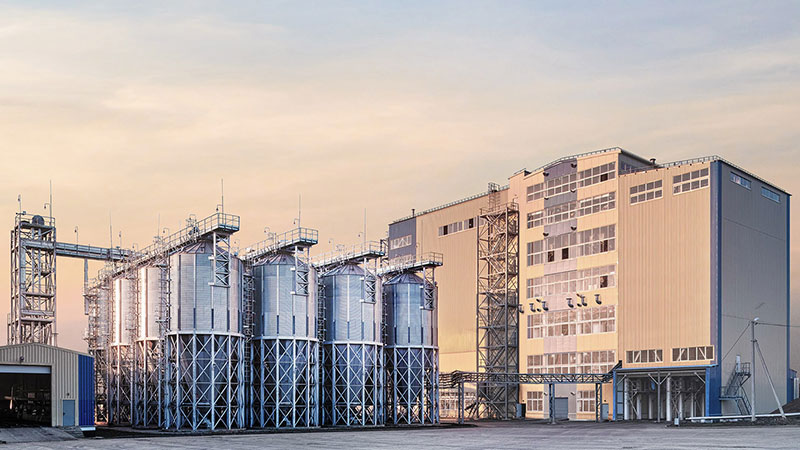
At RICHI, we go beyond project completion. With RICHI Servicee, we’re your dedicated partners in success. Count on us for expert guidance, minimal downtime, and optimized productivity. Choose RICHI for unmatched service and support.
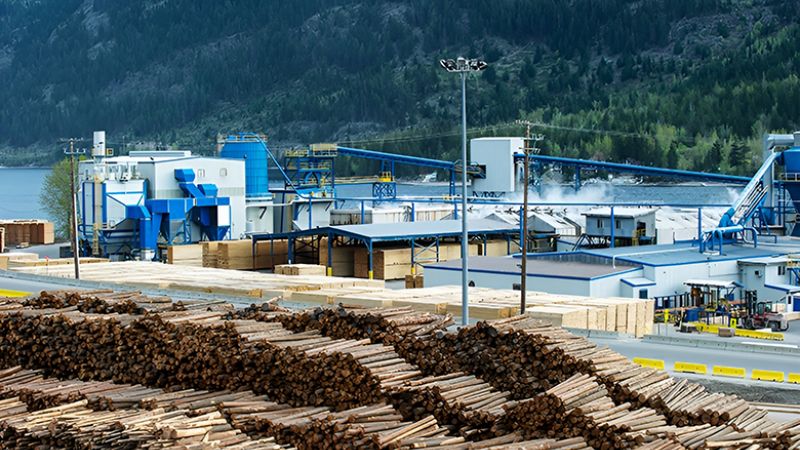


Meet global product demands and quality standards with industry-leading pellet plant design, engineering, equipment, and construction services for pellet processors.


Your Partner Beyond Project Completion
2000+ cases
RICHI is the leading designer, manufacturer and builder of pellet plants in the world, completing over 2000 projects in 140 countries across 6 continents.
Read More
Increase plant productivity, profitability, and safety by integrating high quality equipment into your pellet production line. Over the years, RICHI has become China's top pellet equipment manufacturer. At the same time, RICHI has established valuable partnerships with the world's leading component and raw material manufacturers to bring you the best there is in technology, automation, and efficiency in pelleting plant machinery.

For nearly 30 years, RICHI has been providing best-in-class pellet plant equipment and services to clients across a variety of industries, sizes, and needs. We pride ourselves on the knowledge and skill that each team member possesses – from our technical sales team to our process design engineers. You can count on RICHI Machinery to take your operation to the next level of innovation, quality, and success.
Need help with your pellet manufacturing plant project? Contact us today.
ANIMAL FEED
BIOMASS
WOOD
ORGANIC FERTILIZER
AQUA FEED
CAT LITTER
MUNICIPAL WASTE RECYCLING
SPECIAL PELLET PRODUCTION
RICHI Machinery continues to deliver world class pellet mill equipment, pellet plant engineering and project solutions that add value to our customers in the animal feed, wood waste, agriculture waste, organic fertilizer, cat litter and special pellet products industries. Throughout the years, we RICHI Machinery have built strong brand, becoming industry-leading pellet machine manufacturer. We value integrity, promise quality, and prioritize your success.
Learn MoreWith our expert team, we precisely implement your process engineering requirements in pellet mill and pelletizing plant systems. No matter which industry you’re in – we understand your needs and deliver solutions that meet the highest standards.
At RICHI, quality comes first. Our pellet making machine and related pellet line equipment undergo rigorous quality controls to ensure they meet the highest standards. Rely on products that are durable, safe, and efficient.
With decades of experience in pellet machine and pellet production line production, we have earned a reputation as a trusted partner in various industries. Our expertise allows us to cover a wide range of applications.
Not only do we offer premium pelleting equipment, but we are also experts at designing, building, installing, and maintaining facilities from the ground up. Our expertise is within pellt plant process design, discovering the most efficient, productive, and profitable way to handle your materials in an end-to-end cycle.
○ RICHI MACHINERY
Keeping in touch with us is an effective way to solve all your problems. If you have any needs or questions, please leave your contact information, then RICHI technical consultants will send design, quotation, videos to your mailbox. You can also contact us directly via WhatsApp: +86 13838389622
Copyright©2015-2026 by HENAN RICHI MACHINERY CO., LTD. All rights reserved.