

This is where you find all our press releases and news articles.
Animal feed processing equipment manufactured by RICHI Machinery for a customer in Palestine has reached the delivery stage. After several months of supplier evaluation and project communication, the customer selected RICHI, and the equipment has now progressed from manufacturing to pre-dispatch handover. At this point, attention is shifting away from machine selection and toward a different question: is everything required for the next project stage properly prepared before the equipment leaves?
For an overseas feed mill, delivery is more than a logistics event. Main machines may be the most visible part of the order, but the customer will eventually need a complete system that can be identified, installed, connected, tested and put into production at the destination. The handover stage therefore provides an important checkpoint between factory manufacturing and site implementation.
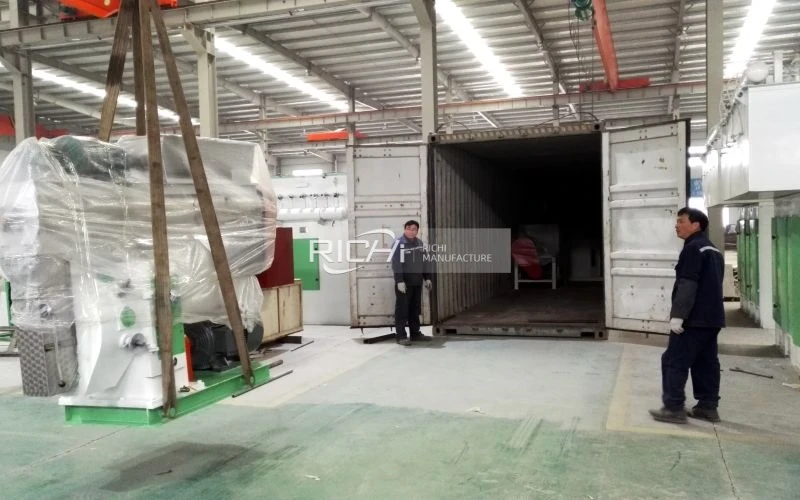
Animal feed mill equipment prepared for handover and delivery to the Palestine customer
When customers compare feed machinery quotations, the main processing equipment usually receives most of the attention. At delivery, however, the boundaries of the complete supply become much more important. The project team needs to know which processing sections, auxiliary machines, conveying components, electrical items and installation-related parts belong to the order and how they correspond to the agreed process.
This matters because two feed mill quotations with a similar headline capacity can contain very different scopes. One may cover only the core processing machines, while another may include more of the conveying, storage, control, dust collection or finished-feed handling equipment required to connect the line. A meaningful delivery review therefore returns to the confirmed project scope rather than simply counting the largest machines.
Large feed machinery is difficult to overlook during delivery. Smaller components create a different risk. Connection parts, sensors, electrical elements, installation accessories and other project-specific items may occupy little shipping space but can become important once site assembly begins.
If a necessary component is discovered missing only after installation has started overseas, the resulting delay can be disproportionate to the value or size of the part itself. The project may need to wait for identification, replacement preparation and another international shipment.
For this reason, pre-dispatch preparation should consider the relationship between machines and their associated components. Equipment identification and organized project documentation can reduce unnecessary uncertainty when the customer begins receiving and installing the system.
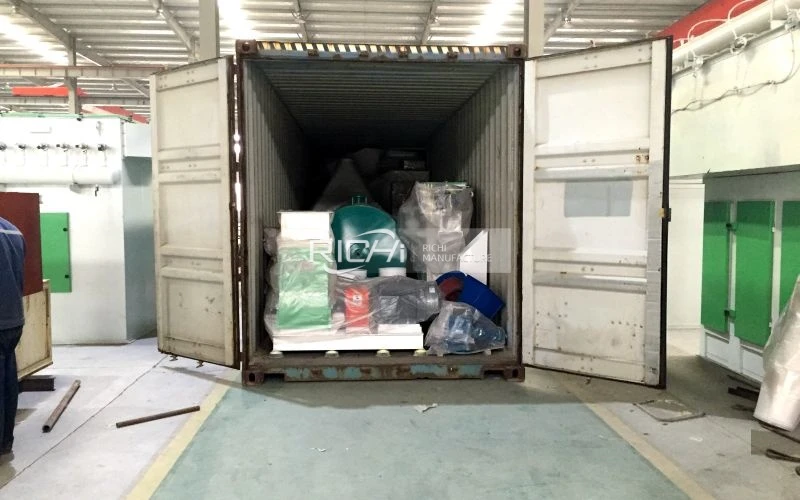
The equipment is intended to operate as an animal feed pellet production line, which means individual machines eventually need to become one continuous material-processing route.
Depending on the customer's feed products and configuration, the system can involve raw material receiving, cleaning, grinding, batching, mixing, conditioning, pelletizing, cooling, screening, conveying and finished-feed handling. The exact route is determined by the ingredients and products the customer intends to manufacture.
During handover, this process relationship provides a useful way to organize the equipment. Instead of viewing the shipment as an inventory of machines, the project can be reviewed from the point where raw materials enter to the point where finished feed leaves. That makes it easier to identify whether the equipment required to connect adjacent production stages has been included and prepared.
Delivery preparation can confirm equipment and project completeness, but it cannot replace production commissioning. Once the line is installed, actual operating conditions will depend on the customer's raw materials, formulations and finished-feed requirements.
Feed formulas can combine grains, protein meals, bran or other agricultural ingredients with minerals, premixes and additional nutritional components. Whole grains normally need suitable grinding, while fine meals and low-inclusion ingredients require different handling. Particle size, moisture, fiber content and oil addition can also influence pelletizing behavior.
This is why operating parameters should ultimately be adjusted around real production materials. The same pellet mill can behave differently when formula characteristics change, even when the nominal production target remains unchanged.
Before equipment begins the journey to an overseas project site, the customer and supplier should be able to connect what is leaving the factory with what will be needed after arrival.
| Handover Question | What It Confirms | Why It Matters Later |
|---|---|---|
| Is the confirmed equipment scope prepared? | Main and auxiliary equipment correspond to the project configuration | Reduces gaps when the production system is assembled |
| Can machines and components be identified? | Equipment and associated parts can be matched at the site | Makes receiving and installation more efficient |
| Are installation-related items organized? | Required connections and accessories move with the project | Reduces avoidable installation interruptions |
| Are technical documents prepared? | The site team has information for subsequent project work | Supports installation, electrical work and equipment checks |
| Is the next project stage coordinated? | Customer and supplier understand what follows delivery | Creates continuity between shipment and site implementation |
While the equipment is moving toward delivery, preparation should also continue at the destination. A feed mill can arrive on schedule and still remain idle if the workshop, foundations, electrical infrastructure or unloading arrangements are not ready.
The animal feed factory project site should therefore be checked against the final equipment layout before machinery arrives. Installation space needs to accommodate not only the physical dimensions of each machine but also conveying connections and maintenance access. Electrical preparation needs to match the supplied equipment. The customer should also plan how machinery will be unloaded and moved to its installation position.
Raw material and finished-feed areas deserve the same attention. Once commissioning begins, the project needs enough production ingredients for testing and a practical way to receive the feed coming from the downstream section. Preparing these areas early can shorten the transition between mechanical completion and actual production trials.
During quotation, project scope exists mainly in technical proposals, equipment lists and commercial documents. At handover, those decisions become physical equipment. This makes the stage particularly useful for checking whether the proposed solution has remained consistent through engineering and manufacturing.
For example, a customer may have requested a more automated ingredient-handling arrangement to reduce manual work. Another may have chosen a simpler system because labor is readily available and the plant produces only a limited number of formulas. Some projects need more raw material bins because they handle many ingredients, while others prioritize compact layout because workshop space is limited.
These choices should be visible in the equipment being delivered. A well-prepared feed mill is not defined by having the greatest number of machines; it is defined by whether the supplied system fits the way the customer intends to produce feed.
The next major work begins when the machinery reaches its destination. Equipment needs to be received, positioned and connected according to the process layout. Mechanical installation is followed by electrical work and the checks required before individual machines can operate.
The project then progresses from single-machine testing toward complete-line commissioning. Material transfer needs to be verified between sections, equipment start-stop relationships need to function correctly, and production parameters need to be adjusted as real feed material enters the line.
Operator preparation is part of the same transition. Personnel who will run the plant need to understand normal startup and shutdown, routine inspection, cleaning, lubrication and the operating points that require attention during production. A feed mill becomes useful to the customer only when the equipment, process and people can work together consistently.
Customers evaluating a feed machinery supplier often focus heavily on factory workshops and finished machines. A delivery site reveals something different: how the manufacturer organizes a complete overseas order after production is finished.
For prospective buyers, useful questions include whether auxiliary equipment is clearly associated with the main system, how smaller parts are managed, what documentation accompanies the project, how installation requirements are communicated and what support is available once the equipment reaches the destination.
These questions are particularly relevant when purchasing a complete feed mill rather than a standalone machine. The more processing sections a project contains, the more important coordination becomes between manufacturing, delivery and installation.
With the feed equipment prepared for delivery, this Palestine project is moving from factory execution toward site implementation. The handover stage provides a final opportunity to connect the physical shipment with the process scope that will later be assembled at the customer's plant.
For RICHI Machinery, the objective is not simply to complete an equipment delivery. A complete feed mill needs continuity from process planning and manufacturing through shipment, installation, commissioning and operator use. Customers preparing a new feed project can provide their target feed products, required output, main raw materials, finished-feed specifications, workshop information and desired automation level so the project can be configured around the production conditions it will actually face.
Having the right mix of reliable, high-quality pellet machine and pelletizing systems and expert support is essential to your success. Watch how our end-to-end feed pellet plant solutions have helped our customers optimize their performance.
Our customized and future-proofed turnkey pellet plant solutions is designed with you at the core. From vision to reality and beyond, our team stays connected with yours. Giving you peace-of-mind with an expert at your side.
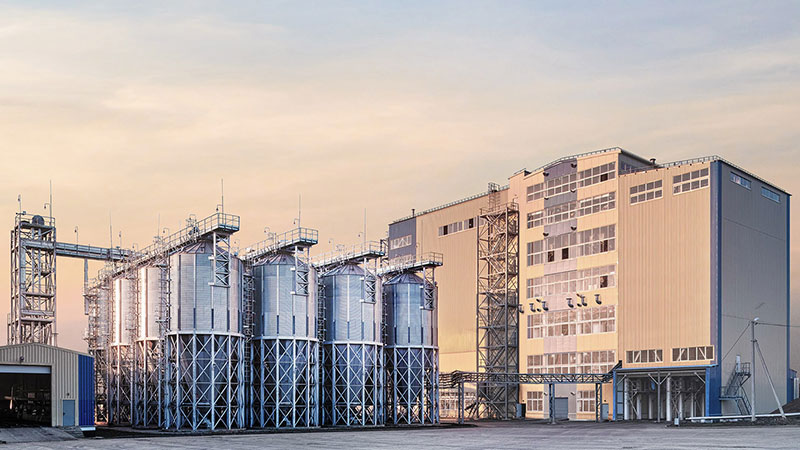
At RICHI, we go beyond project completion. With RICHI Servicee, we’re your dedicated partners in success. Count on us for expert guidance, minimal downtime, and optimized productivity. Choose RICHI for unmatched service and support.
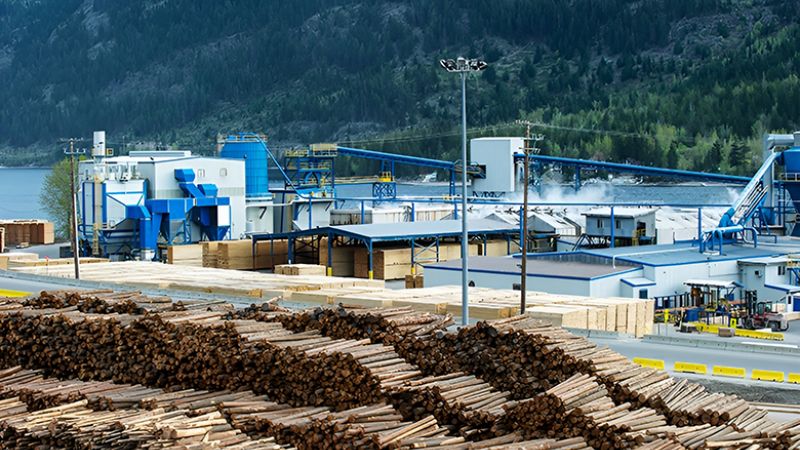


Meet global product demands and quality standards with industry-leading pellet plant design, engineering, equipment, and construction services for pellet processors.


Your Partner Beyond Project Completion
2000+ cases
RICHI is the leading designer, manufacturer and builder of pellet plants in the world, completing over 2000 projects in 140 countries across 6 continents.
Read More
Increase plant productivity, profitability, and safety by integrating high quality equipment into your pellet production line. Over the years, RICHI has become China's top pellet equipment manufacturer. At the same time, RICHI has established valuable partnerships with the world's leading component and raw material manufacturers to bring you the best there is in technology, automation, and efficiency in pelleting plant machinery.

For nearly 30 years, RICHI has been providing best-in-class pellet plant equipment and services to clients across a variety of industries, sizes, and needs. We pride ourselves on the knowledge and skill that each team member possesses – from our technical sales team to our process design engineers. You can count on RICHI Machinery to take your operation to the next level of innovation, quality, and success.
Need help with your pellet manufacturing plant project? Contact us today.
ANIMAL FEED
BIOMASS
WOOD
ORGANIC FERTILIZER
AQUA FEED
CAT LITTER
MUNICIPAL WASTE RECYCLING
SPECIAL PELLET PRODUCTION
RICHI Machinery continues to deliver world class pellet mill equipment, pellet plant engineering and project solutions that add value to our customers in the animal feed, wood waste, agriculture waste, organic fertilizer, cat litter and special pellet products industries. Throughout the years, we RICHI Machinery have built strong brand, becoming industry-leading pellet machine manufacturer. We value integrity, promise quality, and prioritize your success.
Learn MoreWith our expert team, we precisely implement your process engineering requirements in pellet mill and pelletizing plant systems. No matter which industry you’re in – we understand your needs and deliver solutions that meet the highest standards.
At RICHI, quality comes first. Our pellet making machine and related pellet line equipment undergo rigorous quality controls to ensure they meet the highest standards. Rely on products that are durable, safe, and efficient.
With decades of experience in pellet machine and pellet production line production, we have earned a reputation as a trusted partner in various industries. Our expertise allows us to cover a wide range of applications.
Not only do we offer premium pelleting equipment, but we are also experts at designing, building, installing, and maintaining facilities from the ground up. Our expertise is within pellt plant process design, discovering the most efficient, productive, and profitable way to handle your materials in an end-to-end cycle.
○ RICHI MACHINERY
Keeping in touch with us is an effective way to solve all your problems. If you have any needs or questions, please leave your contact information, then RICHI technical consultants will send design, quotation, videos to your mailbox. You can also contact us directly via WhatsApp: +86 13838389622
Copyright©2015-2026 by HENAN RICHI MACHINERY CO., LTD. All rights reserved.