
The Vietnamese recycler did not need another complete PET washing and pelletizing line. Its existing facility in Ho Chi Minh City already had bottle sorting, washing, drying, and downstream recycling equipment. The weak point was much earlier in the process: irregular post-consumer water bottles were entering the washing section too slowly and too inconsistently, while the old pre-crusher required frequent manual intervention.
The Vietnamese recycler did not need another complete PET washing and pelletizing line. Its existing facility in Ho Chi Minh City already had bottle sorting, washing, drying, and downstream recycling equipment. The weak point was much earlier in the process: irregular post-consumer water bottles were entering the washing section too slowly and too inconsistently, while the old pre-crusher required frequent manual intervention.
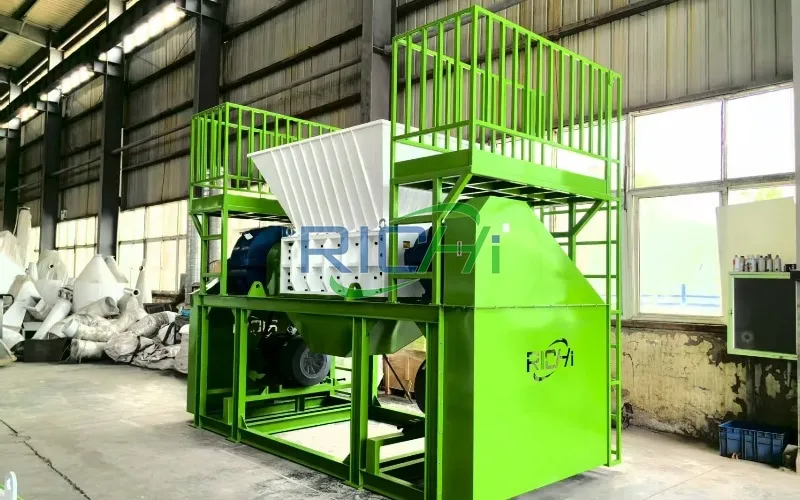
The company therefore installed one SSJ800 water bottle crusher machine in Vietnam as a dedicated pre-crushing unit. Its job is simple but important: reduce empty PET beverage bottles into a more manageable intermediate size before washing, label separation, drying, and any later flake or pellet production. The machine does not make finished recycled PET granules by itself; it prepares the bottle stream so downstream equipment can operate more steadily.
Name:
Bottle Crusher
Country:
Vietnam
Date:
2026
Capacity:
0.8–1.2 T/H
Model:
SSJ800
Main Motor Power:
22 kW × 2
Output Size:
30 mm
Machine Dimensions:
3000 × 1800 × 1900 mm
Empty PET water bottles are lightweight, hollow, and irregular. Their low bulk density makes them awkward to feed consistently, especially when bottles arrive flattened, partially crushed, capped, or mixed with labels and residual liquid.
The customer’s previous crusher had enough motor power for plastic, but feeding was unstable. Bottles frequently bounced above the rotor or accumulated unevenly in the inlet. Operators had to stop and redistribute material manually, which reduced effective throughput.
The SSJ800 was selected because its rotor and blade arrangement are better suited to bulky irregular plastic containers than a small conventional granulator designed mainly for already-cut flakes.
The project is focused on one main waste stream: post-consumer PET bottles collected from urban recycling networks, beverage distributors, commercial collection points, and material recovery operators in southern Vietnam.
Typical incoming material includes:
The plant does not deliberately mix large quantities of HDPE, PP, wood, cardboard, or unrelated industrial waste into this crusher campaign just because the SSJ platform can handle other materials.
Keeping the PET stream more consistent improves sorting efficiency and makes the downstream recycling product easier to control.
Not every contaminant has to be removed before crushing, but the plant does not ignore material separation.
Large foreign objects, stones, metal pieces, glass, and unsuitable containers are removed during receiving and sorting.
Caps and labels may remain on bottles during the first crushing stage depending on the plant’s downstream washing configuration. They are then separated later through washing, density separation, friction cleaning, and classification.
This is more realistic than claiming every bottle must be perfectly cleaned before it enters the crusher.
| Project Parameter | Configuration |
|---|---|
| Equipment | Water bottle crusher machine |
| Model | SSJ800 |
| Quantity | 1 unit |
| Main Drive | 22 kW × 2 |
| Rotor Diameter | 260 mm |
| Blade Material | 55CrSi forged alloy steel |
| Machine Dimensions | Approximately 3000 × 1800 × 1900 mm |
| Project Output Size | Approximately 30 mm class fragments before downstream washing and finer processing |
| Reference Throughput | Approximately 0.8–1.2 T/H depending on bottle condition and feeding density |
The customer’s real collection volume did not justify a much larger machine. The SSJ800 matched the amount of PET already arriving at the plant and could be inserted into the existing workshop without forcing the entire washing and conveying system to be enlarged.
This is important because increasing crusher capacity alone would not improve the plant if the downstream washer, dryer, or flake-handling system remained smaller.
The SSJ800 reduces whole bottles into coarse fragments of roughly 30 mm class, but that material is still an intermediate product.
High-quality PET recycling normally requires further washing, separation, and often additional size reduction before the material reaches a final clean-flake specification.
The customer therefore does not send 30 mm fragments directly into a pellet extruder and call the process complete.
The crusher’s role is to open the bottle structure, reduce volume, expose internal surfaces, and make the next washing and separation stages easier to control.
Whole bottles trap air and residual liquid. They also occupy large volume relative to mass.
Once bottles are opened and reduced in size, washing water and mechanical cleaning can reach a much larger surface area.
Labels and caps also become easier to separate from the PET body after the container has been mechanically opened.
For this customer, the biggest gain was therefore more stable downstream material flow rather than simply a higher tonnes-per-hour number at the crusher itself.
Some post-consumer bottles still contain water or beverage residue when they arrive.
The SSJ800 can tolerate limited residual liquid, but the customer does not intentionally feed bottles filled with liquid.
Excess liquid increases mess, can contaminate the working area, and places unnecessary load on downstream wastewater treatment.
Where bottle collection streams contain significant remaining liquid, the plant drains or compacts them before continuous crushing.
The SSJ800 bottle crusher machine uses replaceable forged alloy steel blades mounted on the rotor system.
For PET bottles, the key requirement is not extreme impact resistance against metal. It is the ability to maintain a cutting edge while repeatedly gripping and opening light hollow containers.
Blade condition is therefore monitored through actual cutting performance, power draw, fragment size, and feeding behavior.
A worn blade does not always cause immediate failure. More often, the machine begins to tear instead of cut cleanly, throughput drops, and irregular fragments increase.
The overload reverse function is useful when a hard object or an unusually dense material causes a sudden load increase.
However, the plant does not use this feature as an excuse to feed metal, glass, or other unsuitable waste.
Automatic reverse is a protective function, not a replacement for upstream sorting.
This distinction reduces blade damage and helps keep the crusher available for the PET stream it was actually purchased to process.
The final process sequence at the Ho Chi Minh City facility is straightforward.
Collected bottles first enter receiving and manual or mechanical sorting. Obvious contaminants are removed. PET bottles are then conveyed to the SSJ800, where the container bodies are opened and reduced in size.
The crushed material continues into the existing washing and separation section. After cleaning and classification, the PET fraction is dried and prepared for downstream recycling according to the customer’s final product route.
This placement makes the water bottle crusher machine in Vietnam a true pre-processing machine rather than a standalone recycling line.
The plant processes post-consumer PET, but the final recycled material is not automatically considered suitable for direct food-contact packaging.
Food-grade recycled PET requires much stricter process validation, decontamination control, traceability, and regulatory compliance than ordinary mechanical recycling.
The customer therefore directs material according to its actual downstream qualification.
Some recycled PET may go into non-food packaging, fibers, sheets, strapping, or other industrial products unless the complete recycling process is separately qualified for higher-value applications.
Vietnam continues to tighten plastic-waste management and recycling requirements. Current national policy places increasing responsibility on producers and importers for recycling and treatment of plastic packaging, while restrictions on certain single-use plastics continue to expand.
For a recycler in southern Vietnam, that creates a credible business environment for improving collection and mechanical pre-processing of PET bottles.
The project fits this broader shift toward stronger plastic-waste collection, sorting, and recycling.
The customer is based in southern Vietnam, so the logistics route was aligned with that location.
Instead of shipping the SSJ800 to Hai Phong in the north and then trucking it across the country, the machine was routed to a southern container terminal serving Ho Chi Minh City.
Cat Lai remains one of the major container gateways serving the city and southern industrial region, and Saigon Newport continues to operate the terminal as a key import facility.
The SSJ800 was exported from Qingdao Port and delivered through the southern Vietnam port system before inland transport to the client’s recycling facility.
The customer did not have unlimited floor space.
The SSJ800 had to fit between an existing sorting conveyor and the washing section without blocking forklift access or maintenance routes.
RICHI therefore reviewed machine footprint, inlet height, discharge position, electrical load, service clearance, and conveyor interface before installation.
The approximately 3000 × 1800 × 1900 mm machine size made the retrofit easier than installing a larger shredder that would have forced structural changes to the workshop.
PET bottles are unusual because one cubic meter of loose bottles contains relatively little mass.
That means the same crusher can show different tonnes-per-hour performance depending on whether bottles arrive loose, partially compacted, flattened, or densely conveyed.
The customer therefore does not judge machine capacity only by rotor speed or motor power.
Conveyor loading and material presentation are equally important.
A poorly fed crusher may appear under-capacity even when the cutting chamber itself has enough power.
After commissioning, the first improvement was not another SSJ800.
The plant adjusted the upstream conveyor and bottle-distribution section so that the crusher received a steadier feed.
This reduced periods when the rotor was running lightly followed by sudden surges of material.
The result was a more stable current draw and more predictable downstream flow.
This again showed that the bottleneck was the complete material-handling system, not the crusher alone.
“The biggest change is that the washing section now receives material at a much steadier rate. Before, whole bottles would arrive in surges and sometimes block the feed. Now the PET is opened before washing, so the operators spend less time correcting the material flow.”
The customer also found that separating oversized foreign objects before crushing had a greater effect on blade life than trying to extend maintenance intervals after contamination had already entered the machine.
The SSJ800 uses replaceable blades, so wear parts can be serviced without replacing the entire rotor.
The plant checks blade edges, fastening condition, rotor balance, bearing seals, and accumulated plastic around the crushing chamber.
Sealed bearings help protect against dust and moisture, but the customer still treats cleaning and inspection as routine maintenance.
There is no fixed promise that blades will last a specific number of months because wear depends on bottle contamination, operating hours, material mix, and accidental hard objects.
This water bottle crusher machine in Vietnam project is a focused PET pre-processing upgrade rather than a complete plastic recycling line.
The Ho Chi Minh City customer uses one SSJ800 with two 22 kW drives, a 260 mm rotor, replaceable 55CrSi alloy steel blades, and an approximate reference capacity of 0.8–1.2 T/H depending on bottle condition and feeding density.
The machine reduces whole and irregular PET bottles into roughly 30 mm class fragments so that washing, separation, drying, and downstream recycling can operate more consistently. It does not replace those later stages and does not by itself produce finished recycled PET granules.
For another customer evaluating a water bottle crusher machine in Vietnam, RICHI Machinery would first review bottle type, percentage of PET versus other plastics, bottle size, cap and label condition, residual liquid, daily collection volume, desired output size, washing-line capacity, conveyor width, electrical supply, available floor space, and downstream recycling route before confirming the crusher model.
That is what determines whether an SSJ800 is the right fit: not simply the number of bottles collected, but whether the crusher, conveyor, washing section, and downstream recycling equipment can operate as one balanced system.
Having the right mix of reliable, high-quality pellet machine and pelletizing systems and expert support is essential to your success. Watch how our end-to-end feed pellet plant solutions have helped our customers optimize their performance.
Our customized and future-proofed turnkey pellet plant solutions is designed with you at the core. From vision to reality and beyond, our team stays connected with yours. Giving you peace-of-mind with an expert at your side.
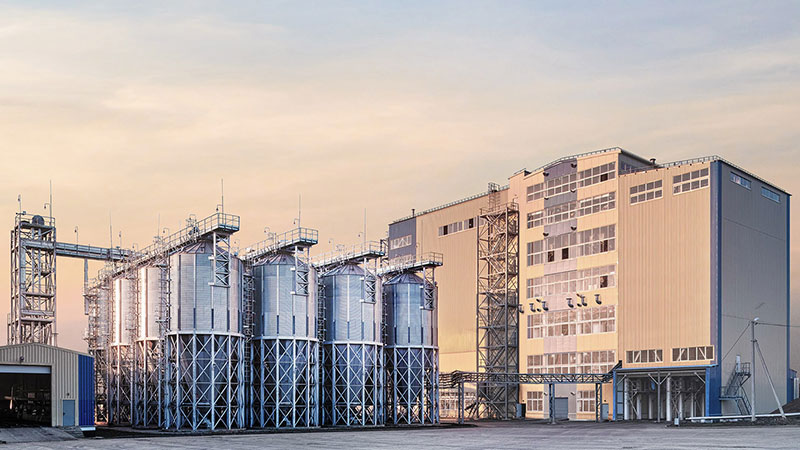
At RICHI, we go beyond project completion. With RICHI Servicee, we’re your dedicated partners in success. Count on us for expert guidance, minimal downtime, and optimized productivity. Choose RICHI for unmatched service and support.
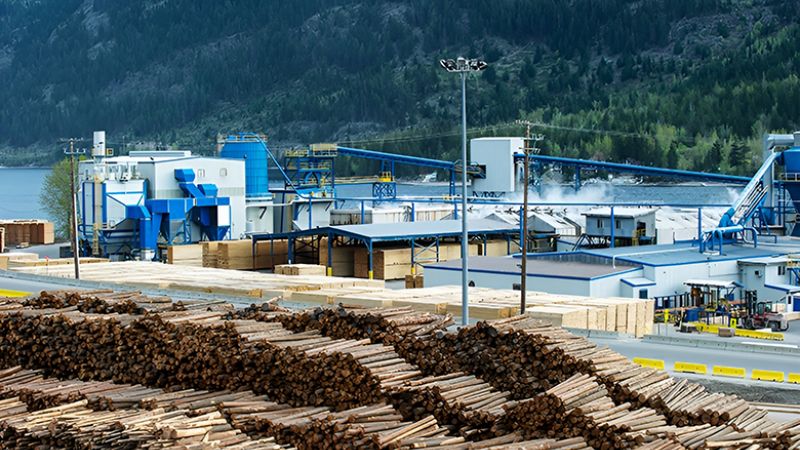


Meet global product demands and quality standards with industry-leading pellet plant design, engineering, equipment, and construction services for pellet processors.

Your Partner Beyond Project Completion
2000+ cases
RICHI is the leading designer, manufacturer and builder of pellet plants in the world, completing over 2000 projects in 140 countries across 6 continents.
Read More
Increase plant productivity, profitability, and safety by integrating high quality equipment into your pellet production line. Over the years, RICHI has become China's top pellet equipment manufacturer. At the same time, RICHI has established valuable partnerships with the world's leading component and raw material manufacturers to bring you the best there is in technology, automation, and efficiency in pelleting plant machinery.

For nearly 30 years, RICHI has been providing best-in-class pellet plant equipment and services to clients across a variety of industries, sizes, and needs. We pride ourselves on the knowledge and skill that each team member possesses – from our technical sales team to our process design engineers. You can count on RICHI Machinery to take your operation to the next level of innovation, quality, and success.
Need help with your pellet manufacturing plant project? Contact us today.
ANIMAL FEED
BIOMASS
WOOD
ORGANIC FERTILIZER
AQUA FEED
CAT LITTER
MUNICIPAL WASTE RECYCLING
SPECIAL PELLET PRODUCTION
RICHI Machinery continues to deliver world class pellet mill equipment, pellet plant engineering and project solutions that add value to our customers in the animal feed, wood waste, agriculture waste, organic fertilizer, cat litter and special pellet products industries. Throughout the years, we RICHI Machinery have built strong brand, becoming industry-leading pellet machine manufacturer. We value integrity, promise quality, and prioritize your success.
Learn MoreWith our expert team, we precisely implement your process engineering requirements in pellet mill and pelletizing plant systems. No matter which industry you’re in – we understand your needs and deliver solutions that meet the highest standards.
At RICHI, quality comes first. Our pellet making machine and related pellet line equipment undergo rigorous quality controls to ensure they meet the highest standards. Rely on products that are durable, safe, and efficient.
With decades of experience in pellet machine and pellet production line production, we have earned a reputation as a trusted partner in various industries. Our expertise allows us to cover a wide range of applications.
Not only do we offer premium pelleting equipment, but we are also experts at designing, building, installing, and maintaining facilities from the ground up. Our expertise is within pellt plant process design, discovering the most efficient, productive, and profitable way to handle your materials in an end-to-end cycle.
○ RICHI MACHINERY
Keeping in touch with us is an effective way to solve all your problems. If you have any needs or questions, please leave your contact information, then RICHI technical consultants will send design, quotation, videos to your mailbox. You can also contact us directly via WhatsApp: +86 13838389622
Copyright©2015-2026 by HENAN RICHI MACHINERY CO., LTD. All rights reserved.