
A commercial poultry feed producer in Colombia’s Antioquia region selected one RICHI SLHSJ2.0A twin screw feed mixer in Colombia to replace an undersized mixer in its existing feed plant. The customer produces compound feed for broiler and layer operations and already had ingredient receiving, grinding, batching, pelletizing and finished-feed handling equipment, so it did not need another complete production line.

A commercial poultry feed producer in Colombia’s Antioquia region selected one RICHI SLHSJ2.0A twin screw feed mixer in Colombia to replace an undersized mixer in its existing feed plant. The customer produces compound feed for broiler and layer operations and already had ingredient receiving, grinding, batching, pelletizing and finished-feed handling equipment, so it did not need another complete production line.
The upgrade focused on one process stage: batch mixing. The existing mixer had become difficult to balance with the rest of the plant as production increased and formulas incorporated several macro- and micro-ingredients. The SLHSJ2.0A, with an effective volume of approximately 2 m³, an 18.5 kW drive and a reference batch load of approximately 1,000 kg under suitable material conditions, was selected to provide a more appropriate batch size for the customer’s production schedule.
Name:
Poultry feed mixer
Country:
Colombia
Date:
2025
Capacity:
1000 kg
Model:
SLHSJ2.0A
Main Motor Power:
18.5 kW
Effective Volume:
2 m³
Main Construction Material :
Carbon steel
Mixing sits between ingredient dosing and pelletizing, and its real capacity has to match both sections.
If grinding and batching can prepare ingredients faster than the mixer can complete each cycle, material begins accumulating upstream.
If the mixer releases batches more slowly than the pelletizing section consumes mash, the pellet mill can run short of material.
The Colombian customer had already increased throughput in other parts of the plant, but the older mixer had been selected for a smaller production scale.
Replacing the mixer therefore made more sense than rebuilding usable grinding, conveying and pelletizing equipment.
RICHI Machinery evaluated the project around mixer batch size, ingredient density, batches per hour, discharge time, downstream mash-buffer capacity and the customer's actual poultry-feed formulas.
This is more useful than selecting a mixer simply from annual feed tonnage.
A feed factory may produce several tonnes per hour, but the mixer operates in batches. The important question is how much material must be mixed per batch and how rapidly the next batch needs to be available.
| Project Parameter | Configuration |
|---|---|
| Equipment | Twin screw feed mixer |
| Model | SLHSJ2.0A |
| Effective Volume | Approximately 2 m³ |
| Reference Batch Load | Approximately 1,000 kg under suitable feed bulk-density conditions |
| Main Drive Power | 18.5 kW |
| Main Construction Material | Carbon steel |
| Main Product | Compound poultry feed |
| Feed Types | Broiler and layer formulas |
| Project Type | Existing feed-mill mixer replacement |
The relationship between 2 m³ effective volume and a 1,000 kg reference batch should not be interpreted as a fixed mass for every formula.
One thousand kilograms inside two cubic metres corresponds to an average bulk density of approximately 500 kg/m³.
That is plausible for many ground compound-feed formulations, but bulk density changes with ingredient composition and particle size.
A cereal-heavy mash can occupy a different volume from a formulation containing more bran, fibrous by-products or low-density ingredients.
The operating batch weight therefore needs to respect both mixer working volume and the actual bulk density of the formula.
Overfilling a mixer to force more tonnes through the plant can reduce free material movement and make uniform distribution more difficult.
For this reason, the reference 1,000 kg batch is used as an engineering starting point rather than a guaranteed batch mass for every feed SKU.
The customer produces broiler and layer feed, but it does not use one permanent formula such as 50% local maize, 25% Brazilian soybean meal, 15% cassava meal and 10% premixes and additives.
Commercial feed formulas change with bird stage, nutrient targets, ingredient prices and procurement conditions.
Yellow corn is a particularly important feed ingredient in Colombia, and a significant share of the corn used by the animal-feed sector is imported.
Soybean meal is another major protein ingredient.
Depending on the formula, the customer can also use suitable locally available feed materials and agricultural by-products after their nutritional and quality characteristics have been evaluated.
The mixer therefore needs to handle a combination of macro-ingredients and much smaller inclusion materials.
Corn or other cereal meals may account for hundreds of kilograms in one batch, while vitamins, minerals, amino acids or other micro-ingredients can represent much smaller quantities.
This difference in inclusion rate is one of the reasons proper dosing and mixing design matters.
The mixer cannot correct a dosing error.
If the batching system adds the wrong amount of methionine, premix or mineral ingredient, longer mixing will not restore the correct formula.
A major objective of feed mixing is distributing low-inclusion ingredients throughout a much larger batch of carrier material.
This requires more than simply dropping every ingredient into the mixer at once.
The customer therefore coordinates the addition sequence with the batching system.
Bulk ground ingredients enter through the main dosing route.
Premixes and other accurately weighed micro-components enter through a smaller controlled addition point.
Where a very small inclusion quantity has to be dispersed through a 1,000 kg batch, pre-blending with a suitable carrier can also be considered depending on the formulation and dosing accuracy available.
Liquid ingredients require separate evaluation.
Oil sprayed into a mixer behaves differently from a dry powder. Excessive liquid addition or poor spray distribution can create local wet areas, material coating and discharge residue.
The customer's mixer therefore has to be configured around the real formula rather than described generically as able to handle every dry, sticky and high-moisture material without adjustment.
Cassava-derived feed ingredients can be relevant in Colombia, but the mixer is not intended to process wet cassava residue.
If cassava meal enters the poultry formula, it must first be processed into a stable feed ingredient with suitable moisture, particle size and safety characteristics.
A high-moisture or sticky cassava by-product can adhere to mixer surfaces, create residues and increase cross-batch carryover.
That is not a feature to celebrate as proof that the machine “handles sticky material flawlessly.”
The more appropriate process is to prepare the cassava ingredient upstream before it reaches batching.
The same rule applies to other feed materials.
The mixer should receive ingredients in the physical condition intended for compound-feed manufacturing.
Grinding, drying, detoxification or other preprocessing belongs upstream where required.
This protects mixing consistency and makes cleaning and batch changeover easier.
One of the largest technical problems in the previous description was the fixed 15–20 minute mixing time.
There is no reason to assume that every 1,000 kg poultry-feed batch needs such a long mixing period.
Actual optimum mixing time depends on mixer geometry, fill level, ingredient particle characteristics, addition sequence, liquid inclusion and the uniformity target.
Mixing for longer is not automatically better.
Once suitable distribution has been achieved, unnecessary additional mixing increases cycle time and reduces plant throughput.
In some formulations, excessive mixing or repeated downstream handling can also allow ingredients with very different particle size or density to segregate again.
RICHI therefore determines the operating cycle through commissioning and quality testing rather than prescribing one permanent time.
The customer runs representative production batches and takes samples according to an agreed sampling procedure.
The results show whether the current mixing time is adequate or whether the addition sequence, batch fill, mixer settings or formulation preparation needs adjustment.
Mixing uniformity is often expressed through coefficient of variation, or CV, but a mixer model by itself cannot guarantee one CV value for every feed formula.
The result depends strongly on the tracer selected, sampling method, number and location of samples, laboratory analysis, ingredient properties and operating conditions.
A claim such as “CV <5%” is meaningful only when the customer defines how it is measured.
For this Colombian project, the correct approach is to establish an internal quality-control method and verify representative batches.
If the result does not meet the plant’s target, the customer can investigate several variables:
This gives the customer a repeatable production-control system rather than a catalogue uniformity promise.
A 1,000 kg batch does not mean the mixer automatically produces a fixed number of tonnes per hour.
Hourly output depends on the complete cycle.
The cycle includes filling, dry mixing, liquid addition where required, final mixing and discharge.
If ingredient dosing takes too long, the mixer may sit empty waiting for the next batch.
If discharge is slow, the next production cycle cannot begin even though blending itself has finished.
This is why RICHI checks the existing batching scales and downstream mash bin when integrating the SLHSJ2.0A.
For example, a mixer may be capable of processing a 1,000 kg batch, but the complete line cannot achieve four batches per hour if the ingredient weighing system needs twenty minutes to prepare each new batch.
Likewise, pelletizing capacity matters.
If the pellet mill uses only 3 T/H of mixed mash, producing mixer batches far faster than that requires enough buffer storage or the mixer will repeatedly stop.
Proper line balance reduces unnecessary waiting and makes better use of both the mixer and pellet mill.
Fast discharge is useful, but low residue is especially important in a poultry feed plant producing several formulas.
Material remaining inside the mixer can enter the next batch.
This becomes particularly relevant when the plant changes between broiler and layer feeds or between formulas with different additives.
RICHI therefore evaluates discharge behavior and cleaning access during commissioning.
The customer also establishes a production sequence that reduces unnecessary cross-contamination risk.
Where formulas contain ingredients subject to strict carryover controls, the mill's own quality and feed-safety program determines whether flushing, physical cleaning or another validated procedure is required.
The mixer alone cannot guarantee zero carryover.
Carbon-steel construction is suitable for many conventional dry feed applications, but housekeeping and corrosion control still depend on the materials being processed and the plant environment.
High-moisture ingredients should not be routinely introduced simply because the shell is robust.
This twin screw feed mixer in Colombia project uses one RICHI SLHSJ2.0A to upgrade the batch mixing section of an existing poultry feed mill in Antioquia.
The mixer has an effective volume of approximately 2 m³, an 18.5 kW drive and a reference batch load of approximately 1,000 kg under suitable feed bulk-density conditions.
The customer primarily produces compound broiler and layer feed.
The SLHSJ2.0A receives ground and accurately dosed ingredients from the existing batching section, distributes macro- and micro-components through the batch, and discharges the mixed mash to downstream storage or pelletizing.
The machine is not selected on the assumption that one permanent Colombian poultry formula exists.
Yellow corn and soybean meal are important feed ingredients, while the actual formula can change according to bird stage, ingredient prices and nutritional specifications.
Other ingredients such as cassava meal can be incorporated where they have already been properly processed and are nutritionally appropriate.
The customer also does not operate around a universal 15–20 minute mixing time or an automatic CV guarantee.
Mixing time and uniformity are established with the actual formula, batch fill, addition sequence and a defined sampling method.
For another buyer searching for a twin screw feed mixer in Colombia, poultry feed mixer Colombia, 1 ton feed mixer, SLHSJ2.0A mixer, animal feed batch mixer or 2 m³ feed mixer, RICHI first checks the relationship between mixer volume and formula bulk density.
Useful project information includes batch weight, formula bulk density, macro-ingredient percentages, number and minimum inclusion rates of micro-ingredients, liquid-addition percentage, required batches per hour, existing batching-scale capacity, discharge destination and downstream pellet-mill capacity.
If the customer is replacing an existing mixer, RICHI also needs the old machine dimensions, inlet elevation, discharge position, available building space, support structure, electrical supply and existing control interfaces.
The SLHSJ2.0A mixer machine was shipped from Qingdao for delivery to Colombia, with Cartagena providing a practical maritime entry route for cargo moving toward the Medellín and Antioquia area depending on the selected freight arrangement.
Final installation focuses on connecting the mixer correctly to the customer's existing dosing and downstream feed systems rather than replacing equipment that remains suitable.
For a Colombian poultry-feed retrofit, send RICHI your mixer batch requirement, formula types, ingredient bulk density, micro-dosing method, liquids used, target batches per hour, pelletizing capacity and existing plant layout. These parameters allow the twin screw feed mixer to be selected around the real batch-production cycle rather than a generic 1,000 kg nameplate figure.
Having the right mix of reliable, high-quality pellet machine and pelletizing systems and expert support is essential to your success. Watch how our end-to-end feed pellet plant solutions have helped our customers optimize their performance.
Our customized and future-proofed turnkey pellet plant solutions is designed with you at the core. From vision to reality and beyond, our team stays connected with yours. Giving you peace-of-mind with an expert at your side.
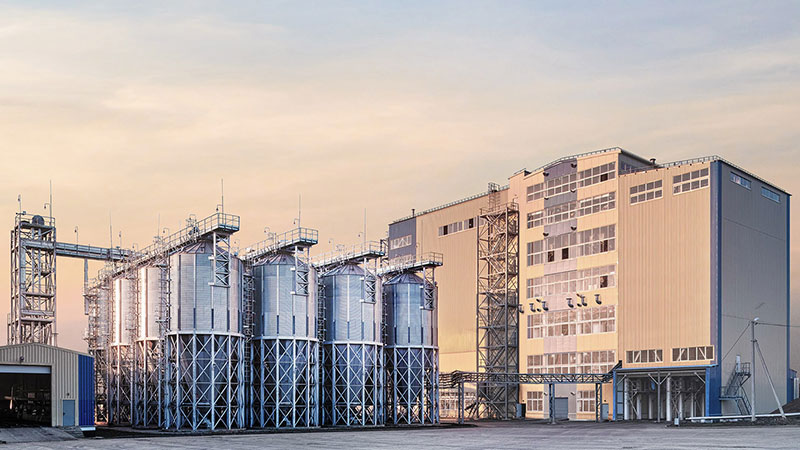
At RICHI, we go beyond project completion. With RICHI Servicee, we’re your dedicated partners in success. Count on us for expert guidance, minimal downtime, and optimized productivity. Choose RICHI for unmatched service and support.
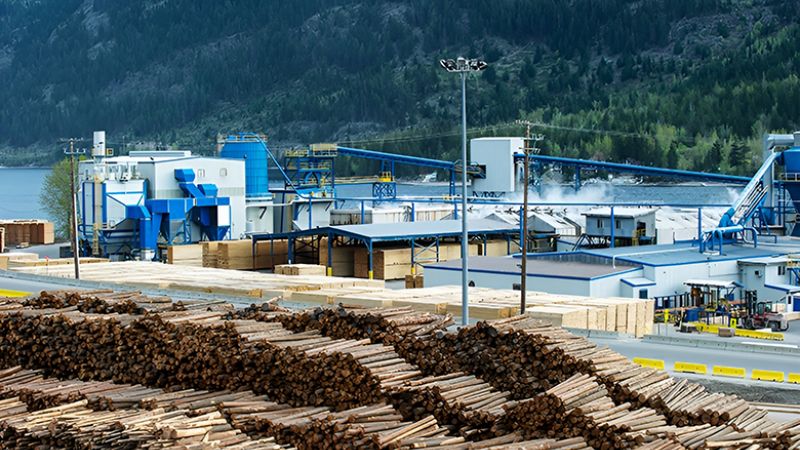


Meet global product demands and quality standards with industry-leading pellet plant design, engineering, equipment, and construction services for pellet processors.


Your Partner Beyond Project Completion
2000+ cases
RICHI is the leading designer, manufacturer and builder of pellet plants in the world, completing over 2000 projects in 140 countries across 6 continents.
Read More
Increase plant productivity, profitability, and safety by integrating high quality equipment into your pellet production line. Over the years, RICHI has become China's top pellet equipment manufacturer. At the same time, RICHI has established valuable partnerships with the world's leading component and raw material manufacturers to bring you the best there is in technology, automation, and efficiency in pelleting plant machinery.

For nearly 30 years, RICHI has been providing best-in-class pellet plant equipment and services to clients across a variety of industries, sizes, and needs. We pride ourselves on the knowledge and skill that each team member possesses – from our technical sales team to our process design engineers. You can count on RICHI Machinery to take your operation to the next level of innovation, quality, and success.
Need help with your pellet manufacturing plant project? Contact us today.
ANIMAL FEED
BIOMASS
WOOD
ORGANIC FERTILIZER
AQUA FEED
CAT LITTER
MUNICIPAL WASTE RECYCLING
SPECIAL PELLET PRODUCTION
RICHI Machinery continues to deliver world class pellet mill equipment, pellet plant engineering and project solutions that add value to our customers in the animal feed, wood waste, agriculture waste, organic fertilizer, cat litter and special pellet products industries. Throughout the years, we RICHI Machinery have built strong brand, becoming industry-leading pellet machine manufacturer. We value integrity, promise quality, and prioritize your success.
Learn MoreWith our expert team, we precisely implement your process engineering requirements in pellet mill and pelletizing plant systems. No matter which industry you’re in – we understand your needs and deliver solutions that meet the highest standards.
At RICHI, quality comes first. Our pellet making machine and related pellet line equipment undergo rigorous quality controls to ensure they meet the highest standards. Rely on products that are durable, safe, and efficient.
With decades of experience in pellet machine and pellet production line production, we have earned a reputation as a trusted partner in various industries. Our expertise allows us to cover a wide range of applications.
Not only do we offer premium pelleting equipment, but we are also experts at designing, building, installing, and maintaining facilities from the ground up. Our expertise is within pellt plant process design, discovering the most efficient, productive, and profitable way to handle your materials in an end-to-end cycle.
○ RICHI MACHINERY
Keeping in touch with us is an effective way to solve all your problems. If you have any needs or questions, please leave your contact information, then RICHI technical consultants will send design, quotation, videos to your mailbox. You can also contact us directly via WhatsApp: +86 13838389622
Copyright©2015-2026 by HENAN RICHI MACHINERY CO., LTD. All rights reserved.