
Two MZLH520 straw pellets machines in Indonesia were integrated with an existing Sumatra biomass facility to pelletize prepared oil-palm residues into industrial biomass fuel.
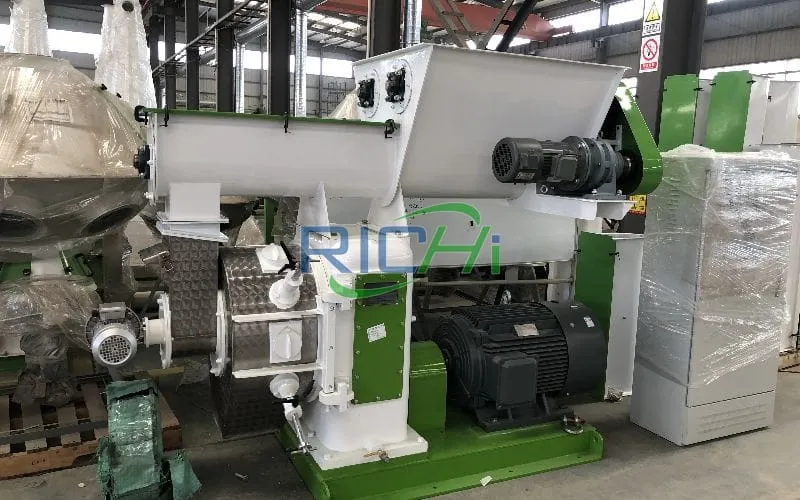
A biomass processor in Sumatra purchased two MZLH520 straw pellets machines in Indonesia to expand an existing agricultural-residue processing operation. The customer already had size-reduction, drying and material-handling equipment, so the requirement was not for another complete biomass pellet production line. The missing capacity was concentrated in the pelletizing section.
In this project, the machines are used for prepared oil-palm biomass rather than conventional rice or wheat straw. Oil palm fronds, trunk-derived fibrous material and selected palm-processing residues all behave differently during crushing, drying and pelletizing, but they share one important requirement: they have to reach a controlled particle size and moisture condition before entering the ring-die pellet mill.
Installing two MZLH520 units gave the processor approximately 3–4 T/H of reference pelletizing capacity under suitable biomass conditions while retaining more operating flexibility than relying on one much larger machine.
Name:
Straw Pellets Mill
Country:
Indonesia
Date:
2025
Capacity:
1.5–2.0 T/H
Model:
MZLH520
Main Motor Power:
132 kW
Application:
Industrial biomass fuel pellets
Quantity:
2 units
The customer had already invested in shredding, grinding and drying equipment. Replacing these sections would have added cost without solving the immediate production constraint.
The older pellet press had become the limiting stage. Its output was insufficient for the volume of prepared biomass available, and irregular feeding became more noticeable when the plant changed between lighter fibrous material and denser biomass blends.
Two MZLH520 machines therefore allowed the customer to expand the pelletizing section while continuing to use the existing preparation system.
The two-machine arrangement does not automatically mean two unrelated raw materials can always be processed independently at the same time. That depends on whether the plant has separate feeding, buffering, cooling and conveying routes. Where equipment is shared, production is scheduled by batch or material campaign.
Indonesia's palm sector creates several biomass streams, but a pellet machine does not see all of them as the same material.
Oil palm fronds are relatively fibrous and low in bulk density after shredding. They require controlled chopping and secondary grinding before stable feeding becomes possible.
Trunk-derived material contains a different fibre structure and can arrive with substantial moisture, particularly when obtained from plantation replanting. Drying capacity therefore becomes important before this material is used continuously in pellet production.
Selected palm fibres can also enter the formulation after drying and grinding. Their actual behavior depends on the source, fibre length, remaining oil, ash content and moisture.
Palm kernel shell requires a different decision. PKS is already a relatively dense solid biomass fuel and can often be sold or burned directly without pelletizing. The customer therefore does not automatically send whole shells through the MZLH520. If PKS is incorporated into a pellet formulation, it first has to be crushed to an appropriate particle size and the blend must be evaluated for feeding, wear and pellet formation.
This approach is more practical than assuming every palm-industry by-product gains value simply because it passes through a ring-die pellet machine.
The MZLH520 straw pellet making machine is the forming machine, not a substitute for shredding or drying. Stable pelletizing begins before material reaches the feeder.
For the Sumatra installation, fibrous residues are first reduced by the existing preparation equipment. Long fronds and irregular trunk pieces cannot be fed directly into the pellet chamber. They are shredded and subsequently ground until the material can enter the forced-feeding system without wrapping, bridging or creating large fluctuations in motor load.
A working particle size of roughly 3–5 mm is suitable for much of the prepared fibrous biomass in this application, although the exact distribution is adjusted according to raw material and die specification rather than controlled to one absolute number.
Moisture requires the same approach. Material entering the pellet mill is normally conditioned into a relatively narrow low-teens moisture range. Excessively wet biomass can reduce forming stability and increase the load on the die, while overdried material may also become difficult to bind and can increase fines.
This is particularly important for palm biomass because plantation residues can arrive at very different moisture levels depending on their source, storage time and exposure to rainfall.
| Project Parameter | Configuration |
|---|---|
| Equipment | Biomass / straw pellet machine |
| Model | MZLH520 |
| Quantity | 2 units |
| Main Motor Power | 132 kW per machine |
| Anti-bridging Feeder Power | 3 kW per machine |
| Forced Feeder Power | 1.5 kW per machine |
| Ring Die Inner Diameter | 520 mm |
| Finished Pellet Diameter | 4–12 mm |
| Reference Capacity | 1.5–2.0 T/H per machine |
| Combined Reference Capacity | 3–4 T/H when both machines are adequately supplied |
| Main Application | Industrial biomass fuel pellets |
| Installation Type | Two standalone pellet mills integrated into an existing biomass-processing system |
The 3–4 T/H figure describes the combined pelletizing capability of the two machines under suitable production conditions. It is not automatically the capacity of the complete plant.
If the existing dryer can only prepare 2.5 T/H of a high-moisture palm material, for example, adding pellet-mill motor power cannot raise finished output to 4 T/H. The same limitation can occur at cooling, screening or conveying.
For this reason, RICHI treats machine capacity and usable plant capacity as two separate engineering figures.
Low-density agricultural fibres do not always fall smoothly into a pelletizing chamber under gravity. Material can accumulate above the inlet, especially when fibre length is inconsistent or bulk density changes between batches.
The MZLH520 biomass pellet machine configuration uses both an anti-bridging feeder and a forced feeding mechanism. Their role is not simply to increase nameplate output. They help present prepared biomass to the pelletizing chamber at a more stable rate.
This matters when processing palm frond fibre or other light agricultural residues because uneven feeding can create alternating under-load and overload conditions even when the main motor has adequate power.
Ring-die selection is equally important. Compression ratio is matched to the actual biomass rather than specified from pellet diameter alone. A die intended for relatively easy-forming material may not perform the same way with a dry, fibrous palm formulation.
The customer therefore treats die specification, moisture, grind size and feed rate as one operating system rather than four independent settings.
The customer selected a normal fuel-pellet route rather than trying to use one machine to manufacture several unrelated products.
For the main market, prepared palm biomass is converted into dense pellets for industrial thermal users. Pellet diameter can be selected within the machine's available range according to the receiving boiler and handling system, with 6–10 mm sizes being practical options for many industrial fuel applications.
Pelletizing makes loose fibrous biomass easier to meter, transport and store, but it does not automatically improve every combustion property of the original raw material. Ash content, chlorine, alkali metals and calorific value still depend on the biomass entering the plant.
This is why raw-material control remains important even after a stable pellet has been formed.
A common mistake in multi-biomass projects is to assume that mixing more residue types automatically improves the product.
The Sumatra processor evaluates blends according to both mechanical behavior and the fuel specification required by the buyer. A fibrous component may help one pelletizing condition while a high-ash or contaminated component may make the finished fuel less attractive for another boiler.
Soil contamination is particularly important for field-collected material such as fronds and trunk residues. Mineral contamination increases ash and can also accelerate wear in grinding and pelletizing equipment.
The customer therefore separates unsuitable loads rather than relying on pelletization to hide poor raw-material quality.
The installed equipment works as one section of a larger material-preparation system:
The buffer between preparation and pelletizing is useful because shredders, dryers and pellet machines do not always run at identical instantaneous capacities. A short interruption upstream does not immediately have to stop both pellet mills if sufficient prepared material is available.
Adding a second biomass pellet mill increases more than the electrical load of the production area. It also increases the maximum quantity of hot pellets that the downstream system may have to receive.
Pellets leave the ring die warm and relatively vulnerable to deformation. Adequate cooling is needed before prolonged storage or bagging.
The existing cooler and conveyors therefore have to be checked against the combined output of both MZLH520 machines. If downstream capacity is lower than the pelletizing section, the two machines cannot simply remain at their highest throughput continuously.
This is one reason the client chose gradual expansion through standalone equipment: each stage can be upgraded when actual operating data shows where the next restriction occurs.
Palm biomass can vary considerably in contamination and abrasiveness. The customer therefore does not replace dies and rollers according to one universal number of production hours.
Operators monitor die condition, roller wear, pellet appearance, motor load and production rate. A clean fibrous batch can behave differently from plantation residue containing substantial soil or hard mineral contamination.
Routine inspection also includes the forced feeder because long fibres or poorly ground material can affect feeding before they create a problem inside the pelletizing chamber.
For this installation, improving upstream material control can be as important for wear life as simply selecting harder pellet-mill components.
The two pellet machines were prepared for ocean transport from China to Belawan, North Sumatra. Belawan provides a practical maritime gateway for equipment destined for this part of Sumatra and avoids routing the machines through a more distant Indonesian port before inland transport.
RICHI Machinery supplied the technical information required for site preparation, including machine dimensions, electrical requirements, foundation information and interface details. The customer's forwarding and local project teams could then coordinate customs clearance and transport from the port to the processing facility.
Because this was an equipment-expansion project rather than construction of a completely new plant, particular attention was given to the positions of the existing conveyors, prepared-material bins and downstream cooling system.
The main operating benefit is flexibility in the pelletizing section rather than an unsupported claim of a fixed percentage reduction in production cost.
The customer now has two machines that can share the required production load. During lower-volume periods, one machine can operate while the second remains available. During heavier production campaigns, both can be used provided the preparation and downstream systems can sustain the combined material flow.
Maintenance scheduling also becomes easier because servicing one pellet mill does not necessarily remove all pelletizing capacity from the factory.
Most importantly, the company can evaluate actual performance with several palm-biomass formulations before deciding whether its next investment should be another pellet mill, a larger dryer, additional raw-material storage or a higher-capacity cooling and conveying section.
This straw pellets machine in Indonesia project shows why pellet-mill selection should begin with the real condition of the biomass rather than with a general label such as “straw” or “palm waste.” Fibrous oil-palm residues, trunk-derived material, palm fibre and crushed shell fractions can require different preparation even when they ultimately enter the same type of ring-die pellet machine.
For a similar Indonesian biomass project, RICHI Machinery would first review the exact raw materials, incoming size, moisture range, contamination, required pellet diameter, hourly output, working hours, existing crusher and dryer capacity, available cooling system and intended fuel market.
These details determine whether one MZLH520, two parallel units or another MZLH model is the appropriate choice. They also show whether purchasing only a biomass pellet machine is sufficient or whether the real production constraint is still located in raw-material preparation, drying or downstream cooling.
Having the right mix of reliable, high-quality pellet machine and pelletizing systems and expert support is essential to your success. Watch how our end-to-end feed pellet plant solutions have helped our customers optimize their performance.
Our customized and future-proofed turnkey pellet plant solutions is designed with you at the core. From vision to reality and beyond, our team stays connected with yours. Giving you peace-of-mind with an expert at your side.
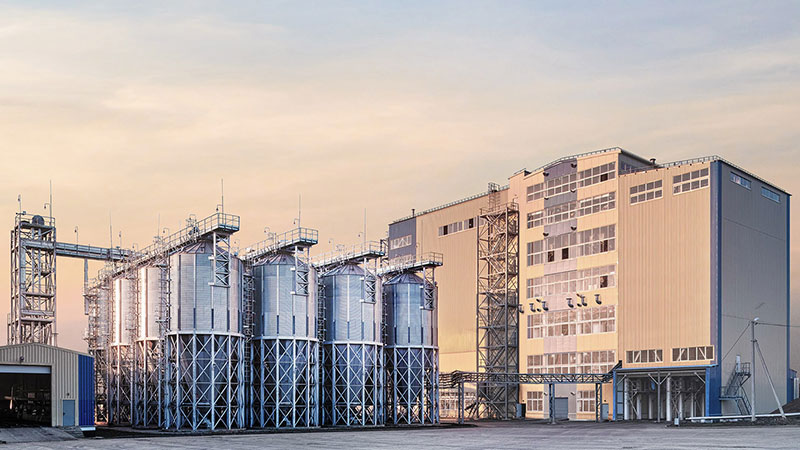
At RICHI, we go beyond project completion. With RICHI Servicee, we’re your dedicated partners in success. Count on us for expert guidance, minimal downtime, and optimized productivity. Choose RICHI for unmatched service and support.
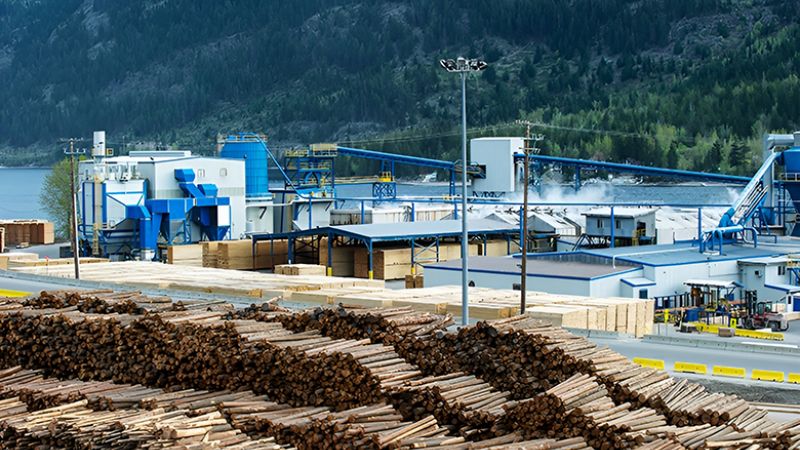


Meet global product demands and quality standards with industry-leading pellet plant design, engineering, equipment, and construction services for pellet processors.


Your Partner Beyond Project Completion
2000+ cases
RICHI is the leading designer, manufacturer and builder of pellet plants in the world, completing over 2000 projects in 140 countries across 6 continents.
Read More
Increase plant productivity, profitability, and safety by integrating high quality equipment into your pellet production line. Over the years, RICHI has become China's top pellet equipment manufacturer. At the same time, RICHI has established valuable partnerships with the world's leading component and raw material manufacturers to bring you the best there is in technology, automation, and efficiency in pelleting plant machinery.

For nearly 30 years, RICHI has been providing best-in-class pellet plant equipment and services to clients across a variety of industries, sizes, and needs. We pride ourselves on the knowledge and skill that each team member possesses – from our technical sales team to our process design engineers. You can count on RICHI Machinery to take your operation to the next level of innovation, quality, and success.
Need help with your pellet manufacturing plant project? Contact us today.
ANIMAL FEED
BIOMASS
WOOD
ORGANIC FERTILIZER
AQUA FEED
CAT LITTER
MUNICIPAL WASTE RECYCLING
SPECIAL PELLET PRODUCTION
RICHI Machinery continues to deliver world class pellet mill equipment, pellet plant engineering and project solutions that add value to our customers in the animal feed, wood waste, agriculture waste, organic fertilizer, cat litter and special pellet products industries. Throughout the years, we RICHI Machinery have built strong brand, becoming industry-leading pellet machine manufacturer. We value integrity, promise quality, and prioritize your success.
Learn MoreWith our expert team, we precisely implement your process engineering requirements in pellet mill and pelletizing plant systems. No matter which industry you’re in – we understand your needs and deliver solutions that meet the highest standards.
At RICHI, quality comes first. Our pellet making machine and related pellet line equipment undergo rigorous quality controls to ensure they meet the highest standards. Rely on products that are durable, safe, and efficient.
With decades of experience in pellet machine and pellet production line production, we have earned a reputation as a trusted partner in various industries. Our expertise allows us to cover a wide range of applications.
Not only do we offer premium pelleting equipment, but we are also experts at designing, building, installing, and maintaining facilities from the ground up. Our expertise is within pellt plant process design, discovering the most efficient, productive, and profitable way to handle your materials in an end-to-end cycle.
○ RICHI MACHINERY
Keeping in touch with us is an effective way to solve all your problems. If you have any needs or questions, please leave your contact information, then RICHI technical consultants will send design, quotation, videos to your mailbox. You can also contact us directly via WhatsApp: +86 13838389622
Copyright©2015-2026 by HENAN RICHI MACHINERY CO., LTD. All rights reserved.