
Straw pellet mill in Slovakia for processing wheat straw into 6–8 mm biomass fuel pellets. Explore the MZLH350 ring die pellet mill, technical specifications, raw material preparation and fuel pellet applications from RICHI Machinery.
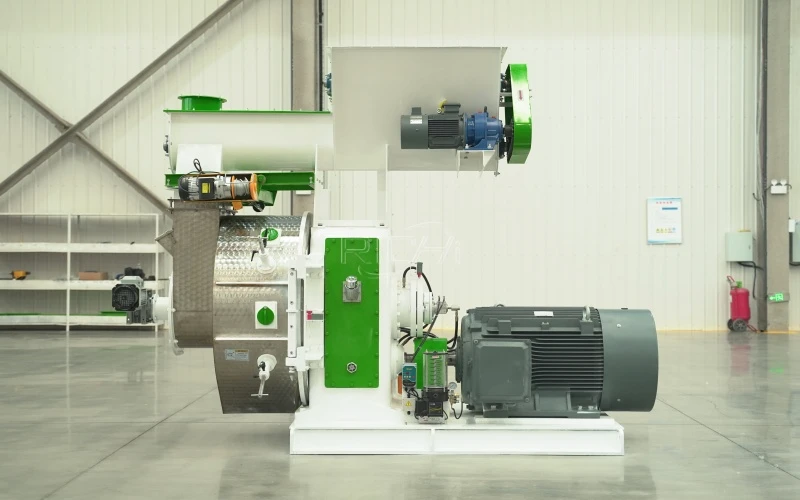
The straw pellet mill in Slovakia is designed for an agricultural biomass processor seeking to turn locally collected wheat straw into compact fuel pellets for small commercial heating systems and agricultural buildings. The project focuses on baled wheat straw left after grain harvesting in the country's cereal-growing areas, rather than wood waste or mixed household residues. By adding one MZLH350 straw pellet mill to its existing preparation equipment, the processor aims to create a saleable fuel from a seasonal agricultural by-product without investing in a complete new pellet production line.
The customer is a small biomass fuel business working with nearby grain farms. It already has access to straw bales, a bale-breaking unit and a straw hammer mill, so the immediate investment is the pelletizing stage. The selected MZLH350 has a 37 kW main motor, a 350 mm ring die and a nominal capacity of 0.3–0.5 T/H for suitable biomass materials. The target finished product is a 6 mm fuel pellet, subject to die configuration and material trials. The project is intended to process prepared, sufficiently dry wheat straw for fuel use, not to manufacture livestock feed.
Name:
Wheat Straw Pellet Mill
Country:
Slovakia
Date:
2026
Capacity:
0.3–0.5 T/H
Model:
MZLH350
Main Motor Power:
37 kW
Raw Materials:
wheat straw
Pellet diameter:
6mm
Slovakia has established cereal-growing areas, including the Danube Lowland and other agricultural districts where wheat and barley are cultivated. Grain harvesting leaves straw in the field, but the amount that can be collected for industrial use depends on the crop, soil-management practices, livestock demand and the cost of baling and storage. A viable straw pellet project therefore begins with a reliable local supply, not simply an estimate of how much straw exists nationally.
For this project, the processor sources wheat straw from several nearby grain farms. The farms retain the straw needed for livestock bedding, soil protection and other agricultural uses, while suitable surplus material is baled and sold to the biomass business. This arrangement gives the processor a defined raw-material collection area and avoids assuming that every tonne of field residue is available for fuel production.
Wheat straw is a reasonable choice because it is generated directly by grain farming and can be collected in a familiar agricultural form. It is also fibrous, relatively bulky and less dense than the finished pellet. These characteristics make densification useful where a buyer needs a more compact fuel that is easier to store, handle and meter into a compatible combustion system.
The business is not purchasing the straw pellet machine to dispose of wet, freshly cut straw. Its operating plan is based on baled straw collected after field drying, with each incoming lot inspected for moisture, dirt, stones, mold and signs of deterioration. Material that is too wet for reliable pelletizing is held back for further drying rather than being forced directly into the machine.
The purchase is deliberately limited to one pellet mill. The customer already owns a bale breaker and a hammer mill, which allows the new machine to be added to an established raw-material preparation area. Buying another complete line would duplicate equipment that the business can continue using and would increase the initial investment beyond the immediate production requirement.
Wheat straw arrives in rectangular bales collected after combine harvesting. The bales are stored under cover on a dry floor, separated from ground moisture and protected from rain. Before processing, operators inspect the bales and remove twine and other foreign material. The bale breaker opens the compacted straw so that it can be fed consistently to the hammer mill.
The hammer mill reduces the straw to a suitable particle size, with approximately 3 mm used as the initial preparation target for this project. The exact screen selection must be checked against the straw's fiber length, bulk density and the feeding characteristics of the biomass pellet mill. Excessively long fibers can bridge in the feed system, while unnecessary overgrinding increases electricity use and may reduce overall processing efficiency.
After grinding, the material is screened to remove oversized pieces and unwanted foreign matter. The prepared straw is then transferred to the pellet mill at a controlled rate. This sequence is important because the MZLH350 is the densification machine, not a bale opener, straw cutter or hammer mill. Stable pellet production depends on the equipment upstream delivering material in a condition the ring die can process.
For this project, the preferred incoming straw is clean wheat straw with a working moisture target of approximately 10–14% before pelletizing. This is a project planning range, not a universal specification for every straw pellet mill. The suitable operating window must be confirmed during trials because straw variety, harvest conditions, particle size, ambient humidity and die compression all affect the result.
Moisture is checked on representative samples rather than judged only by touch. A bale can appear dry on the outside while retaining wetter material inside, particularly if it was baled too early or exposed to rain. Sampling several bales from each delivery helps the operator identify a wet lot before it enters the preparation process.
The customer already has access to a drying arrangement for material that requires additional moisture removal. Straw above the accepted moisture range is not sent directly to the pellet mill; it is dried and checked again before grinding or pelletizing, according to the site's process layout. This avoids treating a moisture problem as though it could be corrected simply by increasing feed pressure.
Storage is equally important. Bales are kept off the ground, with enough separation for inspection and air movement. The business follows a first-in, first-out handling approach where practical and keeps visibly moldy or contaminated material out of the fuel stream. These measures help preserve the feedstock and reduce the risk of moisture fluctuations during production.
The MZLH350 is selected for this project because its nominal output range is aligned with a small commercial biomass operation that has already invested in basic preparation equipment. It offers a defined starting point for processing prepared wheat straw without moving immediately to the larger MZLH420 or MZLH520 models.
The equipment configuration is as follows:
The listed motor powers and nominal capacity follow the supplied MZLH series specifications. Actual output depends on straw moisture, particle-size distribution, bulk density, fiber characteristics, die compression ratio and the stability of the feeding system. The quoted capacity should therefore be treated as a preliminary equipment range, not a guaranteed production rate for every wheat straw batch.
The purpose of the finished product determines which machine configuration is appropriate. This project produces biomass fuel pellets, so the selected machine is the MZLH350 without a conditioning unit and with a forced feeder. The CZLH series is the relevant option when the intended product is livestock feed made from straw or forage and the process requires a conditioner.
Fuel pellets do not need to meet the nutritional or digestibility requirements of animal feed. Instead, the processor focuses on pellet durability, consistent dimensions, moisture, fines generation, bulk handling and compatibility with the intended combustion equipment. A 6 mm pellet is the planned product size for this project, but the final diameter should be agreed with prospective buyers and their heating systems before the die is ordered.
The business intends to sell the pellets to customers with combustion appliances designed and approved for agricultural biomass fuels. Potential users include compatible farm boilers, workshop heating systems and small commercial heating installations. Wheat straw pellets should not be assumed suitable for every domestic wood-pellet stove or boiler. Straw generally has different ash and mineral characteristics from clean wood, so the combustion appliance must be designed to handle the selected fuel.
This distinction affects the sales strategy. Rather than marketing the pellets as a direct substitute for all wood pellets, the processor can provide clear information about the raw material, pellet diameter, moisture, ash characteristics and recommended equipment compatibility. A representative batch should be tested before the business makes firm fuel-performance claims.
Loose straw is awkward to transport and store because its bulk volume is high relative to its weight. Once the material is ground and compressed through a ring die, it becomes a more compact product that can be conveyed, weighed, bagged or supplied in bulk according to the customer's distribution method.
In the MZLH350, the forced feeder helps deliver prepared material into the pelletizing chamber, while the anti-bridging feeder supports a more consistent material supply. The rollers press the straw against the ring die, forcing it through the die holes to form continuous strands. A cutting arrangement then produces pellets of the required length.
Straw is not identical to sawdust. Its fibers can be more elastic, and the amount of fine material, moisture and natural binding components influences how the pellets form. The ring die and roller settings must therefore be selected with the actual straw in mind. A configuration that works well with wood sawdust cannot automatically be assumed to produce the same result with wheat straw.
After pelletizing, the product should be allowed to cool and stabilize before final screening and packing. Cooling reduces the temperature of freshly formed pellets and helps the product reach a condition suitable for storage. Screening removes fines, which can be returned to the process where the operating arrangement allows. Finished pellets should be protected from rain and ground moisture because rewetting can weaken them and cause handling problems.
The processor's quality procedure covers both the incoming material and the finished fuel. For incoming straw, operators record the source, delivery date, visual condition and moisture result. This makes it easier to identify whether a production change is linked to a new supply lot rather than to the pellet mill itself.
During production, the operator checks feed stability, motor load, pellet appearance, pellet length and the amount of fines after cooling and screening. The team also records the settings used for each batch. These records help build a repeatable operating procedure and make it easier to compare material from different farms.
Finished pellets can be assessed for moisture, bulk density, durability and ash content according to the buyer's specification and applicable fuel requirements. Where the customer intends to supply commercial heating users, a laboratory assessment of relevant fuel properties can help establish a consistent product description. The final acceptance criteria should be agreed with buyers rather than invented solely for marketing purposes.
Straw fuel quality also depends on what enters the machine. Soil and sand collected during baling can increase ash content, while moldy or deteriorated straw can create storage and product-quality concerns. The bale inspection and screening stages are therefore part of the pellet mill project's commercial value, even though they are not performed by the pellet mill itself.
Before finalizing the MZLH350 configuration, RICHI Machinery can review the customer's raw-material photographs, sample condition, target pellet diameter and existing preparation equipment. This allows the technical team to distinguish between issues that can be handled by the pellet mill and those that need to be resolved through bale opening, grinding, screening or moisture management.
The equipment layout should show the connection between the existing hammer mill and the new pellet mill, the feeding arrangement, operator access and space required for maintenance. Electrical requirements should be checked against the site supply, including the main motor and feeder loads, control cabinet, protective devices and the starting method specified for the final machine.
The technical review should also cover the ring die specification, roller condition and the expected wear parts needed for the customer's annual operating schedule. Because agricultural residues vary between harvests, it is useful to retain records of material characteristics and pellet quality so that adjustments can be made systematically rather than through trial and error on every batch.
For commissioning, the operator should be trained to introduce material gradually, observe the motor load, monitor pellet formation and stop the machine safely for inspection when required. RICHI can provide operating guidance and maintenance documentation for the supplied equipment. The final operating parameters should be confirmed with the actual wheat straw rather than assumed from a generic biomass setting.
The equipment is planned for shipment from Qingdao Port in China. As Slovakia is landlocked, the Port of Koper in Slovenia is a practical seaport option for containerized machinery destined for Central Europe. The final routing should be confirmed with the freight forwarder based on the equipment's packing dimensions, shipping schedule and inland delivery arrangements.
Before shipment, the customer should confirm the installation space, power supply and interfaces with the existing preparation equipment. The packing list and final equipment dimensions should be used to prepare the receiving area and plan unloading. The actual shipment schedule will depend on manufacturing completion and the carrier's booking.
The key decision is whether the available straw supply and existing preparation equipment can support a steady production schedule. The MZLH350 provides a nominal capacity range of 0.3–0.5 T/H, but the customer should confirm the expected output through material testing and commissioning. The working schedule should also account for straw collection seasonality, storage capacity, labor availability and buyer demand.
For the project scenario, the customer's evaluation focuses on three practical outcomes: reducing the volume of loose straw, producing pellets with consistent dimensions, and creating a fuel product that local buyers can use in suitable biomass heating equipment. These are measurable operating objectives rather than a promise that every straw batch will perform identically.
Feedback should be recorded after the machine has processed representative batches. The operator can document whether the prepared straw feeds steadily, whether the target pellet size is maintained, how much screening return is generated and whether the finished pellets meet the agreed buyer specification. Any customer quotation or testimonial published later should be based on actual commissioning feedback rather than an assumed result.
The straw pellet mill in Slovakia is planned as a single-machine investment for a processor using locally sourced wheat straw. By retaining its existing bale breaker and hammer mill, the business can concentrate its investment on the pelletizing stage and build a compact fuel-pellet operation around a raw material already available through nearby grain farms.
The MZLH350 biomass pellet machine provides a 37 kW main motor, a 350 mm ring die and a nominal output range of 0.3–0.5 T/H. With prepared straw at a suitable moisture level, appropriate particle size and a confirmed die specification, it offers a starting point for producing 6 mm agricultural biomass fuel pellets. Final performance must be confirmed through material trials and actual operating records.
For agricultural businesses considering a straw pellet mill, biomass pellet mill or wheat straw pellet machine, RICHI Machinery can assess the raw material, existing preparation equipment, target pellet size and expected operating schedule before recommending a suitable configuration. The aim is to match the machine to the material and the buyer's requirements, giving the project a sound technical basis before the investment is made.
Having the right mix of reliable, high-quality pellet machine and pelletizing systems and expert support is essential to your success. Watch how our end-to-end feed pellet plant solutions have helped our customers optimize their performance.
Our customized and future-proofed turnkey pellet plant solutions is designed with you at the core. From vision to reality and beyond, our team stays connected with yours. Giving you peace-of-mind with an expert at your side.

At RICHI, we go beyond project completion. With RICHI Servicee, we’re your dedicated partners in success. Count on us for expert guidance, minimal downtime, and optimized productivity. Choose RICHI for unmatched service and support.



Meet global product demands and quality standards with industry-leading pellet plant design, engineering, equipment, and construction services for pellet processors.


Your Partner Beyond Project Completion
2000+ cases
RICHI is the leading designer, manufacturer and builder of pellet plants in the world, completing over 2000 projects in 140 countries across 6 continents.
Read More
Increase plant productivity, profitability, and safety by integrating high quality equipment into your pellet production line. Over the years, RICHI has become China's top pellet equipment manufacturer. At the same time, RICHI has established valuable partnerships with the world's leading component and raw material manufacturers to bring you the best there is in technology, automation, and efficiency in pelleting plant machinery.

For nearly 30 years, RICHI has been providing best-in-class pellet plant equipment and services to clients across a variety of industries, sizes, and needs. We pride ourselves on the knowledge and skill that each team member possesses – from our technical sales team to our process design engineers. You can count on RICHI Machinery to take your operation to the next level of innovation, quality, and success.
Need help with your pellet manufacturing plant project? Contact us today.
ANIMAL FEED
BIOMASS
WOOD
ORGANIC FERTILIZER
AQUA FEED
CAT LITTER
MUNICIPAL WASTE RECYCLING
SPECIAL PELLET PRODUCTION
RICHI Machinery continues to deliver world class pellet mill equipment, pellet plant engineering and project solutions that add value to our customers in the animal feed, wood waste, agriculture waste, organic fertilizer, cat litter and special pellet products industries. Throughout the years, we RICHI Machinery have built strong brand, becoming industry-leading pellet machine manufacturer. We value integrity, promise quality, and prioritize your success.
Learn MoreWith our expert team, we precisely implement your process engineering requirements in pellet mill and pelletizing plant systems. No matter which industry you’re in – we understand your needs and deliver solutions that meet the highest standards.
At RICHI, quality comes first. Our pellet making machine and related pellet line equipment undergo rigorous quality controls to ensure they meet the highest standards. Rely on products that are durable, safe, and efficient.
With decades of experience in pellet machine and pellet production line production, we have earned a reputation as a trusted partner in various industries. Our expertise allows us to cover a wide range of applications.
Not only do we offer premium pelleting equipment, but we are also experts at designing, building, installing, and maintaining facilities from the ground up. Our expertise is within pellt plant process design, discovering the most efficient, productive, and profitable way to handle your materials in an end-to-end cycle.
○ RICHI MACHINERY
Keeping in touch with us is an effective way to solve all your problems. If you have any needs or questions, please leave your contact information, then RICHI technical consultants will send design, quotation, videos to your mailbox. You can also contact us directly via WhatsApp: +86 13838389622
Copyright©2015-2026 by HENAN RICHI MACHINERY CO., LTD. All rights reserved.