
Spiral feed mixer for powder materials in Serbia for blending corn meal, wheat, soybean meal and feed additives. Explore RICHI SLHY2.5L specifications, batch mixing, existing-line integration and customized feed processing solutions.
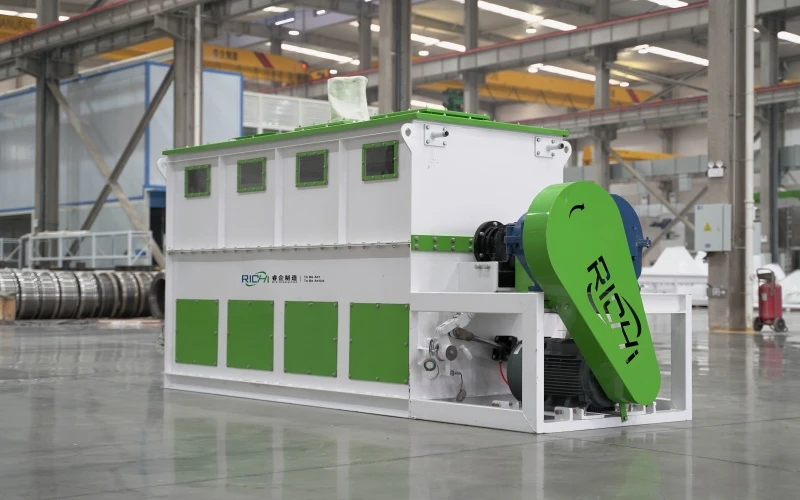
The spiral feed mixer for powder materials in Serbia was selected for a regional feed manufacturer that supplies poultry farms and agricultural distributors across central Serbia. The company already handles locally sourced maize and wheat, purchases soybean meal and sunflower meal from agricultural suppliers, and produces compound feed for commercial poultry operations.
Its immediate requirement is to improve the consistency of powder blending before the material moves to an existing pellet mill or mash-feed packing station. Rather than replace the entire production system, the company plans to add one RICHI SLHY2.5L single-shaft double-ribbon mixer to strengthen the mixing stage.
Name:
Spiral Feed Mixer
Country:
Serbia
Date:
2026
Capacity:
1,000 kg per batch
Model:
SLHY2.5L
Main Motor Power:
18.5 kW
Equipment type:
Single-shaft double-ribbon mixer
Effective volume:
2.5 m³
The purchase is an equipment upgrade, not a complete turnkey feed mill project. The customer intends to retain suitable upstream grinding equipment, raw-material storage and downstream machinery, while introducing a dedicated batch mixer with a 1,000 kg rated mixing amount and a 2.5 m³ effective volume.
The mixer machine will handle ground cereal ingredients, protein meals, limestone, phosphate sources, salt and premix additions according to the relevant feed formulas. Its purpose is straightforward: distribute ingredients more evenly, reduce avoidable batch variation and provide a more dependable handover between grinding, mixing and the next processing stage.
Serbia has a substantial agricultural sector, with maize and wheat forming important parts of its crop production. Poultry production, pig farming and other livestock operations create demand for compound feeds, while regional feed businesses often work with several formulas rather than one fixed product. For a feed manufacturer serving poultry farms, a change in formula can mean a different balance of cereal meals, protein ingredients, minerals and micro-additives.
The customer in this project operates as a medium-sized feed processor rather than a large integrated agricultural conglomerate. It purchases grain from local suppliers and agricultural cooperatives, processes suitable ingredients in its own facility, and distributes feed to independent poultry farms and other regional buyers. The business has already invested in grinding and conveying equipment, so its priority is not to duplicate machinery that still meets production requirements.
The weakness was in batch preparation. When several powdered ingredients enter a mixer, the challenge is not simply to turn the material over. Ingredients differ in bulk density, particle size, flowability and inclusion rate. Ground maize may form the largest share of a poultry formula, while a small quantity of vitamin-mineral premix or an enzyme preparation must still be distributed throughout the batch. If the mixing arrangement is unsuitable, a visually uniform product may not necessarily have the consistency required for reliable feed production.
Adding a purpose-built ribbon mixer gives the plant a defined batch-mixing stage. It also makes it easier to establish repeatable operating procedures for different formulas, document batch conditions and investigate any variation identified during routine quality checks.
RICHI recommended the SLHY2.5L, a single-shaft double-ribbon mixer designed for powder blending in feed production. The model offers a 2.5 m³ effective volume and a listed mixing amount of 1,000 kg per batch. Its pneumatic discharge arrangement suits a plant looking to coordinate batch release with downstream conveying or storage equipment.
| Specification | SLHY2.5L |
|---|---|
| Equipment type | Single-shaft double-ribbon mixer |
| Quantity purchased | 1 unit |
| Rated mixing amount | 1,000 kg per batch |
| Effective volume | 2.5 m³ |
| Motor power | 18.5 kW |
| Drive arrangement | As specified for the selected SLHY configuration |
| Discharge arrangement | Pneumatic discharge |
| Primary application | Powdered feed ingredients and compound-feed formulas |
The rated batch quantity is the manufacturer's listed mixing amount, not a guarantee that every formula will occupy the same volume or reach the same operating weight. The actual loading must account for bulk density, available working volume, ingredient behavior and the requirements of the selected recipe. A low-density mixture and a denser mineral-rich mixture can behave differently even when their weights are similar.
The SLHY series is intended for blending powdered materials, particularly in small and medium-sized feed mills. Its double-ribbon arrangement moves material within the mixing chamber, helping redistribute ingredients rather than relying on a simple rotating paddle to turn the batch. The final mixing performance still depends on the formula, loading sequence, particle-size distribution, fill level and operating time.
The proposed application centers on poultry feed made from ingredients that are commercially relevant to Serbia's agricultural supply chain. Maize provides a major energy ingredient, while wheat may be included depending on availability, price and the nutritional specification. Soybean meal supplies concentrated protein, and sunflower meal can be used in suitable formulas where its protein, fiber and other nutritional characteristics fit the target diet.
Mineral ingredients and premixes are added in controlled quantities. Depending on the formulation, these may include limestone, phosphate sources, salt, a vitamin-mineral premix and other approved feed additives. The proportions must be determined by the feed nutritionist and the requirements of the target bird category. The project does not assume a single fixed recipe for all poultry feed.
For example, a broiler formula may contain a substantial cereal fraction, soybean meal and a carefully controlled mineral and additive package. A layer-feed formula may require a different calcium balance, while a starter feed may need tighter control over ingredient particle size and nutrient distribution. These are formulation differences, not merely different product names, and the mixing procedure should reflect them.
The mixer is intended for ingredients that have already been prepared for blending. Whole maize kernels, large pieces of grain or unprocessed fibrous material should not be treated as ready-to-mix powder. The customer can continue to use its existing grinder where it is suitable, with the ground material screened or checked as necessary before entering the mixer.
The new machine will be installed between ingredient preparation and the next processing stage. This arrangement allows the customer to improve batch blending without automatically replacing the existing grinder, conveyors, pellet mill or packing machinery. Before installation, the equipment layout must be checked to confirm that the mixer discharge aligns with the receiving conveyor, hopper or downstream machine.
The intended process sequence is as follows.
The mixing time is not fixed by the model name or motor power alone. A practical starting point can be established during commissioning, but the operating time should be confirmed using the customer's actual formula and a suitable homogeneity test. Extending the mixing period indefinitely does not guarantee better results; the goal is a repeatable blend that meets the required quality standard without unnecessary cycle time.
For this Serbian project, the operating procedure should focus on four variables: batch loading, ingredient preparation, mixing time and discharge consistency. The SLHY2.5L has a rated mixing amount of 1,000 kg per batch, but the operator should not assume that every formula should be loaded to exactly the same weight without considering bulk density and the manufacturer's recommended working limits.
Particle size is one of the first things to check. If one ingredient is much coarser than the others, it may segregate during transfer or storage even if the mixer initially distributes it adequately. The plant should therefore establish suitable grinding and screening standards for its main ingredients. This is particularly relevant when the formula combines cereal meal, protein meal and small quantities of mineral materials.
Moisture and flowability also matter. Dry powders may flow and discharge differently from materials that have absorbed moisture or become compacted during storage. The mixer is primarily intended for powder blending; it should not be treated as a substitute for a dedicated liquid-addition or high-viscosity mixing system without confirming that the specific process is suitable for the machine.
Operators should also pay attention to the discharge stage. Residual material left in the chamber can affect the next batch, especially when the formula changes or when a product contains small quantities of concentrated additives. The cleaning and inspection procedure should reflect the feed types produced, the risk of cross-contamination and any relevant feed-safety requirements.
A ribbon mixer is designed to move material through the mixing chamber using a rotating shaft fitted with ribbon elements. The inner and outer ribbons help circulate the batch in different directions, promoting redistribution of ingredients across the chamber. This configuration is commonly used where the main task is to blend powders rather than reduce particle size.
For a feed manufacturer, the benefit is not simply a large batch capacity. The machine provides a dedicated and repeatable blending stage for formulas containing ingredients with different proportions. The process can be documented by batch, which helps the plant investigate quality issues and maintain a consistent production routine.
The SLHY series also gives the customer a choice of batch sizes. Smaller models can suit businesses with modest output or frequent formula changes, while larger models can be considered when production demand and the layout justify them. The SLHY2.5L occupies a middle position in the supplied range, with a listed 1,000 kg mixing amount and pneumatic discharge.
RICHI's other mixing equipment serves different production requirements. The SLHJ series uses a single-shaft double-layer paddle arrangement and is described for feed, chemical, organic-fertilizer and viscous-material applications. The SLHSJ series is a twin-shaft paddle mixer intended for a wider range of powder, granular, flake and other materials across feed, grain, food, chemical, pharmaceutical and pesticide industries. The suitable machine depends on the material characteristics, hygiene requirements, batch size and process objective.
The customer already has several important production assets in place. Replacing the complete line would require a larger investment, more extensive installation work and coordination across multiple equipment stages. The immediate need is to improve the mixing process, so a single mixer offers a more focused approach.
This type of purchase is also useful when a feed business wants to evaluate a revised production method before expanding capacity. By installing one mixer, the company can collect operating data on batch consistency, labor requirements, discharge behavior and the interaction with its existing equipment. Those findings can support a later decision about whether to upgrade conveying, storage or pelletizing capacity.
RICHI Machinery supplies individual mixers as well as complete feed processing lines. Where a customer needs a broader solution, the process can be planned around raw-material receiving, grinding, batching, mixing, pelletizing, cooling, screening and packing. The arrangement can be customized according to the available building, target output, feed types and existing machinery. A customer buying one mixer does not have to purchase a complete line, but it can still receive technical support for integrating the machine into the wider process.
Mixing quality should be verified rather than judged only by the appearance of the finished powder. A batch may look uniform while still showing unacceptable variation in a low-inclusion component. The plant should select a suitable sampling plan and test method for its feed formulas, then use the results to confirm the required mixing time and operating procedure.
Routine checks can include ingredient weighing records, mixer loading sequence, mixing duration, discharge inspection and the results of an appropriate homogeneity test. Where the formula contains a tracer or a low-inclusion premix, the chosen test should be suitable for evaluating the distribution of that component. The exact acceptance criteria depend on the customer's quality system and applicable feed regulations.
Maintenance also influences long-term consistency. Operators should inspect the drive, shaft, ribbon elements, bearings and discharge mechanism according to the manufacturer's instructions. Any unusual noise, vibration, leakage or change in discharge behavior should be investigated before it develops into a larger production problem.
The equipment is planned for sea shipment from Qingdao Port in China. Port of Rijeka in Croatia is one possible destination port to evaluate for delivery to Serbia. The final route and port should be confirmed with the freight forwarder based on the shipment schedule, equipment dimensions, available services and current transport arrangements.
In this illustrative project scenario, the buyer's main evaluation criteria are consistent powder blending, practical batch handling and the ability to retain suitable existing equipment. The proposed SLHY2.5L configuration addresses those priorities on paper, but actual mixing performance must be verified with the customer's own ingredients and feed formulas during commissioning.
The most useful results from the first production trials would be the confirmed batch weight, validated mixing time, homogeneity-test results, discharge behavior and any residual material observed between batches. Those records would allow the plant to establish a practical operating procedure instead of relying on a generic mixing-time recommendation.
This case is an illustrative project scenario based on the supplied SLHY2.5L specifications and a plausible Serbian feed-processing application. It is not presented as a verified installation, and no fabricated customer quotation or confirmed production result is claimed.
A suitable mixer should be selected around the materials being blended, the batch weight, the required mixing quality and the machinery already installed at the plant. For feed manufacturers, those details are often more important than choosing a machine solely by motor power or nominal volume.
RICHI Machinery supplies feed mixers for farms, commercial feed mills and integrated agricultural businesses, alongside equipment for other industrial mixing applications. Its equipment has been supplied to customers in more than 100 countries. For a project involving a spiral feed mixer for powder materials in Serbia or another market, the selection process can begin with the ingredients, batch size, required output, existing equipment and the intended downstream process. This provides a sound basis for discussing the right model and a practical installation plan.
Having the right mix of reliable, high-quality pellet machine and pelletizing systems and expert support is essential to your success. Watch how our end-to-end feed pellet plant solutions have helped our customers optimize their performance.
Our customized and future-proofed turnkey pellet plant solutions is designed with you at the core. From vision to reality and beyond, our team stays connected with yours. Giving you peace-of-mind with an expert at your side.

At RICHI, we go beyond project completion. With RICHI Servicee, we’re your dedicated partners in success. Count on us for expert guidance, minimal downtime, and optimized productivity. Choose RICHI for unmatched service and support.



Meet global product demands and quality standards with industry-leading pellet plant design, engineering, equipment, and construction services for pellet processors.


Your Partner Beyond Project Completion
2000+ cases
RICHI is the leading designer, manufacturer and builder of pellet plants in the world, completing over 2000 projects in 140 countries across 6 continents.
Read More
Increase plant productivity, profitability, and safety by integrating high quality equipment into your pellet production line. Over the years, RICHI has become China's top pellet equipment manufacturer. At the same time, RICHI has established valuable partnerships with the world's leading component and raw material manufacturers to bring you the best there is in technology, automation, and efficiency in pelleting plant machinery.

For nearly 30 years, RICHI has been providing best-in-class pellet plant equipment and services to clients across a variety of industries, sizes, and needs. We pride ourselves on the knowledge and skill that each team member possesses – from our technical sales team to our process design engineers. You can count on RICHI Machinery to take your operation to the next level of innovation, quality, and success.
Need help with your pellet manufacturing plant project? Contact us today.
ANIMAL FEED
BIOMASS
WOOD
ORGANIC FERTILIZER
AQUA FEED
CAT LITTER
MUNICIPAL WASTE RECYCLING
SPECIAL PELLET PRODUCTION
RICHI Machinery continues to deliver world class pellet mill equipment, pellet plant engineering and project solutions that add value to our customers in the animal feed, wood waste, agriculture waste, organic fertilizer, cat litter and special pellet products industries. Throughout the years, we RICHI Machinery have built strong brand, becoming industry-leading pellet machine manufacturer. We value integrity, promise quality, and prioritize your success.
Learn MoreWith our expert team, we precisely implement your process engineering requirements in pellet mill and pelletizing plant systems. No matter which industry you’re in – we understand your needs and deliver solutions that meet the highest standards.
At RICHI, quality comes first. Our pellet making machine and related pellet line equipment undergo rigorous quality controls to ensure they meet the highest standards. Rely on products that are durable, safe, and efficient.
With decades of experience in pellet machine and pellet production line production, we have earned a reputation as a trusted partner in various industries. Our expertise allows us to cover a wide range of applications.
Not only do we offer premium pelleting equipment, but we are also experts at designing, building, installing, and maintaining facilities from the ground up. Our expertise is within pellt plant process design, discovering the most efficient, productive, and profitable way to handle your materials in an end-to-end cycle.
○ RICHI MACHINERY
Keeping in touch with us is an effective way to solve all your problems. If you have any needs or questions, please leave your contact information, then RICHI technical consultants will send design, quotation, videos to your mailbox. You can also contact us directly via WhatsApp: +86 13838389622
Copyright©2015-2026 by HENAN RICHI MACHINERY CO., LTD. All rights reserved.