
A cattle-feed operation near Palapye uses one SFSP66×80 hammer mill to grind dry, pre-cut sorghum straw at about 2.0–2.5 T/H for controlled mixed-ration use.
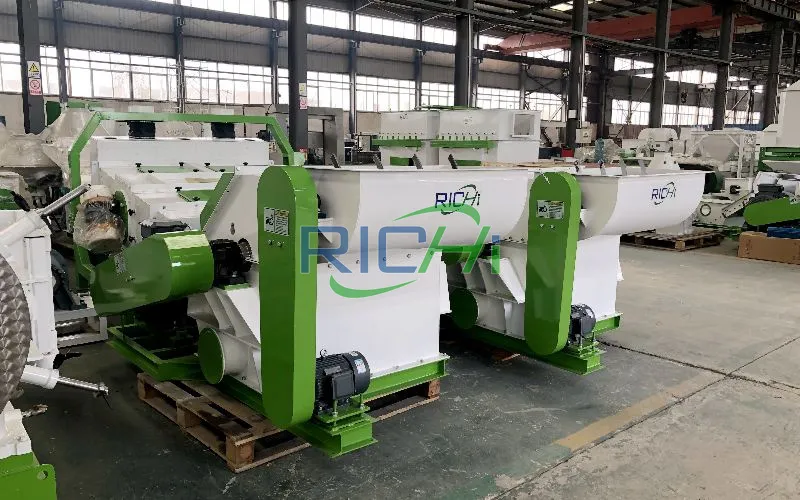
A commercial dairy and cattle-feed operation near Palapye selected one SFSP66×80 Sorghum Straw Hammer Mill in Botswana to improve the way dry sorghum residues are prepared for mixed rations. The farm grows grain sorghum and also buys baled residues from nearby growers, so stalks and leaves can be used as a controlled feed ingredient instead of being burned or left unused after harvest on the farm.
The customer already had bale handling, conveying and a vertical mixer machine, so the purchase remained a standalone grinding upgrade rather than a complete feed plant. The SFSP66×80 was selected for secondary size reduction after bale opening and coarse cutting, with a 75 kW main motor and about 2.0–2.5 T/H reference forage capacity under suitable dry, pre-cut conditions for scheduled farm production when demand rises.
Name:
Sorghum straw hammer mill
Country:
Botswana
Date:
2026
Capacity:
2.0–2.5 T/H
Model:
SFSP66×80
Main Motor Power:
75 kW
Raw Materials:
sorghum straw
Final product size:
8–10mm
Botswana is a credible country for this application because sorghum is an established field crop and cattle remain central to the agricultural economy. Historical agricultural data also show sorghum production in the Central Serowe/Palapye area, while dry-season dairy work in Botswana has documented the use of sorghum stover and other crop residues as practical feed materials during forage shortages.
The farm does not depend only on straw produced from its own fields. Annual residue volume can vary sharply with rainfall and crop yield, so the customer supplements its own bales with purchased material when economics are favorable. This keeps the grinder useful across seasons without pretending that a few hundred hectares of sorghum will always provide enough clean, dry residue for continuous daily operation.
| Project Parameter | Configuration |
|---|---|
| Equipment | Sorghum straw hammer mill / secondary forage grinder |
| Model | SFSP66×80 |
| Quantity | 1 unit |
| Rotor Diameter | 660 mm |
| Grinding Chamber Width | 800 mm |
| Main Motor Power | 75 kW |
| Rotating Speed | Approximately 2980 rpm |
| Hammer Tip Speed | Approximately 103 m/s |
| Reference Forage Capacity | Approximately 2.0–2.5 T/H under suitable dry, pre-cut conditions |
| Project Screen Range | Approximately 8–10 mm for trial and ration-specific selection |
| Main Material | Dry, opened and pre-cut sorghum straw |
| Downstream Use | Controlled fibrous ingredient for mixed cattle rations |
| Installation Type | Standalone grinding upgrade |
The SFSP66×80 sorghum straw crusher machine is used as a secondary forage grinder rather than a machine for intact bales or long stalks. Its 660 mm rotor, 800 mm grinding chamber, 75 kW main motor, approximately 2980 rpm rotor speed and about 103 m/s hammer tip speed provide the mechanical basis for controlled grinding once the straw has already been opened, cleaned and reduced to a manageable feed length without relying on primary chopping duty.
The 2.0–2.5 T/H figure is a forage reference rather than a fixed promise. Sorghum stem thickness, bale density, moisture, incoming chop length, screen opening and hammer condition all affect usable throughput. A dry, evenly pre-cut batch can move through the mill more steadily than loose material containing long stalk sections, compacted bale cores or excessive soil contamination during feeding or uneven feeding.
Whole bales are opened before the hammer mill so twine can be taken away and the straw can be metered more evenly. Long stalks are then shortened by the customer's coarse-cutting equipment before entering the SFSP66×80. This separation of bale opening, coarse cutting and fine grinding reduces bridging at the inlet and prevents sudden fibre surges from repeatedly overloading the 75 kW rotor during operation.
Dryness matters just as much as stem length. The hammer mill is not a dryer, and damp sorghum straw becomes more flexible, passes through the screen less readily and can reduce tonnes per hour. The customer therefore stores bales under cover and checks moisture before grinding campaigns, while wetter material is dried naturally or handled separately instead of being forced through the mill at the same feeder setting.
Screen selection is linked to how the ground straw will be used. An 8–10 mm screen can be evaluated as a practical starting range for a mixed-ration ingredient, but screen opening is not the same as final particle size. Hammer milling produces a distribution of fibre lengths and fines, so the customer checks the actual discharged material rather than assuming every particle matches the screen hole.
The farm does not grind all roughage into a fine meal. Sorghum straw processed by the SFSP66×80 is used as one fibrous component in a mixed ration, while longer forage or silage remains in the feeding program to provide physically effective fibre. This is more suitable for dairy cattle than treating 3–8 mm hammer-milled straw as the entire roughage fraction simply because the mixer can distribute it evenly.
Maize silage, hay, protein meals, grains, minerals and the ground straw are balanced by the farm's nutrition program rather than by a fixed percentage recipe. The hammer mill only prepares the sorghum residue physically; it does not determine crude protein, energy density, fibre adequacy or milk response. Inclusion rate therefore follows forage analysis and ration formulation instead of one permanent 30% straw target.
Sorghum stalks can be abrasive when field soil, mineral ash or other hard contamination remains on the residue, but one hammer material cannot be prescribed for every farm. The customer evaluates wear-resistant hammers for straw campaigns and keeps standard wear parts for cleaner forage. Service intervals are based on processed tonnes and component condition rather than a promised 500- or 600-hour life.
A magnetic separation point ahead of the mill helps intercept ferrous fragments from bale handling, while operators also remove plastic twine, wire, stones and other debris during bale opening. Magnets do not capture soil or non-ferrous contaminants, so good storage and receiving inspection remain important. Preventing contamination before grinding protects both the rotor components and the feed that enters the mixer.
Dry straw grinding creates light fibre and dust, so the discharge system needs suitable aspiration, product separation and filtration. A cyclone can handle part of the material-air separation, but the final filter must be sized for the actual airflow and dust load. The project does not use a generic 90% capture claim because collection performance depends on duct design, filter area, air balance and maintenance.
The 75 kW main motor also requires an electrical check before installation. Site planning covers transformer capacity, motor starting method, cable sizing, protection and the simultaneous load of the feeder, conveyor and aspiration fan. A farm with limited electrical infrastructure may need a smaller grinder or a staged starting arrangement even when the SFSP66×80 is mechanically suitable for the forage volume.
For a Palapye customer, shipment through Durban and inland movement through South Africa toward the Martin's Drift corridor provides one practical route into Botswana. The final road plan depends on freight booking, border conditions and cargo dimensions, so the project does not assign fixed sea or inland transit days. Palapye also has container-terminal infrastructure that supports regional cargo handling.
Before arrival, the customer prepares the machine support, feeder position, discharge route, aspiration connections and maintenance clearance from confirmed installation drawings. The bale breaker and coarse-cutting equipment are positioned far enough upstream to give the hammer mill a stable feed, while the mixer receives ground straw through a controlled buffer rather than directly from an irregular bale-opening discharge.
Future expansion should follow measured grinding hours and forage availability rather than herd size alone. If the SFSP66×80 runs only short seasonal campaigns, another mill would add little value. More capacity becomes relevant only when clean pre-cut straw regularly waits ahead of the grinder and the downstream mixer, storage and ration-preparation system can use the additional ground material without idle accumulation.
For another buyer evaluating a Sorghum Straw Hammer Mill in Botswana, RICHI Machinery would first review bale type, straw moisture, stalk diameter, contamination, bale-opening equipment, pre-cut length, target screen, required tonnes per hour, daily operating hours, mixer capacity, power supply, aspiration and the role of ground straw in the ration. Those inputs determine whether the SFSP66×80 is appropriately sized.
Having the right mix of reliable, high-quality pellet machine and pelletizing systems and expert support is essential to your success. Watch how our end-to-end feed pellet plant solutions have helped our customers optimize their performance.
Our customized and future-proofed turnkey pellet plant solutions is designed with you at the core. From vision to reality and beyond, our team stays connected with yours. Giving you peace-of-mind with an expert at your side.
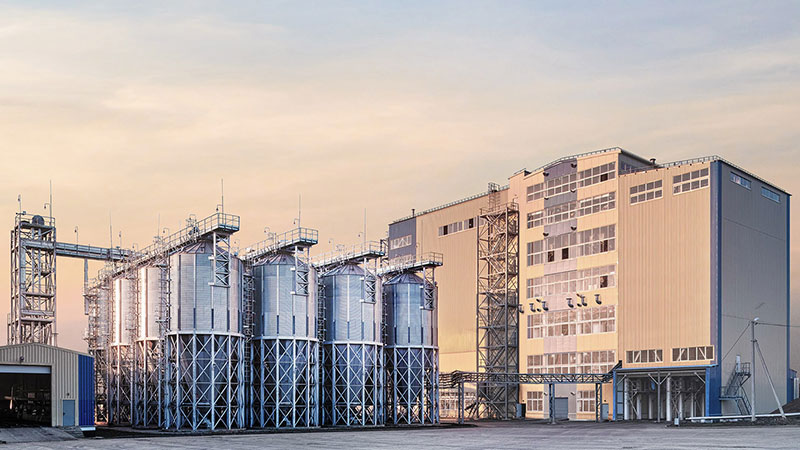
At RICHI, we go beyond project completion. With RICHI Servicee, we’re your dedicated partners in success. Count on us for expert guidance, minimal downtime, and optimized productivity. Choose RICHI for unmatched service and support.
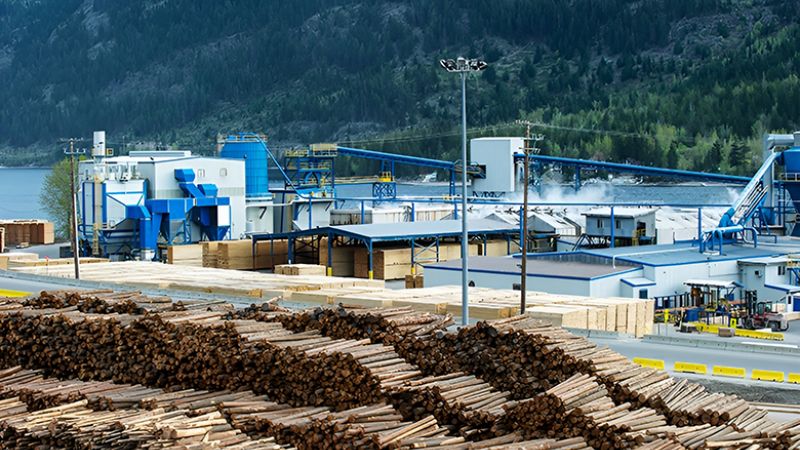


Meet global product demands and quality standards with industry-leading pellet plant design, engineering, equipment, and construction services for pellet processors.


Your Partner Beyond Project Completion
2000+ cases
RICHI is the leading designer, manufacturer and builder of pellet plants in the world, completing over 2000 projects in 140 countries across 6 continents.
Read More
Increase plant productivity, profitability, and safety by integrating high quality equipment into your pellet production line. Over the years, RICHI has become China's top pellet equipment manufacturer. At the same time, RICHI has established valuable partnerships with the world's leading component and raw material manufacturers to bring you the best there is in technology, automation, and efficiency in pelleting plant machinery.

For nearly 30 years, RICHI has been providing best-in-class pellet plant equipment and services to clients across a variety of industries, sizes, and needs. We pride ourselves on the knowledge and skill that each team member possesses – from our technical sales team to our process design engineers. You can count on RICHI Machinery to take your operation to the next level of innovation, quality, and success.
Need help with your pellet manufacturing plant project? Contact us today.
ANIMAL FEED
BIOMASS
WOOD
ORGANIC FERTILIZER
AQUA FEED
CAT LITTER
MUNICIPAL WASTE RECYCLING
SPECIAL PELLET PRODUCTION
RICHI Machinery continues to deliver world class pellet mill equipment, pellet plant engineering and project solutions that add value to our customers in the animal feed, wood waste, agriculture waste, organic fertilizer, cat litter and special pellet products industries. Throughout the years, we RICHI Machinery have built strong brand, becoming industry-leading pellet machine manufacturer. We value integrity, promise quality, and prioritize your success.
Learn MoreWith our expert team, we precisely implement your process engineering requirements in pellet mill and pelletizing plant systems. No matter which industry you’re in – we understand your needs and deliver solutions that meet the highest standards.
At RICHI, quality comes first. Our pellet making machine and related pellet line equipment undergo rigorous quality controls to ensure they meet the highest standards. Rely on products that are durable, safe, and efficient.
With decades of experience in pellet machine and pellet production line production, we have earned a reputation as a trusted partner in various industries. Our expertise allows us to cover a wide range of applications.
Not only do we offer premium pelleting equipment, but we are also experts at designing, building, installing, and maintaining facilities from the ground up. Our expertise is within pellt plant process design, discovering the most efficient, productive, and profitable way to handle your materials in an end-to-end cycle.
○ RICHI MACHINERY
Keeping in touch with us is an effective way to solve all your problems. If you have any needs or questions, please leave your contact information, then RICHI technical consultants will send design, quotation, videos to your mailbox. You can also contact us directly via WhatsApp: +86 13838389622
Copyright©2015-2026 by HENAN RICHI MACHINERY CO., LTD. All rights reserved.