
Small bale shredder in Portugal has become increasingly important for mixed livestock operations in the Alentejo region, where farmers are looking for creative ways to utilize agricultural byproducts from the country's thriving olive and almond industries.
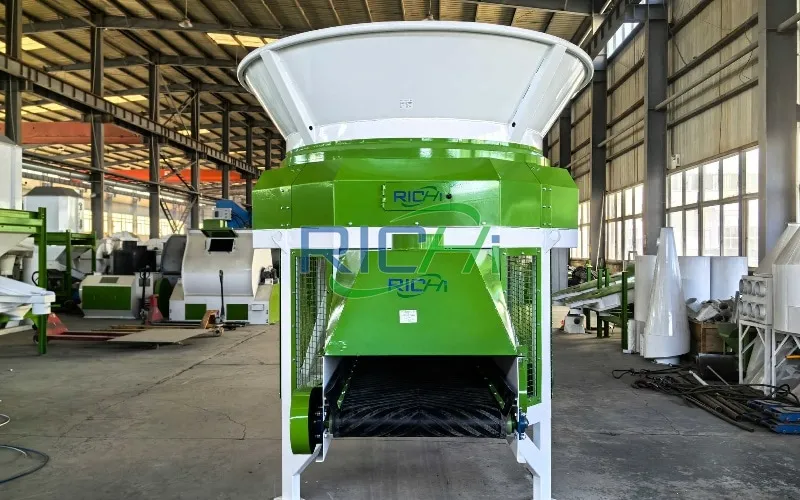
Small bale shredder in Portugal has become increasingly important for mixed livestock operations in the Alentejo region, where farmers are looking for creative ways to utilize agricultural byproducts from the country's thriving olive and almond industries.
A sheep and goat operation located near the town of Beja, in southern Portugal, recently purchased two units of the YPPK-2600 small bale shredder to solve a specific problem: processing olive pomace-straw mixed bales and almond hulls into a consistent 20-30mm particle size for their 400 sheep and 150 goats.
The farm had been using an old hammer mill that was never designed for the oily, sticky olive pomace that clogs screens and wraps around rotors. That machine would run for 15 minutes before the screen would blind completely, requiring a full teardown and cleaning.
Name:
Bale Shredder
Country:
Portugal
Date:
2025
Capacity:
Flexible
Model:
YPPK-2600
Main Motor Power:
55
Raw Materials:
Olive pomace-straw bales
Final product size:
20-25mm
The farm owner, who also processes feed for three neighboring farms, searched online for small bale shredder options and found RICHI Machinery through a Spanish-language agricultural forum.
He purchased two YPPK-2600 units as standalone replacements for his old machine – not as part of a full production line, but as dedicated shredders that allow him to process different materials without cross-contamination.
Portugal is one of the world's largest olive oil producers, with over 350,000 hectares of olive groves concentrated in the Alentejo and Trás-os-Montes regions.
The olive oil production process generates two main byproducts:
Traditionally, olive pomace was spread on fields as a soil amendment or burned for energy. However, spreading raw pomace can harm soil structure, and burning requires drying.
Some innovative farmers have started mixing olive pomace with straw and baling the mixture, creating a nutritious – if challenging – feed for sheep and goats. The pomace provides energy and fiber, while the straw adds structure.
The challenge is that olive pomace is oily (10-15% residual oil content) and sticky. When processed through a standard shredder, the oil builds up on screens and hammers, causing jams and – in extreme cases – fires.
The Beja farm owner had been experimenting with olive pomace-straw bales for three years. His sheep and goats loved the material, and milk production from the dairy goats increased by approximately 15% when the pomace-straw mix replaced standard straw in their winter ration.
But the processing bottleneck was severe. His old hammer mill would run for 15-20 minutes before the screen blinded with oil residue. He would then spend 45 minutes cleaning the machine before restarting. This meant he could only process 10-12 bales per day, even though he needed 30-40 bales per day during the winter feeding season.
He had been searching for a small bale shredder that could handle oily, sticky materials without blinding. The RICHI YPPK-2600, with its damping plate design (which reduces the material's contact time with the screen) and open rotor design (which prevents material packing), was a perfect fit.
He ordered two YPPK-2600 units – one dedicated to olive pomace-straw bales, the other to almond hulls and standard straw.
After discussion of the specific challenges of processing oily olive pomace, the farm selected the YPPK-2600 model with modifications for sticky materials.
| Specification | YPPK-2600 Value | How It Matches Portuguese Needs |
|---|---|---|
| Power (kw) | 55 | Sufficient for pomace and almond hulls |
| Max processing diameter (mm) | 1800 | Fits the standard 1.5m round bales in Portugal |
| Number of hammers | 36 | Provides aggressive action for sticky materials |
| Overall dimensions (mm) | 3800*2600*2650 | Fits in the farm's covered feed shed |
| Equipment weight (T) | 2.2 | Heavy enough for stable operation |
The primary materials processed daily at this Portuguese farm include:
The target output size for olive pomace-straw is 20-25mm. The smaller particle size helps distribute the oily pomace evenly throughout the mix, preventing the goats from sorting out the pomace-rich pieces. For almond hulls and carob pods, the target is 25-30mm.
Olive pomace is one of the most difficult materials to process in a bale shredder because the oil builds up on screens and hammers.
As the machine runs, the oil residue accumulates until the screen holes are completely blocked. At that point, no material can pass, and the rotor either stalls or the motor overloads. Cleaning a oil-blinded screen is a messy, time-consuming job.
The YPPK-2600 addresses this challenge with two key design features:
The damping plate reduces the amount of time that material spends in contact with the screen. By forcing the material through the hammer zone quickly, the damping plate minimizes the opportunity for oil to transfer from the material to the screen surface. The plate is positioned at an angle that accelerates the material toward the discharge, rather than allowing it to circulate in the chamber.
The open rotor design – no internal baffles or obstructions – prevents material from packing in dead zones. In a standard hammer mill, there are crevices and corners where sticky material can accumulate and harden. The YPPK-2600 bale crusher machine's rotor and chamber are designed with smooth surfaces and minimal crevices, making it much easier to clean when necessary.
For the Portuguese farm, this combination means:
The thickened transmission chain is also important for olive pomace because the oily material creates higher resistance in the chamber. The heavy-duty chain has a safety factor of 8:1 and has not required adjustment after 700 hours of operation.
Standard hammers can struggle with olive pomace for two reasons: the pits (which are hard) and the oil (which creates a slippery surface). The hammer tips need to be hard enough to crack the pits but shaped to cut through the slippery fibers.
The farm owner reported that after processing 400 tons of olive pomace-straw bales (approximately 500 bales), the hammers showed less than 3mm of wear. The carbide tips still had sharp edges, and none of the hammers had cracked from impact with olive pits – a significant improvement over the old machine, which would have required new hammers every 150-200 bales.
The small bale shredder in Portugal – represented by this Beja farm installation – proves that heavy-duty Chinese equipment can handle challenging materials like olive pomace that defeat standard shredders.
The YPPK-2600 processes oily, sticky olive pomace-straw bales without blinding, delivers consistent 20-30mm output for sheep and goat rations, and withstands daily use without excessive maintenance.
For any Portuguese sheep or goat farmer, olive oil producer, or agricultural waste processor currently struggling with olive pomace or other challenging byproducts, the YPPK series offers a heavy-duty, cost-effective solution. The ability to purchase two units for the price of one European machine provides operational flexibility and the ability to process multiple materials simultaneously.
Contact RICHI Machinery directly for a site assessment, to request hammer samples for olive pomace testing, or to arrange a conversation with the Beja farmer about his experience. The return on investment is clear: reliable processing, improved animal performance, lower feed costs, and machines built to last through many Portuguese harvest seasons.
Having the right mix of reliable, high-quality pellet machine and pelletizing systems and expert support is essential to your success. Watch how our end-to-end feed pellet plant solutions have helped our customers optimize their performance.
Our customized and future-proofed turnkey pellet plant solutions is designed with you at the core. From vision to reality and beyond, our team stays connected with yours. Giving you peace-of-mind with an expert at your side.
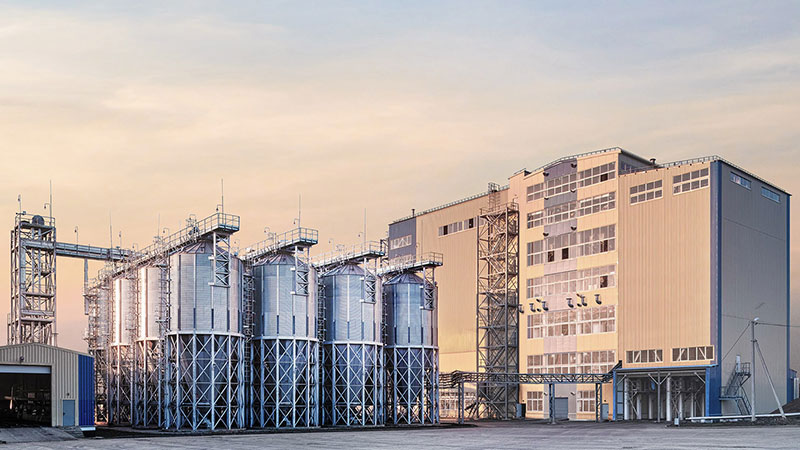
At RICHI, we go beyond project completion. With RICHI Servicee, we’re your dedicated partners in success. Count on us for expert guidance, minimal downtime, and optimized productivity. Choose RICHI for unmatched service and support.
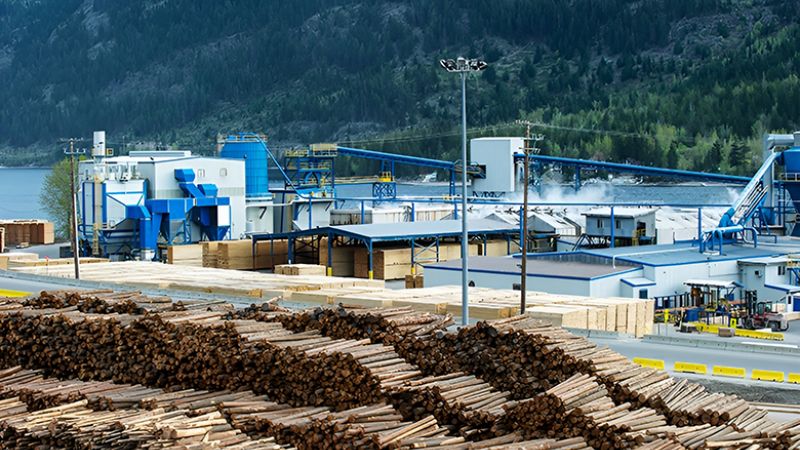


Meet global product demands and quality standards with industry-leading pellet plant design, engineering, equipment, and construction services for pellet processors.


Your Partner Beyond Project Completion
2000+ cases
RICHI is the leading designer, manufacturer and builder of pellet plants in the world, completing over 2000 projects in 140 countries across 6 continents.
Read More
Increase plant productivity, profitability, and safety by integrating high quality equipment into your pellet production line. Over the years, RICHI has become China's top pellet equipment manufacturer. At the same time, RICHI has established valuable partnerships with the world's leading component and raw material manufacturers to bring you the best there is in technology, automation, and efficiency in pelleting plant machinery.

For nearly 30 years, RICHI has been providing best-in-class pellet plant equipment and services to clients across a variety of industries, sizes, and needs. We pride ourselves on the knowledge and skill that each team member possesses – from our technical sales team to our process design engineers. You can count on RICHI Machinery to take your operation to the next level of innovation, quality, and success.
Need help with your pellet manufacturing plant project? Contact us today.
ANIMAL FEED
BIOMASS
WOOD
ORGANIC FERTILIZER
AQUA FEED
CAT LITTER
MUNICIPAL WASTE RECYCLING
SPECIAL PELLET PRODUCTION
RICHI Machinery continues to deliver world class pellet mill equipment, pellet plant engineering and project solutions that add value to our customers in the animal feed, wood waste, agriculture waste, organic fertilizer, cat litter and special pellet products industries. Throughout the years, we RICHI Machinery have built strong brand, becoming industry-leading pellet machine manufacturer. We value integrity, promise quality, and prioritize your success.
Learn MoreWith our expert team, we precisely implement your process engineering requirements in pellet mill and pelletizing plant systems. No matter which industry you’re in – we understand your needs and deliver solutions that meet the highest standards.
At RICHI, quality comes first. Our pellet making machine and related pellet line equipment undergo rigorous quality controls to ensure they meet the highest standards. Rely on products that are durable, safe, and efficient.
With decades of experience in pellet machine and pellet production line production, we have earned a reputation as a trusted partner in various industries. Our expertise allows us to cover a wide range of applications.
Not only do we offer premium pelleting equipment, but we are also experts at designing, building, installing, and maintaining facilities from the ground up. Our expertise is within pellt plant process design, discovering the most efficient, productive, and profitable way to handle your materials in an end-to-end cycle.
○ RICHI MACHINERY
Keeping in touch with us is an effective way to solve all your problems. If you have any needs or questions, please leave your contact information, then RICHI technical consultants will send design, quotation, videos to your mailbox. You can also contact us directly via WhatsApp: +86 13838389622
Copyright©2015-2026 by HENAN RICHI MACHINERY CO., LTD. All rights reserved.