
For a feed mill in Santa Fe Province, the packing problem appeared only after the feed itself was ready for sale. Its beef-cattle and dairy concentrates were produced mainly as coarse mash, and the combination of ground maize, bran, protein meals, alfalfa meal and mineral ingredients did not discharge from the packing hopper as consistently as pellets. At busy production periods, unstable feeding into the weighing system had become a bottleneck at the end of an otherwise functional feed line.
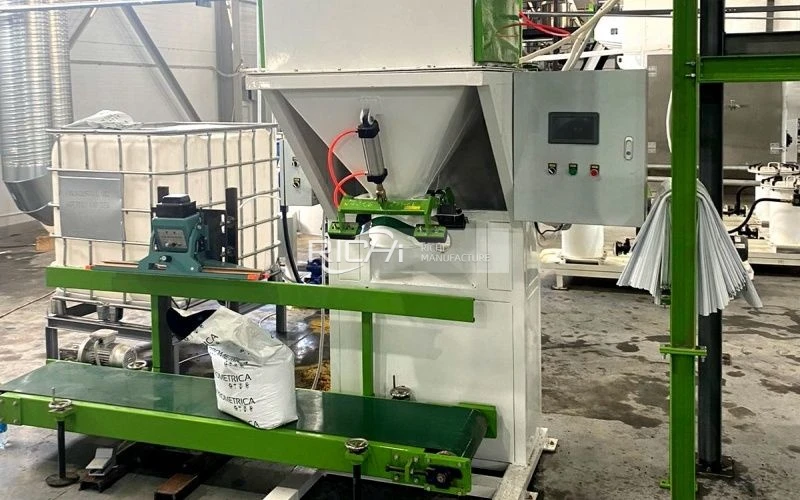
For a feed mill in Santa Fe Province, the packing problem appeared only after the feed itself was ready for sale. Its beef-cattle and dairy concentrates were produced mainly as coarse mash, and the combination of ground maize, bran, protein meals, alfalfa meal and mineral ingredients did not discharge from the packing hopper as consistently as pellets. At busy production periods, unstable feeding into the weighing system had become a bottleneck at the end of an otherwise functional animal feed production line.
The customer therefore replaced the unsuitable feeding arrangement with one DCS-50F ruminant feed packing scale in Argentina. Rather than rebuilding the entire bagging section, the mill retained its existing finished-feed bins, bag conveyor and sewing equipment and installed an auger-fed weighing machine specifically for its non-free-flowing mash products. The objective was straightforward: stabilize material feeding, maintain repeatable bag weights and let the packing section keep pace with feed production.
Name:
ruminant feed packer
Country:
Argentina
Date:
2026
Capacity:
Flexible
Model:
DCS-50F
Client:
cattle and dairy feed mill
Bag closing:
Sewing system
Typical bag weights:
25 kg, 40 kg and 50 kg
The customer is a commercial feed producer serving beef and dairy farms in Santa Fe and neighboring markets. Its annual production is approximately 20,000 tons, with products packed mainly in 25 kg, 40 kg and 50 kg bags.
The previous packing arrangement relied heavily on gravity. That approach can work well with pellets, grains and other relatively free-flowing materials. The customer's ruminant mash behaved differently.
The feed contained irregular particles rather than uniform granules. Bran contributed light, flaky material; ground maize provided denser particles; alfalfa meal increased the fibrous fraction; and finely ground mineral ingredients filled the voids between larger particles. Depending on formula and moisture, the bulk material could compact or form an arch above the outlet instead of falling at a stable rate.
This meant that replacing the weighing controller alone would not solve the customer's problem. The feed had to be positively conveyed toward the weighing section.
The plant produces several cattle-feed formulations rather than one standardized product. Beef grower and finishing concentrates account for the largest volume, followed by dairy concentrates and a smaller quantity of calf feed.
A representative mash formulation includes locally available maize, soybean meal, wheat bran, sunflower meal, alfalfa meal and mineral-vitamin ingredients. The original project formulation used approximately 40–50% maize, 15–20% soybean meal, 10–15% wheat bran, 5–10% sunflower meal and 5–10% alfalfa meal, with minerals and vitamins added according to the formulation.
These ingredients are realistic for an Argentine ruminant-feed operation, particularly in a major grain, oilseed and dairy-producing region such as Santa Fe. The exact percentages, however, change according to whether the mill is producing dairy concentrate, beef feed or calf feed and according to ingredient prices and nutritional targets.
The customer therefore needed a packing system capable of handling changing bulk density and flow characteristics instead of being optimized around only one formulation.
RICHI recommended the DCS-50F configuration because its feeding principle was better matched to the customer's mash material. An auger meters the feed toward the weighing section rather than depending entirely on natural gravity flow.
| Project Item | Configuration |
|---|---|
| Country | Argentina |
| Location | Santa Fe Province |
| Client | Commercial cattle and dairy feed mill |
| Equipment | DCS-50F ruminant feed packing scale |
| Feeding method | Auger / screw feeding |
| Main material | Ruminant mash and coarse concentrate feed |
| Typical bag weights | 25 kg, 40 kg and 50 kg |
| Bag closing | Sewing system |
| Export port | Qingdao Port, China |
| Destination | Argentina |
The original project specification gives a dynamic weighing accuracy reference of ±0.2%. In actual production, final bag-weight performance also depends on calibration, material bulk density, feeding stability, installation conditions and the coarse/fine feeding settings. For that reason, the customer verifies filled bags against a reference scale rather than assuming that a nominal machine accuracy automatically applies under every operating condition.
With the previous gravity arrangement, an operator could see feed above the outlet while little or no material entered the weighing section. Once the bridge collapsed, a sudden surge could follow. That alternating starvation and surging made both packing speed and final weight harder to control.
The DCS-50F introduced positive feeding. As the screw rotates, material is carried toward the weighing system at a controlled rate. This is particularly useful for feeds that are powdery, fibrous or otherwise reluctant to discharge consistently under gravity alone.
During the main filling stage, the system can feed comparatively quickly. As the measured weight approaches the preset target, the feed rate is reduced so that the final portion enters more gradually. This coarse-and-fine feeding strategy is more important to weighing accuracy than simply trying to fill every bag as fast as possible.
Once the target weight is reached, material feeding stops, the filled bag is released and transferred to the sewing section.
The Santa Fe customer uses 40 kg bags for much of its cattle-feed business, with 50 kg bags supplied to some larger farm customers and 25 kg packaging used for selected products. The original project distribution included all three sizes.
Changing from 40 kg to 50 kg therefore requires more than entering another target weight. Operators first select the corresponding recipe or weighing parameters and then run test bags. The filled bags are checked on a reference scale, and the feeding settings are corrected if the different formula flows differently from the previous product.
This is particularly important when switching between a relatively dense maize-rich concentrate and a lighter formula containing more bran or alfalfa meal. Two products can have the same target bag weight while requiring different feeding behavior.
One problem in the original project description was the assumption that the packing scale needed to operate continuously at six to eight 40 kg bags per minute. At 40 kg per bag, six bags per minute would equal 14.4 T/H, while eight would equal 19.2 T/H. That would be far beyond the average hourly requirement implied by a 20,000-ton annual feed mill unless the plant intentionally operates its packing section for only short concentrated periods.
For this project, the more useful engineering question was whether the packing station could comfortably exceed the output of the upstream feed-production process and clear finished-product bins without becoming the bottleneck.
Actual bagging output depends not only on the weighing scale. Bag placing, bag clamping, material flow, weighing stabilization, bag release, conveying and sewing all contribute to the complete cycle time. Manual bag placement and manual sewing can become the limiting steps even when the weighing mechanism itself is capable of operating faster.
RICHI therefore configured the ruminant feed packing scale around the customer's real production rhythm rather than using maximum theoretical bags per minute as the main selection criterion.
Ruminant mash generates more dust during bagging than well-formed pellets. Every time a bag is filled, displaced air must leave the bag while fine particles are entering it. Without suitable dust management, powder can accumulate around the bag clamp, weighing components and sewing area.
The relatively enclosed auger feeding arrangement helps reduce uncontrolled material discharge, but it does not eliminate the need for dust control. The packing station was therefore arranged so dust could be collected near the filling point while operators retained convenient access for placing and removing bags.
Good housekeeping also contributes directly to weighing reliability. Dust accumulation around moving mechanisms or weighing components should not be allowed to build up until it affects operation.
One of the practical advantages of the auger-fed system became apparent when the mill changed formulations.
A maize-rich beef concentrate can flow quite differently from a dairy feed containing more bran and fibrous ingredients. Higher-fat formulas can also behave differently, particularly if liquid ingredients are incorporated upstream. Moisture variation changes flowability as well.
The operators consequently maintain settings for the main products instead of trying to use one auger speed and weighing program for everything.
When a new formula is introduced, the team first observes hopper discharge, establishes a stable feeding rate and fills several test bags. Only after checking the actual weights does the product enter normal packing operation.
The customer did not purchase a complete feed packing line. The purpose of the project was to correct one specific weak point in the existing plant.
The old packing scale was removed while the finished-feed storage arrangement, downstream bag handling and sewing equipment were retained where practical. The new DCS-50F was positioned beneath the appropriate discharge point, and the supporting arrangement was checked to ensure that external vibration from surrounding machinery would not unnecessarily affect weighing.
The pneumatic supply was another installation consideration because bag clamping and other actuated functions require stable, clean compressed air. The original project specification called for approximately 0.5 MPa compressed air.
Commissioning then focused on zero calibration, test weights, feeding adjustment, bag clamping and repeated filling trials with the customer's actual ruminant mash.
For a commercial feed producer, bag-weight control has two financial consequences. Underweight bags can create customer and compliance problems, while systematically overweight bags quietly give product away.
The customer therefore established a routine verification procedure after commissioning. Filled bags are sampled and weighed on a separate reference scale, with results recorded by product and bag size.
If a gradual shift appears, the operator does not immediately assume that the load cell has failed. The team first checks whether the formula has changed, whether material has accumulated in the feeder, whether the auger is feeding consistently and whether mechanical interference is affecting the weighing assembly.
This approach makes the packing system more reliable than simply calibrating once during installation and ignoring it afterward.
Positive screw feeding solves a flow problem, but it also introduces a component that remains in continuous contact with the feed.
Ruminant concentrates can contain maize particles, mineral ingredients and other relatively abrasive components. The screw therefore requires routine inspection, especially at high-throughput plants.
The original case assigned a fixed auger life of roughly 1,500–2,000 tons. In practice, it is more accurate to treat wear life as application-dependent. Mineral content, contamination, operating hours, screw material, clearances and feed abrasiveness can all change service life substantially.
The Santa Fe customer consequently keeps a spare auger assembly available but replaces the operating component according to condition rather than an arbitrary tonnage. Uneven wear, reduced feeding capacity or deteriorating repeatability are reasons to inspect the screw and its clearances.
Cleaning was another consideration because the same packing machine handles several formulas.
Residual mash can remain around the screw, hopper and discharge section after production. This matters particularly when moving from one formula to another because residual mineral additives or medicated ingredients, where applicable, should not be allowed to contaminate the following batch.
The machine layout therefore needs accessible cleaning points. The customer's operators inspect the material-contact area during product changes and perform more thorough cleaning according to the plant's feed-safety procedures.
The original proposal suggested running dry maize through the auger as a cleaning method. That may help displace loose residual material in some circumstances, but it is not treated as a substitute for proper physical inspection and cleaning where cross-contamination control is required.
The decision to use the DCS-50F does not mean auger feeding is automatically superior for every feed product.
For finished pellets with good flowability, gravity feeding can be simpler and can provide high throughput with fewer material-contact components. Belt feeding can also be appropriate for particular materials when gentler conveying or different flow characteristics need to be accommodated.
The customer's problem was specifically coarse, non-uniform ruminant mash. For that material, positive feeding offered substantially better control than relying on gravity.
This is why RICHI first asks customers what they are actually packing rather than selecting a packing scale only from the required bag weight.
“The improvement is not that the scale somehow makes our feed easier to flow. The feed is still the same coarse cattle mash. The difference is that we no longer depend on the material falling by itself. Once we adjusted the auger feeding for our main formulas, bag filling became much more predictable. Our operators spend their time checking weights and moving finished bags instead of trying to clear the hopper.”
The production manager also found that keeping separate settings for the main dairy and beef formulas reduced adjustment time during changeovers. Instead of starting from zero each time, operators begin with an established parameter set and verify it with several test bags.
The ruminant feed packing scale was prepared for export from Qingdao Port, China. The original proposal named Rosario as the receiving point because the customer's plant is in Santa Fe Province and Rosario is a major logistics hub on the Paraná River.
For an actual shipment, however, the final ocean route and discharge arrangement should be confirmed with the freight forwarder when the order is placed rather than assuming every container service will move directly from Qingdao to Rosario. Routing can involve an ocean gateway and subsequent feeder or inland movement depending on the carrier and sailing schedule.
RICHI supplied the packing equipment together with the required technical documentation and spare-parts recommendations. Spanish-language operating information was provided so the customer's maintenance and production personnel could handle routine adjustment and troubleshooting more easily.
A packing-scale inquiry should contain more than “I need a 50 kg packing machine.” The bag weight alone does not determine the correct feeding system.
For mash feed, RICHI needs to know the main ingredients, particle-size range, approximate bulk density, moisture, whether molasses or oil is included, target bag weights, required tonnes per hour, bag material and preferred closing method. A short video showing how the feed discharges from an existing hopper can also reveal useful information about its flow behavior.
If the customer already has a production line, the height available below the finished-product bin and the capacity of the upstream process should also be supplied. These details determine whether an auger-fed packing scale can be integrated directly or whether modifications to the supporting structure and material inlet are necessary.
The ruminant feed packing scale in Argentina project demonstrates an important point about feed-mill automation: the best weighing technology cannot compensate for the wrong material-feeding method.
For this Santa Fe customer, the problem was not simply inaccurate weighing. Its coarse ruminant mash did not enter the weighing system consistently. Installing one DCS-50F with auger feeding addressed the actual bottleneck while allowing the mill to retain the rest of its existing packing equipment.
The result is a packing section better matched to 25 kg, 40 kg and 50 kg cattle-feed products, with controlled feeding, easier weight management and less dependence on manual intervention. For other ruminant feed producers, RICHI Machinery can select between auger, gravity and other feeding configurations according to the actual flow characteristics of the finished product rather than applying one packing solution to every type of feed.
Having the right mix of reliable, high-quality pellet machine and pelletizing systems and expert support is essential to your success. Watch how our end-to-end feed pellet plant solutions have helped our customers optimize their performance.
Our customized and future-proofed turnkey pellet plant solutions is designed with you at the core. From vision to reality and beyond, our team stays connected with yours. Giving you peace-of-mind with an expert at your side.
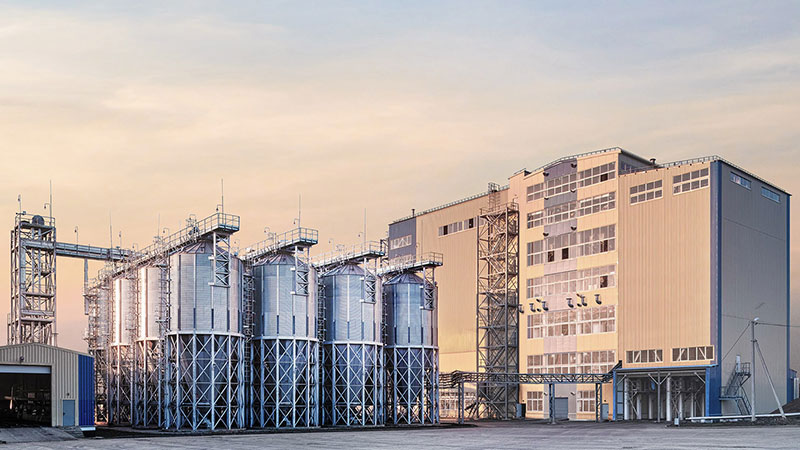
At RICHI, we go beyond project completion. With RICHI Servicee, we’re your dedicated partners in success. Count on us for expert guidance, minimal downtime, and optimized productivity. Choose RICHI for unmatched service and support.
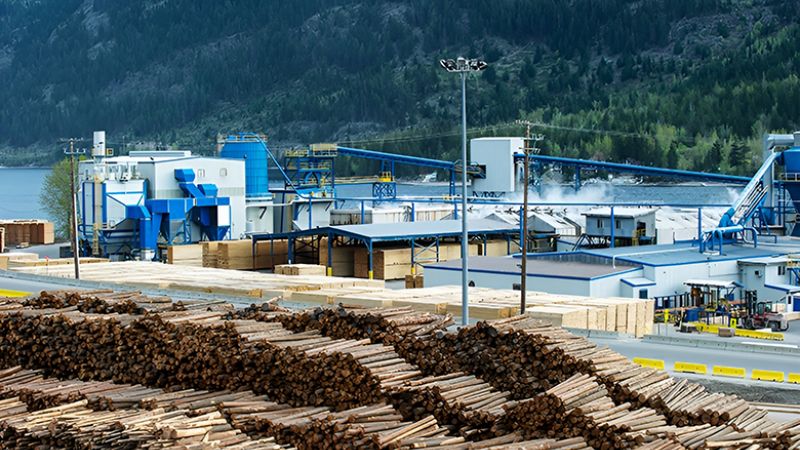


Meet global product demands and quality standards with industry-leading pellet plant design, engineering, equipment, and construction services for pellet processors.


Your Partner Beyond Project Completion
2000+ cases
RICHI is the leading designer, manufacturer and builder of pellet plants in the world, completing over 2000 projects in 140 countries across 6 continents.
Read More
Increase plant productivity, profitability, and safety by integrating high quality equipment into your pellet production line. Over the years, RICHI has become China's top pellet equipment manufacturer. At the same time, RICHI has established valuable partnerships with the world's leading component and raw material manufacturers to bring you the best there is in technology, automation, and efficiency in pelleting plant machinery.

For nearly 30 years, RICHI has been providing best-in-class pellet plant equipment and services to clients across a variety of industries, sizes, and needs. We pride ourselves on the knowledge and skill that each team member possesses – from our technical sales team to our process design engineers. You can count on RICHI Machinery to take your operation to the next level of innovation, quality, and success.
Need help with your pellet manufacturing plant project? Contact us today.
ANIMAL FEED
BIOMASS
WOOD
ORGANIC FERTILIZER
AQUA FEED
CAT LITTER
MUNICIPAL WASTE RECYCLING
SPECIAL PELLET PRODUCTION
RICHI Machinery continues to deliver world class pellet mill equipment, pellet plant engineering and project solutions that add value to our customers in the animal feed, wood waste, agriculture waste, organic fertilizer, cat litter and special pellet products industries. Throughout the years, we RICHI Machinery have built strong brand, becoming industry-leading pellet machine manufacturer. We value integrity, promise quality, and prioritize your success.
Learn MoreWith our expert team, we precisely implement your process engineering requirements in pellet mill and pelletizing plant systems. No matter which industry you’re in – we understand your needs and deliver solutions that meet the highest standards.
At RICHI, quality comes first. Our pellet making machine and related pellet line equipment undergo rigorous quality controls to ensure they meet the highest standards. Rely on products that are durable, safe, and efficient.
With decades of experience in pellet machine and pellet production line production, we have earned a reputation as a trusted partner in various industries. Our expertise allows us to cover a wide range of applications.
Not only do we offer premium pelleting equipment, but we are also experts at designing, building, installing, and maintaining facilities from the ground up. Our expertise is within pellt plant process design, discovering the most efficient, productive, and profitable way to handle your materials in an end-to-end cycle.
○ RICHI MACHINERY
Keeping in touch with us is an effective way to solve all your problems. If you have any needs or questions, please leave your contact information, then RICHI technical consultants will send design, quotation, videos to your mailbox. You can also contact us directly via WhatsApp: +86 13838389622
Copyright©2015-2026 by HENAN RICHI MACHINERY CO., LTD. All rights reserved.