
RICHI supplied a 0.2–0.3 T/H MZLH320 Recycled Paper Energy Pellet Machine in Italy to process 3–8 mm prepared paper fiber into 8 mm industrial energy pellets.
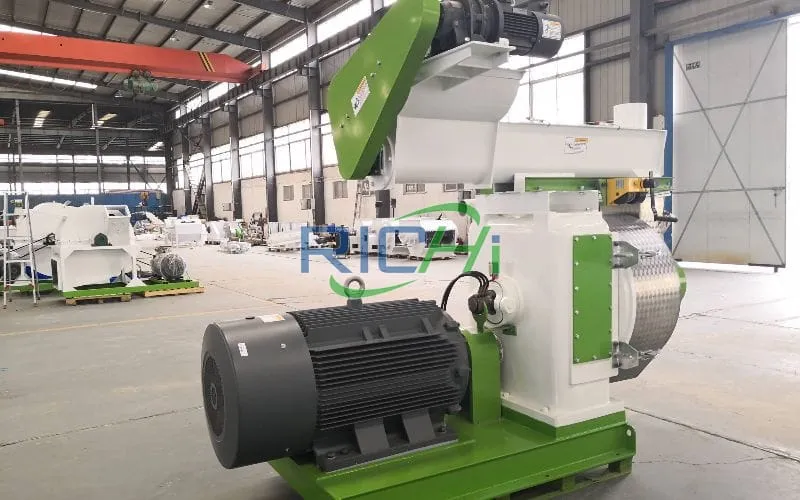
A recovered-paper processor in Lombardy selected one RICHI MZLH320 Recycled Paper Energy Pellet Machine in Italy to test a new densification route for selected paper-rich fractions that were not suitable for the company's normal high-value fiber recycling stream.
The customer already operated sorting, baling, shredding and warehouse equipment around Milan, so the project did not require another complete waste-processing plant. The missing step was a small ring die machine capable of converting prepared paper fiber into a denser and more manageable 8 mm energy pellet.
The selected MZLH320 uses a 22 kW main motor and provides a rated production capacity of approximately 0.2–0.3 T/H. Prepared paper entering the pellet mill is reduced to approximately 3–8 mm effective fiber size after sorting and secondary size reduction. The finished product is approximately 8 mm in diameter.
At eight effective operating hours per day and 300 days per year, one machine provides a theoretical annual pelletizing capacity of approximately 480–720 tonnes, which is suitable for a staged market-development project rather than a large commercial fuel plant.
Name:
Paper Energy Pellet Machine
Country:
Italy
Date:
2026
Capacity:
0.2–0.3 T/H
Model:
MZLH320
Main Motor Power:
22 kW
Raw Materials:
paper and cardboard
Pellet diameter:
8 mm
The company had worked for years with commercial paper and cardboard collected from offices, warehouses, retailers and industrial customers. Recyclable OCC, clean office paper and other fiber grades with established paper-mill demand continue through conventional recycling channels. The pellet project is aimed only at selected paper-rich fractions for which material recycling is not technically or commercially appropriate and which can legally enter an energy-recovery route after proper classification and testing.
Starting with one 0.2–0.3 T/H pellet mill allows the customer to establish raw-material acceptance rules, test pellet behavior and communicate with authorized industrial energy users before expanding capacity. Installing two machines immediately would provide 0.4–0.6 T/H, but that additional capacity would have little value if fuel classification, combustion testing and downstream demand had not yet been established.
| Project Parameter | Specification |
|---|---|
| Equipment | Ring die recycled paper energy pellet machine |
| Model | MZLH320 |
| Main Motor | 22 kW |
| Arch-Breaking Feeder | 2.2 kW |
| Forced Feeder | 0.75 kW |
| Ring Die Inner Diameter | 320 mm |
| Rated Capacity | 0.2–0.3 T/H |
| Prepared Fiber Size | Approximately 3–8 mm |
| Project Pellet Diameter | 8 mm |
| Theoretical Annual Capacity | Approximately 480–720 T/Y |
| Main Application | Paper-rich fuel pellets for authorized industrial energy recovery |
The 0.2–0.3 T/H range is the machine capacity used throughout this project. Actual production within the range depends on paper grade, fiber length, moisture, ash and mineral contamination, bulk density, die configuration and feeding stability. Lightweight office-paper fiber does not necessarily behave exactly like shredded corrugated board, so commissioning is carried out with the customer's representative material rather than one idealized sample.
The customer does not pelletize every low-priced paper fraction. Material suitable for conventional paper recycling remains in the recycling stream. The energy-pellet route is reserved for selected non-hazardous paper-rich rejects after sorting and compliance review.
Plastic-laminated material, PVC-containing components, heavily waxed packaging, chemically contaminated paper, metal, glass and unknown industrial residues require separate assessment and are not simply sent through the pellet mill. This matters for both equipment protection and combustion compliance because coatings, chlorine-bearing plastics, mineral contamination and additives can alter ash and emission characteristics.
The pellet mill is therefore the densification stage of a controlled material-selection process. It cannot turn an unsuitable or legally restricted waste fraction into an acceptable fuel simply by changing its physical form.
Large sheets, cartons and baled paper are not fed directly into the MZLH320. The customer's existing shredder performs primary size reduction, after which oversized material is reduced further to an approximately 3–8 mm effective fibrous condition suitable for stable feeding into the ring die machine.
Paper fiber is light and can bridge in a hopper, so particle preparation must also avoid long ribbon-like strips. The MZLH320 uses an arch-breaking feeder and forced feeder to move the prepared material toward the pelletizing chamber more consistently, but those systems cannot compensate for poorly shredded sheets or compacted lumps.
Moisture is checked before pelletizing and adjusted according to actual forming behavior. Paper-based materials can be pelletized over a relatively broad moisture range, so this project does not impose one universal moisture number. The customer establishes the operating window through trials while monitoring feeding, motor load, pellet integrity and downstream storage condition.
The customer selected an 8 mm die to produce a compact industrial fuel form that is easier to convey, store and meter than loose shredded paper. The choice is based on the intended industrial handling system rather than compatibility with residential pellet stoves.
Diameter alone does not define fuel interchangeability. An 8 mm paper pellet has different ash, chlorine, additives, calorific characteristics and combustion behavior from an 8 mm certified wood pellet. The product therefore needs its own laboratory characterization and an identified authorized end user before regular commercial production.
The paper pellet machine changes density and geometry. It does not certify calorific value, ash content or emissions performance.
This distinction is essential in Italy, where residential wood pellets are a familiar heating fuel. The finished material from this project is not marketed as ENplus wood pellet fuel and is not automatically suitable for household pellet stoves simply because the machine produces an 8 mm cylinder.
The customer's commercial route is industrial energy recovery. Before supply, the paper-derived fuel needs appropriate characterization and must fit the receiving plant's authorization and fuel-acceptance conditions. Depending on the waste classification and regulatory route, additional requirements can apply to production, transport, conformity and final use.
This makes regulatory qualification part of product development rather than something considered only after the pellet mill has already been installed.
Loose shredded paper has low bulk density and can be difficult to meter consistently into storage and fuel-handling systems. Pelletizing converts the prepared fiber into a denser form with a controlled diameter, reducing storage volume and improving mechanical handling.
These are physical handling advantages. RICHI does not claim that densification automatically increases the intrinsic energy content of the paper. Calorific value is determined primarily by material composition and moisture, while pelletizing changes how the material is stored, transported and dosed.
The finished pellets therefore need testing for parameters relevant to the intended industrial user, including moisture, ash, net calorific value and chemical characteristics required by the applicable fuel specification or authorization.
One MZLH320 can theoretically produce approximately 1.6–2.4 tonnes during an eight-hour operating day. At 300 days per year, this equals about 480–720 tonnes of annual pelletizing capacity before allowing for cleaning, maintenance, product trials and changeovers.
That scale suits the customer's objective. The company can first establish which paper fractions are technically appropriate, determine the real preparation cost and secure an industrial off-take route. If demand subsequently exceeds the single-machine capacity, expansion can be based on actual operating data.
A second pellet mill is not automatically the next investment. The bottleneck may instead be secondary shredding, fiber storage, dust extraction, cooling or finished-pellet handling. RICHI therefore reviews the complete material flow before increasing installed pelletizing capacity.
The MZLH320 is prepared for export from Qingdao, China, with northern Italian port access selected according to the freight arrangement before inland delivery to Lombardy. Because the customer is integrating only one pelletizer into an operating recycling facility, the installation review focuses on the existing fiber-preparation system, feeder elevation, electrical supply, dust collection, discharge handling and maintenance access.
The pellet mill does not require a feed conditioner of the type used in animal-feed plants. The prepared paper fiber moves through the dedicated arch-breaking and forced-feeding system into the ring die section, followed by suitable cooling and screening before storage or dispatch.
This Recycled Paper Energy Pellet Machine in Italy project uses one RICHI MZLH320 to densify selected non-hazardous paper-rich material at a Lombardy recycling facility. The machine has a 22 kW main motor and a clear rated capacity of approximately 0.2–0.3 T/H. Recovered paper is sorted, shredded and prepared to approximately 3–8 mm before pelletizing, and the selected ring die produces approximately 8 mm finished pellets.
The project is designed around authorized industrial energy recovery rather than the residential wood-pellet market. For another Italian recycler considering this route, RICHI Machinery needs the paper categories and waste codes, contamination profile, moisture, ash, chlorine-related concerns, prepared fiber size, target T/H, intended pellet diameter, operating hours, existing shredding equipment and identified end-use facility. These parameters determine both whether the MZLH320 is technically suitable and whether the proposed energy-pellet route can be developed around the required regulatory conditions.
Having the right mix of reliable, high-quality pellet machine and pelletizing systems and expert support is essential to your success. Watch how our end-to-end feed pellet plant solutions have helped our customers optimize their performance.
Our customized and future-proofed turnkey pellet plant solutions is designed with you at the core. From vision to reality and beyond, our team stays connected with yours. Giving you peace-of-mind with an expert at your side.
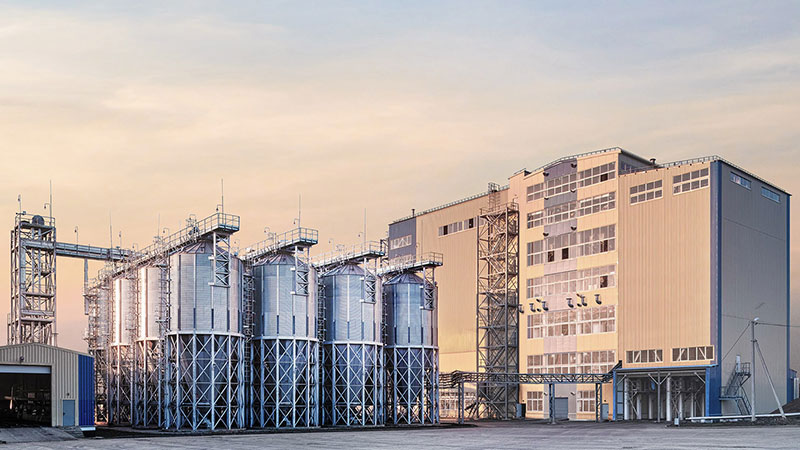
At RICHI, we go beyond project completion. With RICHI Servicee, we’re your dedicated partners in success. Count on us for expert guidance, minimal downtime, and optimized productivity. Choose RICHI for unmatched service and support.
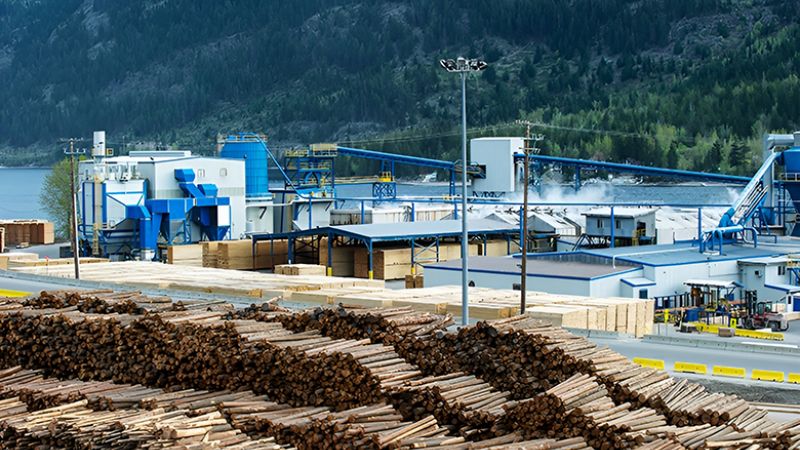


Meet global product demands and quality standards with industry-leading pellet plant design, engineering, equipment, and construction services for pellet processors.

Your Partner Beyond Project Completion
2000+ cases
RICHI is the leading designer, manufacturer and builder of pellet plants in the world, completing over 2000 projects in 140 countries across 6 continents.
Read More
Increase plant productivity, profitability, and safety by integrating high quality equipment into your pellet production line. Over the years, RICHI has become China's top pellet equipment manufacturer. At the same time, RICHI has established valuable partnerships with the world's leading component and raw material manufacturers to bring you the best there is in technology, automation, and efficiency in pelleting plant machinery.

For nearly 30 years, RICHI has been providing best-in-class pellet plant equipment and services to clients across a variety of industries, sizes, and needs. We pride ourselves on the knowledge and skill that each team member possesses – from our technical sales team to our process design engineers. You can count on RICHI Machinery to take your operation to the next level of innovation, quality, and success.
Need help with your pellet manufacturing plant project? Contact us today.
ANIMAL FEED
BIOMASS
WOOD
ORGANIC FERTILIZER
AQUA FEED
CAT LITTER
MUNICIPAL WASTE RECYCLING
SPECIAL PELLET PRODUCTION
RICHI Machinery continues to deliver world class pellet mill equipment, pellet plant engineering and project solutions that add value to our customers in the animal feed, wood waste, agriculture waste, organic fertilizer, cat litter and special pellet products industries. Throughout the years, we RICHI Machinery have built strong brand, becoming industry-leading pellet machine manufacturer. We value integrity, promise quality, and prioritize your success.
Learn MoreWith our expert team, we precisely implement your process engineering requirements in pellet mill and pelletizing plant systems. No matter which industry you’re in – we understand your needs and deliver solutions that meet the highest standards.
At RICHI, quality comes first. Our pellet making machine and related pellet line equipment undergo rigorous quality controls to ensure they meet the highest standards. Rely on products that are durable, safe, and efficient.
With decades of experience in pellet machine and pellet production line production, we have earned a reputation as a trusted partner in various industries. Our expertise allows us to cover a wide range of applications.
Not only do we offer premium pelleting equipment, but we are also experts at designing, building, installing, and maintaining facilities from the ground up. Our expertise is within pellt plant process design, discovering the most efficient, productive, and profitable way to handle your materials in an end-to-end cycle.
○ RICHI MACHINERY
Keeping in touch with us is an effective way to solve all your problems. If you have any needs or questions, please leave your contact information, then RICHI technical consultants will send design, quotation, videos to your mailbox. You can also contact us directly via WhatsApp: +86 13838389622
Copyright©2015-2026 by HENAN RICHI MACHINERY CO., LTD. All rights reserved.