
A Gauteng cement producer added two MZLH520-based RDF pellet machines to densify prepared non-hazardous waste fuel for controlled storage, conveying and kiln co-processing.
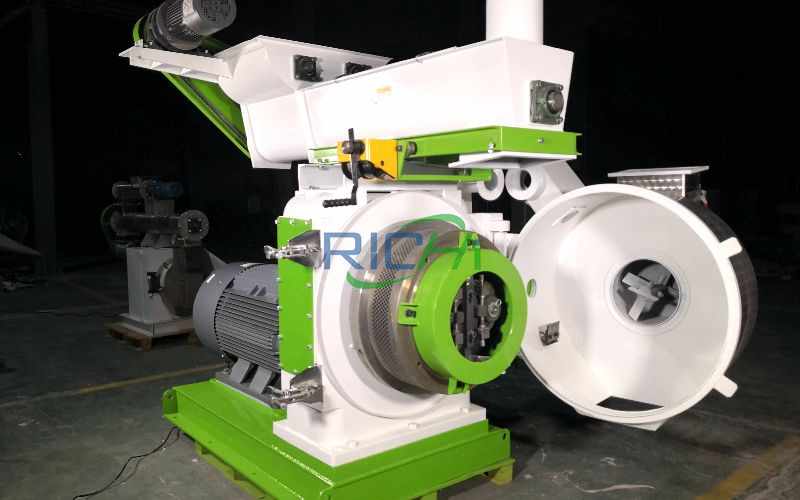
A cement producer in Gauteng selected two MZLH520-based RDF Refuse Pellet Machine in South Africa units to densify a prepared combustible waste fraction for evaluation and scheduled use as an alternative kiln fuel. The plant already had access to primary shredding, sorting, metal separation and moisture-control capacity, so the purchase did not involve another complete RDF production line.
The pelletizing section was added specifically to convert low-bulk-density fluff containing selected plastics, textiles, paper fibre and clean wood fractions into a denser product that could be stored, conveyed and metered more consistently than loose refuse-derived fuel.
The project uses two parallel 132 kW ring-die machines rather than one oversized forming unit because the customer wanted both usable production capacity and maintenance flexibility while the alternative-fuel program was still developing.
Each MZLH520 has a 520 mm ring die, 3 kW anti-bridging feeder and 1.5 kW forced feeder, while actual RDF throughput has to be established from the prepared waste blend rather than copied directly from clean-wood pellet data. The cement plant therefore treats pelletizing as one controlled step between RDF preparation and kiln feeding, not as a process that can make unsorted municipal waste suitable for cement combustion.
Name:
Densified refuse-derived fuel pelletizer
Country:
South Africa
Date:
2026
Capacity:
1.5–2.0 T/H
Model:
MZLH520
Power:
132 kW
Quantity:
2 units
Pellet Diameter:
12 mm
The customer already had access to equipment and contractors capable of opening waste, removing major metals, reducing oversized pieces and controlling part of the incoming moisture load, so purchasing another shredder, dryer and sorting line would have duplicated functions that were already available. The actual gap was downstream densification: loose RDF fluff has low bulk density, can bridge in storage and can be difficult to meter predictably over longer conveying distances.
Two pelletizing units gave the plant a way to evaluate a denser fuel format while continuing to use its established waste-preparation infrastructure, which keeps this project firmly within the scope of a standalone equipment upgrade rather than presenting it as a complete municipal-waste processing facility.
The incoming material is not ordinary mixed household garbage. Before pelletizing, the waste stream has to be converted into a controlled non-hazardous combustible fraction with unsuitable materials removed as far as the project specification requires.
Flexible polyolefin plastics, selected textile residues, clean untreated wood, paper and cardboard fractions can contribute useful calorific value, but batteries, electronic waste, pressurised containers, wet organic waste, stones, glass, large metal pieces and hazardous chemical residues do not belong in the pelletizer feed. PVC and other chlorine-rich materials also require particular control because chlorine affects both kiln operation and emissions, so the sorting specification is just as important as the pellet-machine capacity.
A permanent waste formula would create false precision because RDF composition changes with supplier, season and source industry. One production campaign may contain more film plastic and paper, while another may contain more textiles or clean wood fibre, and those changes alter calorific value, ash, bulk density, moisture and pelletizing resistance.
The customer therefore builds batches from analytical and physical targets rather than insisting on one percentage recipe. Before material is released to the RDF section, the plant needs to understand at least moisture, net calorific value, ash, chlorine, sulphur, relevant metals, bulk density and contamination, while the pelletizing team additionally monitors particle size, fibre length, plastic content and feeding behaviour.
Primary shredding alone does not normally create ideal ring-die feed. Oversized plastic strips, long textile fibres and large wood fragments can wrap, bridge or create unstable loading at the forced feeder, while stones and metal can damage the working area.
The preparation route therefore includes sorting and metal protection followed by size reduction appropriate to the actual refuse fraction, with secondary shredding or finer cutting used when the primary shredder still leaves material too coarse for controlled densification. The target is not a decorative uniform powder but a reasonably homogeneous, flowable mixture that can enter the feeder continuously without long flexible pieces repeatedly interrupting the material bed above the die.
RDF containing paper, textiles, wood and plastics does not behave like clean sawdust, so there is no responsible reason to guarantee that every blend should enter the pelletizer at exactly 12–15% moisture. Excess water can increase steam generation, reduce pellet stability and make fibrous fractions more difficult to handle, while an excessively dry, plastic-rich mixture can create more dust and may require different compression conditions.
The operating window therefore has to be established by representative material testing, and wetter fractions are segregated or dried before they raise the moisture of the complete batch. The MZLH520 is a densification machine rather than a dryer, so feeder pressure and motor power should never be used as substitutes for proper moisture preparation.
A cylindrical pellet can look uniform while still being unsuitable for cement co-processing. The kiln operator is interested in thermal and chemical behaviour, including net calorific value, moisture, ash quantity, ash composition, chlorine, sulphur, volatile components and trace metals, because non-combustible mineral material ultimately interacts with the clinker process.
The required specification therefore comes from the cement plant and its environmental operating conditions rather than from the pellet-machine catalogue. Pelletizing mainly improves density, handling, storage and metering consistency; it does not increase the calorific value of a poor waste blend or remove chlorine, metals and other contaminants that should have been controlled upstream.
Not all plastics should be valued simply for their high heating value. Polyethylene and polypropylene fractions can contribute considerable energy, but PVC and other chlorine-bearing materials can create a very different kiln-management problem.
Excess chlorine may contribute to internal circulation, deposit formation and operational instability, while the permitted waste-fuel composition also has to comply with the plant's environmental requirements. The RDF supplier therefore needs an incoming-waste specification and routine analytical program rather than relying on visual sorting alone.
A pelletizer can compress chlorine-containing plastic just as easily as acceptable plastic, which is exactly why fuel-quality control has to take place before the material reaches the ring die.
| Project Parameter | Configuration |
|---|---|
| Equipment | RDF ring-die pelletizing units |
| Platform | MZLH520 |
| Quantity | 2 units |
| Main Motor Power | 132 kW each |
| Anti-Bridging Feeder Power | 3 kW each |
| Forced Feeder Power | 1.5 kW each |
| Ring Die Inner Diameter | 520 mm |
| Standard Pellet Diameter Basis | 4–12 mm |
| Main Project Pellet Diameter | 12 mm |
| Reference Biomass Capacity | Approximately 1.5–2.0 T/H per machine |
| RDF Operating Capacity | Confirmed from actual prepared waste characteristics and die configuration |
| Main Application | Densified refuse-derived fuel for controlled cement-kiln co-processing |
| Installation Type | Two standalone parallel pelletizers integrated with an existing RDF preparation system |
The standard biomass capacity provides a useful mechanical reference but should not be published as a guaranteed RDF result because refuse-derived material can differ far more than clean wood in bulk density, elasticity, plastic content, fibre length and abrasive contamination. A plastic-rich mixture may feed differently from a paper-and-textile-heavy batch even when both meet the same moisture specification.
Commissioning therefore establishes the usable feeder rate, die compression characteristics, roller setting, motor-load window and real tonnes per hour for the customer's actual fuel recipe, with the two-machine arrangement giving more operating flexibility than forcing one pelletizer to handle every material condition at its maximum load.
The original production arithmetic needs to follow actual operating hours. If two MZLH520 units together process approximately 3–4 T/H under a suitable prepared-material condition, one 8-hour shift represents roughly 24–32 tonnes of pelletizing per day. At 300 operating days, that corresponds to approximately 7,200–9,600 tonnes per year before availability, product changes and maintenance losses are considered.
Reaching around 24,000 T/A would require substantially more operating hours or additional effective capacity. This distinction matters because the RDF supply contract, storage area, kiln consumption plan and economic calculations should all be based on a realistic annual mass balance rather than an hourly figure multiplied by an assumed continuous schedule.
The verified MZLH520 product range is based around pellets up to 12 mm, so the project uses 12 mm as the principal specification rather than presenting a 15 mm die as if it were part of the standard machine configuration. A larger custom hole can be evaluated where a kiln-feeding system genuinely requires it, but that decision should follow material trials and confirmation of die strength, throughput, conveying behaviour and combustion requirements.
Pellet diameter alone does not determine whether material will remain in the burner zone or escape with gas flow; pellet length, density, mechanical strength, conveying velocity, burner design and the kiln's actual alternative-fuel injection arrangement all matter at the same time.
The RDF Refuse Pellet Machine in South Africa handles a low-density mixture that can contain film, textile fibre, paper and shredded wood, so stable feeding is one of the most important mechanical issues in the project. The anti-bridging device keeps fluffy material moving in the hopper while the forced feeder transfers it into the compression zone more consistently than gravity alone could manage.
Feeder speed is coordinated with main-motor current rather than fixed at one percentage for every batch; if material becomes more elastic, wetter or more plastic-rich, the same feeder setting can create a very different die load. The correct operating point is therefore established from stable motor behaviour and pellet formation rather than a claim that the feeder eliminates every RDF blockage.
Conventional animal-feed pellet mills use steam conditioning because cereal starch, protein and feed hygiene create a completely different processing objective. This RDF project does not need a feed conditioner simply because it also uses a ring-die press. The prepared waste enters the densification chamber after moisture and particle condition have already been adjusted upstream, while friction, compression and the thermoplastic behaviour of part of the plastic fraction contribute to pellet formation.
Adding steam indiscriminately would introduce more water and heat into a waste blend whose storage stability and kiln specification already depend on moisture control, so any liquid or binder addition would require an actual material test rather than being treated as a standard process step.
RDF can be substantially more abrasive than clean wood because fine glass, mineral dust, sand and other contaminants may remain even after sorting. For that reason, it would be misleading to promise that one ring die will last 1,200 hours, 1,500 hours or any other universal duration.
Die and roller life depend on contamination, throughput, compression ratio, material temperature, plastic content and operating practices, while one supplier's textile-rich RDF may create a completely different wear pattern from a mineral-contaminated municipal fraction. The plant therefore logs tonnes processed, motor behaviour, pellet quality and visible die condition so that maintenance intervals are based on actual wear rather than a fixed marketing number.
One magnet at the front of an RDF plant does not guarantee that every damaging object has been removed. Small bolts, wire, aluminium pieces, stones and hard fragments can remain after primary shredding, particularly when the waste originates from industrial packaging, demolition-related streams or mixed commercial collection.
The pelletizing section therefore relies on upstream screening and appropriate ferrous separation, with additional non-ferrous detection or separation evaluated where the waste stream justifies it. This protects the forced feeder, die and rollers and also reduces the chance that unacceptable metallic contamination reaches the cement-fuel product, which is important for both machine reliability and kiln chemistry.
Prepared RDF can contain dry paper fibre, textiles, wood fines and combustible plastic dust, while the ring-die process introduces friction and a high-power mechanical drive. The installation therefore needs more than a concrete foundation and electrical connection.
Enclosed conveying, housekeeping, appropriate dust collection, bearing-temperature monitoring, motor protection, emergency shutdown logic and fire-risk assessment all belong in the project review, while the specific explosion or fire-protection devices depend on the waste composition and plant layout.
Hot pellets or smouldering material should never be transferred directly into a large closed storage area without detection and temperature control, especially when the downstream customer operates a continuous cement process.
Pellets leave ring-die compression warm and can still be mechanically softer than the product required for conveying and storage. The downstream system therefore allows them to lose process heat before long-term storage, while screening removes loose fines and broken material that could behave differently in pneumatic or mechanical fuel handling.
Cooling should not be confused with drying: if RDF enters the MZLH520 with excessive moisture, the proper solution is upstream moisture management rather than expecting the cooler to evaporate a large water load. Fines can only be recycled when their composition remains within the approved fuel specification, since uncontrolled recycling could concentrate ash or contamination in the pelletizing loop.
The cement plant does not need the strongest possible pellet simply as a quality symbol. It needs a product that survives loading, transport, buffer storage and metering without creating excessive fines, while still behaving correctly when introduced into the kiln's alternative-fuel system. Excessively weak pellets can disintegrate before the burner, but excessive densification can reduce machine output and alter combustion behaviour.
The customer therefore defines an acceptable durability range through handling trials rather than adopting a biomass-pellet standard automatically. Bulk density, pellet length and fines percentage are checked together because all three affect the volume of fuel that conveyors, screws, bins or pneumatic systems must move for each tonne delivered.
The two pellet machines do not establish whether the cement plant can replace 10%, 25%, 30% or 40% of its conventional fuel. Thermal substitution depends on the RDF's net calorific value, kiln heat balance, burner design, feeding position, clinker chemistry, chlorine and sulphur circulation, emissions performance, production stability and the plant's environmental authorisation.
The project therefore begins with a controlled alternative-fuel program and increases use only when operating data support the change. This is more realistic for South Africa, where cement producers are actively pursuing co-processing and alternative fuels but national utilisation remains well below the very high substitution rates achieved at some European plants.
A visual inspection cannot tell the kiln operator whether a fuel contains 14 MJ/kg or 22 MJ/kg of usable energy, nor can it reliably identify problematic chlorine, ash chemistry or trace metals. Representative samples therefore need laboratory analysis according to the customer's fuel-acceptance plan, and incoming supplier loads should be controlled so the pelletizing section does not unknowingly combine incompatible materials.
The required minimum calorific value is set by the cement plant rather than assumed to be exactly 18 MJ/kg for every project. A lower-energy fuel may still have a role at a certain substitution level, while a high-calorific plastic-rich fraction can remain unacceptable if its chlorine or contaminant profile falls outside the kiln's approved operating window.
Pelletizing does not automatically make every combustible waste stream an appropriate fuel. Recyclable plastics, clean paper fibres or other materials with a practical higher-value recovery route should be evaluated within the customer's waste-management system before they are committed to energy recovery.
The RDF route is better suited to selected residual fractions that have been sorted, characterised and approved for co-processing rather than valuable clean recyclables being diverted merely to increase pellet output. South Africa already has a regulatory framework for high-temperature waste treatment and cement-kiln alternative fuel use, so project development must consider waste authorisation, environmental conditions and the cement plant's approved fuel specifications alongside machine capacity.
The strongest engineering reason for installing two MZLH520 units is not a claim that two smaller machines are always more economical than one larger unit. In this project, parallel machines allow the plant to reduce pelletizing capacity rather than stopping the complete RDF forming section when one die, roller assembly or feeder requires inspection.
That flexibility can be useful when the cement kiln operates continuously but the alternative-fuel section is still building experience with variable waste streams. The trade-off is that two machines also mean two main motors, two feeders, two die-and-roller groups and more electrical and mechanical maintenance points, so the configuration is justified by redundancy and staged production rather than by pretending that parallel equipment has no additional operating complexity.
The larger MZLH678 platform offers more nominal biomass capacity from one compression chamber and would reduce the number of pelletizing units, but one larger machine also concentrates production in a single maintenance point. For a plant still developing its RDF fuel specification, two MZLH520 units allow one line to remain available while the other is being inspected or trialled with a different die or feed setting.
If the customer later standardises the waste stream and needs substantially more continuous output, a larger pelletizer can be evaluated from real tonnes, power consumption, die life and kiln demand. Expansion should therefore follow measured RDF performance rather than the assumption that fewer motors or a larger ring die always create the lowest lifecycle cost.
Two 132 kW pellet-machine drives create 264 kW of main-motor load before the anti-bridging feeders, forced feeders, upstream conveyors, secondary shredding, dust extraction, cooler and screening equipment are counted. The Gauteng plant therefore needs to verify transformer capacity, motor-starting method, cable sizing, protection and the effect of simultaneous startup on the wider cement-site electrical network.
Where RDF processing is scheduled independently from peak kiln auxiliary loads, operating strategy can help manage demand, but the electrical installation still has to support the maximum credible simultaneous condition. The machines should not be selected from tonnes per hour alone if the available electrical infrastructure cannot run them reliably.
A cement site may have available concrete space outside the main process building, but that does not make uncovered installation acceptable. Motors, electrical panels, instrumentation and weighing or control components need suitable protection from rain, dust and direct weather exposure, while maintenance teams need safe access around the pelletizer throughout the year.
The project layout therefore provides a roofed or enclosed operating area with drainage, ventilation and enough clearance for die and roller service. Dusty cement-plant surroundings also make cabinet sealing and housekeeping relevant, so site integration has to consider the environment around the machine rather than assuming industrial equipment can remain exposed simply because its mechanical frame is heavy-duty.
The two pelletizers can be shipped from Qingdao to Durban and then transferred inland to Gauteng by the established South African freight corridor. Durban is the country's principal container gateway and directly serves the Gauteng economic region through major road and rail links, making the route logical for industrial machinery destined for the Johannesburg area.
The shipment plan should be based on the confirmed machine dimensions, container configuration, lifting requirements and inland carrier rather than a promised 32-day transit or fixed customs period. Site drawings can be used while the equipment is moving so foundations, electrical supply, conveyors and service clearances are prepared before inland delivery.
The RDF Refuse Pellet Machine in South Africa finishes the densification stage, but the cement producer still needs a suitable storage, metering and kiln-feeding system. Pellet fuel can have very different bulk density, ignition behaviour and volatile content from coal, so burner-air settings and fuel distribution cannot simply be copied from the conventional fuel system.
Whether pellets enter through the main burner, calciner or another approved point depends on kiln design and project engineering. RICHI's machine selection therefore focuses on producing a consistent physical fuel that meets the agreed specification, while the cement plant and its kiln specialists remain responsible for combustion trials, substitution strategy, emissions control and clinker-quality verification.
Adding a third pellet machine only makes sense when enough approved RDF feed regularly accumulates ahead of the two installed units and the kiln can actually consume the additional densified fuel within its authorised operating window. If sorting capacity, moisture control or laboratory acceptance is restricting available feedstock, more ring-die capacity would simply sit idle.
The same applies downstream: if the kiln's practical alternative-fuel demand is lower than the pellet section can already supply, additional production creates storage rather than savings. Future expansion should therefore compare annual qualified RDF tonnes, actual machine utilisation, maintenance availability, electricity demand, kiln substitution data and fuel-storage capacity before another MZLH520 or a larger MZLH model is selected.
An RDF Refuse Pellet Machine in South Africa should be selected only after the combustible waste fraction has been defined.
For another cement, lime or industrial thermal project, RICHI Machinery would first review waste sources and percentages, recyclable-material separation, hazardous exclusions, maximum incoming size, secondary shredding requirement, moisture, bulk density, plastic and textile content, chlorine, ash, calorific value, target pellet diameter, required tonnes per hour, annual operating hours, electrical capacity, cooling and screening arrangement, storage method and the receiving plant's fuel-acceptance specification.
Those data determine whether one MZLH520, two parallel units or a larger pelletizer provides useful capacity without creating a machine that is oversized for the qualified RDF supply or incompatible with the downstream combustion system.
Having the right mix of reliable, high-quality pellet machine and pelletizing systems and expert support is essential to your success. Watch how our end-to-end feed pellet plant solutions have helped our customers optimize their performance.
Our customized and future-proofed turnkey pellet plant solutions is designed with you at the core. From vision to reality and beyond, our team stays connected with yours. Giving you peace-of-mind with an expert at your side.
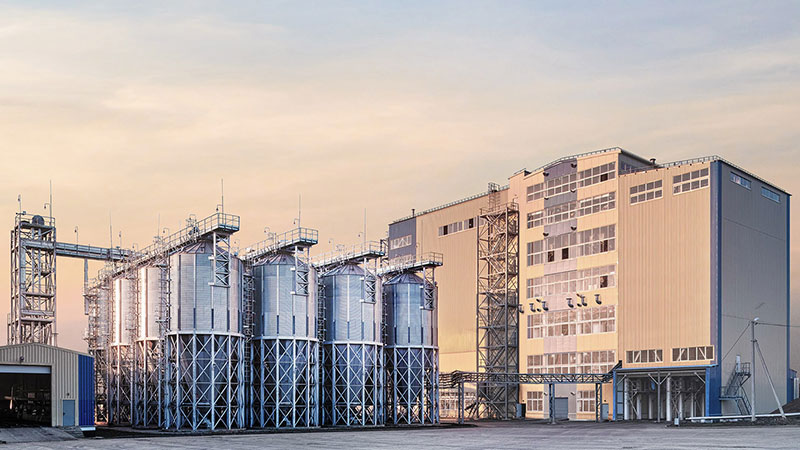
At RICHI, we go beyond project completion. With RICHI Servicee, we’re your dedicated partners in success. Count on us for expert guidance, minimal downtime, and optimized productivity. Choose RICHI for unmatched service and support.
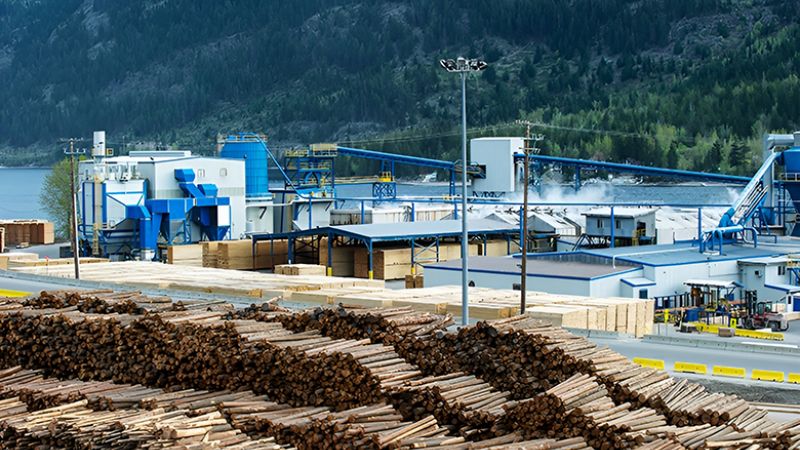

Meet global product demands and quality standards with industry-leading pellet plant design, engineering, equipment, and construction services for pellet processors.


Your Partner Beyond Project Completion
2000+ cases
RICHI is the leading designer, manufacturer and builder of pellet plants in the world, completing over 2000 projects in 140 countries across 6 continents.
Read More
Increase plant productivity, profitability, and safety by integrating high quality equipment into your pellet production line. Over the years, RICHI has become China's top pellet equipment manufacturer. At the same time, RICHI has established valuable partnerships with the world's leading component and raw material manufacturers to bring you the best there is in technology, automation, and efficiency in pelleting plant machinery.

For nearly 30 years, RICHI has been providing best-in-class pellet plant equipment and services to clients across a variety of industries, sizes, and needs. We pride ourselves on the knowledge and skill that each team member possesses – from our technical sales team to our process design engineers. You can count on RICHI Machinery to take your operation to the next level of innovation, quality, and success.
Need help with your pellet manufacturing plant project? Contact us today.
ANIMAL FEED
BIOMASS
WOOD
ORGANIC FERTILIZER
AQUA FEED
CAT LITTER
MUNICIPAL WASTE RECYCLING
SPECIAL PELLET PRODUCTION
RICHI Machinery continues to deliver world class pellet mill equipment, pellet plant engineering and project solutions that add value to our customers in the animal feed, wood waste, agriculture waste, organic fertilizer, cat litter and special pellet products industries. Throughout the years, we RICHI Machinery have built strong brand, becoming industry-leading pellet machine manufacturer. We value integrity, promise quality, and prioritize your success.
Learn MoreWith our expert team, we precisely implement your process engineering requirements in pellet mill and pelletizing plant systems. No matter which industry you’re in – we understand your needs and deliver solutions that meet the highest standards.
At RICHI, quality comes first. Our pellet making machine and related pellet line equipment undergo rigorous quality controls to ensure they meet the highest standards. Rely on products that are durable, safe, and efficient.
With decades of experience in pellet machine and pellet production line production, we have earned a reputation as a trusted partner in various industries. Our expertise allows us to cover a wide range of applications.
Not only do we offer premium pelleting equipment, but we are also experts at designing, building, installing, and maintaining facilities from the ground up. Our expertise is within pellt plant process design, discovering the most efficient, productive, and profitable way to handle your materials in an end-to-end cycle.
○ RICHI MACHINERY
Keeping in touch with us is an effective way to solve all your problems. If you have any needs or questions, please leave your contact information, then RICHI technical consultants will send design, quotation, videos to your mailbox. You can also contact us directly via WhatsApp: +86 13838389622
Copyright©2015-2026 by HENAN RICHI MACHINERY CO., LTD. All rights reserved.