
A plastic bottle smasher in Germany was purchased by a recycling operator that needed to improve the first size-reduction stage for bulky post-consumer plastic containers. The facility already had downstream sorting, washing, drying and recycling equipment, but irregular bottles were feeding poorly into the existing system and creating unnecessary handling problems before the main recycling stages.
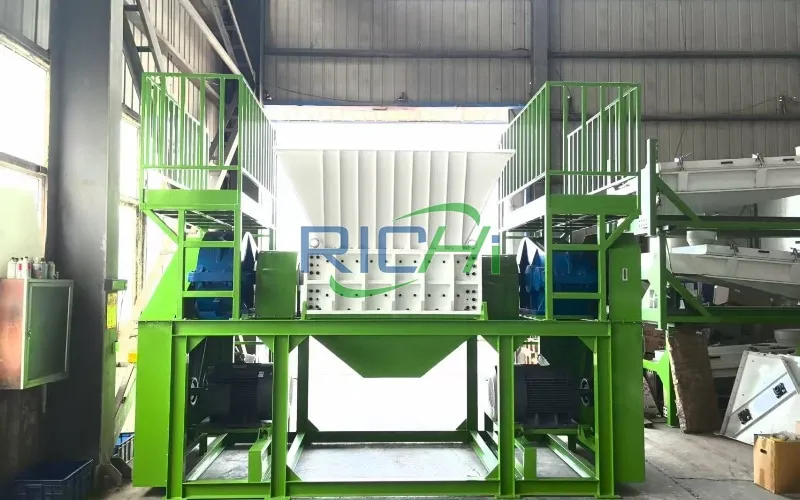
A plastic bottle smasher in Germany was purchased by a recycling operator that needed to improve the first size-reduction stage for bulky post-consumer plastic containers. The facility already had downstream sorting, washing, drying and recycling equipment, but irregular bottles were feeding poorly into the existing system and creating unnecessary handling problems before the main recycling stages.
The customer selected one SSJ1000 plastic bottle smasher as a replacement for an older pre-shredder rather than rebuilding the whole plant. Its role is to break bottles and other suitable rigid plastic containers into smaller, more manageable pieces before they move into the customer's existing separation and washing process.
Name:
Plastic bottle crusher
Country:
Germany
Date:
2025
Capacity:
2.5–3.0 T/H
Model:
SSJ1000
Main Motor Power:
37 kW
Raw Materials:
Plastics bottles
Final product size:
30 mm
The customer operates a medium-scale plastics recycling facility in southern Germany. Incoming material comes from commercial collection channels, beverage-related packaging streams and other post-consumer plastic sources.
The problem was not that the plant lacked a complete recycling process.
Sorting, washing, drying and downstream plastic processing equipment were already installed. The weak point was the machine at the beginning of the line.
Empty bottles and rigid containers are light, irregular in shape and difficult to feed consistently. Some are flattened, some remain almost completely intact, and wall thickness varies considerably between different packaging types. Residual caps, labels and small amounts of liquid can also change how the material moves through conveyors and hoppers.
The previous pre-shredder struggled when larger quantities of mixed bottles arrived together. Operators frequently had to redistribute material around the inlet, and occasional bridging reduced the amount of plastic reaching the downstream system.
The customer therefore began looking for a plastic bottle smasher in Germany that could perform coarse, reliable size reduction without forcing the company to replace equipment that was already functioning well.
This was a replacement-machine project rather than a greenfield recycling plant.
The customer's existing facility already handled material receiving, preliminary sorting and conveying. After size reduction, plastic could continue through the plant's established washing and subsequent processing stages.
RICHI therefore focused on one specific problem: how to make irregular rigid plastic containers smaller and easier for the existing system to handle.
One SSJ1000 crusher machine was enough for the required pre-crushing duty. Purchasing additional crushers or another full line would have increased capital cost without addressing a real production need.
This type of equipment decision is common in mature recycling facilities. A customer may already have most of the line but still suffer from one poorly matched machine that limits the capacity of everything after it.
For this customer, upgrading the pre-crusher provided more value than replacing the whole plant.
The primary material is post-consumer plastic packaging collected through the customer's established recycling channels.
PET beverage bottles represent an important part of the incoming stream. The customer also handles suitable HDPE and other rigid plastic containers in separate or controlled processing batches according to the facility's sorting procedures.
The machine is not intended to turn completely mixed municipal plastic waste into a finished recycled product in one step.
Material identification and separation still matter.
PET and HDPE have different polymer characteristics and normally need to remain appropriately separated for downstream recycling. The SSJ1000 performs mechanical size reduction; it does not replace polymer sorting, label removal, washing or material purification.
This distinction is important for anyone evaluating a plastic bottle smasher in Germany. The crusher improves material size and handling, but the quality of the final recycled plastic still depends on the complete downstream process.
Plastic bottles have very low bulk density before crushing. A hopper can appear full while containing relatively little material by weight.
Irregular shapes can also bridge above a conveyor or crusher inlet.
An intact PET bottle may collapse under pressure in one direction but move unpredictably in another. Larger rigid containers may behave differently again because of thicker walls or molded handles.
For the German customer, this inconsistent physical form was one of the main reasons the old equipment became a bottleneck.
Pre-crushing changes the material from bulky containers into smaller fragments that are easier to transfer between processing stages.
The objective is not to create finished plastic flakes with final recycling quality at this point. The SSJ1000 is used as the first mechanical size-reduction stage, preparing the material for more controlled handling and subsequent treatment.
The customer selected the SSJ1000 after comparing the inlet requirement, existing conveyor capacity, bottle size range and expected throughput of the recycling plant.
| Project Item | Specification |
|---|---|
| Equipment | Plastic bottle smasher / rigid plastic pre-crusher |
| Model | SSJ1000 |
| Quantity | 1 unit |
| Motor Power | 37 kW × 2 |
| Rotor Diameter | 400 mm |
| Blade Material | 55CrSi forged alloy steel |
| Blade Configuration | Customizable according to material condition |
| Machine Dimensions | Approximately 3900 × 1800 × 2200 mm |
| Project Output Size | Approximately 30 mm coarse fragments |
| Project Capacity | Approximately 2.5–3.0 T/H under suitable feed conditions |
| Main Application | Pre-crushing before plastic sorting, washing and further recycling |
The customer uses an approximately 30 mm coarse output as the working target for this stage. Actual fragment shape is not perfectly identical because bottles break according to wall thickness, geometry, blade engagement and feed condition.
For this reason, RICHI treats the 30 mm figure as a target coarse size rather than claiming that every fragment leaving the plastic bottle smasher has exactly the same dimensions.
The customer needed a machine that could grip and tear irregular containers rather than relying only on high-speed impact.
The dual-rotor arrangement helps draw bulky plastic material into the crushing zone and subjects it to repeated cutting and tearing action.
This is useful with bottles because the incoming material is not uniform.
Some containers enter upright, others sideways or partially compressed. A controlled low-speed, high-torque crushing approach can handle this variation more effectively at the pre-processing stage than a machine designed only for already uniform flakes.
The blade configuration can also be adjusted according to the plastic being processed.
For a plant handling mainly thin PET bottles, the preferred arrangement may differ from a project processing heavier HDPE containers or thick-walled industrial plastic packaging.
This is why RICHI asks for bottle photos, typical dimensions and material composition before finalizing a plastic bottle crusher configuration.
Post-consumer bottles rarely arrive in laboratory-clean condition.
Some may retain small amounts of liquid. Labels, caps and adhesive residues may also remain attached when the material enters the pre-crushing stage.
The SSJ1000 can mechanically reduce the bottles, but the customer still needs downstream equipment to remove contamination and separate different material fractions.
Residual liquid also affects housekeeping and drainage around the crusher.
For this project, the machine area was integrated with the facility's existing wet-material management practices rather than treating the crusher as a completely dry standalone machine.
This type of detail matters to an operating recycling plant because successful integration depends on what actually arrives from collection points, not on perfectly clean sample bottles used only for equipment demonstrations.
The plastic bottle smasher in Germany is positioned near the beginning of the customer's material preparation system.
Incoming bottles are first received and subjected to the customer's normal preliminary sorting procedures. Material suitable for the SSJ1000 is then fed into the crusher at a controlled rate.
After coarse size reduction, the smaller pieces are easier to transfer by conveyor and process in the next sections of the plant.
The fragments subsequently enter the customer's existing separation and washing operations. PET and HDPE streams are managed according to the recycling route required for each polymer.
After adequate washing and drying, suitable plastic can continue into further size reduction or recycling processes according to the customer's finished product.
This is why the SSJ1000 should be described as a pre-crushing machine rather than a complete plastic recycling solution.
The most immediate improvement was material flow.
Instead of sending intact bottles deeper into the plant, the customer could reduce their volume and irregularity at the beginning of the process.
This made conveyor loading more predictable and reduced the amount of manual intervention required around the old pre-crushing area.
Downstream equipment also received material in a more manageable physical form.
The customer did not expect the crusher alone to determine recycled pellet quality. What it did accomplish was remove one mechanical bottleneck that had been interfering with the equipment responsible for washing and subsequent processing.
This distinction is important for high-volume recycling operations. Improving the first stage can create value throughout the line even when the crusher itself does not produce the final recycled product.
Post-consumer plastic can contain unexpected hard objects even after preliminary sorting.
If an unsuitable object creates excessive resistance in the crushing chamber, an overload protection and reverse function can help reduce the risk of continuing to force the rotor against the obstruction.
This does not mean the machine can safely process metal or other contaminants as normal feedstock.
Upstream inspection remains necessary.
The protection function is a safeguard for abnormal operating conditions, not a replacement for sorting.
For the customer, this was valuable because an operating recycling facility inevitably sees more material variation than a controlled factory test.
The customer also evaluated maintenance before selecting the SSJ1000.
Plastic crushing is not a zero-wear process. Blade condition affects cutting performance, energy consumption and finished fragment size.
The machine therefore uses replaceable forged alloy steel blades, allowing the plant to inspect and service the cutting components according to operating condition.
Actual blade life depends on the type of plastic, contamination, operating hours and whether hard foreign objects reach the crushing chamber.
RICHI did not promise one fixed number of operating hours for every blade set.
Instead, maintenance planning was based on regular visual inspection, output changes and cutting performance.
The SSJ1000 has flexibility, but that does not mean every plastic waste stream should be mixed together simply because the machine is capable of crushing it.
Recycling value depends heavily on material purity.
A PET bottle recycling stream should not be contaminated unnecessarily with unrelated polymers. HDPE packaging also has its own downstream recycling route.
The customer's operating procedures therefore separate materials according to product requirements even when the same crusher design can technically process several rigid plastic types.
This is a useful point for buyers searching for a plastic bottle smasher in Germany: machine versatility should support different controlled production batches, not encourage poor material separation.
The SSJ1000 was shipped by sea from Qingdao Port in China to Hamburg Port in Germany.
Before shipment, RICHI carried out equipment preparation and supplied dimensional, electrical and installation information to the customer's technical team.
Because the machine was replacing an existing crusher, workshop integration had to be checked before delivery.
Inlet height, feed conveyor position, discharge arrangement, electrical supply and maintenance clearance all influenced how easily the SSJ1000 could be inserted into the existing process.
RICHI also discussed blade replacement and routine inspection procedures so that the customer could prepare maintenance practices before commercial operation began.
The investment decision was based on the condition of the existing plant.
The customer already had expensive downstream equipment. There was no economic reason to replace washing, drying or recycling systems simply because the pre-crusher was underperforming.
A standalone SSJ1000 allowed the company to target the actual bottleneck.
This also reduced the complexity of the project. RICHI could concentrate on feed dimensions, bottle characteristics, throughput, output size and interface requirements rather than redesigning an entire recycling facility.
For an established recycler, this type of targeted equipment replacement can provide a much clearer return than a complete line investment that duplicates functioning machinery.
That depends on the condition of the recycling operation.
A facility that already has sorting, washing, drying and downstream processing may only need a pre-crusher or shredder to solve its bottle-handling problem.
A new recycler starting with collected bottles but no existing equipment requires a much broader system.
Material separation, label and cap management, washing, drying and subsequent size reduction or pelletizing all need to be evaluated according to the intended recycled product.
Throughput should also be calculated around the complete process.
Installing a 3 T/H pre-crusher provides little value if the washing section after it can handle only 1 T/H. Conversely, an undersized crusher can prevent a larger washing system from reaching its intended capacity.
This project shows how one machine can solve a specific problem inside a mature recycling facility.
The customer already understood its plastic streams and already had downstream equipment. What it needed was a stronger pre-crushing stage that could deal with irregular bottles more consistently before washing and further recycling.
For another customer evaluating a plastic bottle smasher in Germany, RICHI Machinery first needs to understand what bottles or rigid plastic containers are being processed.
Useful project information includes polymer type, typical bottle dimensions, wall thickness, whether bottles are loose or baled, approximate contamination, residual liquid condition, required T/H, target fragment size and the capacity of downstream washing or recycling equipment.
Photos or samples of the actual plastic waste are particularly useful because “plastic bottle” can describe materials with very different physical characteristics.
With these details, RICHI Machinery can determine whether an SSJ1000 like the machine used in this plastic bottle smasher in Germany project is appropriate, whether blade configuration should be changed, or whether another crusher size would provide a better capacity match.
For an existing recycling plant, the best solution is not automatically the largest shredder available; it is the machine that removes the actual material-flow bottleneck while fitting the equipment that is already operating around it.
Having the right mix of reliable, high-quality pellet machine and pelletizing systems and expert support is essential to your success. Watch how our end-to-end feed pellet plant solutions have helped our customers optimize their performance.
Our customized and future-proofed turnkey pellet plant solutions is designed with you at the core. From vision to reality and beyond, our team stays connected with yours. Giving you peace-of-mind with an expert at your side.
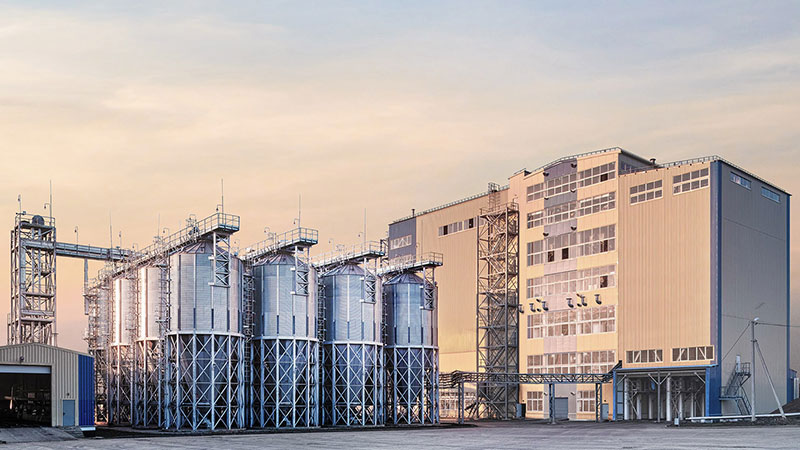
At RICHI, we go beyond project completion. With RICHI Servicee, we’re your dedicated partners in success. Count on us for expert guidance, minimal downtime, and optimized productivity. Choose RICHI for unmatched service and support.
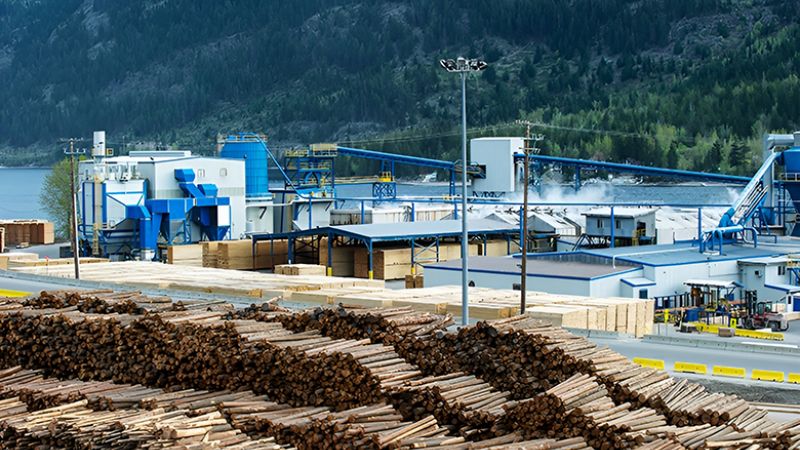


Meet global product demands and quality standards with industry-leading pellet plant design, engineering, equipment, and construction services for pellet processors.

Your Partner Beyond Project Completion
2000+ cases
RICHI is the leading designer, manufacturer and builder of pellet plants in the world, completing over 2000 projects in 140 countries across 6 continents.
Read More
Increase plant productivity, profitability, and safety by integrating high quality equipment into your pellet production line. Over the years, RICHI has become China's top pellet equipment manufacturer. At the same time, RICHI has established valuable partnerships with the world's leading component and raw material manufacturers to bring you the best there is in technology, automation, and efficiency in pelleting plant machinery.

For nearly 30 years, RICHI has been providing best-in-class pellet plant equipment and services to clients across a variety of industries, sizes, and needs. We pride ourselves on the knowledge and skill that each team member possesses – from our technical sales team to our process design engineers. You can count on RICHI Machinery to take your operation to the next level of innovation, quality, and success.
Need help with your pellet manufacturing plant project? Contact us today.
ANIMAL FEED
BIOMASS
WOOD
ORGANIC FERTILIZER
AQUA FEED
CAT LITTER
MUNICIPAL WASTE RECYCLING
SPECIAL PELLET PRODUCTION
RICHI Machinery continues to deliver world class pellet mill equipment, pellet plant engineering and project solutions that add value to our customers in the animal feed, wood waste, agriculture waste, organic fertilizer, cat litter and special pellet products industries. Throughout the years, we RICHI Machinery have built strong brand, becoming industry-leading pellet machine manufacturer. We value integrity, promise quality, and prioritize your success.
Learn MoreWith our expert team, we precisely implement your process engineering requirements in pellet mill and pelletizing plant systems. No matter which industry you’re in – we understand your needs and deliver solutions that meet the highest standards.
At RICHI, quality comes first. Our pellet making machine and related pellet line equipment undergo rigorous quality controls to ensure they meet the highest standards. Rely on products that are durable, safe, and efficient.
With decades of experience in pellet machine and pellet production line production, we have earned a reputation as a trusted partner in various industries. Our expertise allows us to cover a wide range of applications.
Not only do we offer premium pelleting equipment, but we are also experts at designing, building, installing, and maintaining facilities from the ground up. Our expertise is within pellt plant process design, discovering the most efficient, productive, and profitable way to handle your materials in an end-to-end cycle.
○ RICHI MACHINERY
Keeping in touch with us is an effective way to solve all your problems. If you have any needs or questions, please leave your contact information, then RICHI technical consultants will send design, quotation, videos to your mailbox. You can also contact us directly via WhatsApp: +86 13838389622
Copyright©2015-2026 by HENAN RICHI MACHINERY CO., LTD. All rights reserved.