
Pig manure pellet machine in Ghana for composted pig manure and agricultural residues. Discover the RICHI FZLH320 organic fertilizer pelletizer, technical specifications, raw material preparation and customized fertilizer production solutions.
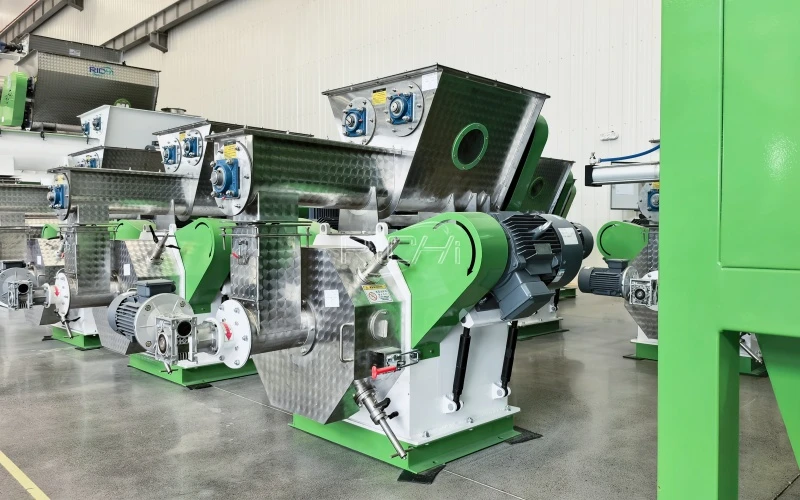
A pig manure pellet machine in Ghana was selected for a medium-sized organic fertilizer processor looking to turn locally available livestock waste and agricultural residues into a more marketable granular fertilizer. The customer already had a composting yard, basic material preparation equipment and a covered area for handling finished compost. Rather than invest in an entirely new fertilizer production line, the business decided to add one RICHI FZLH320 ring-die organic fertilizer pelletizer to its existing operation.
The project focuses on composted pig manure blended with processed maize stover and cocoa pod husks. These agricultural materials are relevant to Ghana's livestock and crop-production sectors, although the actual availability and suitability of each ingredient must be confirmed for the customer's location. The proposed product is a 5 mm organic fertilizer pellet for bagged distribution to crop growers, agricultural input dealers and small commercial farms.
Name:
Pig Manure Pellet Machine
Country:
Ghana
Date:
2026
Capacity:
2–3 T/H
Model:
FZLH320
Main Motor Power:
22 kW
Raw Materials:
Composted manure
Pellet diameter:
5mm
The selected FZLH320 fertilizer granulator machine has a rated reference capacity of 2–3 T/H. Actual throughput will depend on compost maturity, moisture, fiber content, particle size and the performance of the upstream preparation system. The objective is not simply to compress manure into pellets, but to establish a practical route from prepared compost to a consistent product that is easier to handle, store and sell.
The customer was already handling livestock manure and organic residues but faced a familiar commercial problem: loose compost is bulky, can be dusty when dry, and often varies in texture from one batch to another. Buyers who purchase fertilizer in bags generally want a product that can be weighed, transported and applied with less mess. A granular format can help the processor serve this market, provided the finished pellets meet the customer's requirements for durability, moisture and storage stability.
The existing composting operation was still useful, so replacing the whole setup would have required unnecessary investment. The customer instead chose to retain the equipment used for composting, screening, drying and material handling, while adding a dedicated organic fertilizer pellet machine as the next processing stage.
This single-machine purchase also gives the business a manageable way to test demand for pelletized organic fertilizer. The processor can use existing infrastructure, monitor the performance of the new equipment and expand the production system later if sales justify further investment. The project is therefore an extension of an operating business rather than a completely new fertilizer factory.
For this application, a ring-die organic fertilizer pelletizer is more appropriate than an animal feed pellet machine. The purpose is to densify prepared compost into fertilizer granules. The equipment is not intended to manufacture livestock feed, and the resulting pellets must not be represented as feed products.
Pig manure is the principal ingredient because the customer has access to manure from local pig production. Fresh manure is not fed directly into the pelletizer. It must first undergo appropriate composting and stabilization. This preparation helps manage odor and biological activity while allowing the processor to produce a more suitable material for subsequent granulation.
The proposed starting blend is based on the following dry-matter proportions. These are initial formulation targets for the project, not a universal recipe; the final blend must be adjusted after checking the actual compost and conducting pelletizing trials.
The percentages above refer to dry matter, not the weight of wet ingredients as delivered. This distinction matters because composted manure, maize stover and cocoa pod husks can have very different moisture contents. A batch weighed before drying cannot be compared directly with a dry-matter formulation unless the moisture of each ingredient is known.
Maize stover is collected after harvesting and must be chopped or milled before mixing. Long stalks and coarse fibers can interfere with consistent feeding and produce uneven pellets. Cocoa pod husks also require inspection, size reduction and appropriate composting or conditioning before use. The processor must exclude plastic, stones, metal and other contaminants that could damage the equipment or reduce fertilizer quality.
Although the proposed formula reflects plausible agricultural residues, the actual supply chain must be checked locally. If suitable cocoa pod husks are not consistently available, the customer can evaluate another clean, compostable crop residue after confirming its moisture, fiber content and compatibility with the intended product.
Composted manure is not a uniform raw material. Its moisture can vary with the original manure, bedding material, composting method, rainfall exposure and storage conditions. For this project, the incoming compost is expected to require moisture adjustment before pelletizing, particularly if the material has been stored outdoors or contains recently processed wet residues.
The customer plans to retain the existing drying equipment rather than purchase another dryer with the pelletizer. Material moisture will be measured after composting and blending, then adjusted according to test results. A preliminary operating target of approximately 15–20% moisture can be evaluated during trials, but it should not be treated as a guaranteed setting for every formula. The actual operating window depends on the prepared material and the pelletizing performance achieved on the FZLH320.
Too much moisture can cause feeding difficulties, weak pellets and increased drying demand. Material that is excessively dry may also fail to bind properly, depending on its composition. RICHI can help the customer assess the prepared compost and adjust the operating conditions before the equipment is put into routine production.
Because the project already has a drying stage, the new machine can be integrated without purchasing a duplicate dryer. If the feed material changes substantially in the future, moisture control and drying capacity should be reviewed again rather than assuming that the same settings will work for every batch.
The FZLH320 was selected for the customer's planned initial production scale. It offers a middle ground between a small trial unit and a larger industrial pelletizer, allowing the processor to develop a bagged fertilizer product without immediately committing to a high-capacity installation.
| Parameter | Specification |
|---|---|
| Equipment model | FZLH320 |
| Equipment type | Ring-die organic fertilizer pellet machine |
| Main motor power | 22 kW |
| Anti-bridging feeder power | 2.2 kW |
| Forced feeder power | 0.75 kW |
| Ring-die inner diameter | 320 mm |
| Reference production capacity | 2–3 T/H |
| Proposed finished pellet diameter | 5 mm |
| Finished product | Composted organic fertilizer pellets |
The reference capacity is based on the manufacturer's model data and should not be interpreted as a guaranteed output under every operating condition. Actual production depends on the feed material, moisture, formulation, pellet quality requirements and the configuration of the complete processing system.
The selected 5 mm pellet diameter is a project target rather than a fixed guarantee for every formulation. The final pellet dimensions and die configuration should be confirmed with RICHI through material assessment and testing. Pellet durability, fines generation and the ability to maintain a stable feed rate are also important acceptance criteria.
The project does not require the customer to replace every stage of its current operation. Instead, the FZLH320 is introduced into the existing material-preparation workflow. The exact layout will depend on the customer's installed equipment, available floor space and the condition of the prepared compost.
The proposed processing sequence is compost preparation, screening, size reduction where necessary, formulation and mixing, moisture adjustment, pelletizing, cooling or drying as required, final screening and bagging. Not every installation requires new machinery at every stage. Equipment that already performs adequately can remain in service, while missing or undersized sections can be addressed separately.
Before the compost reaches the pelletizer, it should be sufficiently mature, free from oversized foreign objects and reasonably uniform in particle size. The mixing stage must distribute the manure compost and crop residues evenly. If the feed is inconsistent, the machine may experience unstable feeding, variable pellet formation or changes in output.
After pelletizing, the product should be checked for temperature, moisture, pellet integrity and the amount of fines. Cooling and drying requirements depend on the condition of the pellets as they leave the machine. Finished fertilizer should not be packed while excessively warm or wet, because unsuitable storage conditions can lead to condensation, caking or deterioration in product quality.
By adding the pelletizer to the existing operation, the customer can focus its investment on the stage that creates the new product format. If sales grow, RICHI can also help plan a more integrated organic fertilizer production line with coordinated conveying, mixing, drying, cooling, screening and packing equipment.
The intended product is a granular organic soil amendment made from composted pig manure and agricultural residues. Its target market includes crop growers who want a bagged material that is easier to handle than loose compost. Potential customers may include vegetable producers, maize growers, mixed farms and agricultural supply dealers, depending on local demand and the finished product's quality.
Pelletizing changes the physical form of the compost; it does not automatically increase its nutrient content or make it a complete fertilizer for every crop. The final nutrient profile depends on the incoming manure, the crop residues, composting losses and any additional ingredients used. The processor should arrange appropriate laboratory analysis before making nutrient claims or printing fertilizer specifications on the packaging.
The granules are intended to make handling, weighing and distribution more convenient. They may also reduce some of the loose material and dust associated with poorly screened compost, although the actual amount of dust and fines depends on pellet strength, handling and storage. Product testing is therefore important before the business commits to a particular bag size or sales specification.
For this Ghana project, a 5 mm pellet is the proposed commercial format. It offers a practical starting point for bagged organic fertilizer, but the final diameter should be agreed upon after checking customer preferences, application methods and the mechanical quality of the finished product.
A ring-die pelletizer forms prepared material by forcing it through die openings under mechanical pressure. The die and roller system must be matched to the feed material and required pellet dimensions. Organic fertilizer blends are often more variable than clean wood or uniform grain, so feed preparation and moisture management are especially important.
The FZLH series is designed for organic fertilizer granulation applications. The FZLH320's 320 mm ring die and 22 kW main motor suit the planned reference capacity of 2–3 T/H under appropriate operating conditions. Its anti-bridging and forced-feeding components help deliver material into the pelletizing chamber, where uniform feeding is important for stable operation.
The equipment is intended for prepared organic fertilizer material, not raw, untreated manure straight from a livestock house. The customer must continue to manage composting, contamination control, particle size and moisture upstream. A pelletizer cannot compensate for an unsuitable or inconsistent feed blend.
The ring-die design also gives the processor a defined pellet format that can be incorporated into a repeatable production routine. The machine's suitability should nevertheless be assessed using the actual compost blend, because manure-based materials differ in fiber content, bulk density, abrasiveness and binding behavior.
The customer's decision was based on more than the nominal hourly capacity. The business needed a machine that could be integrated with equipment already on site and a supplier able to discuss the relationship between material preparation and pelletizing performance.
RICHI Machinery supplies individual machines as well as complete pellet production lines. For a customer that already has a composting and drying operation, this flexibility means the proposal can focus on the missing equipment instead of automatically replacing serviceable machinery. If a later expansion requires additional equipment, the process can be reviewed as a complete system.
Technical support can include reviewing the raw material, checking the intended capacity, confirming the pellet diameter, discussing upstream preparation and identifying which existing machines can be reused. These checks help establish a more realistic equipment scope before the customer commits to the installation.
For this organic fertilizer production project, the important consideration is whether the existing compost preparation and drying stages can provide a sufficiently consistent feed to the FZLH320. A machine selection based only on the size of the livestock operation would not answer that question. The actual blend, moisture and product specification must be considered together.
In this project scenario, the customer's main priority is to add a marketable product without rebuilding the entire processing site. The single-machine approach allows the business to retain its composting and drying infrastructure while evaluating whether granular fertilizer can command a sustainable place in its sales mix.
The customer also places importance on having a clear operating procedure for feed preparation. The team needs to know when compost is ready for granulation, how to identify unsuitable moisture, and how to respond if the blend changes with the availability of crop residues. These practical questions affect day-to-day output just as much as the pelletizer's rated capacity.
Following installation, the key performance indicators should include actual throughput, pellet diameter, pellet durability, fines percentage, power consumption and the stability of the finished product during storage. These results provide a more useful basis for judging the investment than a single capacity figure.
The feedback described here represents the priorities expected for this project configuration, not a verified quotation from a named customer. Actual customer statements and measured operating results should be added only after they have been confirmed by the buyer.
The equipment is planned for shipment by sea from Qingdao Port in China to Tema Port in Ghana. Tema is a major commercial seaport serving Ghana's international cargo trade.
Before shipment, the equipment package, electrical requirements, installation conditions and any agreed spare parts should be checked against the purchase order. The customer should also confirm the site foundation, available lifting equipment, access for installation and local electrical supply before the machine arrives.
Although this order centers on one pig manure pellet machine, RICHI Machinery can supply equipment for a broader range of pellet-processing applications. Depending on the customer's future requirements, these may include raw material crushing, mixing, conveying, drying, cooling, screening and packing equipment for organic fertilizer production.
RICHI can also help evaluate a complete fertilizer production line when the customer's existing machinery reaches its capacity limit or when additional preparation stages are needed. The design should be based on the actual feedstock, intended production volume, product specifications, site conditions and available utilities rather than a standard equipment list applied to every project.
For a processor in Ghana, a staged investment can be a sensible approach: retain serviceable equipment, add the pelletizing stage, measure the results and expand only when the market supports it. This approach keeps the initial scope focused while leaving room for a more automated production system later.
The proposed FZLH320 organic fertilizer pellet machine installation gives the customer a route to produce approximately 5 mm organic fertilizer pellets from composted pig manure and selected agricultural residues. Its reference capacity of 2–3 T/H fits the intended starting scale, provided the prepared feed material and upstream equipment can support that rate.
The most important preparation work is to verify the raw materials, confirm the dry-matter formulation, control moisture, remove contaminants and test the finished pellets. These steps help establish whether the proposed product can meet the customer's handling and market requirements.
For businesses considering a pig manure pellet machine in Ghana, RICHI Machinery can discuss individual equipment purchases as well as complete organic fertilizer production solutions. By reviewing the raw materials and existing process first, the equipment configuration can be tailored to the actual project instead of requiring the buyer to invest in unnecessary machinery.
Having the right mix of reliable, high-quality pellet machine and pelletizing systems and expert support is essential to your success. Watch how our end-to-end feed pellet plant solutions have helped our customers optimize their performance.
Our customized and future-proofed turnkey pellet plant solutions is designed with you at the core. From vision to reality and beyond, our team stays connected with yours. Giving you peace-of-mind with an expert at your side.

At RICHI, we go beyond project completion. With RICHI Servicee, we’re your dedicated partners in success. Count on us for expert guidance, minimal downtime, and optimized productivity. Choose RICHI for unmatched service and support.



Meet global product demands and quality standards with industry-leading pellet plant design, engineering, equipment, and construction services for pellet processors.


Your Partner Beyond Project Completion
2000+ cases
RICHI is the leading designer, manufacturer and builder of pellet plants in the world, completing over 2000 projects in 140 countries across 6 continents.
Read More
Increase plant productivity, profitability, and safety by integrating high quality equipment into your pellet production line. Over the years, RICHI has become China's top pellet equipment manufacturer. At the same time, RICHI has established valuable partnerships with the world's leading component and raw material manufacturers to bring you the best there is in technology, automation, and efficiency in pelleting plant machinery.

For nearly 30 years, RICHI has been providing best-in-class pellet plant equipment and services to clients across a variety of industries, sizes, and needs. We pride ourselves on the knowledge and skill that each team member possesses – from our technical sales team to our process design engineers. You can count on RICHI Machinery to take your operation to the next level of innovation, quality, and success.
Need help with your pellet manufacturing plant project? Contact us today.
ANIMAL FEED
BIOMASS
WOOD
ORGANIC FERTILIZER
AQUA FEED
CAT LITTER
MUNICIPAL WASTE RECYCLING
SPECIAL PELLET PRODUCTION
RICHI Machinery continues to deliver world class pellet mill equipment, pellet plant engineering and project solutions that add value to our customers in the animal feed, wood waste, agriculture waste, organic fertilizer, cat litter and special pellet products industries. Throughout the years, we RICHI Machinery have built strong brand, becoming industry-leading pellet machine manufacturer. We value integrity, promise quality, and prioritize your success.
Learn MoreWith our expert team, we precisely implement your process engineering requirements in pellet mill and pelletizing plant systems. No matter which industry you’re in – we understand your needs and deliver solutions that meet the highest standards.
At RICHI, quality comes first. Our pellet making machine and related pellet line equipment undergo rigorous quality controls to ensure they meet the highest standards. Rely on products that are durable, safe, and efficient.
With decades of experience in pellet machine and pellet production line production, we have earned a reputation as a trusted partner in various industries. Our expertise allows us to cover a wide range of applications.
Not only do we offer premium pelleting equipment, but we are also experts at designing, building, installing, and maintaining facilities from the ground up. Our expertise is within pellt plant process design, discovering the most efficient, productive, and profitable way to handle your materials in an end-to-end cycle.
○ RICHI MACHINERY
Keeping in touch with us is an effective way to solve all your problems. If you have any needs or questions, please leave your contact information, then RICHI technical consultants will send design, quotation, videos to your mailbox. You can also contact us directly via WhatsApp: +86 13838389622
Copyright©2015-2026 by HENAN RICHI MACHINERY CO., LTD. All rights reserved.