
For a pig feed mill in central Ukraine, replacing the packing scale was not part of a new feed line project. The mill already had stable grinding, mixing, pelleting, cooling, screening, and bag conveying sections. The weak point appeared only at the final handover between production and sales: finished feed was being packed with an aging weighing system whose repeatability had become increasingly difficult to control.
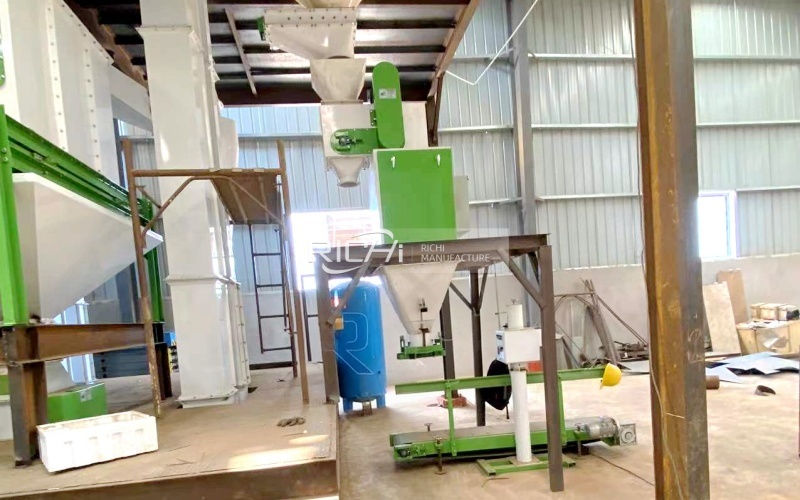
For a pig feed mill in central Ukraine, replacing the packing scale was not part of a new feed line project. The mill already had stable grinding, mixing, pelleting, cooling, screening, and bag conveying sections. The weak point appeared only at the final handover between production and sales: finished feed was being packed with an aging weighing system whose repeatability had become increasingly difficult to control.
The customer therefore purchased one DCS-50K pig feed packing scale in Ukraine as a standalone retrofit. Rather than changing the entire packing department, the project focused on improving dosing repeatability for the mill’s main 25 kg and 40 kg pig-feed bags while retaining the existing finished-product bin, bag conveyor, sewing machine, and palletizing arrangement.
Name:
Pig feed bagger
Country:
Ukraine
Date:
2025
Capacity:
Flexible
Model:
DCS-50K
Application:
Dry pig feed pellets
Bag Closing:
Sewing system
Main Bag Sizes:
25 kg and 40 kg
The customer is an independent compound feed producer serving commercial pig farms and agricultural businesses in the Poltava region. Its pig-feed portfolio includes weaner, grower, finisher, and sow diets, with most products sold as dry pellets.
For this mill, the packing problem was not simply “some bags were a little heavy or light.” Variation in filling weight creates two different commercial risks.
If the operator deliberately increases the set point to avoid underweight packages, every additional gram becomes product giveaway. If the set point is kept close to the nominal weight while the old scale continues to fluctuate, some packages may fall below the declared quantity.
At several thousand tonnes of annual bagged production, even a small systematic overfill can become meaningful feed loss. The mill therefore wanted better control around the target weight rather than simply setting every 25 kg bag substantially above 25 kg.
| Project Item | Selected Configuration |
|---|---|
| Machine | DCS-50K quantitative packing scale |
| Application | Dry pig feed pellets |
| Main Bag Sizes | 25 kg and 40 kg |
| Feeding Method | Gravity feeding |
| Reference Dynamic Accuracy | ±0.2% |
| Weighing Control | Electronic weighing with PLC-based control |
| Bag Closing | Sewing system |
| Installation Type | Standalone replacement in existing packing section |
The DCS-50K was selected because the product reaching the packing section is relatively dry and free-flowing. Gravity feeding keeps the material path simple and is appropriate for conventional pig-feed pellets when the product does not contain an unusually sticky surface coating.
For this configuration, the reference dynamic weighing accuracy is ±0.2%, while the actual achievable repeatability depends on commissioning, feed characteristics, upstream head pressure, vibration, air supply, bagging speed, and calibration. The supplied project information also identifies electronic load-cell weighing and PLC control as key features of the selected system.
The packing station handles several pig-feed SKUs during a normal production week. Weaner products contain smaller pellets, while grower, finisher, and sow feeds generally use larger pellets. The mill mainly packs 25 kg bags, with 40 kg bags used for selected farm customers.
This matters because packing performance cannot be judged with one product during commissioning and then assumed to remain identical for every formulation.
Pellet diameter, bulk density, fines content, surface oil, pellet durability, and the amount of product sitting above the weighing unit can all influence filling behavior.
A batch of clean, dense 4 mm grower pellets can flow differently from a smaller weaner pellet containing more fines. The customer therefore established separate packing parameters for its principal product groups rather than using one universal setting.
High-speed packing and accurate packing pull in opposite directions if the feeding system is not controlled correctly.
Opening the gravity gate fully for the entire filling cycle is fast, but material continues moving while the weighing system approaches its set point. This can cause overshoot.
The practical solution is staged feeding.
The DCS-50K rapidly delivers the bulk of the required feed and then reduces the material flow as the target weight approaches. The slower final dosing phase gives the weighing controller time to complete the fill more accurately.
During commissioning, the technician therefore concentrated on the relationship among fast-feed cutoff, fine-feed cutoff, material flow, target weight, and actual settled weight.
Those values were established with the customer’s real pellets rather than copied directly from a factory test using a different material.
One lesson from this retrofit was that weighing accuracy does not depend only on the load cells.
If the finished-product bin feeds the scale inconsistently, the weighing system has to compensate for unstable material flow. Likewise, excessive vibration transmitted from nearby conveyors or equipment can interfere with weighing signals.
RICHI therefore reviewed the installation position, supporting structure, product head above the packing scale, discharge connection, bag clamp position, compressed-air quality, and downstream conveyor arrangement.
The scale was installed as an independent weighing point rather than rigidly allowing unnecessary vibration from adjacent equipment to pass into the weighing assembly.
Because 25 kg is the mill’s highest-volume retail and farm-distribution format, commissioning began with this package.
A sequence of bags was filled and independently check-weighed. The technician then adjusted the coarse and fine feeding parameters based on the actual deviation pattern.
The objective was not to make one demonstration bag land exactly at 25.000 kg.
The important result was repeatability across consecutive bags.
A packing machine that occasionally produces an exact reading but alternates between significant underfill and overfill is less useful than a properly calibrated system producing a tight, stable distribution around the intended target.
The customer initially expected that changing from 25 kg to 40 kg would simply require entering a new target weight.
In practice, the larger fill mass changes the dosing cycle.
The fast-feed period becomes longer, and the relationship between material in free fall and material already registered by the weighing system must still be considered. For that reason, the 40 kg program was tested separately.
The PLC allows the mill to retain working parameters for the frequently produced bag formats, reducing adjustment time when the packing department changes from one feed order to another.
Different products require different packing mechanisms.
For fine powders with poor flowability, an auger-fed scale can provide more controlled material delivery. A belt-fed arrangement may be appropriate for certain products that do not behave well under direct gravity feeding.
Neither complication was necessary here.
The mill’s finished pig feed is predominantly screened, cooled pellet feed at normal storage moisture. Once excessive fines are removed, the pellets flow readily from the finished-product bin.
Gravity feeding therefore gave the customer a comparatively straightforward configuration with fewer driven feeding components.
The new scale did not solve problems that belong to the cooler.
Before feed reaches the DCS-50K, pellets must already have been properly cooled and screened. Packing hot pellets can lead to condensation and storage problems regardless of weighing accuracy.
The customer therefore keeps the packing scale downstream of the cooler and final screening equipment.
Screening is particularly relevant to this application because an excessive fines fraction can change bulk flow behavior and increase dust around the bagging station.
The pig feed packing scale in Ukraine is consequently treated as the final quantitative dosing machine, not as a substitute for correct upstream feed processing.
Buying a standalone machine only made financial sense if the customer could retain most of the packing infrastructure already in place.
The new DCS-50K was therefore matched to the available discharge height and the existing finished-feed storage arrangement. The customer continued using its bag conveyor and industrial sewing equipment after the scale.
The operating sequence remained familiar: an operator positions the empty bag, the clamp secures it, the scale doses the programmed quantity, the filled bag is released onto the conveyor, and the bag moves to sewing and subsequent handling.
This reduced the amount of structural modification and operator retraining required for the upgrade.
Replacing an old scale with an electronic one does not eliminate the need for verification.
The mill introduced a simple check-weighing routine using an appropriate reference scale. Operators periodically sample finished bags, record the results, and investigate unusual drift before it becomes a larger production problem.
Calibration is also checked after maintenance that can affect the weighing assembly, after significant mechanical disturbance, or when packing behavior changes unexpectedly.
The customer pays particular attention when changing to a feed with substantially different bulk density or fines content.
This approach is more useful than promising that PLC control means a packing scale can “never drift.” Electronic control improves consistency, but a commercial weighing system still needs correct installation, verification, and maintenance.
After the retrofit, the production manager became equally interested in overfill.
Consider a simple example. If a mill unnecessarily gives away an average of only 50 g on every nominal 25 kg bag, that equals 2 kg of additional product for every tonne packed in 25 kg bags.
Across 5,000 tonnes, that would represent approximately 10 tonnes of feed transferred to customers without being invoiced.
This is why packing-scale investment is often evaluated using both compliance control and giveaway reduction.
The exact financial saving for any mill should be calculated from its own before-and-after check-weighing data, annual bag volume, feed value, and actual average overfill rather than from a generic payback claim.
The most visible difference was not packing appearance. A sewn 25 kg feed bag looked essentially the same as before.
The difference appeared in the check-weighing records.
Operators no longer needed to compensate for an unpredictable scale by repeatedly changing the target during the shift. Once the appropriate parameters had been established for each principal product and bag size, the packing station became much easier to manage.
“With the old scale, our operators watched every batch because the result could gradually move during the day. With the new unit, we still check bags regularly, but now the checks confirm the process instead of constantly telling us to correct it. That is the biggest improvement for us.”
The customer keeps the weighing assembly clean and avoids allowing feed dust to accumulate around moving parts and sensors.
The pneumatic system is supplied with clean, dry compressed air, because unstable air pressure or contaminated pneumatic components can affect gate and clamp operation.
Bag-clamping components are inspected as wear items rather than assumed to have a fixed lifetime. Their service interval depends heavily on bag material, operating frequency, alignment, and handling practices.
The mill also keeps selected pneumatic components and other routine spares on site so that a relatively inexpensive component does not stop the entire packing section.
The packing equipment was prepared for export at RICHI’s manufacturing base and shipped from Qingdao Port.
Because transport conditions and usable Ukrainian import routes can change, the final sea entry point, transshipment arrangement, customs route, and inland delivery plan are confirmed with the customer and freight forwarder when the equipment is actually dispatched rather than being treated as a permanently fixed Qingdao–Odesa schedule.
This is especially important for projects involving Ukraine, where logistics planning needs to reflect the operating conditions at the time of shipment.
The phrase “50 kg packing machine” is not enough information for selecting an automatic weighing system.
For this project, the important inputs included product form, pellet diameter, bulk density, fines percentage, bag material, minimum and maximum bag weight, required bags per hour, available height under the finished-product bin, compressed-air conditions, local power supply, bag-closing method, and the layout of the downstream conveyor.
The customer also identified the 25 kg product as its priority SKU. That allowed commissioning to concentrate on the format with the greatest commercial impact before establishing the secondary 40 kg program.
This configuration is particularly suitable when a feed manufacturer already has a functioning production line but the final quantitative packing stage has become inaccurate, slow, difficult to maintain, or incompatible with current production requirements.
It is also appropriate for greenfield feed mills, but the engineering approach is different. In a new line, the packing machine can be designed together with finished-product bins, conveyors, dust extraction, sewing equipment, palletizing, and plant automation from the beginning.
For a retrofit such as this Ukrainian project, interface dimensions become more important because the new equipment has to fit what is already installed.
This pig feed packing scale in Ukraine project ultimately involved more than replacing an old weighing device with a digital one. The DCS-50K had to match dry pig-feed pellets, two principal bag weights, the existing packing layout, the available pneumatic system, and the mill’s actual production rhythm.
The selected gravity-fed configuration provides a straightforward solution for free-flowing pellet feed. Its reference dynamic accuracy is ±0.2%, while electronic weighing and PLC control provide the foundation for repeatable automatic dosing.
More importantly, the customer now manages packing accuracy through correct machine selection, staged feeding, product-specific settings, check weighing, calibration, preventive maintenance, and stable upstream product flow.
For another Ukrainian pig feed mill, RICHI Machinery would not recommend a packing scale based only on annual tonnage. The selection should start with the actual feed form and bulk density, bag sizes, required packing speed, target weighing tolerance, bag material, sealing method, existing bin dimensions, available installation height, compressed-air supply, electrical conditions, and the equipment already installed before and after the weighing station.
That information determines whether a gravity-fed DCS-50K is the appropriate choice—or whether another feeding and weighing configuration would provide better control.
Having the right mix of reliable, high-quality pellet machine and pelletizing systems and expert support is essential to your success. Watch how our end-to-end feed pellet plant solutions have helped our customers optimize their performance.
Our customized and future-proofed turnkey pellet plant solutions is designed with you at the core. From vision to reality and beyond, our team stays connected with yours. Giving you peace-of-mind with an expert at your side.
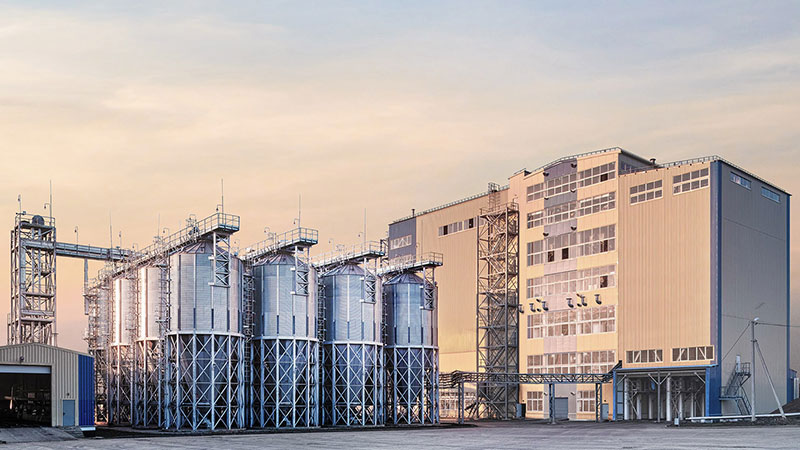
At RICHI, we go beyond project completion. With RICHI Servicee, we’re your dedicated partners in success. Count on us for expert guidance, minimal downtime, and optimized productivity. Choose RICHI for unmatched service and support.
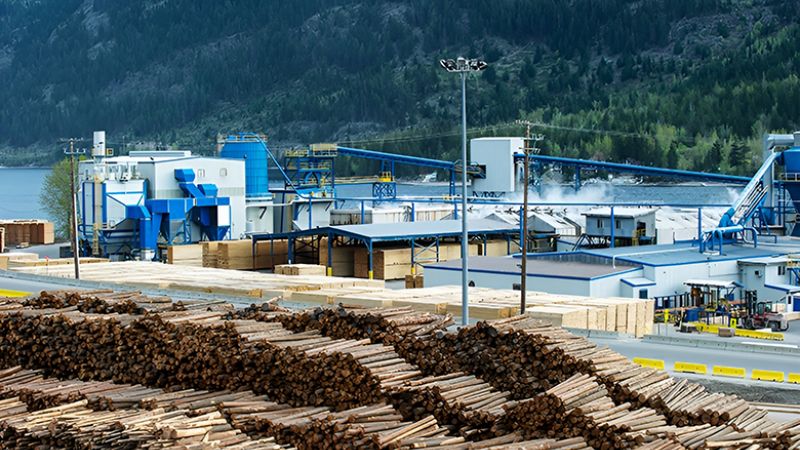


Meet global product demands and quality standards with industry-leading pellet plant design, engineering, equipment, and construction services for pellet processors.


Your Partner Beyond Project Completion
2000+ cases
RICHI is the leading designer, manufacturer and builder of pellet plants in the world, completing over 2000 projects in 140 countries across 6 continents.
Read More
Increase plant productivity, profitability, and safety by integrating high quality equipment into your pellet production line. Over the years, RICHI has become China's top pellet equipment manufacturer. At the same time, RICHI has established valuable partnerships with the world's leading component and raw material manufacturers to bring you the best there is in technology, automation, and efficiency in pelleting plant machinery.

For nearly 30 years, RICHI has been providing best-in-class pellet plant equipment and services to clients across a variety of industries, sizes, and needs. We pride ourselves on the knowledge and skill that each team member possesses – from our technical sales team to our process design engineers. You can count on RICHI Machinery to take your operation to the next level of innovation, quality, and success.
Need help with your pellet manufacturing plant project? Contact us today.
ANIMAL FEED
BIOMASS
WOOD
ORGANIC FERTILIZER
AQUA FEED
CAT LITTER
MUNICIPAL WASTE RECYCLING
SPECIAL PELLET PRODUCTION
RICHI Machinery continues to deliver world class pellet mill equipment, pellet plant engineering and project solutions that add value to our customers in the animal feed, wood waste, agriculture waste, organic fertilizer, cat litter and special pellet products industries. Throughout the years, we RICHI Machinery have built strong brand, becoming industry-leading pellet machine manufacturer. We value integrity, promise quality, and prioritize your success.
Learn MoreWith our expert team, we precisely implement your process engineering requirements in pellet mill and pelletizing plant systems. No matter which industry you’re in – we understand your needs and deliver solutions that meet the highest standards.
At RICHI, quality comes first. Our pellet making machine and related pellet line equipment undergo rigorous quality controls to ensure they meet the highest standards. Rely on products that are durable, safe, and efficient.
With decades of experience in pellet machine and pellet production line production, we have earned a reputation as a trusted partner in various industries. Our expertise allows us to cover a wide range of applications.
Not only do we offer premium pelleting equipment, but we are also experts at designing, building, installing, and maintaining facilities from the ground up. Our expertise is within pellt plant process design, discovering the most efficient, productive, and profitable way to handle your materials in an end-to-end cycle.
○ RICHI MACHINERY
Keeping in touch with us is an effective way to solve all your problems. If you have any needs or questions, please leave your contact information, then RICHI technical consultants will send design, quotation, videos to your mailbox. You can also contact us directly via WhatsApp: +86 13838389622
Copyright©2015-2026 by HENAN RICHI MACHINERY CO., LTD. All rights reserved.