
Paper refuse pellet machine in Belgium for processing selected waste paper and cardboard into recycled paper cat litter. Explore the RICHI MZLH320 specifications, raw material preparation, pellet quality and single-machine investment.
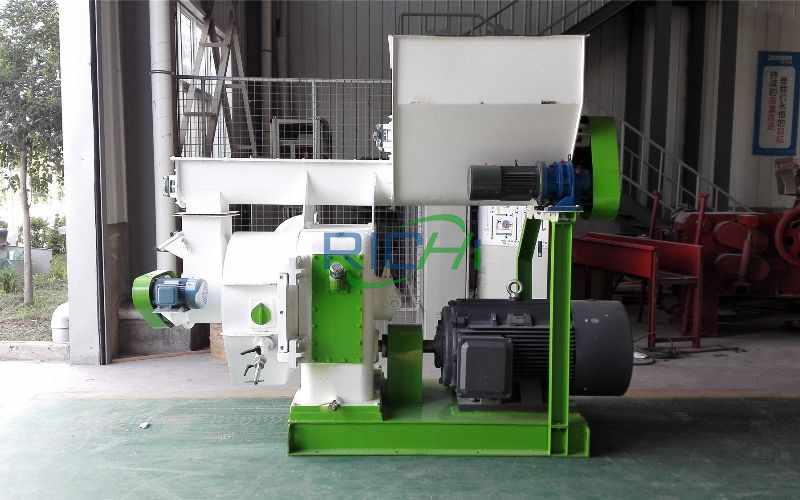
A paper refuse pellet machine in Belgium is the proposed investment for a small recycling and pet-product business seeking to turn selected waste paper into recycled paper cat litter. The project focuses on clean, recoverable paper fibers from packaging and commercial paper collection, rather than mixed municipal waste. The buyer wants to add a compact pelletizing machine to an existing material-preparation operation and test whether a consistent, absorbent litter product can be produced for the local pet-care market.
The planned purchase is one RICHI MZLH320 ring die pellet machine, with a reference capacity of 0.2–0.3 T/H. The buyer already has access to sorting and paper size-reduction equipment, so a complete production line is not required at this stage. The machine will provide the compression step needed to form prepared paper fibers into small pellets, while product trials will determine the suitable pellet diameter, absorbency, durability and dust level.
Name:
Paper Pellet Machine
Country:
Belgium
Date:
2026
Capacity:
0.2–0.3 T/H
Model:
MZLH320
Main Motor Power:
22 kW
Main Product:
paper-based cat litter
Pellet diameter:
4–6mm
The buyer operates in the recycling and pet-product supply sector. Its existing business handles sorted paper and cardboard from commercial packaging, retail distribution and office collection. Some recovered fibers are not suitable for the buyer's usual recycling route, but a carefully selected fraction may be considered for non-food pet products after inspection and appropriate quality checks.
The intended product is paper-based cat litter. Unlike a fuel pellet project, the objective here is not energy generation. The product must be lightweight enough for convenient handling, absorb moisture effectively, produce limited dust and remain suitable for routine use in a cat litter tray. Pellet formation is only one part of the process; raw material cleanliness and finished-product performance matter just as much.
Belgium is a reasonable setting for a small recycling venture exploring this product route because the project can draw on established paper collection and packaging-recovery activities while targeting pet owners and specialist retailers. However, the availability of waste paper does not automatically guarantee a profitable cat litter business. The buyer still needs to verify the supply of suitable fibers, production costs, competing litter products and customer demand.
The project therefore begins with a defined feedstock specification instead of accepting every paper grade available. Clean, uncoated paper and selected cardboard fibers are the main candidates. Paper contaminated with food residues, oils, chemicals or unknown substances must be rejected, as must material with plastic films or unsuitable coatings. Paper that is technically pelletizable is not necessarily suitable for a product used around animals.
The business already has equipment for sorting collected paper and reducing it to a manageable size. Its main production gap is the ability to compact prepared fibers into a uniform product. Buying a complete automated plant would duplicate some of the existing equipment and require a larger initial investment before the market has been tested.
A single paper pelletizer allows the operator to add the missing processing stage while retaining its current preparation system. It also makes it easier to run small batches, compare raw material grades and identify which settings deliver acceptable pellets. If the product meets the required quality standards and generates repeat orders, the business can consider upgrading conveying, cooling, screening or packaging equipment later.
This investment is not intended to replace the entire recycling operation. It is a targeted addition that gives the buyer another possible use for selected paper residues. The MZLH320 will be evaluated as part of the existing workflow, with actual throughput measured against the material available and the quality of the finished cat litter.
The buyer's commercial priority is repeatability rather than maximum nominal capacity. A machine that can maintain stable feeding and form acceptable pellets from the selected fibers is more useful at this stage than a larger model whose output would exceed the available qualified feedstock or the sales volume of a new product.
The selected model is the RICHI MZLH320 ring die paper pellet machine. Its reference capacity of 0.2–0.3 T/H makes it a suitable starting point for controlled production trials. The actual capacity for paper cat litter must be established through material testing, because paper fibers behave differently from denser agricultural residues and wood-based materials.
| Technical Item | Specification |
|---|---|
| Model | MZLH320 |
| Equipment type | Ring die paper pellet machine |
| Purchase quantity | 1 unit |
| Main motor power | 22 kW |
| Anti-bridging feeder power | 2.2 kW |
| Forced feeder power | 0.75 kW |
| Ring die inner diameter | 320 mm |
| Reference capacity | 0.2–0.3 T/H |
| Available pellet diameter range | 4–12 mm |
| Initial trial pellet diameter | 4–6 mm, subject to product testing |
| Conditioning system | No conditioner included |
The anti-bridging feeder helps prevent loose paper fibers from accumulating above the feed outlet, while the forced feeder supports a more consistent supply of prepared material into the pelletizing chamber. These functions are useful when handling low-density fibers that may bridge or feed irregularly if their size and bulk density vary significantly.
The ring die compresses the prepared fibers through its holes to form cylindrical pellets. The listed 0.2–0.3 T/H is a reference range, not a guaranteed output for every paper grade. Fiber length, moisture, bulk density, feeding behavior and the resistance of the material during compression all influence actual production performance.
The proposed 4–6 mm diameter is an initial trial range for cat litter, not a confirmed final product specification. The buyer should evaluate pellet size alongside absorbency, clumping or breakup behavior, dust generation and ease of removal from the litter tray. RICHI should confirm the appropriate die configuration after reviewing representative raw material samples and the intended product requirements.
The proposed feedstock consists mainly of clean, uncoated paper and selected cardboard fibers recovered from commercial packaging and paper collection. The exact blend will depend on availability and the results of product trials. A consistent feedstock specification is preferable to changing the formulation every time a new collection batch arrives.
Paperboard offcuts and plain packaging paper can provide a source of recoverable fibers, but their suitability must be checked individually. Waxed paper, laminated packaging, heavily coated stock, thermal receipts, adhesive-rich labels and paper with unknown chemical contamination should not be included without a documented assessment demonstrating suitability for the intended use.
Before pelletizing, the selected material needs to be sorted and reduced to a more uniform fiber size. An existing shredder or paper size-reduction machine can prepare the feedstock, provided it delivers a suitable structure for stable feeding. The goal is not necessarily to grind all fibers into fine powder: excessive fines may increase dust and alter the texture and absorption characteristics of the final litter.
Moisture must also be controlled. An initial working range of approximately 10–15% moisture at the pelletizer inlet can be evaluated during trials, but it is not a validated specification for every paper formulation. If the incoming paper is damp, the operator should dry it and check for mold or other deterioration before use. Moisture requirements should be confirmed by testing the material and the finished pellets.
The business should keep clean feedstock separate from rejected material and record the source of each batch. That simple control makes it easier to investigate changes in pellet strength, dust or absorbency. It also helps prevent unsuitable paper from entering the product stream merely to maintain machine utilization.
After sorting and size reduction, the prepared fibers are fed into the MZLH320. The ring die compresses the material into pellets, which are then discharged for cooling and screening. Since the selected configuration does not include a conditioner, raw material preparation and consistent feeding are especially important to the trial process.
Fresh pellets should be allowed to cool before packaging. Screening can remove loose fines and undersized particles that would otherwise collect in bags and create dust when the product is poured. The operator should measure the fines fraction and inspect pellet consistency rather than relying on appearance alone.
The first batches should be tested in representative litter trays. Useful observations include how quickly the material takes up liquid, whether the pellets remain intact or break apart, how much dust appears during pouring and scooping, and whether the used material can be removed conveniently. The product should not be marketed with a specific absorbency or odor-control claim until the performance has been measured.
Paper cat litter does not necessarily behave like bentonite clay or wood-based litter. Its moisture response and disposal characteristics depend on the paper fibers and any additives used. The product instructions should therefore explain how it is intended to be used, how frequently it should be replaced and how the used material should be disposed of in accordance with local requirements.
Quality control should cover both the raw material and the finished pellets. The buyer should check for visible contamination, abnormal odor, excessive dust and changes in moisture during storage. Packaging should protect the pellets from humidity, as paper-based products can soften or deteriorate if they absorb moisture before reaching the customer.
For the buyer, the attraction of recycled paper cat litter is the possibility of creating a marketable product from a selected paper stream that has limited value in its current form. Pelletizing reduces bulk and gives the material a consistent shape for weighing, bagging and distribution. Whether this creates a commercial advantage depends on the quality achieved and the cost of preparing the feedstock.
Potential customers include independent pet shops, online pet-product sellers and consumers who are actively comparing alternative litter materials. These buyers may value a paper-based product, but they will still expect reliable absorption, convenient handling, reasonable dust levels and clear instructions. The business should obtain feedback from small trial batches before committing to large production volumes.
The project also needs a realistic cost model. The calculation should include collection and sorting, rejected material, shredding, drying where necessary, electricity, labor, packaging, storage and delivery. A low-cost raw material does not automatically translate into a low-cost finished product if it requires extensive preparation or generates a high proportion of fines.
Starting with the MZLH320 gives the operator a way to evaluate the production process without immediately investing in a larger pelletizer. If demand grows, the next decision can be based on measured production hours, accepted output, repeat purchases and the availability of suitable paper fibers rather than an optimistic estimate of market size.
For a standalone machine purchase, equipment selection should begin with the actual material. RICHI can review the proposed paper grades, moisture range, fiber size and target pellet diameter before confirming the MZLH320 configuration. Where representative samples are available, trial testing can help determine whether the fibers feed consistently and form pellets with the required physical characteristics.
The technical review can also cover the installation area, electrical requirements, access for maintenance and the connection between the existing shredder and the pelletizer. Since the buyer already has part of the preparation system, the objective is to integrate the new machine without unnecessarily duplicating existing equipment.
RICHI's experience in pelletizing equipment can support the buyer in evaluating the ring die configuration, feeding arrangement and practical operating requirements. Any recommendation for commercial output should be tied to the test results for the selected paper material rather than transferred directly from the machine's nominal capacity for other materials.
After installation, the buyer should keep records of material batches, operating settings, production rate, fines and finished-product test results. Those records will help distinguish a raw material problem from a feeding or process-setting issue. They will also provide a more reliable basis for deciding whether further equipment is needed.
The proposed shipping arrangement is sea freight from Qingdao Port in China to the Port of Antwerp in Belgium. The final booking and delivery schedule should be confirmed against the packed machine dimensions, gross weight and shipping documents before dispatch.
Before arrival, the buyer should prepare a suitable installation area and confirm the electrical supply for the 22 kW main motor and auxiliary feeder motors. Space should be available for safe operation, inspection and routine maintenance, with adequate arrangements for collecting and managing paper dust around the preparation and pelletizing stages.
The receiving team should also check that the existing preparation equipment can supply the pelletizer with material at a reasonably steady rate. This is particularly important for loose paper fibers, because inconsistent feeding can affect output and make it harder to compare production trials.
The main question for this project is whether the prepared paper fibers can be pelletized consistently and meet the expectations of cat litter customers. The MZLH320 offers a compact starting point, while its anti-bridging and forced-feeding arrangement addresses practical challenges associated with lightweight materials.
The buyer's evaluation should focus on measurable results: stable feeding, acceptable pellet formation, manageable fines, moisture absorption, storage stability and the performance of the product in a litter tray. Machine capacity matters, but it should not take priority over product suitability or the consistency of the raw material.
No verified customer quotation or completed commissioning report has been supplied for this case. A direct testimonial should be added only after the buyer has conducted production trials and provided genuine feedback. The most useful feedback would describe actual operating performance, the preparation required for the paper fibers, product quality and the support received during installation.
A paper refuse pellet machine in Belgium can be a practical investment for a recycling business that has access to suitable paper fibers and wants to test a non-fuel pet-care product. The RICHI MZLH320 provides a reference capacity of 0.2–0.3 T/H, with the final production rate and pellet specification to be confirmed through material testing.
For businesses considering recycled paper cat litter, RICHI Machinery can review the raw material and existing equipment before recommending the machine configuration. A sample-based evaluation is the most useful starting point for establishing a realistic process, controlling product quality and deciding whether the project is ready for commercial production.
Having the right mix of reliable, high-quality pellet machine and pelletizing systems and expert support is essential to your success. Watch how our end-to-end feed pellet plant solutions have helped our customers optimize their performance.
Our customized and future-proofed turnkey pellet plant solutions is designed with you at the core. From vision to reality and beyond, our team stays connected with yours. Giving you peace-of-mind with an expert at your side.

At RICHI, we go beyond project completion. With RICHI Servicee, we’re your dedicated partners in success. Count on us for expert guidance, minimal downtime, and optimized productivity. Choose RICHI for unmatched service and support.



Meet global product demands and quality standards with industry-leading pellet plant design, engineering, equipment, and construction services for pellet processors.


Your Partner Beyond Project Completion
2000+ cases
RICHI is the leading designer, manufacturer and builder of pellet plants in the world, completing over 2000 projects in 140 countries across 6 continents.
Read More
Increase plant productivity, profitability, and safety by integrating high quality equipment into your pellet production line. Over the years, RICHI has become China's top pellet equipment manufacturer. At the same time, RICHI has established valuable partnerships with the world's leading component and raw material manufacturers to bring you the best there is in technology, automation, and efficiency in pelleting plant machinery.

For nearly 30 years, RICHI has been providing best-in-class pellet plant equipment and services to clients across a variety of industries, sizes, and needs. We pride ourselves on the knowledge and skill that each team member possesses – from our technical sales team to our process design engineers. You can count on RICHI Machinery to take your operation to the next level of innovation, quality, and success.
Need help with your pellet manufacturing plant project? Contact us today.
ANIMAL FEED
BIOMASS
WOOD
ORGANIC FERTILIZER
AQUA FEED
CAT LITTER
MUNICIPAL WASTE RECYCLING
SPECIAL PELLET PRODUCTION
RICHI Machinery continues to deliver world class pellet mill equipment, pellet plant engineering and project solutions that add value to our customers in the animal feed, wood waste, agriculture waste, organic fertilizer, cat litter and special pellet products industries. Throughout the years, we RICHI Machinery have built strong brand, becoming industry-leading pellet machine manufacturer. We value integrity, promise quality, and prioritize your success.
Learn MoreWith our expert team, we precisely implement your process engineering requirements in pellet mill and pelletizing plant systems. No matter which industry you’re in – we understand your needs and deliver solutions that meet the highest standards.
At RICHI, quality comes first. Our pellet making machine and related pellet line equipment undergo rigorous quality controls to ensure they meet the highest standards. Rely on products that are durable, safe, and efficient.
With decades of experience in pellet machine and pellet production line production, we have earned a reputation as a trusted partner in various industries. Our expertise allows us to cover a wide range of applications.
Not only do we offer premium pelleting equipment, but we are also experts at designing, building, installing, and maintaining facilities from the ground up. Our expertise is within pellt plant process design, discovering the most efficient, productive, and profitable way to handle your materials in an end-to-end cycle.
○ RICHI MACHINERY
Keeping in touch with us is an effective way to solve all your problems. If you have any needs or questions, please leave your contact information, then RICHI technical consultants will send design, quotation, videos to your mailbox. You can also contact us directly via WhatsApp: +86 13838389622
Copyright©2015-2026 by HENAN RICHI MACHINERY CO., LTD. All rights reserved.