
A resource recovery company in southern Vietnam purchased one MZLH520 paper pellet mill in Vietnam to process clean corrugated cardboard scraps, kraft paper trimmings and rejected paper packaging into 8 mm recycled paper pellets.
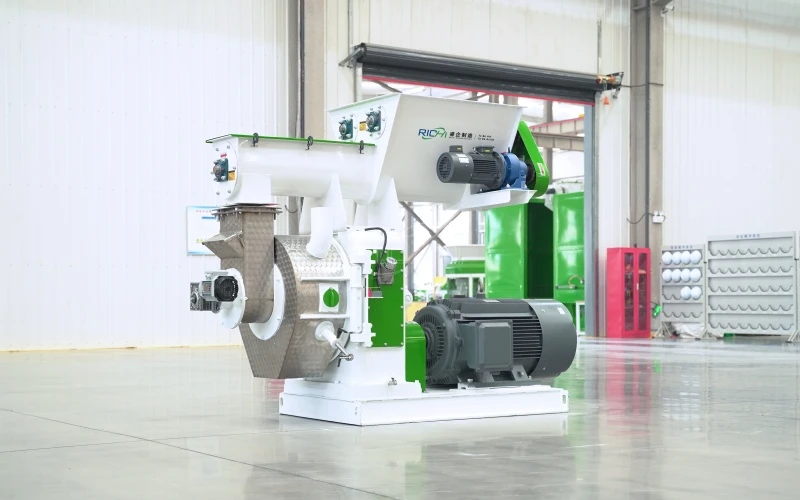
A resource recovery company in southern Vietnam purchased one MZLH520 paper pellet mill in Vietnam to process clean corrugated cardboard scraps, kraft paper trimmings and rejected paper packaging into 8 mm recycled paper pellets. With a rated capacity of 1.5–2.0 T/H, the machine was selected as a standalone addition to the customer's existing sorting, shredding and material handling system.
Unlike conventional waste-paper projects that simply bale recovered cardboard for resale, this customer wanted to manufacture a more standardized product for the pet bedding market. The investment therefore focused on the missing pelletizing stage rather than replacing the equipment already operating in the recycling workshop.
Name:
paper pellet machine for bedding
Country:
Vietnam
Date:
2025
Capacity:
1.5–2.0 T/H
Model:
MZLH520
Main Motor Power:
132 kW
Raw Materials:
Corrugated boxe
Pellet diameter:
8 mm
Vietnam's expanding manufacturing, retail, logistics and e-commerce sectors generate large quantities of corrugated cartons and other paper packaging materials. Much of this material can return to conventional paper recycling channels, but recycling businesses do not necessarily receive paper in one uniform grade or condition.
The customer in this project operates a resource recovery and waste processing business in southern Vietnam. Its collection network covers packaging and warehouse waste from industrial and commercial customers rather than municipal mixed household garbage. This distinction is important because the company needs a relatively clean and controllable paper stream for the product it intends to manufacture.
For several years, recovered cardboard had mainly been sorted, compressed into bales and sold as secondary fiber. The business was familiar with the waste-paper market, but management wanted to move beyond the simple collect-sort-bale-sell model.
The idea behind the new project was to select part of the cleaner paper fraction and convert it into compact pellets. Instead of targeting boiler fuel, as is common in some waste-paper densification projects, this customer planned to develop recycled paper bedding pellets for pet and small-animal applications.
That product decision shaped the entire project. It affected which incoming materials could be accepted, how carefully contaminants had to be removed, what pellet diameter should be produced and, ultimately, which paper pelletizer would be appropriate.
This was not a greenfield paper pellet plant.
The customer's existing workshop already handled recovered packaging materials every day. Sorting areas, storage space and basic paper size-reduction equipment were available, and the company already had experience moving low-density paper through the facility. Building another complete line would have duplicated several machines and increased the initial investment unnecessarily.
The real gap was between shredded paper and a finished densified product.
RICHI Machinery therefore discussed the project as an equipment integration job rather than automatically proposing a complete turnkey line. After reviewing the customer's expected feedstock volume and the existing processing equipment, one MZLH520 paper pellet making machine was selected for the new pelletizing section.
The decision also reflected the customer's business strategy. Although the company had sufficient paper resources to support commercial production, recycled paper bedding was a new product category for the business. Starting with one industrial pelletizer allowed the company to establish its product specification and sales channels without immediately committing to several parallel pellet mills.
In other words, the customer was not buying a machine because the old pellet mill had failed. There had been no pellet mill in the workshop before. The MZLH520 was a new standalone paper pellet machine added to an established recycling process.
The project does not use unsorted waste paper indiscriminately. Because the final pellets are intended for bedding-related applications, raw-material selection begins before the material reaches the shredder.
A major feedstock is used corrugated cardboard collected from warehouses and distribution operations. The customer also receives kraft paper packaging waste and clean paper trimmings from packaging-related businesses. Some rejected cartons are unused or only slightly damaged products that cannot enter normal packaging circulation because of printing errors, cutting defects, dimensional problems or damage during handling.
These materials are particularly interesting for the project because they provide a relatively consistent cellulose-rich feedstock compared with mixed municipal waste paper.
The principal material groups used by the customer are:
The customer does not simply mix everything collected at the recycling facility. Plastic film, excessive adhesive tape, metal clips, strapping, laminated packaging and other unsuitable contaminants are removed during sorting. Wet, heavily soiled or chemically contaminated paper is also excluded from this particular product stream.
This sorting work is easy to overlook when discussing a waste paper pellet mill, but it has a direct effect on commercial production. A pelletizer can densify prepared fiber; it cannot turn badly contaminated mixed waste into a high-quality pet bedding product.
Corrugated boxes have very low bulk density in their original form. Feeding whole or roughly torn cartons directly into a ring die pellet mill would not provide the stable material flow required for continuous production.
The customer therefore uses its existing size-reduction equipment before the new pelletizing stage. Cartons and kraft paper are opened, sorted and shredded, with the material progressively reduced into a loose fibrous form that can be handled more consistently.
There is deliberately no single claim in this project that every piece of paper must be shredded to an exact dimension such as 15 mm, 30 mm or 60 mm. Paper thickness, cardboard construction, moisture, fiber condition and the performance of the customer's upstream shredder all influence the final preparation requirement.
During technical communication, RICHI focused on whether the prepared material could be fed continuously and pelletized reliably rather than treating one particle-size figure as a universal rule for all waste paper.
Moisture condition also needs attention. Very wet recovered cardboard behaves differently from dry kraft trimmings, while material that is excessively dry may also require process adjustment. The customer therefore manages feedstock storage and preparation as part of pellet quality control rather than relying entirely on the pellet mill to compensate for large variations upstream.
The customer needed more capacity than a trial-scale recycling workshop but did not require the largest machine available in the MZLH series. Based on its collected paper volume and planned operating schedule, the MZLH520 paper pellet mill in Vietnam provided a more appropriate balance between capacity and investment.
| Project Item | Specification |
|---|---|
| Machine Model | MZLH520 |
| Main Motor Power | 132 kW |
| Arch Breaker Feeder Power | 3 kW |
| Forced Feeder Power | 1.5 kW |
| Ring Die Inner Diameter | 520 mm |
| Available Pellet Diameter | 4–12 mm |
| Project Pellet Diameter | 8 mm |
| Rated Capacity | 1.5–2.0 T/H |
| Machine Quantity | 1 Unit |
| Finished Product | Recycled paper bedding pellets |
The MZLH520 is equipped with a 132 kW main motor. Its arch breaker feeder uses 3 kW, while the forced feeder is equipped with a 1.5 kW drive. The inner diameter of the ring die is 520 mm.
According to the machine specification, finished pellet diameters from 4 to 12 mm can be produced by using the appropriate ring die. For this Vietnamese project, the customer selected 8 mm paper pellets because the intended product is an absorbent bedding material rather than a fine feed pellet or a small-diameter fuel pellet.
The rated production range is 1.5–2.0 tons per hour. Actual operating output depends on the prepared paper, bulk density, moisture, die specification and machine adjustment. For that reason, RICHI does not treat 2.0 T/H as an unconditional output figure for every possible waste-paper mixture.
Pellet diameter was discussed according to the finished product rather than chosen simply because a certain ring die was available.
The customer's initial market direction is recycled paper bedding for pets and small animals. For this application, the pellet needs to be easy to handle and package while retaining the practical characteristics expected from a compressed cellulose product.
An 8 mm diameter gives the customer a relatively substantial pellet compared with very small granules. After cooling and appropriate packaging, the pellets can be supplied as a compact recycled-paper bedding product.
The company is also interested in the possibility of further product development. Different pellet diameters within the machine's applicable range can be evaluated later if distributors request another specification. This gave the customer more flexibility than purchasing equipment designed around only one narrowly defined pellet size.
The MZLH520 supplied for this project is configured for waste paper pelletizing and does not use the conditioner associated with conventional animal feed pellet production.
This is an important distinction when comparing a paper pellet machine with a feed pellet mill. The material here is prepared cardboard and paper fiber. The production objective is physical densification into recycled paper pellets, not steam conditioning of a compound feed formula before pellet formation.
One of the more relevant challenges is actually feeding.
Shredded paper has a low bulk density and can bridge or accumulate unevenly. This is why the arch-breaking feeder and forced feeder are meaningful parts of the MZLH configuration. They help manage the loose fibrous material before it enters the main pelletizing chamber.
Once inside the working area, the material is subjected to mechanical pressure between the roller and ring die. Prepared fiber is forced through the die holes and formed into cylindrical pellets.
For a customer comparing a paper pellet press in Vietnam with simpler densification equipment, continuous feeding and stable commercial production were more important than simply demonstrating that waste paper could be compressed.
The actual workshop arrangement makes this project different from a standard complete pellet plant.
Recovered cardboard first enters the customer's established sorting operation. Materials suitable for normal secondary-fiber sales can still follow the company's traditional recycling channel. The customer does not need to pelletize valuable paper grades simply because a pellet mill is now available.
The selected paper fraction is diverted to the new product route.
After contaminant removal and size reduction, prepared material enters the feeding section of the MZLH520. The arch-breaking and forced-feeding mechanisms support stable delivery into the pelletizing chamber, after which the material is compressed through the ring die.
The freshly produced pellets then require appropriate downstream cooling and handling before storage or packaging. The customer arranged these functions around its existing workshop resources and the requirements of the new product.
This is also why a standalone paper pelletizer in Vietnam made commercial sense. RICHI supplied the piece of equipment that the recycling facility genuinely needed instead of forcing the customer to replace useful upstream equipment.
The decision to use an MZLH520 was not based simply on motor power.
Smaller models are available. For example, the MZLH320 has a rated capacity of 0.2–0.3 T/H, the MZLH350 is rated at 0.3–0.5 T/H, and the MZLH420 reaches 1.0–1.2 T/H under the specified application range.
Those machines can make sense for different customers, particularly businesses entering paper pellet production with limited raw-material supply.
This customer, however, already operates an established material collection and recycling network. The available volume of suitable cardboard and kraft waste justified a machine above the small-scale range. At the same time, moving directly to an MZLH678 or MZLH768 would have created considerably more pelletizing capacity than required during the initial market-development stage.
The 1.5–2.0 T/H MZLH520 therefore sits in a useful middle position for this project.
This capacity matching is part of RICHI Machinery's approach to standalone equipment projects. A recycling company with 400 kg/h of prepared material should not automatically be pushed toward a multi-ton machine, while a processor with a stable industrial collection network should not be limited by an undersized pelletizer simply because the initial purchase price is lower.
Although this project uses mainly corrugated cardboard and kraft packaging paper, the MZLH paper pellet mill is a general-purpose ring die pelletizing machine that can be configured for different suitable fibrous materials.
For waste-paper applications, potential feedstocks may include cardboard, office paper, paper packaging scraps, clean paper-processing residues and selected mixed paper fractions after appropriate preparation. The exact material accepted in a commercial project depends on the intended finished product.
The final use can vary as well.
Some customers investigate waste paper pellets for industrial energy applications. Others are interested in paper-based pet litter, rabbit or small-animal bedding, absorbent products, horticultural materials or other recycled-fiber products. Paper fiber can also be blended with other suitable materials in specially designed projects, although the formulation and equipment configuration must be evaluated rather than assumed.
This versatility was one reason the Vietnamese customer selected a commercial ring die system. The current business plan is based on bedding pellets, but the equipment does not lock the company into one packaging specification or one sales channel for the entire service life of the machine.
For the customer, machine capacity was only one part of the purchase decision. Integrating equipment from a new supplier into an existing recycling workshop creates practical questions that are different from ordering a complete production line from one manufacturer.
The inlet height has to work with the feeding arrangement. The discharge position needs to match downstream handling. Electrical requirements have to be prepared before commissioning. The upstream shredder must be capable of providing material that the pelletizing section can actually use. Spare and wear parts also need to be considered before the machine begins long-term commercial operation.
RICHI Machinery discussed these points during the technical stage instead of treating the MZLH520 as an isolated machine.
The customer also needed guidance on ring die selection and material preparation because paper is different from conventional biomass and animal feed materials. Corrugated board, kraft paper and thinner paper sheets do not have identical bulk density or feeding characteristics.
Technical communication therefore covered the machine itself as well as the conditions required around it.
For an overseas customer buying a waste paper pellet machine in Vietnam, this type of support reduces the risk of discovering integration problems only after the equipment has reached the workshop.
The MZLH520 was prepared for ocean transportation from Qingdao Port, China, with the shipment arranged to a port in southern Vietnam suitable for the customer's project.
RICHI Machinery prepared the machine and related components for long-distance sea freight and supplied the corresponding shipping and technical documents. The customer also received equipment information in advance so that electrical work, machine positioning and the surrounding workshop arrangement could be prepared before installation.
Because this was a standalone machine rather than a complete turnkey production line, pre-installation communication was particularly useful. The customer's existing equipment had not been manufactured as part of the same system, so interface conditions needed to be considered separately.
RICHI's service work therefore began before the machine left China. Equipment drawings, technical parameters, installation requirements and operational information were provided according to the project requirements, helping the customer prepare for commissioning rather than waiting until the pelletizer arrived.
The customer did not expect the MZLH520 to change every part of the recycling business. The first objective was much more specific: produce a repeatable pellet from a paper fraction that previously left the facility mainly as loose or baled recycled material.
After the pelletizing section was introduced, the customer could begin separating material not only by recycling grade but also by potential finished-product value.
That changed the role of certain cardboard and kraft paper fractions. Instead of asking only how much a buyer would pay for a bale of recovered paper, the company could evaluate whether the same suitable material made more sense as feedstock for a processed bedding product.
Densification also makes a visible difference to material handling. Loose shredded paper occupies considerable space. Pellets are more compact, more regular and considerably easier to meter into retail or wholesale packaging.
For the customer's sales team, a defined 8 mm product is also easier to present than irregular shredded paper. Product consistency therefore became just as important as throughput.
“The project was never about buying the biggest pellet mill available. There was already enough equipment in the workshop for sorting and preparing cardboard, so the important part was finding a machine that could fit into that process. The MZLH520 gives the production section enough capacity without making the rest of the workshop completely dependent on the new product. The team spent time adjusting the prepared paper and feeding conditions at the beginning, and the production became much more consistent after those settings were established.”
The customer was particularly satisfied that the project could be developed around the existing recycling business rather than requiring an immediate reconstruction of the facility.
Operators also found that raw-material control made a noticeable difference. A batch dominated by corrugated cardboard does not feed exactly like one containing more thin kraft paper. Instead of treating this variation as a machine defect, the customer's production team learned to manage preparation and feeding according to the actual material entering the pelletizer.
This experience is valuable for future expansion because the company now has its own operating data for the locally available paper waste.
Turning waste paper into pellets does not mean conventional paper recycling becomes unnecessary. In many cases, clean recovered paper has an established value as secondary fiber and should continue moving through that route.
The opportunity appears when a recycling company has a suitable material stream, processing capability and a defined market for a densified product.
For this Vietnamese customer, pet bedding provides that additional direction. The business already controls a substantial part of the most difficult side of the project: obtaining and sorting paper waste. The MZLH520 adds the capability to convert selected fiber into a standardized pellet.
This can improve the value created from each ton of suitable material, but the customer is developing the market gradually. Packaging format, absorbency, dust level, storage behavior and distributor feedback all influence whether a recycled bedding product succeeds commercially.
That is another reason the project started with one machine rather than two parallel units. Once the market becomes established and the customer has enough orders to support additional production, pelletizing capacity can be expanded according to actual demand.
The most important point in this Paper Pellet Mill in Vietnam project is not simply that a 132 kW pelletizer was delivered. The value of the project lies in matching one machine to a recycling business that already had raw materials, upstream processing experience and a clear reason for producing pellets.
The customer had no need to purchase another complete paper recycling workshop. What it needed was an industrial densification machine capable of sitting between its existing material preparation section and a new recycled-paper product.
The MZLH520 provided that missing link.
Its 1.5–2.0 T/H rated capacity corresponds to the customer's available material volume better than a small trial machine, while avoiding the unnecessary investment associated with immediately installing one of the largest models in the range. The 4–12 mm pellet diameter capability also leaves room for later product trials beyond the current 8 mm bedding pellet.
For companies searching for a paper pellet mill in Vietnam, paper pellet machine in Vietnam, waste paper pelletizer, cardboard pellet machine, paper pellet press or equipment for producing recycled paper bedding pellets, machine selection should begin with the actual paper stream.
RICHI Machinery can evaluate what type of waste paper is available, how it is currently collected and prepared, whether existing shredding and conveying equipment can be retained, what pellet diameter is required, and how much finished product the customer realistically plans to sell. Based on these conditions, the project may require only one standalone MZLH pellet mill, or it may need a complete system covering size reduction, conveying, pelletizing, cooling, screening and packing.
There is no advantage in selling a complete line when a customer already owns half of it, just as there is little value in recommending a small machine when the available raw material will quickly exceed its capacity.
That project-by-project approach is particularly important in paper recycling because waste paper is not a single raw material. OCC cardboard, kraft paper, office paper, printing waste and mixed packaging paper behave differently during preparation and pelletizing. Finished products also have different requirements depending on whether the pellets are intended for bedding, litter, horticultural applications or industrial use.
For a recycling business considering its own paper pellet production project in Vietnam, RICHI Machinery can start with the material rather than a machine quotation. Providing information about the paper type, hourly requirement, current processing equipment, target pellet diameter and final application makes it possible to determine whether a standalone paper pellet mill such as the MZLH520 is sufficient or whether additional processing equipment is required.
A well-matched pellet mill should not become an isolated machine in the workshop. It should become a productive part of the customer's existing business. That is the principle behind this MZLH520 paper pellet mill in Vietnam project.
Having the right mix of reliable, high-quality pellet machine and pelletizing systems and expert support is essential to your success. Watch how our end-to-end feed pellet plant solutions have helped our customers optimize their performance.
Our customized and future-proofed turnkey pellet plant solutions is designed with you at the core. From vision to reality and beyond, our team stays connected with yours. Giving you peace-of-mind with an expert at your side.
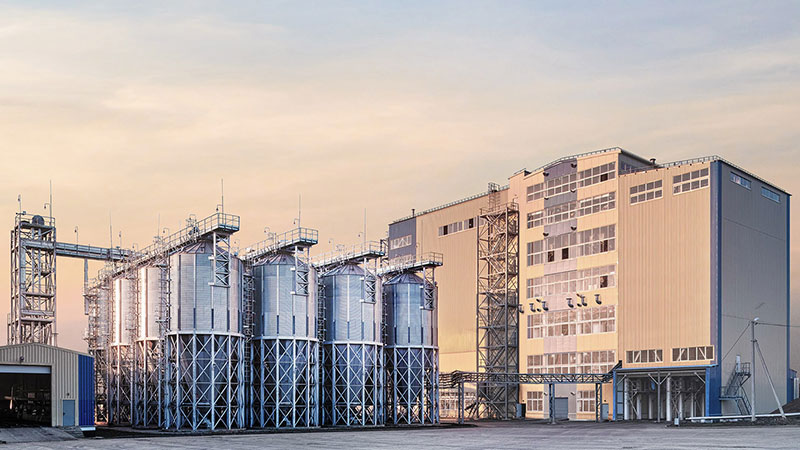
At RICHI, we go beyond project completion. With RICHI Servicee, we’re your dedicated partners in success. Count on us for expert guidance, minimal downtime, and optimized productivity. Choose RICHI for unmatched service and support.
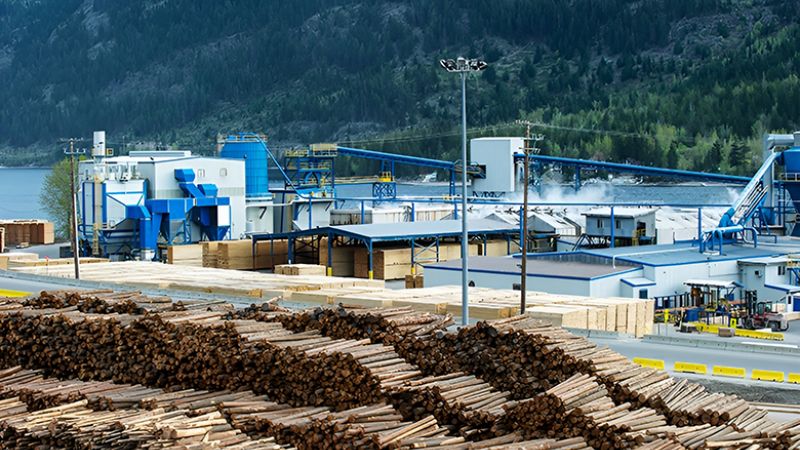


Meet global product demands and quality standards with industry-leading pellet plant design, engineering, equipment, and construction services for pellet processors.

Your Partner Beyond Project Completion
2000+ cases
RICHI is the leading designer, manufacturer and builder of pellet plants in the world, completing over 2000 projects in 140 countries across 6 continents.
Read More
Increase plant productivity, profitability, and safety by integrating high quality equipment into your pellet production line. Over the years, RICHI has become China's top pellet equipment manufacturer. At the same time, RICHI has established valuable partnerships with the world's leading component and raw material manufacturers to bring you the best there is in technology, automation, and efficiency in pelleting plant machinery.

For nearly 30 years, RICHI has been providing best-in-class pellet plant equipment and services to clients across a variety of industries, sizes, and needs. We pride ourselves on the knowledge and skill that each team member possesses – from our technical sales team to our process design engineers. You can count on RICHI Machinery to take your operation to the next level of innovation, quality, and success.
Need help with your pellet manufacturing plant project? Contact us today.
ANIMAL FEED
BIOMASS
WOOD
ORGANIC FERTILIZER
AQUA FEED
CAT LITTER
MUNICIPAL WASTE RECYCLING
SPECIAL PELLET PRODUCTION
RICHI Machinery continues to deliver world class pellet mill equipment, pellet plant engineering and project solutions that add value to our customers in the animal feed, wood waste, agriculture waste, organic fertilizer, cat litter and special pellet products industries. Throughout the years, we RICHI Machinery have built strong brand, becoming industry-leading pellet machine manufacturer. We value integrity, promise quality, and prioritize your success.
Learn MoreWith our expert team, we precisely implement your process engineering requirements in pellet mill and pelletizing plant systems. No matter which industry you’re in – we understand your needs and deliver solutions that meet the highest standards.
At RICHI, quality comes first. Our pellet making machine and related pellet line equipment undergo rigorous quality controls to ensure they meet the highest standards. Rely on products that are durable, safe, and efficient.
With decades of experience in pellet machine and pellet production line production, we have earned a reputation as a trusted partner in various industries. Our expertise allows us to cover a wide range of applications.
Not only do we offer premium pelleting equipment, but we are also experts at designing, building, installing, and maintaining facilities from the ground up. Our expertise is within pellt plant process design, discovering the most efficient, productive, and profitable way to handle your materials in an end-to-end cycle.
○ RICHI MACHINERY
Keeping in touch with us is an effective way to solve all your problems. If you have any needs or questions, please leave your contact information, then RICHI technical consultants will send design, quotation, videos to your mailbox. You can also contact us directly via WhatsApp: +86 13838389622
Copyright©2015-2026 by HENAN RICHI MACHINERY CO., LTD. All rights reserved.